
Iran Shifts From Using Missiles to Drones in Gulf Strikes
Tehran Adapts Tactics as Missile Capabilities Wane and Drone Attacks Surge
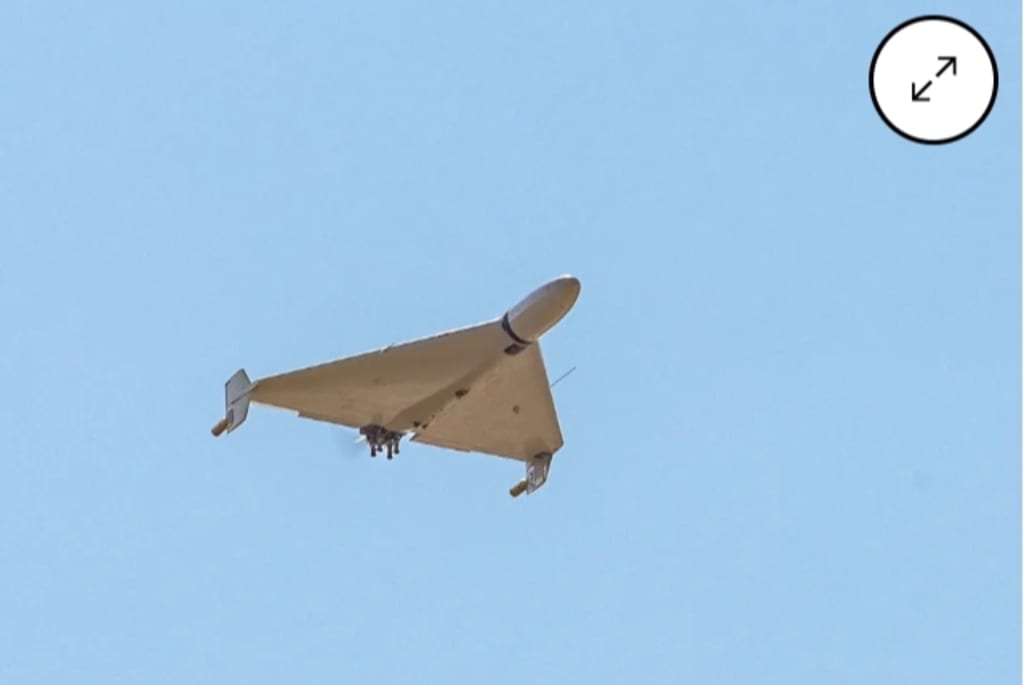
Amid the intensifying U.S.–Israel military campaign against Iran, Tehran has begun adjusting its offensive strategy, increasingly relying on drones rather than ballistic missiles to carry out attacks in the Gulf. This tactical shift comes after sustained U.S. and Israeli strikes have degraded Iran’s missile launch capabilities, forcing the country’s military to turn to cheaper, more numerous unmanned aerial systems that can challenge regional air defenses and maintain pressure on adversaries.
Missile Barrages Give Way to Drone Waves
In the early stages of the conflict, Iran retaliated to U.S. and Israeli strikes with large-scale missile barrages, launching hundreds of ballistic and cruise missiles toward Gulf states, U.S. bases, and other strategic targets. These missile attacks were intended to demonstrate Tehran’s reach and capacity for retaliation.
Recent reports from Gulf defense ministries, however, show that the majority of recent projectiles targeting countries such as the UAE, Qatar, and Bahrain are now drones, most commonly variants of Iran’s Shahed UAVs.
In the UAE, air defenses have detected over 1,000 drones in recent waves, dwarfing the number of missile launches, highlighting Iran’s pivot to unmanned systems.
Why Drones Dominate the Offensive
Several factors explain Iran’s shift toward drones:
• Limited Missile Availability: Many of Iran’s missile launchers have been damaged or destroyed by U.S. and Israeli strikes, reducing the ability to sustain frequent missile barrages.
• Cost and Production: Drones are significantly cheaper than ballistic or cruise missiles, allowing Iran to launch large-scale attacks without depleting scarce resources. This tactic creates a cost asymmetry that strains defenders.
• Saturation Tactics: Drones are smaller and harder to detect than missiles. By launching large numbers simultaneously, Iran forces Gulf air defenses to expend expensive interceptor missiles, potentially overwhelming protective systems.
• Operational Flexibility: Drones can strike a variety of targets, including infrastructure, military installations, ports, and other strategic sites, making them ideal for sustained offensive operations.
Impact on Gulf States
Gulf countries have faced the brunt of Tehran’s evolving tactics. UAE authorities report multiple drone interceptions over cities such as Abu Dhabi and Dubai, with some drones evading defenses and causing damage.
Qatar and Bahrain have also been targeted, with drone activity now far exceeding missile activity in these regions. Missiles are still used selectively but no longer dominate Iran’s offensive campaign.
Responding to Missile Degradation
Iran’s shift comes as its missile arsenal has been significantly degraded by U.S. and Israeli strikes. A substantial portion of mobile launchers and missile stockpiles has reportedly been destroyed, limiting Iran’s capacity for large-scale missile attacks.
As a result, drones offer a sustainable, low-cost means to maintain offensive pressure without relying on increasingly vulnerable missile systems. This shift reflects Iran’s tactical flexibility and adaptation to battlefield realities.
The Rise of Drone Warfare
Iran’s reliance on drones illustrates a broader trend in modern warfare: unmanned systems are becoming central strike assets. Countries like Iran have invested heavily in UAV technology to offset conventional weaknesses, taking advantage of their lower cost, mass-production capability, and resilience against traditional air defenses.
Drones have been used effectively in previous conflicts, including in Ukraine, to force opponents to expend expensive interceptors and divert resources. Iran’s strategy in the Gulf demonstrates how unmanned aerial systems can redefine modern conflict, even for nations with limited conventional capabilities.
Challenges for Defenders
While Gulf states, Israel, and U.S. forces have successfully intercepted many drones, the volume of UAVs presents logistical and financial challenges. Air defenses must often use costly interceptor missiles to destroy drones that are inexpensive to produce, creating a persistent cost imbalance for the defenders.
This dynamic has forced militaries to explore alternative counter-drone measures, including electronic warfare, directed-energy weapons, and low-cost intercepting drones.
Strategic Implications
The drone shift is not just tactical; it carries strategic significance. Iran aims to maintain offensive pressure on U.S. allies and Gulf states even as missile capability diminishes. Drones provide an asymmetric advantage, allowing Tehran to project force economically and persistently.
The growing use of drones also highlights a trend in regional conflicts: future wars may rely heavily on unmanned systems, altering air defense doctrines and military planning across the Middle East.
Toward a Prolonged Conflict
Iran’s increasing reliance on drones suggests a prolonged, asymmetric phase of warfare. While missiles remain part of its arsenal, unmanned systems now dominate the operational landscape.
Gulf states must continuously adapt their air defense strategies to counter waves of drones, while U.S. and allied forces seek to neutralize Iranian offensive capabilities. This phase of the conflict demonstrates how technological adaptation can shape both tactics and strategy, making the use of drones a defining feature of the current Gulf war.
Key Takeaways:
Iran has shifted from ballistic missiles to large-scale drone attacks against Gulf states.
UAVs are cheaper, easier to produce, and allow for sustained operations despite missile losses.
Gulf defense systems face challenges intercepting high volumes of drones.
Drones provide Tehran with an asymmetric, cost-effective way to maintain offensive pressure.
The conflict underscores the growing centrality of unmanned aerial systems in modern warfare.
Iran’s adaptation to drone warfare highlights the evolving nature of Middle Eastern conflicts and the increasing importance of unmanned systems as both a tactical and strategic tool.
About the Creator
A Gathering of Evil Bosses
“I’m the queen of chin jutting while I smooth my hair, attacking, insulting, and deflecting to protect my appointer.” “Oh, please, Blondi, my hair is curled, highlighted, and longer than yours. I feature television commercials telling immigrants that we will give them a free plane ride home, and if they voluntarily turn themselves in, they will be allowed to legally apply for re-entry. It runs everywhere, and I look good in it! You can’t compete because of your blond hair. Mine is nicer, and my lips are prettier than yours.”
By Andrea Corwin 16 days ago in The Swamp
Iris Dena
In the digital age, a single phrase can travel across continents within minutes. Recently, search terms such as “Iris Dena,” “submarine sinks Iranian ship,” and “Mark 48 torpedo” have circulated widely online, often tied to dramatic claims involving the Iranian navy and waters near Sri Lanka. These narratives, sometimes framed around an alleged incident involving an Iranian warship, illustrate how quickly maritime rumors can capture public attention.
By Saboor Brohi about 16 hours ago in The Swamp



Comments
There are no comments for this story
Be the first to respond and start the conversation.