
Iran’s Regime May Have One Chance to Save Itself
A moment that could determine whether the Islamic Republic adapts — or collapses
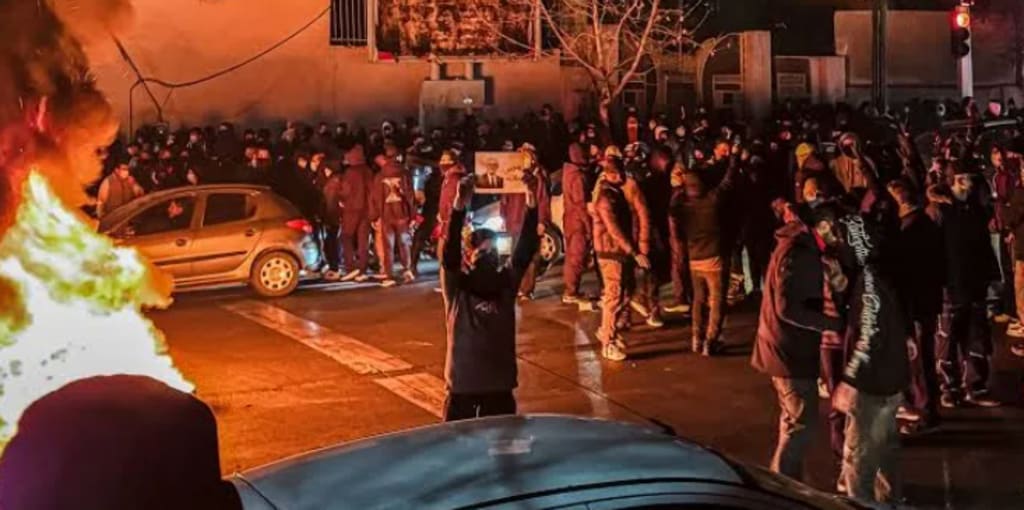
For more than four decades, the Islamic Republic has survived wars, sanctions, internal unrest, and global isolation. Its leadership has repeatedly relied on force, ideology, and patience to outlast crises. But today’s unrest feels different. It is deeper, wider, and more determined — and it raises a question many Iranians are now asking openly:
Can the system survive without changing itself?
Why This Moment Feels Different
Protests in Iran are not new. What is new is the breadth of anger and the absence of fear that once kept dissent in check. Demonstrations now span cities, towns, and rural areas. They include students, workers, women, retirees, and even segments of the middle class that once avoided confrontation.
Economic hardship lies at the center of this unrest. Inflation has crushed purchasing power. The national currency continues to lose value. Basic goods have become luxuries for many families. But beneath the economic pain lies something far more dangerous for the regime: a collapse of belief in the system itself.
People are no longer asking for temporary relief. They are questioning legitimacy.
Repression Has Reached Its Limit
The government’s response has followed a familiar script — arrests, intimidation, censorship, and heavy security presence. Officials blame foreign interference and insist that stability must be protected at all costs.
But repression is no longer restoring calm. Instead, it is hardening resistance.
Each crackdown convinces more citizens that peaceful reform is impossible. Each death or arrest becomes another symbol of a system unwilling to listen. Fear still exists, but it no longer guarantees silence.
When control becomes the only tool left, authority begins to crack.
A Generational Divide That Can’t Be Ignored
Iran today is governed by a revolutionary generation, but populated by a post-revolutionary society.
Most Iranians were born long after 1979. They did not experience the revolution or the war that followed. Their expectations are shaped by global connectivity, education, and the desire for personal freedom. They compare their lives not to Iran’s past, but to the world beyond its borders.
This generational divide is perhaps the regime’s greatest challenge. The values that once unified the state no longer resonate with much of the population.
An aging leadership attempting to govern a young, restless society is a recipe for long-term instability.
What “Saving the Regime” Actually Means
If Iran’s leaders want to preserve the system, doing nothing is no longer an option.
“Saving itself” does not mean crushing protests harder or waiting for exhaustion. It means addressing the root causes of public anger — something the system has avoided for decades.
That would require:
Economic reform that tackles corruption and limits the dominance of powerful institutions over the economy
Political openness that allows criticism, debate, and accountability
Social flexibility, particularly toward women and younger generations demanding autonomy
These steps would not weaken the state — they could legitimize it.
Reform is risky, but stagnation is fatal.
The Hardliners’ Fear
Within Iran’s power structure, many hardliners view reform as surrender. They fear that any compromise will embolden opposition and unravel control.
But history offers a warning: regimes rarely fall because they reformed too early. They fall because they refused to reform until it was too late.
The paradox facing Iran’s leadership is clear — maintaining absolute control may ultimately cost them power altogether.
Why the World Can’t Decide Iran’s Future
Outside Iran, debates rage about sanctions, diplomacy, and intervention. But Iran’s future will not be decided abroad.
Foreign pressure can influence behavior, but it cannot restore legitimacy. In fact, external threats often strengthen hardliners while weakening reformist voices.
Real change — whether reform or collapse — will come from within Iranian society itself.
The question is not whether the world supports the Iranian people. It’s whether Iran’s rulers are willing to listen to them.
The Cost of Missing This Window
If the regime fails to act, the risks multiply.
Protests could become more violent. Economic conditions could deteriorate further. Public trust could vanish entirely. In the worst case, a sudden collapse of authority could create chaos — hurting ordinary citizens far more than political elites.
Ironically, reform may be the most conservative option available. It offers a way to preserve institutions while easing public pressure.
A Narrow and Closing Window
Iran’s leaders still have power. They still have resources. They still have a chance.
But legitimacy, once lost, is nearly impossible to regain.
This moment may be the last opportunity for the Islamic Republic to evolve rather than implode. Whether the leadership recognizes that reality — and has the courage to act on it — will shape Iran’s future for decades.
Iran’s regime may indeed have one chance to save itself.
What happens next will determine whether it takes that chance — or lets it slip away.
About the Creator
Keep reading
More stories from Aqib Hussain and writers in The Swamp and other communities.
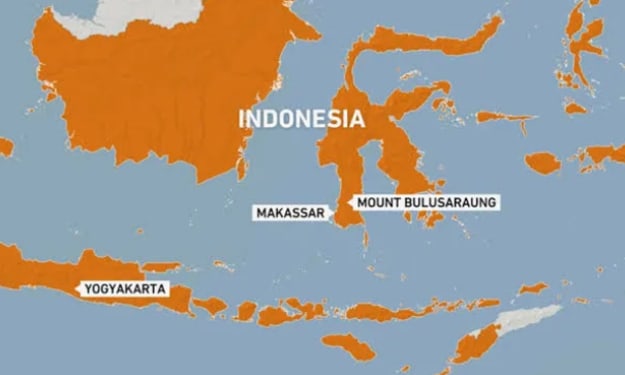
Indonesia Searches for Missing Plane With at Least 10 on Board
Indonesia has once again been thrust into an anxious search-and-rescue operation after a small aircraft carrying at least ten people was reported missing. The disappearance has triggered a coordinated response involving aviation authorities, the military, local search teams, and emergency services, all racing against time in a country known for its challenging geography and unpredictable weather conditions.
By Aqib Hussainabout 15 hours ago in The Swamp
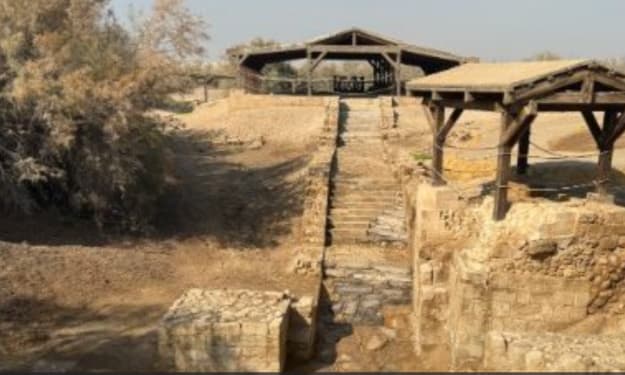
Bethany Beyond the Jordan: The Sacred Place of Jesus’ Baptism
A Sacred Place Hidden in Plain Sight Along the eastern bank of the Jordan River, just a short distance from the Dead Sea, lies a place revered by millions of Christians around the world: Bethany Beyond the Jordan. Known in Arabic as Al-Maghtas, this site is widely recognized as the location where Jesus Christ was baptized by John the Baptist. Though modest in appearance, its spiritual weight is immense, making it one of the holiest places in Christianity. Unlike grand cathedrals or bustling pilgrimage cities, Bethany Beyond the Jordan offers something rare—silence, simplicity, and a powerful sense of sacred history. It is here, according to Christian tradition and strong archaeological evidence, that Jesus’ public ministry began. Biblical Roots of Bethany Beyond the Jordan The Gospel of John provides the clearest reference to this site, describing it as “Bethany beyond the Jordan, where John was baptizing.” For centuries, scholars debated the exact location of this biblical Bethany. Some believed it lay west of the river, while others argued for the eastern bank. Modern archaeology has largely settled the debate. Excavations in Jordan uncovered ancient baptism pools, churches, monasteries, and water systems dating back to the Roman and Byzantine periods—all pointing to this area as the original baptism site. Early Christian pilgrims also recorded journeys to this very location, strengthening its authenticity. John the Baptist and the Meaning of Baptism Bethany Beyond the Jordan is inseparable from the figure of John the Baptist, a prophet who preached repentance and spiritual renewal. His act of baptizing Jesus transformed baptism from a symbol of repentance into a cornerstone sacrament of Christianity. The baptism of Jesus represents humility, obedience, and divine affirmation. According to scripture, the heavens opened, the Holy Spirit descended like a dove, and a voice declared Jesus as God’s beloved Son. This moment marks the beginning of Jesus’ mission and gives the site its profound theological importance. For believers, standing near the waters of the Jordan is not just about history—it is about reconnecting with faith at its source. Archaeology That Brings Scripture to Life What sets Bethany Beyond the Jordan apart from many holy sites is the strength of its archaeological record. Researchers have uncovered: Ruins of early Christian churches built to honor the baptism site Monastic cells where early monks lived and prayed Large baptism pools used by pilgrims Ancient water channels connecting the site to the Jordan River These findings show that Christians revered this location from the earliest centuries of the faith. Rather than relying solely on tradition, Bethany Beyond the Jordan is supported by physical evidence that aligns closely with biblical descriptions. Recognition as a World Heritage Site In 2015, UNESCO officially recognized Bethany Beyond the Jordan as a World Heritage Site, citing its outstanding universal value and deep religious significance. This recognition placed the site alongside the world’s most important cultural and spiritual landmarks. Jordan’s role in preserving and promoting the site has been widely praised. Despite being located in a region often associated with conflict, Bethany Beyond the Jordan stands as a symbol of peace, coexistence, and shared heritage among Christians, Muslims, and Jews. A Place of Pilgrimage and Papal Visits Over the years, Bethany Beyond the Jordan has welcomed pilgrims from every corner of the world. Many describe their visit as deeply emotional, even transformative. The quiet landscape, combined with the slow flow of the Jordan River, creates an atmosphere of reflection rarely found at more crowded holy sites. Several popes, including Pope John Paul II, Pope Benedict XVI, and Pope Francis, have visited the site, reinforcing its importance within the global Christian community. These visits also elevated international awareness of Jordan as a custodian of Christian holy places. The Jordan River: More Than Just Water The Jordan River itself holds immense symbolic power. In the Bible, it represents transition, renewal, and divine intervention. From the Israelites crossing into the Promised Land to Jesus’ baptism, the river is a recurring setting for spiritual turning points. At Bethany Beyond the Jordan, the river becomes more than geography—it becomes theology. For many pilgrims, touching or seeing its waters is a reminder of spiritual cleansing and new beginnings, echoing the meaning of baptism itself. Interfaith Importance and Cultural Harmony While Bethany Beyond the Jordan is a Christian holy site, its significance extends beyond one faith. Jordan, a Muslim-majority country, has actively protected Christian heritage, offering a powerful example of interfaith respect. The site demonstrates how sacred spaces can unite rather than divide. In a region often portrayed through the lens of conflict, Bethany Beyond the Jordan tells a different story—one of shared history, mutual reverence, and peaceful coexistence. Visiting Bethany Beyond the Jordan Today Today, the site is carefully managed to preserve its spiritual atmosphere. Modern walkways guide visitors through ruins without disturbing the landscape. Informational signs explain both the biblical and archaeological significance, making the experience educational as well as devotional. Unlike many major pilgrimage destinations, Bethany Beyond the Jordan remains calm and uncluttered. This simplicity allows visitors to focus not on spectacle, but on meaning. Why Bethany Beyond the Jordan Still Matters In a fast-paced, modern world, Bethany Beyond the Jordan offers something timeless. It reminds believers of humility, faith, and beginnings. It reminds historians that ancient texts can align with physical evidence. And it reminds the global community that sacred heritage deserves protection, regardless of borders or beliefs. More than a historical landmark, Bethany Beyond the Jordan is a living testament to the moment when a quiet act in a river changed the course of religious history. Final Reflections Bethany Beyond the Jordan is not defined by grandeur, but by depth. It stands as a sacred bridge between scripture and soil, faith and history. For Christians, it marks the beginning of Jesus’ mission. For the world, it stands as a symbol of spiritual heritage preserved with dignity and care. In the stillness of the Jordan’s waters, the story of baptism continues to flow—inviting reflection, renewal, and reverence for generations to come
By Muhammad Hassan7 days ago in The Swamp


Comments
There are no comments for this story
Be the first to respond and start the conversation.