
Indiana Republicans Reject Trump-Backed Congressional Map
A Rare Break Within the GOP Over Redistricting Ahead of the 2026 Midterms

Introduction: A Notable Political Moment
In early December 2025, the Indiana State Senate voted against a proposed congressional map that had significant support from President Donald Trump and his allies. The plan aimed to redraw district lines in a way that could have given Republicans an advantage in the 2026 midterm elections. Instead, a large group of Republican lawmakers joined all Democratic senators in rejecting the proposal, creating a rare moment of opposition to Trump’s strategy within his own party.
AP News
This decision has drawn national attention not only because of its immediate impact on the state’s political landscape, but also because it highlights growing questions about party leadership, local representation, and the role of redistricting in American elections.
Background: What the Proposed Map Was and Why It Mattered
Every ten years, states redraw congressional district boundaries based on new census data. This process, known as redistricting, typically happens to reflect population changes. However, in some states, lawmakers can adjust lines in the middle of a decade—often for political advantage.
In Indiana, Republican lawmakers currently hold seats in seven of the state's nine U.S. House districts. The proposed map sought to redraw those districts in a way that likely would have given Republicans control of all nine seats. It was part of a broader push by national Republican leaders and the White House to strengthen the party’s hold in the House of Representatives ahead of the 2026 midterms.
Reuters
Supporters argued that changing district boundaries could protect Republican incumbents and expand the party’s majority in Congress. Critics, including opposition lawmakers and some members of the Republican Party in Indiana, raised concerns about fairness, political overreach, and the long-term effects of such an adjustment.
The Senate Vote: Numbers and Context
On Thursday, December 11, 2025, the Indiana Senate held a vote on the proposed congressional map. The final tally was 31 senators against the map and 19 in favor. Notably, 21 Republicans crossed party lines to vote against the proposal along with all 10 Democrats in the chamber.
AP News
This outcome was unusual for several reasons:
The Indiana Senate is a Republican-led body with a significant majority.
The vote represented a public rebuke of a plan strongly supported by national Republican leadership.
The opposition came from a combination of statewide Republicans and Democrats, signaling a departure from party unity at a critical moment before the midterm elections.
Indiana Capital Chronicle
Pressure From National Leaders
President Trump and other national Republican figures had encouraged Indiana lawmakers to approve the map. The president had emphasized the importance of gaining more Republican seats in Congress. Vice President J.D. Vance visited the state legislature to meet with senators and advocate for the proposal.
The Guardian
Additional pressure came through public statements, social media posts, and warnings about possible political consequences for lawmakers who voted against the plan. Some national conservative advocacy groups also communicated with legislators, emphasizing the importance of redistricting in securing Republican power.
Salon.com
Despite these efforts, many Indiana senators chose to prioritize their own assessment of the proposal and the views of their constituents over external pressure.
Reasons Behind the Opposition
Lawmakers who voted against the proposed map offered various explanations for their decision:
Some cited concerns about fairness and representation—believing that redrawing districts in the middle of a decade gave undue advantage to one party.
Others referenced state autonomy, expressing resistance to what they saw as heavy external influence on local decisions.
Several Republicans emphasized that they were acting on the basis of principles rather than party or national expectations.
The Guardian
These views underlined a key point of debate: how best to balance political strategy with respect for voters and democratic norms.
Reactions Within the State
Responses to the vote varied within Indiana’s political circles:
Some state Republicans who supported the measure expressed disappointment and vowed to continue efforts to promote the plan in other ways.
State officials aligned with the White House indicated that they might support future challenges to lawmakers who opposed the map in their next elections.
Citizens and local advocacy groups held discussions both in support of and against the decision, highlighting broader debates about how district lines should be drawn and who gets to make such decisions.
These reactions reflect the complexities and tensions often present when local and national political interests intersect.
National Significance
The vote in Indiana mattered beyond the state for several reasons:
It marked one of the first significant instances of Republican lawmakers publicly resisting a high-profile request from President Trump.
AP News
The decision may influence how other states approach redistricting efforts and negotiations with national party leaders.
It also contributes to broader discussions about the balance of power between federal influence and state legislative autonomy.
Political observers across the country are watching how this decision could affect the Republican Party’s strategy in the 2026 midterm elections.
Potential Effects on the 2026 Midterms
Because state congressional maps determine which voters are grouped together in each district, the decision in Indiana directly affects the electoral landscape for the 2026 midterm elections.
Had the new map passed, Republicans might have had a stronger chance in certain districts by creating new lines favorable to their candidates. With the plan rejected, the existing districts remain in place, and the state’s political dynamics for 2026 will unfold under the current configuration.
This outcome could influence not only which party wins specific seats but also broader control of the U.S. House of Representatives. Given the narrow margins in Congress, every seat counts, and changes in statewide maps can have ripple effects on national legislative control.
Broader Implications for Gerrymandering Debate
The issue of redistricting often raises questions about gerrymandering—the practice of drawing political boundaries to favor one party over another. Critics argue that gerrymandering can undermine democratic representation by diluting certain voting blocs, while supporters say strategic redistricting is a legitimate political tool.
The Indiana vote contributes to a larger conversation about how districts should be drawn, who should have authority in making these decisions, and what safeguards might be needed to protect fair representation.
By voting against the proposed map, Indiana senators put a spotlight on how redistricting decisions can raise both local and national concerns about fairness, accountability, and political influence.
Conclusion: A Moment of Local Decision With National Echoes
The Indiana State Senate’s rejection of a Trump-backed, mid-decade congressional map marks a notable moment in contemporary American politics. By choosing to oppose the proposal, many Republican lawmakers signaled that local considerations can, at times, outweigh national party pressure.
AP News
As the 2026 midterm elections approach, this decision is likely to continue to be referenced by political analysts, lawmakers, and voters as an example of how redistricting debates intersect with questions of representation, party unity, and democratic process.
Through this vote, Indiana joined a broader national conversation about how political boundaries are drawn and who gets to decide them—an issue that carries consequences for both state governance and federal elections
About the Creator
Saad
I’m Saad. I’m a passionate writer who loves exploring trending news topics, sharing insights, and keeping readers updated on what’s happening around the world.
The Forsyth House Fire
Since 1851, Forsyth House has stood on the corner of Union Street and Gordon Street in the heart of Glasgow. Its iconic, or was... because on Sunday 8th of March, 2026, a fire broke out in a small, seemingly un-named shop in the building and tore all that history down. As I write, the rubble is still unsettled and the street is still blocked off. Central Station is quiet on the upper level, and around 30 small businesses have quite literally gone up in smoke.
By S. A. Crawford2 days ago in The Swamp
Al Quds Day March Banned After Government Approves Met Request
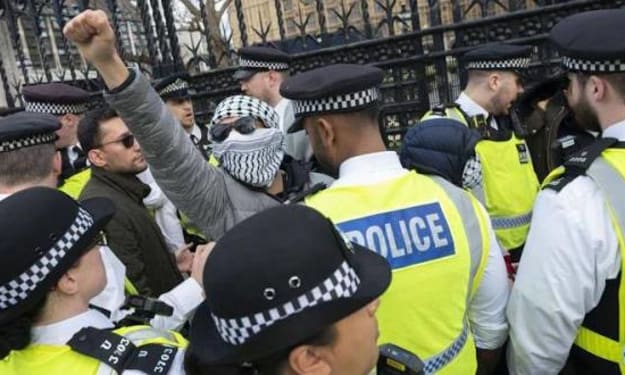
Authorities have banned a planned Al Quds Day march after approving a request from the Metropolitan Police, citing security concerns and the risk of public disorder. The decision has sparked debate among activists, civil rights groups, and political leaders, with supporters of the ban arguing it was necessary for public safety while critics claim it restricts freedom of expression. Al Quds Day, observed annually in many countries, is intended to show solidarity with Palestinians and highlight the status of Jerusalem, known as Al Quds in Arabic. Demonstrations linked to the day have taken place in cities around the world for decades, often drawing both supporters of the Palestinian cause and counter-protesters. In recent years, however, the marches have become increasingly controversial, particularly in Western capitals where authorities have struggled to balance public safety with the right to protest. The Metropolitan Police submitted a formal request to government officials seeking legal powers to prohibit the march this year. According to police statements, intelligence assessments indicated that tensions surrounding the conflict in the Middle East could lead to confrontations between demonstrators and counter-protest groups. Officers warned that managing the event would place a significant strain on police resources and could create a serious risk of violence or disorder in central areas of the city. After reviewing the request, the government granted approval for the ban under public order legislation that allows authorities to restrict demonstrations in exceptional circumstances. Officials stated that the decision was not taken lightly and followed consultations with security advisers and legal experts. A government spokesperson said the move was necessary to maintain public safety. “While the right to peaceful protest is fundamental in a democratic society, it must be balanced against the responsibility to protect communities and prevent violence,” the spokesperson said. “Based on the information provided by law enforcement, ministers concluded that prohibiting the march was the most appropriate course of action.” Supporters of the ban argue that previous Al Quds Day demonstrations have included controversial symbols and rhetoric that have caused concern among local communities. Some lawmakers have long called for tighter restrictions on the event, claiming that extremist slogans or imagery sometimes appear during the marches. However, organizers and civil liberties groups strongly criticized the decision. They argue that banning the entire demonstration unfairly punishes peaceful participants and undermines the principle of free assembly. Representatives from several advocacy organizations said authorities should instead focus on monitoring the event and taking action only against individuals who break the law. One organizer described the ban as “deeply disappointing,” saying that participants intended to hold a peaceful march calling for justice and human rights. “People should be allowed to express solidarity and raise awareness about international issues without being silenced,” the organizer said. Legal experts note that blanket bans on protests are relatively rare and typically require clear evidence that serious disorder cannot be prevented by less restrictive measures. Some campaigners have already suggested the decision could face legal challenges if organizers attempt to contest the ban in court. Community leaders have also urged calm following the announcement. Several groups emphasized the importance of dialogue and respect during a period when international tensions are already high. Police officials said they would continue monitoring the situation and would deploy officers in key areas to prevent unauthorized gatherings or potential confrontations. The controversy surrounding the Al Quds Day march reflects the broader challenge facing governments in managing politically sensitive demonstrations. As global conflicts increasingly resonate within diverse urban communities, authorities must navigate a difficult balance between protecting public order and safeguarding democratic freedoms. For now, the ban means the planned march will not take place this year, but the debate it has triggered is likely to continue well beyond the day itself. Activists say they will explore alternative ways to raise awareness about their cause, while officials maintain that the priority remains ensuring safety and stability in the city.Start writing...
By Fiaz Ahmed 4 days ago in The Swamp
My First Time Skiing and I Got Lost, Alone, in the French Alps
Looking back, I can trace some of my life’s biggest adventures to a simple action from my sister. She’d introduced me to Tommy (a very long time ago), a colleague of hers, who had overshared his penchant for Italian-looking women, and I ticked that box.
By Chantal Christie Weiss2 days ago in Humans


Comments
There are no comments for this story
Be the first to respond and start the conversation.