
India’s Reported K-4 Missile Launch Signals a Major Leap in Undersea Nuclear Deterrence
A successful K-4 test from an Arihant-class submarine highlights India’s growing undersea nuclear strength and strategic deterrence


India has reportedly taken a significant step forward in strengthening its nuclear deterrence capability with the successful launch of a K-4 ballistic missile from one of its Arihant-class nuclear-powered submarines. While official confirmation has remained limited, multiple defense analysts and strategic observers suggest that the test marks a crucial milestone in India’s long-term plan to establish a credible and survivable sea-based nuclear force.
What Is the K-4 Ballistic Missile?
The K-4 is a submarine-launched ballistic missile (SLBM) developed under India’s secretive Advanced Technology Vessel (ATV) program. With an estimated range of around 3,500 kilometers, the missile is designed to carry nuclear warheads and strike targets deep within hostile territory while being launched from beneath the ocean’s surface.
Compared to earlier systems like the K-15 (also known as Sagarika), the K-4 represents a substantial upgrade in both range and payload capability. Its longer reach allows Indian submarines to remain farther from enemy coastlines, reducing vulnerability while maintaining credible strike options.
Arihant-Class Submarines: India’s Silent Shield
The reported missile launch is believed to have been conducted from one of India’s Arihant-class nuclear-powered ballistic missile submarines (SSBNs). These submarines form the sea-based leg of India’s nuclear triad, alongside land-based missiles and air-delivered nuclear weapons.
India currently operates INS Arihant and INS Arighat, with additional submarines under construction. Designed for stealth and endurance, these vessels can remain submerged for extended periods, making them extremely difficult to detect and neutralize. This survivability is precisely what makes SSBNs the most reliable component of nuclear deterrence.
Strengthening the Nuclear Triad
A successful K-4 launch from an operational submarine would significantly reinforce India’s nuclear triad, ensuring a second-strike capability even in the event of a devastating first attack. This capability is central to India’s declared “No First Use” nuclear doctrine, which relies on the assurance that retaliation would remain possible under any circumstances.
Strategic experts note that sea-based deterrence reduces the risk of escalation during crises. Unlike land-based missile sites, submarines are not easily targeted, making preemptive strikes less attractive to adversaries.
Regional Implications
The reported test is likely to draw close attention from neighboring countries, particularly China and Pakistan. China already operates a fleet of advanced SSBNs armed with long-range SLBMs, while Pakistan continues to expand its missile capabilities with an emphasis on tactical nuclear weapons.
India’s progress with the K-4 missile sends a clear signal that it is committed to maintaining strategic parity and safeguarding its national security interests in an increasingly volatile Indo-Pacific region. Analysts emphasize that the move is defensive rather than aggressive, aimed at deterrence rather than provocation.
Technological and Strategic Challenges
Developing a reliable submarine-launched ballistic missile system is among the most complex tasks in modern defense engineering. It requires advanced guidance systems, robust underwater launch mechanisms, secure command-and-control networks, and extremely high levels of crew training.
The reported success suggests that India has overcome several critical technological hurdles, though experts caution that full operational deployment involves repeated testing, integration, and patrol readiness. Each successful test brings the system closer to being fully mission-capable.
Silence and Strategic Ambiguity
India’s defense establishment has historically maintained a policy of strategic ambiguity when it comes to nuclear submarine operations. Official silence following such reports is consistent with global norms surrounding SSBN deployments, as secrecy enhances deterrence by keeping adversaries uncertain.
By neither fully confirming nor denying specific details, India preserves operational security while still allowing the strategic message to resonate internationally.
What This Means Going Forward
If confirmed, the K-4 missile launch would represent more than a technical achievement—it would symbolize India’s arrival as a mature nuclear submarine power. As additional Arihant-class submarines enter service and longer-range missiles like the K-5 and K-6 continue development, India’s sea-based deterrent is expected to grow both in scale and sophistication.
For global observers, the development underscores the shifting dynamics of strategic stability in Asia. For India, it reinforces a long-term commitment to credible deterrence, technological self-reliance, and strategic restraint.
Conclusion
India’s reported launch of a K-4 ballistic missile from an Arihant-class submarine marks a potentially transformative moment in the country’s defense posture. By strengthening the most survivable leg of its nuclear triad, India enhances its ability to deter threats while adhering to its long-standing doctrine of restraint.
In an era defined by uncertainty and rapid military modernization, this development highlights how undersea deterrence continues to shape the balance of power beneath the world’s oceans—quietly, but decisively.
About the Creator
Fiaz Ahmed Brohi
I am a passionate writer with a love for exploring and creating content on trending topics. Always curious, always sharing stories that engage and inspire.
Keep reading
More stories from Fiaz Ahmed Brohi and writers in The Swamp and other communities.
Update on Israel Bombs Lebanon, Saying It Targeted Hezbollah and Hamas
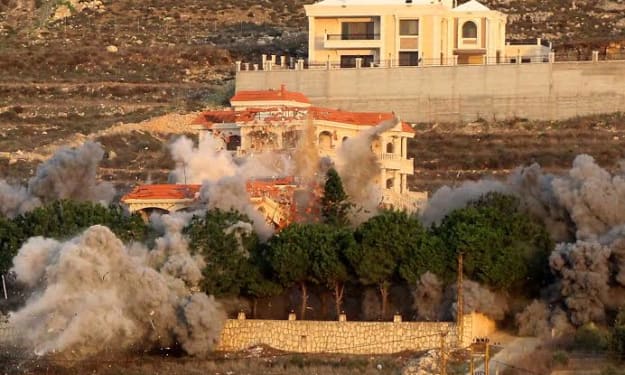
Tensions in the Middle East have escalated once again following Israel’s confirmation that it carried out airstrikes in Lebanon, claiming the attacks were aimed at positions linked to Hezbollah and Hamas. The development marks a serious expansion of regional instability, raising fears of a broader conflict at a time when diplomatic efforts are already under strain. What Israel Says Happened According to Israeli military officials, the strikes were launched in response to perceived security threats originating from Lebanese territory. Israel maintains that Hezbollah, the powerful armed group based in southern Lebanon, and Hamas, traditionally associated with Gaza, are coordinating activities that endanger Israeli civilians and military installations. Israeli authorities argue that the bombed sites were strategic in nature, including weapons storage facilities, command centers, and launch areas allegedly used to plan or support attacks against Israel. Officials emphasized that the strikes were “targeted and limited,” framing them as defensive actions intended to deter further aggression rather than provoke a wider war. Lebanon’s Reaction and Civilian Concerns Lebanese officials strongly condemned the bombings, calling them a violation of national sovereignty and international law. While Hezbollah has not always aligned itself fully with the Lebanese state, the attacks have nonetheless heightened public anxiety across the country, particularly in border regions already accustomed to instability. Reports from local sources indicate that airstrikes caused damage to infrastructure and raised concerns about civilian safety. In a country still grappling with economic collapse, political paralysis, and humanitarian challenges, renewed violence threatens to deepen existing hardships. Human rights organizations have urged all parties to exercise restraint, warning that any escalation risks civilian casualties and long-term destabilization. The proximity of military targets to residential areas in southern Lebanon adds to fears that further strikes could result in significant loss of life. Hezbollah and Hamas: A Growing Nexus? One of the most notable aspects of Israel’s statement is its emphasis on both Hezbollah and Hamas. Traditionally operating in different territories, the two groups share ideological opposition to Israel but have historically functioned independently. Recent developments, however, suggest increasing coordination, at least on a strategic level. Israel claims that Hamas has expanded its presence and influence in Lebanon, potentially with Hezbollah’s support. If accurate, this would represent a significant shift in regional dynamics, opening a new front beyond Gaza and increasing pressure on Israel’s northern border. Analysts note that even limited cooperation between the two groups could complicate Israel’s security calculations, forcing it to divide military resources and prepare for multi-front scenarios. Regional and International Implications The strikes have drawn international attention, with global powers calling for calm and renewed diplomatic engagement. The United Nations reiterated its concern over violations of existing ceasefire agreements and warned that continued hostilities could spiral out of control. Neighboring countries are watching closely. Any sustained conflict between Israel and Hezbollah could draw in regional actors and disrupt trade, energy routes, and political stability across the Middle East. For many observers, the situation highlights how interconnected regional conflicts have become, where actions in one area quickly reverberate across borders. The Risk of Escalation While Israel has characterized the strikes as precise and restrained, history shows that such actions can easily trigger retaliation. Hezbollah possesses a significant arsenal and has previously demonstrated its ability to strike deep into Israeli territory. Even a limited response could escalate into sustained clashes. The risk is not only military but also political. Escalation could derail fragile diplomatic efforts elsewhere in the region and harden positions on all sides. For civilians in Israel and Lebanon alike, the consequences of miscalculation would be severe. Public Sentiment and Media Narratives Public opinion within Israel remains divided. Some view the strikes as a necessary show of strength to maintain deterrence, while others fear that aggressive action will invite further attacks. In Lebanon, frustration and fear dominate public discourse, with many civilians feeling caught between militant groups and external military pressure. Media coverage on both sides reflects these divisions, underscoring how narratives and perceptions can shape public expectations and political decision-making during times of crisis. Conclusion The latest update on Israel’s bombing of Lebanon underscores the fragile and volatile nature of Middle Eastern geopolitics. While Israel insists the strikes were aimed solely at Hezbollah and Hamas targets, the broader consequences extend far beyond military objectives. With civilian safety, regional stability, and international diplomacy at stake, the situation demands caution from all parties involved. Whether this episode remains a limited exchange or escalates into a wider confrontation will depend largely on the choices made in the coming days. For now, the strikes serve as a stark reminder that in a region shaped by overlapping conflicts and unresolved tensions, even “targeted” actions can carry far-reaching and unpredictable consequences.
By Fiaz Ahmed Brohi2 months ago in The Swamp
The Forsyth House Fire
Since 1851, Forsyth House has stood on the corner of Union Street and Gordon Street in the heart of Glasgow. Its iconic, or was... because on Sunday 8th of March, 2026, a fire broke out in a small, seemingly un-named shop in the building and tore all that history down. As I write, the rubble is still unsettled and the street is still blocked off. Central Station is quiet on the upper level, and around 30 small businesses have quite literally gone up in smoke.
By S. A. Crawford2 days ago in The Swamp
Sweden Investigates Cargo Ship Allegedly Transporting Stolen Grain with Russian Crew
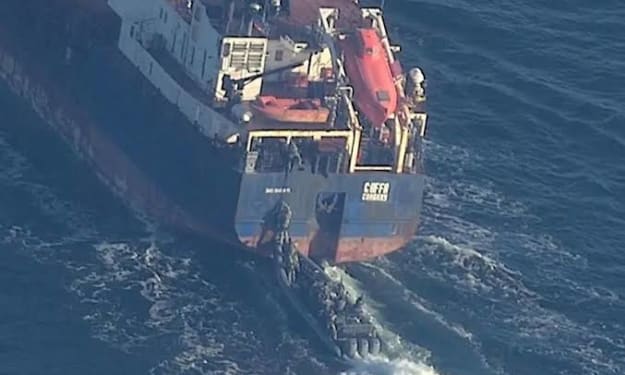
Authorities probe suspected illegal shipment linked to grain seized in occupied Ukrainian territories. Swedish authorities have launched an investigation into a cargo vessel suspected of transporting stolen grain believed to have originated from Ukraine’s occupied territories. The probe follows concerns raised by Ukrainian officials and international observers that the shipment may be part of a broader network trafficking agricultural goods taken from farms and storage facilities during the ongoing conflict. According to officials in Sweden, maritime authorities began examining the vessel after it entered waters under Swedish jurisdiction. The cargo ship, reportedly operated by a crew largely composed of Russian nationals, had drawn attention due to irregular documentation and suspicions regarding the origin of its grain cargo. The case has emerged against the backdrop of longstanding accusations by Ukraine that grain harvested from its occupied regions has been transported through international shipping routes and sold on global markets. Since the beginning of the war with Russia in 2022, Kyiv has repeatedly claimed that agricultural commodities taken from Ukrainian territory are being exported abroad through complex logistical channels. Suspicion Over Cargo Origins The vessel under investigation reportedly arrived at a port in southern Sweden earlier this week. Authorities said that customs officials and maritime inspectors became suspicious when reviewing shipping records and cargo manifests, which appeared incomplete or inconsistent. While officials have not publicly disclosed the ship’s name pending the ongoing investigation, reports suggest that the grain cargo may have originated from areas of eastern or southern Ukraine currently under Russian control. Ukrainian officials argue that such shipments represent the systematic removal of resources from territories seized during the conflict. Representatives of Sweden’s customs and coast guard agencies have confirmed that samples of the grain cargo are being examined. Experts are attempting to determine the grain’s geographic origin using agricultural and trade data, a process that may help establish whether the shipment matches harvest patterns from Ukrainian regions. Diplomatic and Legal Implications The investigation highlights the increasingly complex legal issues surrounding wartime trade and maritime commerce. If the grain is proven to have been taken from occupied territories without the consent of Ukrainian authorities, it could potentially constitute the transport of stolen goods under international law. Officials from European Union institutions have also been monitoring such cases closely. The EU has imposed extensive sanctions on Russia since the invasion of Ukraine, targeting sectors ranging from energy to shipping and agriculture. Any confirmed involvement in transporting looted commodities could lead to further legal or financial penalties. For Sweden, which joined NATO in 2024, the investigation underscores the broader geopolitical tensions surrounding the war in Ukraine and the enforcement of international sanctions. Swedish authorities have emphasised that their investigation is being conducted in accordance with national law and international maritime regulations. Ukraine’s Claims of Grain Theft Ukrainian officials have long alleged that millions of tonnes of grain have been removed from occupied areas since the start of the conflict. The country, one of the world’s largest grain exporters, relies heavily on agricultural exports to support its economy and global food supply chains. Kyiv has argued that the alleged seizure of grain not only damages Ukraine’s economy but also distorts international markets by introducing agricultural products whose origins may be concealed. Ukrainian diplomats have repeatedly urged governments and shipping authorities to investigate suspicious cargo shipments arriving in international ports. In several previous cases, ships suspected of carrying Ukrainian grain were reportedly turned away from ports or subjected to inspection after documentation discrepancies were discovered. The Investigation Continues Swedish authorities have stressed that the inquiry remains in its early stages and that no formal charges have yet been filed against the ship’s crew or operators. Investigators are reviewing shipping logs, satellite tracking data, and customs paperwork to reconstruct the vessel’s journey. Maritime experts say such investigations can take weeks or months, particularly when cargo may have been transferred between ports or mixed with grain from other sources during transit. For now, the cargo ship remains under scrutiny while authorities determine whether the shipment violated international trade regulations or sanctions regimes. The outcome of Sweden’s investigation could set an important precedent for how European ports handle suspected shipments of goods taken from conflict zones. As the war continues, scrutiny over global trade routes and cargo origins is expected to intensify, with governments seeking to ensure that international markets are not used to profit from resources seized during wartime.
By Fiaz Ahmed 8 days ago in The Swamp


Comments
There are no comments for this story
Be the first to respond and start the conversation.