
India, Pakistan Exchange Lists of Nuclear Installations, Prisoners
India and Pakistan Exchange Lists of Nuclear Installations and Prisoners, Signaling Diplomatic Engagement


In a significant development for bilateral diplomacy, India and Pakistan have exchanged lists of nuclear installations and prisoners, reaffirming commitments to long-standing agreements on nuclear safeguards and prisoner welfare. This exchange, while largely procedural, reflects ongoing efforts by both nations to maintain communication channels despite persistent political tensions and regional security challenges.
Nuclear Installations: Maintaining Strategic Transparency
The exchange of nuclear installation lists between India and Pakistan is conducted under the 1988 Agreement on the Prohibition of Attack against Nuclear Installations and Facilities. This pact, aimed at preventing escalation during conflict, mandates that both countries provide updated information on their nuclear facilities to avoid misunderstandings or accidental targeting.
Officials from both sides confirmed that the lists include all operational nuclear plants, research facilities, and missile-related installations. While details remain classified for security reasons, the move serves as a crucial confidence-building measure. Analysts note that maintaining transparency around nuclear sites reduces the risk of miscalculation in periods of tension and ensures compliance with international non-proliferation norms.
Dr. Arvind Mishra, a strategic affairs expert, commented, “Even though India and Pakistan have had tense relations, this routine exchange demonstrates a shared understanding of the catastrophic consequences of nuclear escalation. It’s a procedural step, but an essential one for regional stability.”
Prisoner Exchange: Humanitarian and Diplomatic Dimensions
Alongside nuclear transparency, the two nations also submitted updated lists of prisoners held in each other’s custody. This is part of longstanding agreements allowing for the identification and repatriation of individuals detained during cross-border incidents, including fishermen and civilians inadvertently caught near contested borders.
The prisoner exchange is often viewed as a humanitarian gesture, providing relief to families on both sides. While India and Pakistan have historically had disputes over territorial and security issues, these exchanges underscore a commitment to adhering to bilateral agreements even amid political friction.
An official statement from the Indian Ministry of External Affairs emphasized, “The sharing of prisoner lists reflects our continued focus on humanitarian concerns and legal obligations. We remain committed to facilitating the return of individuals as per agreed protocols.”
Implications for India-Pakistan Relations
Though largely routine, these exchanges carry broader strategic implications. They signal that despite rhetoric and border tensions, formal communication channels remain functional. Confidence-building measures such as nuclear transparency and prisoner lists reduce the potential for misjudgments and demonstrate adherence to international norms.
Experts note that such procedural steps are especially critical in the context of the India-Pakistan relationship, which has been shaped by historical conflicts, territorial disputes, and nuclear deterrence. Dr. Sarah Khan, a South Asia policy analyst, remarked, “These exchanges show that both nations recognize the need for stability in an inherently volatile region. Even small measures like updating nuclear site lists are vital for preventing inadvertent escalation.”
International Perspective
The international community often views these exchanges as positive steps towards maintaining peace in South Asia, a region with two nuclear-armed neighbors. Organizations such as the United Nations and the International Atomic Energy Agency (IAEA) have consistently encouraged transparency measures, considering them essential for reducing global nuclear risks.
Additionally, humanitarian organizations monitor prisoner exchanges closely, advocating for the timely release and fair treatment of detainees. Ensuring that lists are accurate and up-to-date is crucial for maintaining trust and protecting the rights of affected individuals.
Challenges and Criticism
Despite the positive aspects, critics argue that such exchanges, while necessary, are insufficient to address the deeper political issues between India and Pakistan. Border skirmishes, disputes over Kashmir, and other strategic disagreements continue to strain relations. Analysts caution that without broader dialogue on core issues, these measures serve only as temporary mitigations rather than long-term solutions.
Moreover, concerns about the welfare of prisoners remain, particularly regarding conditions of detention, legal representation, and the speed of repatriation. Human rights groups have repeatedly called on both nations to enhance transparency and ensure the humane treatment of all detainees.
Conclusion
The exchange of nuclear installation and prisoner lists between India and Pakistan is a small but meaningful step in maintaining dialogue and preventing misunderstandings. While largely procedural, these measures reflect adherence to international norms, demonstrate a commitment to humanitarian obligations, and provide a framework for confidence-building in an otherwise tense bilateral relationship.
As regional and global observers watch closely, it becomes clear that consistent communication, transparency, and adherence to agreements—no matter how routine—remain essential for stability between these two nuclear-armed neighbors. While much work remains to resolve underlying conflicts, such exchanges represent a pragmatic approach to reducing risk and fostering a measure of trust in South Asia’s complex geopolitical landscape.
About the Creator
Fiaz Ahmed Brohi
I am a passionate writer with a love for exploring and creating content on trending topics. Always curious, always sharing stories that engage and inspire.
Keep reading
More stories from Fiaz Ahmed Brohi and writers in The Swamp and other communities.
Government to Defend Decision to Strip Begum's UK Citizenship
The United Kingdom finds itself at the center of renewed debate over citizenship, national security, and human rights as the government prepares to defend its controversial decision to strip Shamima Begum of her British nationality. Begum, who left the UK as a teenager to join the so-called Islamic State (IS) in Syria, has become a lightning rod for discussions on security, morality, and legal boundaries, and the latest government action has reignited both public and legal scrutiny. Background: Begum's Departure and Controversy Shamima Begum, then a 15-year-old schoolgirl from London, traveled to Syria in 2015, where she married an IS fighter and lived in territories under extremist control. Her departure and subsequent lifestyle in a conflict zone drew widespread condemnation in the UK. When she was discovered in a refugee camp in Syria in 2019, Begum expressed a desire to return to the UK, claiming her circumstances and radicalization had changed. The government, citing national security concerns, argued that her return posed a potential threat to the public. Consequently, authorities revoked her UK citizenship, asserting that she was eligible for Bangladeshi nationality through her parents, though Bangladesh later refused her entry. This decision has faced multiple legal challenges, raising questions about the balance between security and human rights. Government’s Position The UK Home Office has consistently argued that revoking Begum’s citizenship was necessary to protect national security. Officials contend that individuals who join extremist organizations voluntarily pose significant risks upon return, including radicalization of others, espionage, or participation in terrorist activities. Recent statements indicate that the government will continue to defend this stance in court, emphasizing that it is within the state’s right to revoke citizenship when public safety is at stake. Officials also highlight that the government is not leaving Begum stateless in violation of international law, as she retains eligibility for Bangladeshi nationality—though her ability to exercise this right remains contested. Legal Challenges and Human Rights Debate Begum’s legal team has argued that stripping her citizenship violates both British and international law, including protections against rendering someone stateless. They maintain that the government’s decision disproportionately punishes her for actions committed as a minor and undermines principles of rehabilitation and reintegration. Human rights advocates have weighed in, arguing that the move sets a concerning precedent. If governments can revoke citizenship in cases involving ideological crimes or associations, critics fear that it could be used against other vulnerable individuals, including political dissidents or young citizens influenced by radical networks. Public Opinion and Media Coverage The Begum case has polarized public opinion in the UK. Some view her as a traitor who willingly joined a terrorist organization and deserves no protection or support from the state. Others highlight her age at the time of departure and argue for a more nuanced approach, focusing on rehabilitation and accountability rather than permanent exclusion. Media coverage has amplified both perspectives, fueling debates about national security, morality, and the state’s role in safeguarding both public safety and individual rights. The government’s defense of its actions is likely to remain in the spotlight as the case continues through legal and public scrutiny. International Implications The Begum case is not only a domestic issue but also has international ramifications. Countries across Europe and beyond have faced similar dilemmas with citizens who joined extremist groups abroad. How the UK resolves this case could influence policies in other nations, particularly regarding the treatment of foreign fighters and the legal frameworks for revoking citizenship. The Path Forward As the government prepares to defend its decision in court, the case will test the limits of national security powers, human rights law, and public opinion. Legal experts anticipate that the courts will need to carefully balance security concerns with the principles of justice and human rights protections, particularly given Begum’s age at the time of her radicalization. Regardless of the outcome, the case underscores the continuing challenges that states face in managing the fallout from international terrorism, the return of foreign fighters, and the complexities of citizenship in a globalized world. Conclusion The government’s decision to strip Shamima Begum of her UK citizenship highlights the tension between national security imperatives and human rights protections. By defending this decision, officials signal that they prioritize public safety, while critics warn of the legal and ethical implications. As court proceedings unfold, the case will likely continue to spark debate across the UK and internationally, reflecting the difficult choices governments must make in an era of global terrorism and political uncertainty.
By Fiaz Ahmed Brohi2 months ago in The Swamp
The Forsyth House Fire
Since 1851, Forsyth House has stood on the corner of Union Street and Gordon Street in the heart of Glasgow. Its iconic, or was... because on Sunday 8th of March, 2026, a fire broke out in a small, seemingly un-named shop in the building and tore all that history down. As I write, the rubble is still unsettled and the street is still blocked off. Central Station is quiet on the upper level, and around 30 small businesses have quite literally gone up in smoke.
By S. A. Crawforda day ago in The Swamp
Incident involving Greek-owned vessel raises new security concerns for commercial shipping in the Black Sea
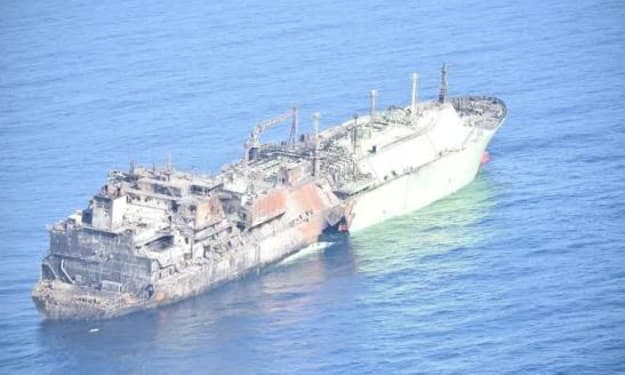
A tanker belonging to a fleet associated with the prominent Greek shipping group Angelicoussis Group was reportedly struck by what authorities believe may have been a missile or drone while navigating the Black Sea, sparking renewed concerns over the safety of commercial shipping routes in the increasingly tense maritime region. Maritime security sources said the incident occurred during routine transit through international waters, where merchant vessels continue to operate despite the lingering security risks tied to the regional conflict. Initial reports suggest the ship sustained damage but remained afloat, and emergency response procedures were quickly initiated by the vessel’s crew. Explosion at Sea According to shipping monitors and maritime intelligence firms, the tanker’s crew reported a sudden explosion near the vessel’s hull, followed by alarms indicating possible structural damage. Early assessments indicated that the blast could have been caused either by a missile fragment or an aerial drone strike, though investigators are still working to confirm the exact source of the attack. The tanker, managed by a subsidiary within the Angelicoussis shipping network, was reportedly carrying cargo when the incident occurred. Fortunately, no immediate reports of fatalities were released, although some crew members were said to have sustained minor injuries during the explosion and the subsequent emergency response onboard. Authorities in the region were alerted shortly after the event, and nearby vessels reportedly altered their routes to maintain a safe distance from the damaged ship while rescue coordination efforts began. Rising Maritime Risks The attack highlights the continued volatility affecting maritime traffic in the Black Sea since the outbreak of the Russian invasion of Ukraine in 2022. Although some shipping activity has gradually resumed, the area remains one of the world’s most closely monitored maritime corridors due to military operations, mines, and drone warfare. Commercial vessels traveling through the Black Sea face a complex risk environment that includes naval patrols, aerial surveillance, and the potential presence of unmanned attack systems. Maritime insurers have repeatedly warned that merchant ships operating in the region must maintain heightened vigilance and adhere to strict security protocols. Industry analysts note that tankers and bulk carriers are particularly vulnerable because of their large size and relatively slow maneuverability, making them easier targets in contested waters. Greek Shipping Industry on Alert The Angelicoussis family controls one of the largest privately owned shipping fleets in the world. Its companies operate hundreds of vessels across multiple sectors, including crude oil tankers, liquefied natural gas carriers, and bulk cargo ships. News of the strike quickly spread across the global shipping industry, prompting concerns among operators whose vessels regularly traverse the Black Sea to transport grain, oil products, and other commodities. Greek shipping firms, which collectively manage one of the largest merchant fleets worldwide, are closely monitoring developments. Executives within the sector warned that repeated attacks on merchant vessels could significantly disrupt maritime trade routes in the region. If threats escalate further, insurers may increase war-risk premiums or impose stricter operating conditions on ships entering the Black Sea. Crew Safety and Emergency Response Following the explosion, the tanker’s crew reportedly implemented standard maritime emergency procedures, including damage assessment and communication with nearby vessels and coastal authorities. Maritime safety experts say such protocols are designed to stabilize vessels after attacks or collisions and prevent further harm. Support ships and emergency response teams were reportedly dispatched to assist the damaged tanker, ensuring it could be stabilized and escorted to a safe harbor for inspection and repairs. Early reports suggest the vessel’s propulsion and navigation systems remained functional despite the blast. Crew members were also evaluated for injuries, with medical assistance provided where necessary. Strategic Implications Security analysts say the incident underscores the growing role of drones and precision weapons in modern maritime conflict. The use of relatively inexpensive unmanned systems has allowed both state and non-state actors to threaten large commercial vessels without deploying traditional naval forces. The Black Sea has increasingly become a testing ground for such tactics. Drone strikes on ports, ships, and offshore infrastructure have become more common over the past two years as the conflict has evolved. This development presents a significant challenge for commercial shipping operators, who must navigate waters where advanced military technologies may be deployed without warning. Trade Routes at Risk The Black Sea remains a crucial corridor for global trade, particularly for energy shipments and agricultural exports originating from Eastern Europe and surrounding regions. Any disruption to shipping in the area could have ripple effects across international markets. Energy traders and commodity analysts are closely watching developments following the tanker incident. Although a single attack may not immediately disrupt trade flows, repeated incidents could deter shipping companies from operating in the region. For now, maritime authorities and shipping firms are focusing on ensuring the safety of crews and stabilizing the affected vessel. Investigations into the cause of the strike are ongoing, and additional details are expected to emerge in the coming days. The incident serves as a stark reminder that, even years after the outbreak of conflict in the region, commercial vessels operating in the Black Sea continue to face unpredictable and potentially dangerous conditions.
By Fiaz Ahmed about 13 hours ago in The Swamp
Why Didn't Anyone Tell Us
Men, move along. This is not for you. This is for the women. I was forty-five when I began menopause. It is pretty young for that to be going on in a woman’s life, but I had undiagnosed PCOS, my entire life. Thank you to all the gynecologists I had seen my entire life. That in itself should encourage women to keep seeking second opinions, especially when you are not getting correct answers or any at all.
By Alexandra Grant4 days ago in Humans



Comments
There are no comments for this story
Be the first to respond and start the conversation.