
Imran Khan: From Cricket Legend to Political Icon
A Career That Defined Pakistan’s Cricket History

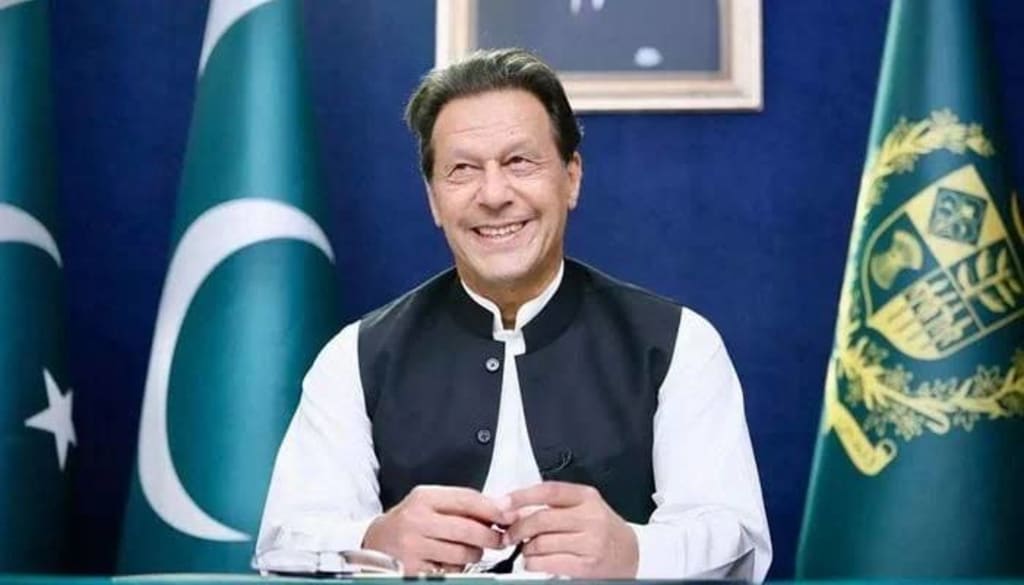
The Rise of a Cricket Hero
Imran Khan’s name is known across the world — not only in Pakistan but in every nation that follows cricket and global politics. Born on October 5, 1952, in Lahore, Imran was raised in an educated and well-respected family. From a young age, he was passionate about sports, especially cricket, which would later make him a household name.
Imran attended Aitchison College and later Oxford University, where he studied philosophy, politics, and economics. But more than academics, it was cricket that defined his youth. His natural leadership, determination, and talent soon made him one of the most admired players in the sport.
A Career That Defined Pakistan’s Cricket History
Imran Khan made his debut for Pakistan’s national cricket team in 1971. Over two decades, he became one of the greatest all-rounders in cricket history. His bowling was fast and fierce, his batting confident and strategic, and his leadership unmatched.
The defining moment of his sporting career came in 1992, when he captained Pakistan to its first-ever Cricket World Cup victory. That triumph wasn’t just a sporting achievement — it was a moment of national pride. Millions of Pakistanis saw in him a hero who united a country divided by politics and struggle.
Imran’s calm leadership under pressure made him more than a captain; he became a symbol of hope and resilience. After his retirement from cricket, he was celebrated as one of the finest captains in the game’s history.
From Stadium to State: Entering Politics
After leaving cricket, Imran Khan could have easily lived a quiet, comfortable life. Instead, he chose a path that was far more challenging — politics. In 1996, he founded his own political party, the Pakistan Tehreek-e-Insaf (PTI), meaning “Movement for Justice.”
At first, his political journey was difficult. Many doubted his ability to succeed in politics. PTI struggled to win seats, and critics saw him as an idealist without real influence. But Imran was persistent. His image as a clean, honest leader appealed to a generation tired of corruption and inequality.
By the mid-2010s, his message began to gain momentum. The youth of Pakistan saw him as a reformer who could challenge the traditional political elite. His rallies filled stadiums once again — this time, not for cricket, but for change.
Becoming the Prime Minister
In 2018, after more than two decades of political struggle, Imran Khan achieved his biggest political victory when PTI won the national elections, making him the 22nd Prime Minister of Pakistan.
As Prime Minister, Imran promised to create a “Naya Pakistan” — a New Pakistan based on justice, honesty, and equality. His government focused on welfare projects, anti-corruption reforms, and rebuilding the economy. He launched the Ehsaas Program, a large-scale social safety initiative for low-income families, and worked on improving healthcare and education systems.
On the international stage, Imran Khan called for peace in South Asia and raised awareness of global issues like climate change and Islamophobia. His speeches at the United Nations gained global attention for their directness and passion.
Challenges and Controversies
However, Imran’s time in office was not without challenges. The Pakistani economy faced high inflation, debt, and political opposition. Some criticized his government for struggling to deliver on promises of reform and stability.
In 2022, after losing the support of key political allies, Imran Khan was removed from office through a parliamentary vote of no confidence. It was a dramatic and emotional moment in Pakistan’s political history.
Even after his removal, Imran remained one of the country’s most influential figures. He continued to lead massive public rallies, calling for early elections and government accountability. His relationship with the military establishment and judiciary became central to Pakistan’s political debates.
A Global Personality Beyond Politics
Imran Khan’s life cannot be defined by one title — he is an athlete, philanthropist, and leader. In addition to cricket and politics, he has also made major contributions to charity.
In memory of his mother, who died of cancer, he founded the Shaukat Khanum Memorial Cancer Hospital in Lahore, which provides free treatment to thousands of patients. He also established Namal University to give underprivileged students access to higher education.
These initiatives have earned him global respect as a humanitarian who uses his fame and influence for positive change.
Legacy and Influence
Whether one supports or criticizes him, Imran Khan remains a symbol of perseverance. His journey from cricket fields to the highest political office shows how determination and vision can transform lives and even nations.
His life story continues to inspire millions across the world. For Pakistanis, he is not just a former Prime Minister or a cricket legend — he is a reminder that leadership can come from courage, not privilege.
Conclusion: A Life Beyond Boundaries
Imran Khan’s story is one of ambition, challenges, and transformation. He conquered the world of sports, redefined charity work in Pakistan, and rose to the top of the political ladder. Despite facing controversy and conflict, his influence remains undeniable.
From the cricket pitch to the corridors of power, Imran Khan’s legacy continues to shape Pakistan’s identity. His life stands as a testament to resilience — a reminder that true leadership often comes from those who dare to dream beyond their limits.
---
✅ Suggested Community on Vocal Media:
This article fits best in the “Humans” community — it focuses on leadership, personality, and human stories of resilience and ambition.
About the Creator
Fiaz Ahmed
I am Fiaz Ahmed. I am a passionate writer. I love covering trending topics and breaking news. With a sharp eye for what’s happening around the world, and crafts timely and engaging stories that keep readers informed and updated.
Keep reading
More stories from Fiaz Ahmed and writers in The Swamp and other communities.
BBC Strictly Vote: How Fans Shape the Dance Floor
Every autumn, millions of viewers across the United Kingdom tune in to watch one of the BBC’s most beloved shows: Strictly Come Dancing. The glittering costumes, dazzling choreography, and star-studded performances make it a highlight of the television season. But there is one element that makes Strictly unique—the audience vote. Known as the BBC Strictly vote, it gives viewers the power to decide who stays on the dance floor and who faces elimination.
By Fiaz Ahmed 5 months ago in The Swamp
The Forsyth House Fire
Since 1851, Forsyth House has stood on the corner of Union Street and Gordon Street in the heart of Glasgow. Its iconic, or was... because on Sunday 8th of March, 2026, a fire broke out in a small, seemingly un-named shop in the building and tore all that history down. As I write, the rubble is still unsettled and the street is still blocked off. Central Station is quiet on the upper level, and around 30 small businesses have quite literally gone up in smoke.
By S. A. Crawford2 days ago in The Swamp
The First Rainbow Baby
Pitter-patter, pitter-patter. The rain fell in rhythmic splatters, slowly slowing, but still constant. Mira rolled onto her side pulling the blanket tight against her ears, but still she could hear chitter-chatter and scurrying feet of the creatures that refused to sleep in the lower decks.
By A. J. Schoenfeld2 days ago in Fiction




Comments
There are no comments for this story
Be the first to respond and start the conversation.