
IDF Discusses Disarming Hamas, Opening Rafah Border Crossing: What’s Next?
A Pivotal Moment in the Gaza Conflict
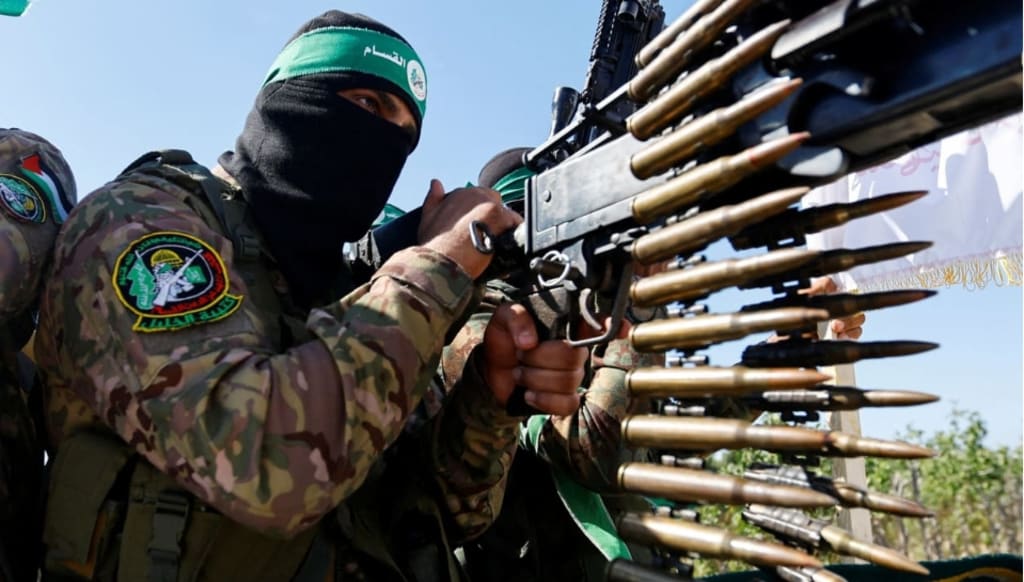
As the war in Gaza grinds on, a new phase of discussion has emerged from Israeli military and political circles: the potential disarmament of Hamas and the opening of the Rafah Border Crossing between Gaza and Egypt. These developments, still largely at the level of strategic debate, signal a possible shift from full-scale military operations toward post-conflict planning. The question dominating regional and international conversations is simple but profound: what happens next if Hamas is disarmed and Rafah reopens?
The answers carry serious implications for Gaza’s future, Israel’s security, Egypt’s role, and broader Middle Eastern stability.
IDF’s Objective: From Military Defeat to Disarmament
The Israel Defense Forces (IDF) have repeatedly stated that their primary objective in Gaza is to eliminate Hamas’ military and governing capabilities. While battlefield operations have targeted leadership figures, weapons stockpiles, and tunnel networks, disarmament represents a far more complex challenge.
Disarming Hamas would require more than destroying arms. It would involve dismantling command structures, preventing rearmament, and ensuring no parallel militant force can re-emerge under a different name. Historically, militant groups in Gaza have shown resilience, adapting quickly after major military blows. This raises concerns that partial disarmament may create a power vacuum rather than lasting stability.
For the IDF, the discussion signals recognition that military pressure alone cannot secure long-term outcomes without a viable political and security framework to follow.
Rafah Border Crossing: A Humanitarian and Strategic Pressure Point
The Rafah Crossing, Gaza’s main gateway to the outside world not controlled by Israel, has long been a flashpoint. Its closure has deepened Gaza’s humanitarian crisis, while its opening raises fears of weapons smuggling and militant movement.
Israeli officials have indicated that any reopening of Rafah would need strict security arrangements, potentially involving Egypt, international monitors, or a restructured Palestinian authority. For Egypt, Rafah is both a humanitarian responsibility and a national security concern, particularly due to instability in the Sinai region.
If Rafah reopens under a new framework, it could allow:
Increased humanitarian aid and medical evacuations
Civilian movement under controlled conditions
The beginning of Gaza’s economic revival
However, without robust oversight, Israel fears Rafah could once again become a conduit for arms and financing to militant groups.
The Role of Egypt and International Actors
Egypt sits at the center of the Rafah equation. Cairo has historically mediated ceasefires and prisoner exchanges, and its cooperation is essential for any post-war arrangement. Egyptian officials have emphasized that they do not want responsibility for Gaza’s internal governance, but they also cannot ignore the humanitarian collapse on their border.
Meanwhile, international actors — including the United States, the United Nations, and the European Union — are pushing for a solution that combines security guarantees for Israel with a credible political pathway for Palestinians. Discussions increasingly reference:
A reformed Palestinian Authority role in Gaza
International peacekeeping or monitoring forces
Long-term reconstruction funds tied to demilitarization
Yet consensus remains elusive, especially on who enforces disarmament and who governs Gaza afterward.
What Happens to Gaza After Hamas?
One of the most pressing uncertainties is governance in a post-Hamas Gaza. Hamas has ruled the territory since 2007, and removing it leaves a political vacuum that cannot be filled overnight.
Several scenarios are being debated:
Return of the Palestinian Authority (PA): Supported by Western powers but viewed skeptically by many Gazans.
International transitional administration: Logistically difficult and politically sensitive.
Local technocratic governance: Unclear whether it could survive without armed backing.
Without a credible governing authority, any security gains achieved through disarmament could quickly unravel.
Risks of Escalation and Fragmentation
Disarming Hamas is not a single event but a prolonged process. During such transitions, splinter groups or rival factions often emerge, sometimes more radical and less controllable. Gaza already hosts smaller militant organizations that could exploit instability.
There is also the regional dimension. Hezbollah in Lebanon, Iran, and other regional actors are closely watching developments. Any perceived failure or imbalance could trigger wider escalation, particularly if Gaza descends into chaos rather than stability.
Humanitarian Stakes Remain Enormous
For Gaza’s civilian population, the stakes could not be higher. Years of blockade, repeated wars, and economic collapse have left millions dependent on aid. The opening of Rafah, even partially, could ease suffering — but only if it is sustained and accompanied by reconstruction.
International donors have made it clear that rebuilding Gaza depends on security and demilitarization, creating a direct link between humanitarian relief and political outcomes. This conditionality adds urgency but also complexity to every decision.
What’s Next? A Fragile Crossroads
The IDF’s discussions around disarming Hamas and opening the Rafah Border Crossing suggest the conflict may be approaching a strategic crossroads. Military action alone cannot define Gaza’s future, but neither can diplomatic plans without security guarantees.
What comes next will depend on:
The feasibility of enforcing disarmament
Egypt’s willingness to manage Rafah under new rules
International unity on post-war governance
The response of Gaza’s population and regional actors
Without careful coordination, the transition risks replacing one crisis with another. With it, there remains a narrow — but critical — opportunity to move from endless war toward a fragile form of stability.
About the Creator
Not Just For Clean Up: A History Of The MCU's Department of Damage Control
Initially an organisation that seemed to exist to help the heroes of the Marvel Cinematic Universe, from Phase Four onwards, the Department of Damage Control has shifted into a more antagonistic role. Most recently seen in the Wonder Man series, the current incarnation of Damage Control seems to target superpowered individuals, regardless of whether that person poses an active or intentional threat.
By Kristy Anderson2 days ago in Geeks



Comments
There are no comments for this story
Be the first to respond and start the conversation.