
How To Judge Figures Like Christopher Columbus
Should we view people based on the current era or theirs?

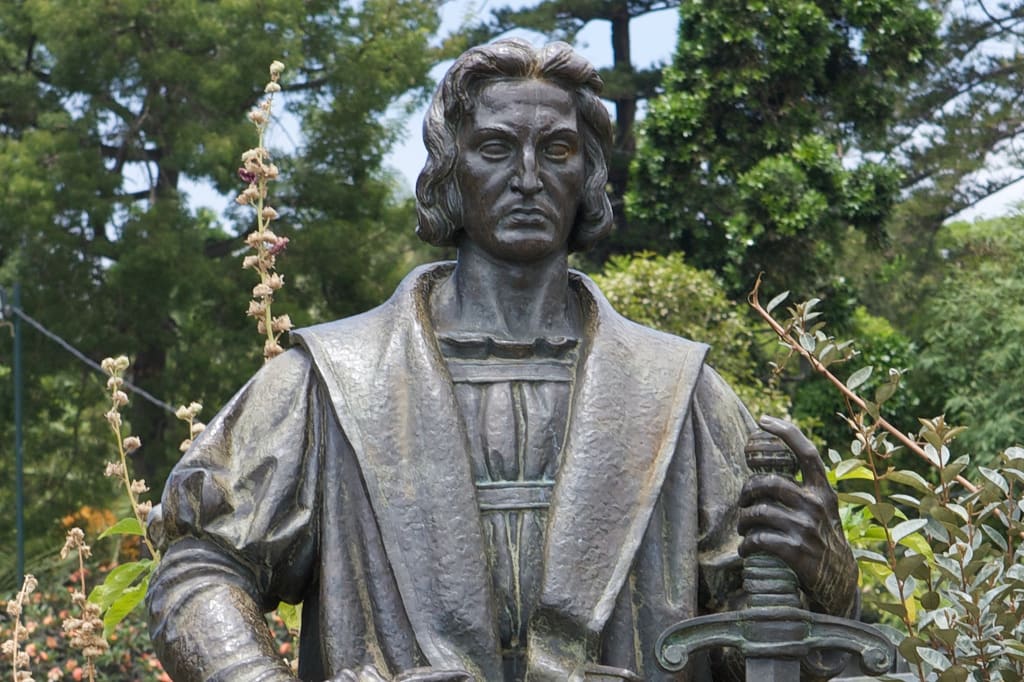
To what degree do we judge the individuals that founded and/or aided in the development and success of our country? Christopher Columbus has occupied a position of scrutiny in the limelight of contemporary America, with much of the discussion revolving around the moral compass of him and his merry group of bandits. The arguments presented on both sides depict the triumphs of the Europeans with their alleged, proxy discovery of America, and those that believe that the cruelty that took place as a result of Columbus, is the most pivotal aspect that should be remembered. Altering the stories to fit into the mollycoddled mold created by the American education system allowed for omissions and errors in textbooks. With the understanding that the majority of sources are biased and that there are facts that we don’t have, how do we judge a miscellaneous figure like the “discoverer” of America?
The primary argument against giving credit to Columbus is that there already were inhabitants living on the land. In addition, claims of previous discoveries of America by various explorers also demand, allegedly deserved, recognition. Some of these tales include Native Americans, as well as, Norwegian Vikings that traveled to North America. As easy as it is to declare that the existence of people living in the Americas is the sole explanation as to why Columbus was not the first discoverer of America, which is accurate since he never actually set foot in North America, would not be correct. The people living in the Americas were not explorers but rather, nomads that traveled along the Bering Land Bridge when it connected Alaska and Siberia. As a result, these people should not attain credit since this was not as much a discovery as it was the movement of the pre-Clovis people just looking for a home before the split of the land. Furthermore, ascribing the Norwegian explorer, Leif Erikson, as the genuine ferreter of America is not as cookie-cutter clear as it may seem. The Norwick Viking discovered Canada but never set foot on the Americas. Without more knowledge and the lack of existing data about which individuals actually discovered America, the credit could go to the pilgrims that came in 1582.
On the grounds of the horrors that took place subsequent Columbus’ arrival, much of the information is also missing there, and the lack of correct blaming destroys an incredible man’s legacy. Some of the misinformation is related to the sources of the knowledge, and as proven by historians, the majority of what we know about Columbus, apart from his diary, comes from a man by the name of Francisco de Bobadilla, who was a Spaniard that hated Columbus and wanted his job as governor. He was sent to investigate complaints made in regard to Columbus made by Europeans that disliked the fact that he regarded the Natives in a favorable manner. Bobadilla investigated the claims by speaking to those individuals that filed them and without questioning Columbus, arrested him and sent him and his brothers back to Spain. As soon as that happened, Bobadilla claimed that his arrest made him governor and took up ruling Hispaniola. When the Queen and King found out about the lack of actual investigation, they freed Columbus, reinstated him as admiral, and sent a ship to arrest Bobadilla, who wrecked the ship and died. The use of information from Bobadilla is not factual because of his personal bias, rendering the information rather unbelievable.
Additionally, Columbus was not directly involved in the slave trade that everyone demands he was a part of. On his first voyage, when his ship was wrecked on the coast of Hispaniola, he founded a colony there to leave some men for which he would eventually return. When Columbus returned a year later expecting to see the 39 men he left, he instead saw a gory scene in which the Taino Indians massacred the settlement. As a result, he and his men went to war with the Tainos and took 500 as prisoners of war and sent them to Spain as a gift to Queen Isabella to show that their men hadn’t died in vain. Unimpressed, the Queen sent the Natives back and that’s where the “slave trading” ended.
Claims made that because of the fact that Europeans introduced the Native Americans to smallpox, that’s what makes them terrible people is erroneous because at the time with no explanation, the settlers believed that it was an act of God, which meant that the divine wanted them to conquer the land of the Natives. The idea that the conquering of the Americas is what causes people to turn their heads in shame because the Natives were such peaceful people is false. Native Americans did equally as much damage to one another as the Europeans did. They made enemies amongst one another, massacring entire tribes in Minnesota as well as other places because their spiritual leaders believed the land was given to them by the divine. If the Europeans followed the same moral compass of believing that conquering people and land was not a moral implication because of their spiritualism, why are the Natives not also judged by history as the bad guys?
Modern historians, fabricating elaborate myths based on precedent events, are the ones that should be judged for intentionally spreading a false narrative. The reason as to why Columbus is treated like a hero despite not having actually discovered America is because, in all actuality, he stimulated the Spanish Colonization of America as well as expanded knowledge to the rest of Europe. The fixation on the ostensible facts about Columbus’ crimes against humanity shroud his accomplishments and all the good he enabled. He sailed to enrich the country he represented as well as the world. All of history is based on the courage of discoverers, voyagers, and pilgrims for establishing colonies and creating the world we live in and enjoy now. His journey is one of bravery and wonder. The contentious questions based on inevitable outcomes of what eventually would have happened, if not by him then by others, opened the world to new possibilities. It is very easy to judge based on the presumed crimes and wrongdoings rather than focusing on the actual result of his expedition. History should judge individuals when the full facts of all events are candid and unprejudiced without the want to believe that death automatically means only the worst. Columbus should be judged based on the merits of what he achieved and not by the barbarity of those that followed him or that stemmed from his voyage.
About the Creator
Keep reading
More stories from writers in The Swamp and other communities.




Comments
There are no comments for this story
Be the first to respond and start the conversation.