
How Mike Johnson Plans to Beat the Deadline on a Government Shutdown
Speaker Johnson Outlines Strategic Moves to Keep the Government Open

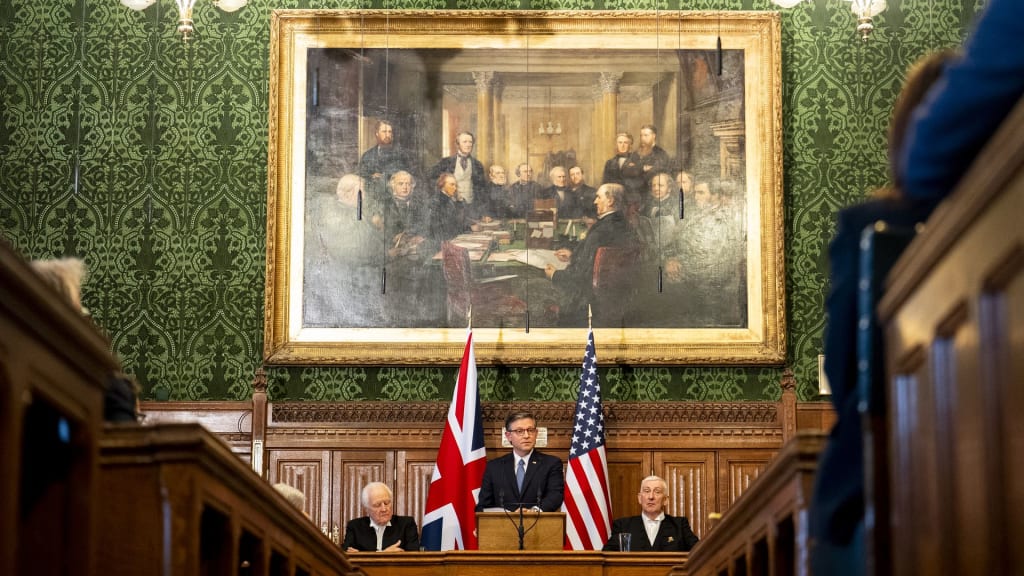
As the federal government approaches another potential shutdown, House Speaker Mike Johnson has emerged as a key figure working to prevent a lapse in funding. With the deadline looming, Johnson is navigating a delicate political landscape, balancing pressures from party factions, the White House, and congressional committees. His approach reflects both strategic negotiation and careful timing aimed at keeping essential government functions operational.
The threat of a government shutdown comes as Congress struggles to pass a spending bill before the current funding expires. If lawmakers fail to reach an agreement, federal employees could face furloughs, national parks could close, and vital services could be disrupted. Johnson, who has risen to prominence for his legislative experience and negotiation skills, recognizes the urgency of the situation and is reportedly employing multiple tactics to avoid a shutdown.
One of Johnson’s primary strategies involves building bipartisan support for a short-term funding measure, commonly known as a continuing resolution (CR). This temporary funding plan allows the government to operate while negotiations on a full-year budget continue. According to insiders, Johnson is actively engaging with Democratic leaders to identify areas of compromise, including funding priorities for defense, healthcare, and infrastructure programs.
At the same time, Johnson is working to manage expectations within his own party. Some conservative members of the House have expressed concerns over spending increases and want stricter fiscal controls attached to any funding bill. Johnson is attempting to reconcile these positions by proposing targeted cuts in certain programs while maintaining funding for high-priority areas, such as veterans’ services and national security. This balancing act is critical to securing the votes needed to pass the measure before the deadline.
Another element of Johnson’s plan focuses on procedural maneuvering within the House. By scheduling key votes strategically and using procedural tools to streamline debate, he hopes to expedite the passage of funding legislation. Lawmakers close to Johnson describe him as methodical and precise, emphasizing that careful timing and coordination with committee chairs are essential components of his approach.
The Speaker is also closely coordinating with the Senate and the White House. While the House often moves first, a shutdown can only be avoided if both chambers agree on the spending measure. Johnson has reportedly held multiple phone calls with Senate leaders, ensuring that both sides are aligned on priorities and deadlines. Coordination with the White House adds another layer of complexity, as the executive branch has its own policy goals and must sign any spending bill into law.
Johnson’s efforts are not limited to internal government discussions. Public messaging plays a crucial role in shaping the narrative and reducing political tensions. By emphasizing the real-world impacts of a shutdown—such as delayed paychecks for federal workers and interruptions to social programs—Johnson seeks to create public pressure that encourages lawmakers to compromise. Analysts suggest that this approach can be effective in motivating reluctant members of Congress to prioritize government continuity over political posturing.
Political experts also note that Johnson’s plan reflects lessons learned from previous shutdown threats. Past experiences have shown that even a short lapse in government funding can create uncertainty in financial markets, slow down public services, and damage public trust in Congress. By taking proactive steps and engaging multiple stakeholders early, Johnson aims to prevent a repeat of these consequences while demonstrating leadership under pressure.
Despite his careful planning, challenges remain. Deep partisan divisions, disagreements over spending priorities, and last-minute amendments can all threaten the timely passage of a funding bill. Johnson’s ability to navigate these obstacles will be critical in determining whether a shutdown is avoided or if the government faces temporary closures that could affect millions of Americans.
Observers also highlight that Johnson’s approach may set a precedent for how future Speaker-led negotiations are conducted during budget crises. By blending negotiation, procedural strategy, and public messaging, he offers a model for avoiding shutdowns while maintaining legislative credibility. This method underscores the importance of leadership, coalition-building, and strategic foresight in the complex world of federal budgeting.
In conclusion, Speaker Mike Johnson is taking decisive steps to beat the looming government shutdown deadline. Through a combination of bipartisan negotiation, party management, procedural strategy, and public engagement, he aims to secure funding and maintain government operations without interruption. While obstacles remain, Johnson’s proactive approach reflects a commitment to governance and highlights the crucial role of congressional leadership in times of fiscal uncertainty. The coming days will test his ability to unify lawmakers and deliver a solution that prevents disruption to essential services, demonstrating the high-stakes nature of political negotiation in Washington, D.C.
About the Creator
Asad Ali
I'm Asad Ali, a passionate blogger with 3 years of experience creating engaging and informative content across various niches. I specialize in crafting SEO-friendly articles that drive traffic and deliver value to readers.
The Forsyth House Fire
Since 1851, Forsyth House has stood on the corner of Union Street and Gordon Street in the heart of Glasgow. Its iconic, or was... because on Sunday 8th of March, 2026, a fire broke out in a small, seemingly un-named shop in the building and tore all that history down. As I write, the rubble is still unsettled and the street is still blocked off. Central Station is quiet on the upper level, and around 30 small businesses have quite literally gone up in smoke.
By S. A. Crawford3 days ago in The Swamp
Microsoft's Purposeful Marketing Deception About AI's Ability To Beat Physicians In Diagnosis
When you look at the world of scientific research... If you are not careful... You will be fooled into believing things that are not actually supported by the data.
By Dr. Cody Dakota Wooten, DFM, DHM, DAS (hc)a day ago in Longevity




Comments
There are no comments for this story
Be the first to respond and start the conversation.