
How four years of Ukraine war have changed Russia
From battlefield mobilization to economic isolation, the conflict has reshaped Russian society, politics, and its place in the world

Four years after the full-scale invasion of Ukraine began in February 2022, Russia is not the same country it was when its troops first crossed the border. What the Kremlin described as a short “special military operation” has become a grinding, transformative conflict. The war has altered Russia’s political system, economy, social fabric, culture, and global standing in ways that will reverberate for decades.
A Political System Hardened by War
When the invasion began under Vladimir Putin, Russia was already a tightly managed political system. Opposition figures were marginalized, independent media constrained, and elections tightly controlled. Four years of war have accelerated this trajectory.
New laws criminalized criticism of the military, expanded definitions of “extremism,” and increased penalties for dissent. Independent outlets were shuttered or forced abroad. The political vocabulary shifted: compromise became weakness, neutrality became betrayal. Public space narrowed as patriotic symbolism and wartime rhetoric filled television, schools, and cultural institutions.
The war has also elevated the role of security services and the military establishment in governance. Veterans of the conflict have been integrated into regional administrations and state corporations, reinforcing a system where loyalty and battlefield credentials carry increasing weight. What began as centralized power has evolved into a more openly militarized state structure.
An Economy Turned East and Inward
Before 2022, Russia’s economy was deeply intertwined with Europe. Energy exports flowed westward; Western brands filled shopping malls; global finance linked Moscow to London and New York. Sanctions following the invasion changed that equation dramatically.
Western companies exited en masse. Access to foreign technology, capital markets, and consumer goods shrank. In response, Russia pivoted toward Asia, deepening trade with China, India, and other non-Western partners. Energy exports were rerouted, often at discounted prices. Parallel import schemes emerged to circumvent trade restrictions.
The state took on a larger economic role. Defense spending surged, propping up industrial output and employment in certain sectors. Military factories expanded, while civilian industries struggled with labor shortages and limited access to advanced components. Over time, the economy became more insulated but also more dependent on war production.
Inflation, currency volatility, and uneven regional impacts reshaped daily life. Major cities adapted more easily; peripheral regions often bore heavier burdens. While macroeconomic collapse did not materialize as some predicted, the structure of the economy shifted decisively toward self-reliance, state control, and strategic partnerships outside the Western sphere.
Society Under Mobilization
Perhaps the most profound changes have been social. The partial mobilization announced in 2022 marked a turning point. For the first time in decades, large numbers of Russian families were directly touched by war.
Hundreds of thousands of men were called up or volunteered. Some citizens left the country to avoid conscription, contributing to a wave of emigration that included IT specialists, journalists, artists, and entrepreneurs. This exodus reshaped the professional class and accelerated a “brain drain” that may have long-term consequences.
At the same time, state media and educational reforms intensified patriotic messaging. School curricula incorporated new history modules framing the war as a defensive struggle against Western encroachment. Public events, from concerts to sporting matches, featured military symbolism. The narrative of national resilience became central to identity.
Yet beneath official unity, Russian society has grown more complex. For some, the war fostered solidarity and pride; for others, it brought anxiety, grief, or quiet dissent. Families navigated loss, economic uncertainty, and the moral weight of a prolonged conflict. Conversations that once occurred openly migrated into private spaces or encrypted channels.
Culture and Information in a Closed Loop
Russia’s cultural sphere has also transformed. Artists who criticized the war often found themselves labeled “foreign agents” or faced professional bans. Others adapted, aligning their work with patriotic themes or avoiding politics altogether.
The digital landscape shifted as well. Western social media platforms were restricted or blocked, while domestic alternatives gained prominence. Information flows became more insular. State narratives dominated television, still the primary news source for many Russians, while online communities fractured along ideological lines.
International cultural exchange narrowed. Film festivals, academic conferences, and sports competitions became arenas of geopolitical tension. Russian athletes competed under neutral flags; scholars faced visa barriers; joint research projects were suspended. The symbolic separation from Europe deepened alongside economic decoupling.
A New Global Posture
On the world stage, Russia’s position has changed dramatically. Relations with the European Union deteriorated to historic lows. Diplomatic ties were downgraded; embassies reduced staff; travel became more complicated.
North Atlantic Treaty Organization expanded its presence in Eastern Europe, reinforcing the very security architecture Moscow had long opposed. Meanwhile, Russia sought stronger alignment with non-Western blocs and forums, emphasizing a multipolar world order.
Energy diplomacy evolved as Europe reduced dependence on Russian gas, accelerating diversification efforts. Russia, in turn, intensified outreach to Asian markets. The geopolitical map of trade, security partnerships, and diplomatic engagement shifted accordingly.
Yet Russia did not become isolated in absolute terms. Many countries in Africa, Latin America, and Asia maintained pragmatic relations, balancing Western pressure with their own strategic interests. The result has been a more divided global landscape, with Russia firmly positioned outside the Western-led order but still active in alternative networks.
Generational and Psychological Impact
Four years of war have left a psychological imprint. Children have grown up in a climate of sanctions and mobilization. Young adults have faced choices between emigration and adaptation. Veterans return with experiences that will shape communities and politics for years.
The normalization of war language and imagery has altered public consciousness. Commemorations, memorials, and new rituals of remembrance have become part of civic life. For some, the war represents sacrifice and sovereignty; for others, it marks lost opportunities and international estrangement.
History suggests that prolonged conflicts reshape national identity. In Russia’s case, the war has reinforced themes of resilience, confrontation with the West, and centralized authority. Whether these themes endure or evolve will depend on future political developments and the eventual resolution of the conflict.
An Uncertain Future
Four years on, Russia stands transformed. Its political system is more rigid, its economy more state-driven, its society more militarized, and its global relationships more polarized. The war has not only redrawn borders and battle lines; it has redefined the country’s internal dynamics and external orientation.
The long-term consequences remain uncertain. Wars often produce outcomes few anticipate at the outset. What is clear is that the Russia of today is shaped profoundly by the choices made in 2022 and the years that followed. The conflict has become not just a foreign policy venture, but a defining chapter in the nation’s modern history — one that continues to unfold.
About the Creator
A Gathering of Evil Bosses
“I’m the queen of chin jutting while I smooth my hair, attacking, insulting, and deflecting to protect my appointer.” “Oh, please, Blondi, my hair is curled, highlighted, and longer than yours. I feature television commercials telling immigrants that we will give them a free plane ride home, and if they voluntarily turn themselves in, they will be allowed to legally apply for re-entry. It runs everywhere, and I look good in it! You can’t compete because of your blond hair. Mine is nicer, and my lips are prettier than yours.”
By Andrea Corwin 5 days ago in The Swamp
Macquarie-Led Group to Buy Qube Holdings for $8.3 Billion
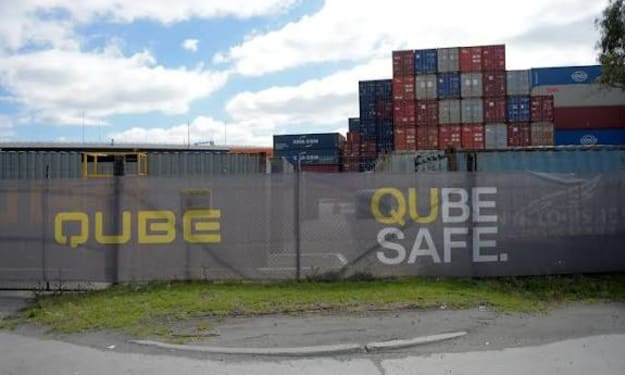
A consortium led by Macquarie Group has announced plans to acquire Qube Holdings in a deal valued at approximately $8.3 billion AUD, marking one of the largest transactions in the Australian logistics and infrastructure sector in recent years. The agreement, which is subject to regulatory approval and shareholder consent, represents a significant consolidation in the logistics and port operations market. Transaction Overview Under the terms of the proposed deal, the Macquarie-led group, which includes a mix of institutional investors and private equity partners, will acquire all outstanding shares of Qube Holdings. The deal structure combines cash payments with potential equity stakes, ensuring that Qube shareholders are offered a premium over recent trading prices. The transaction aims to leverage Macquarie’s global infrastructure expertise while enhancing Qube’s strategic growth prospects. Qube Holdings, known for its integrated logistics and port operations across Australia, has seen steady growth over the past decade. The company operates container terminals, bulk handling facilities, and rail logistics networks, providing a critical backbone to Australia’s import and export supply chains. Analysts note that the acquisition will allow Qube to expand its operational capabilities and capitalize on growing trade volumes, particularly in containerized goods and bulk commodities. Strategic Rationale The acquisition reflects Macquarie’s continued strategy of investing in infrastructure and logistics assets with long-term growth potential. By taking control of Qube, the group gains access to a diversified portfolio of ports and transport networks, enabling operational synergies and economies of scale. Industry experts highlight several strategic benefits: Operational Integration: Combining Qube’s logistics platforms with Macquarie’s infrastructure management could streamline operations, reduce costs, and enhance service delivery. Market Expansion: The deal positions the consortium to participate in growing domestic and international trade corridors. Financial Optimization: Macquarie’s financial expertise is expected to strengthen Qube’s capital structure and support future investment in technology and automation. Market and Shareholder Implications Qube’s shareholders are likely to benefit from a significant premium over the company’s recent market valuation, reflecting both the competitive nature of the bid and Qube’s strategic importance. Financial advisors are assisting in ensuring compliance with Australian corporate regulations, including shareholder approval processes, foreign investment review board (FIRB) clearance, and other regulatory requirements. Market analysts predict that the acquisition may trigger interest from other infrastructure investors, as Qube’s scale and integrated logistics operations make it a sought-after asset. The transaction could also influence market valuations for comparable logistics and infrastructure companies operating in Australia and the broader Asia-Pacific region. Industry Reactions The deal has garnered attention from industry stakeholders, with logistics experts emphasizing the long-term benefits for supply chain efficiency. Port operators, shipping lines, and freight forwarders may see improved coordination and investment in state-of-the-art handling and storage facilities. Regulatory authorities are expected to scrutinize the deal for competition implications, ensuring that the acquisition does not lead to monopolistic behavior in Australian port and logistics operations. Analysts note that Macquarie’s prior experience in infrastructure investments positions the group to navigate these regulatory hurdles successfully. Outlook and Next Steps The acquisition process is expected to take several months to complete. Key milestones include shareholder meetings, regulatory approvals, and finalization of financing arrangements. Both Macquarie and Qube have committed to keeping stakeholders informed throughout the process, emphasizing continuity in Qube’s operations and employee retention. Once completed, the deal is anticipated to reshape the Australian logistics landscape, combining Qube’s operational capabilities with Macquarie’s financial and strategic expertise. This consolidation reflects a broader trend of investment in critical infrastructure assets globally, where private capital plays an increasing role in managing essential logistics networks. Conclusion The proposed $8.3 billion acquisition of Qube Holdings by the Macquarie-led consortium represents a major strategic and financial milestone in Australia’s infrastructure sector. By combining operational expertise, capital resources, and strategic vision, the deal is poised to enhance the efficiency, capacity, and resilience of Australia’s logistics and port networks, while delivering value to shareholders and strengthening the country’s position in global trade.
By Fiaz Ahmed 7 days ago in The Swamp
Veil of Subconscious Awakening
Images slide behind my eyelids like film cadres, bursting with meanings. In one moment, I’m speeding down the highway, making the speedometer swing wildly like a frantic pendulum. The next moment, I’m plunging from a falling plane, slowly crashing earthward. At home, I meet black cat’s green, googly eyes staring at me from the cavernous hollowness of the kitchen. When I turn for a moment, it disappears, and all I can see is a pair of blue suede shoes set up against the wall. I pick them up and put them on. When I glimpse at them again, they’ve become black as night, making me blink and flinch.
By Moon Desertabout 23 hours ago in Fiction



Comments
There are no comments for this story
Be the first to respond and start the conversation.