
How Charlie Kirk’s Murder Influenced Zohran Mamdani’s Victory
The shocking killing of a conservative activist sent ripples through America’s political landscape — but how did it impact progressive candidates like Zohran Mamdani?

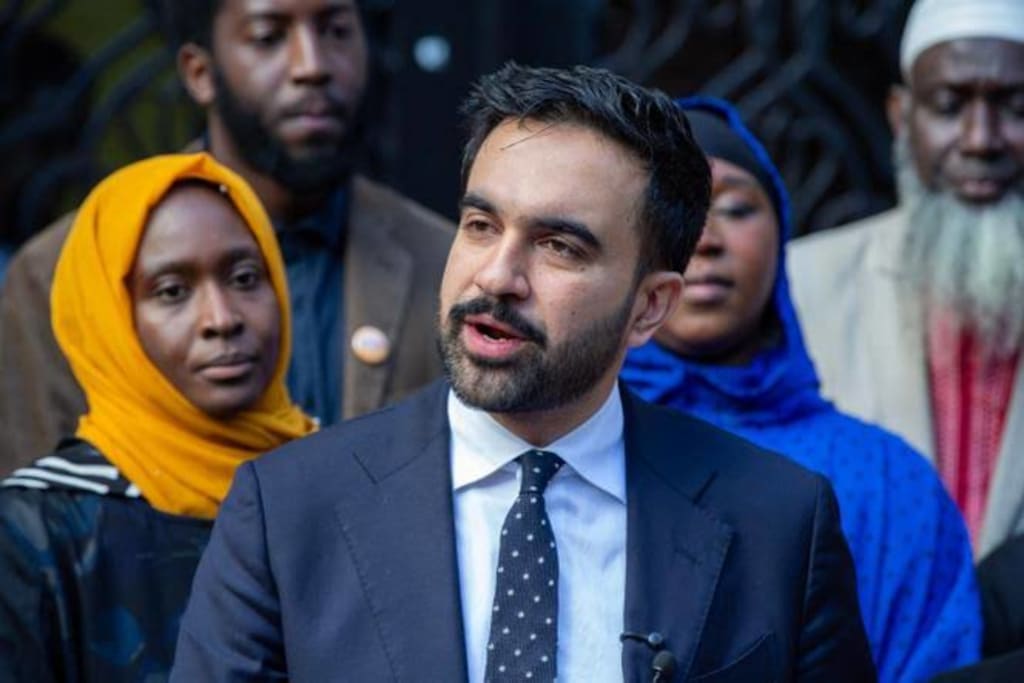
In a year already charged with political tension, the murder of right-wing commentator Charlie Kirk became one of the most polarizing stories in the United States. While investigators continue to uncover the motives behind his killing, the ripple effects are being felt far beyond the crime scene — reaching even into the world of progressive politics, including the recent victory of Zohran Mamdani, a New York State Assembly member known for his bold socialist platform.
As emotions flared and political narratives clashed, many began asking the question: Did the tragic death of a conservative figure like Kirk indirectly shape the political momentum behind figures like Mamdani?
A Nation on Edge
Charlie Kirk was a highly visible and controversial political voice. As the founder of Turning Point USA, he built a massive following among conservative youth, often engaging in fiery debates over culture, race, and national identity. His murder sent shockwaves through political circles, with both supporters and critics reacting strongly online.
Social media quickly turned into a battleground — conservatives decried the attack as politically motivated, while progressives warned against turning tragedy into propaganda.
At the same time, across the political aisle, Zohran Mamdani, a young and articulate progressive of Ugandan-Indian heritage, was quietly running a campaign built on empathy, housing rights, and economic justice.
The national mood of polarization — intensified by Kirk’s death — became a backdrop against which Mamdani’s campaign thrived.
The Backlash That Backfired
In the aftermath of Kirk’s killing, conservative media outlets amplified their message that progressive rhetoric was fueling division and hatred. But ironically, that very argument seemed to energize the left.
Voters began to view progressive candidates as the ones calling for unity, mental health awareness, and systemic reform — in contrast to what they saw as fear-based politics from the right.
For Mamdani, this created a window of opportunity. His consistent message of “justice for all, not just the privileged few” resonated even more in an atmosphere clouded by violence and suspicion.
Political analysts noted that the backlash against progressive ideals may have actually helped solidify voter support for those very ideals.
Zohran Mamdani’s Approach: From Local to Global Impact
Zohran Mamdani, born in Kampala, Uganda, and raised in New York City, has always represented the intersection of identity, activism, and politics. A member of the Democratic Socialists of America, he has advocated for affordable housing, immigrant rights, and fair policing — issues that directly connect to working-class communities.
Following the emotional wave created by Kirk’s murder, Mamdani’s message stood out as calm, rational, and humane. Instead of exploiting the tragedy, he emphasized healing and collective understanding.
This tone contrasted sharply with the aggressive rhetoric dominating national media. To many voters, Mamdani appeared to be a refreshing alternative — a leader who believed in policy over polarization.
The Role of Digital Awareness
The murder of Charlie Kirk also reignited discussions about online radicalization, echo chambers, and the emotional toll of constant political warfare. In this climate, Mamdani’s campaign used digital platforms differently — focusing on storytelling, community voices, and grassroots engagement.
His team avoided reactionary content, instead sharing local stories of economic struggle and resilience. This strategy drew in younger voters disillusioned by the toxicity of online politics.
As one campaign volunteer put it, “We didn’t fight fire with fire — we fought fear with facts.”
The Irony of Tragedy
In politics, tragedy often becomes a tool — but not always in the way people expect. While conservatives used Kirk’s death to reinforce their cultural fears, progressives reframed the conversation around compassion, accountability, and the dangers of political extremism.
This reframing subtly strengthened candidates like Mamdani, who became symbols of the next generation of American leadership — diverse, socially conscious, and emotionally intelligent.
The tragedy underscored one of Mamdani’s key campaign points: that violence, whether physical or ideological, is a symptom of deeper systemic issues — inequality, anger, and alienation.
A Deeper Message for the Future
Zohran Mamdani’s electoral success, while grounded in local issues, also reflected a global political shift. Around the world, people are searching for leaders who can rise above division — those who offer hope rather than outrage.
Kirk’s death was a reminder of what happens when anger replaces dialogue. Mamdani’s victory, on the other hand, showcased what can happen when empathy and intelligence take center stage.
Though the two men stood on opposite ends of the political spectrum, their stories became unintentionally linked — one through tragedy, the other through triumph.
Conclusion: Politics Beyond Hate
The death of Charlie Kirk will remain a dark moment in America’s political memory. But its aftermath revealed a surprising truth — that even in a time of chaos and polarization, voices of compassion can still rise above the noise.
For Zohran Mamdani, his victory wasn’t just about winning votes; it was about redefining what leadership means in an age of division. His calm defiance against hatred proved that sometimes, the strongest response to violence isn’t vengeance — it’s vision.
About the Creator
Fiaz Ahmed
I am Fiaz Ahmed. I am a passionate writer. I love covering trending topics and breaking news. With a sharp eye for what’s happening around the world, and crafts timely and engaging stories that keep readers informed and updated.
Keep reading
More stories from Fiaz Ahmed and writers in The Swamp and other communities.
Thailand Extradites Owner of Myanmar Scam City to China
For years, the borderlands of Myanmar’s Shan State have been a lawless frontier — a place where power is negotiated through money, armed groups, and influence rather than through governments. But one of the most shocking stories to emerge from this region in recent times has been the rise and fall of a sprawling cybercrime hub known as a “scam city.”
By Fiaz Ahmed 2 months ago in The Swamp
Bethany Beyond the Jordan: The Sacred Place of Jesus’ Baptism
A Sacred Place Hidden in Plain Sight Along the eastern bank of the Jordan River, just a short distance from the Dead Sea, lies a place revered by millions of Christians around the world: Bethany Beyond the Jordan. Known in Arabic as Al-Maghtas, this site is widely recognized as the location where Jesus Christ was baptized by John the Baptist. Though modest in appearance, its spiritual weight is immense, making it one of the holiest places in Christianity. Unlike grand cathedrals or bustling pilgrimage cities, Bethany Beyond the Jordan offers something rare—silence, simplicity, and a powerful sense of sacred history. It is here, according to Christian tradition and strong archaeological evidence, that Jesus’ public ministry began. Biblical Roots of Bethany Beyond the Jordan The Gospel of John provides the clearest reference to this site, describing it as “Bethany beyond the Jordan, where John was baptizing.” For centuries, scholars debated the exact location of this biblical Bethany. Some believed it lay west of the river, while others argued for the eastern bank. Modern archaeology has largely settled the debate. Excavations in Jordan uncovered ancient baptism pools, churches, monasteries, and water systems dating back to the Roman and Byzantine periods—all pointing to this area as the original baptism site. Early Christian pilgrims also recorded journeys to this very location, strengthening its authenticity. John the Baptist and the Meaning of Baptism Bethany Beyond the Jordan is inseparable from the figure of John the Baptist, a prophet who preached repentance and spiritual renewal. His act of baptizing Jesus transformed baptism from a symbol of repentance into a cornerstone sacrament of Christianity. The baptism of Jesus represents humility, obedience, and divine affirmation. According to scripture, the heavens opened, the Holy Spirit descended like a dove, and a voice declared Jesus as God’s beloved Son. This moment marks the beginning of Jesus’ mission and gives the site its profound theological importance. For believers, standing near the waters of the Jordan is not just about history—it is about reconnecting with faith at its source. Archaeology That Brings Scripture to Life What sets Bethany Beyond the Jordan apart from many holy sites is the strength of its archaeological record. Researchers have uncovered: Ruins of early Christian churches built to honor the baptism site Monastic cells where early monks lived and prayed Large baptism pools used by pilgrims Ancient water channels connecting the site to the Jordan River These findings show that Christians revered this location from the earliest centuries of the faith. Rather than relying solely on tradition, Bethany Beyond the Jordan is supported by physical evidence that aligns closely with biblical descriptions. Recognition as a World Heritage Site In 2015, UNESCO officially recognized Bethany Beyond the Jordan as a World Heritage Site, citing its outstanding universal value and deep religious significance. This recognition placed the site alongside the world’s most important cultural and spiritual landmarks. Jordan’s role in preserving and promoting the site has been widely praised. Despite being located in a region often associated with conflict, Bethany Beyond the Jordan stands as a symbol of peace, coexistence, and shared heritage among Christians, Muslims, and Jews. A Place of Pilgrimage and Papal Visits Over the years, Bethany Beyond the Jordan has welcomed pilgrims from every corner of the world. Many describe their visit as deeply emotional, even transformative. The quiet landscape, combined with the slow flow of the Jordan River, creates an atmosphere of reflection rarely found at more crowded holy sites. Several popes, including Pope John Paul II, Pope Benedict XVI, and Pope Francis, have visited the site, reinforcing its importance within the global Christian community. These visits also elevated international awareness of Jordan as a custodian of Christian holy places. The Jordan River: More Than Just Water The Jordan River itself holds immense symbolic power. In the Bible, it represents transition, renewal, and divine intervention. From the Israelites crossing into the Promised Land to Jesus’ baptism, the river is a recurring setting for spiritual turning points. At Bethany Beyond the Jordan, the river becomes more than geography—it becomes theology. For many pilgrims, touching or seeing its waters is a reminder of spiritual cleansing and new beginnings, echoing the meaning of baptism itself. Interfaith Importance and Cultural Harmony While Bethany Beyond the Jordan is a Christian holy site, its significance extends beyond one faith. Jordan, a Muslim-majority country, has actively protected Christian heritage, offering a powerful example of interfaith respect. The site demonstrates how sacred spaces can unite rather than divide. In a region often portrayed through the lens of conflict, Bethany Beyond the Jordan tells a different story—one of shared history, mutual reverence, and peaceful coexistence. Visiting Bethany Beyond the Jordan Today Today, the site is carefully managed to preserve its spiritual atmosphere. Modern walkways guide visitors through ruins without disturbing the landscape. Informational signs explain both the biblical and archaeological significance, making the experience educational as well as devotional. Unlike many major pilgrimage destinations, Bethany Beyond the Jordan remains calm and uncluttered. This simplicity allows visitors to focus not on spectacle, but on meaning. Why Bethany Beyond the Jordan Still Matters In a fast-paced, modern world, Bethany Beyond the Jordan offers something timeless. It reminds believers of humility, faith, and beginnings. It reminds historians that ancient texts can align with physical evidence. And it reminds the global community that sacred heritage deserves protection, regardless of borders or beliefs. More than a historical landmark, Bethany Beyond the Jordan is a living testament to the moment when a quiet act in a river changed the course of religious history. Final Reflections Bethany Beyond the Jordan is not defined by grandeur, but by depth. It stands as a sacred bridge between scripture and soil, faith and history. For Christians, it marks the beginning of Jesus’ mission. For the world, it stands as a symbol of spiritual heritage preserved with dignity and care. In the stillness of the Jordan’s waters, the story of baptism continues to flow—inviting reflection, renewal, and reverence for generations to come
By Muhammad Hassan6 days ago in The Swamp



Comments
There are no comments for this story
Be the first to respond and start the conversation.