
House Votes to End Government Shutdown, Buys Time for ICE Talks
Congress approves short-term funding bills, giving lawmakers a limited window to resolve disagreements over immigration enforcement and border security
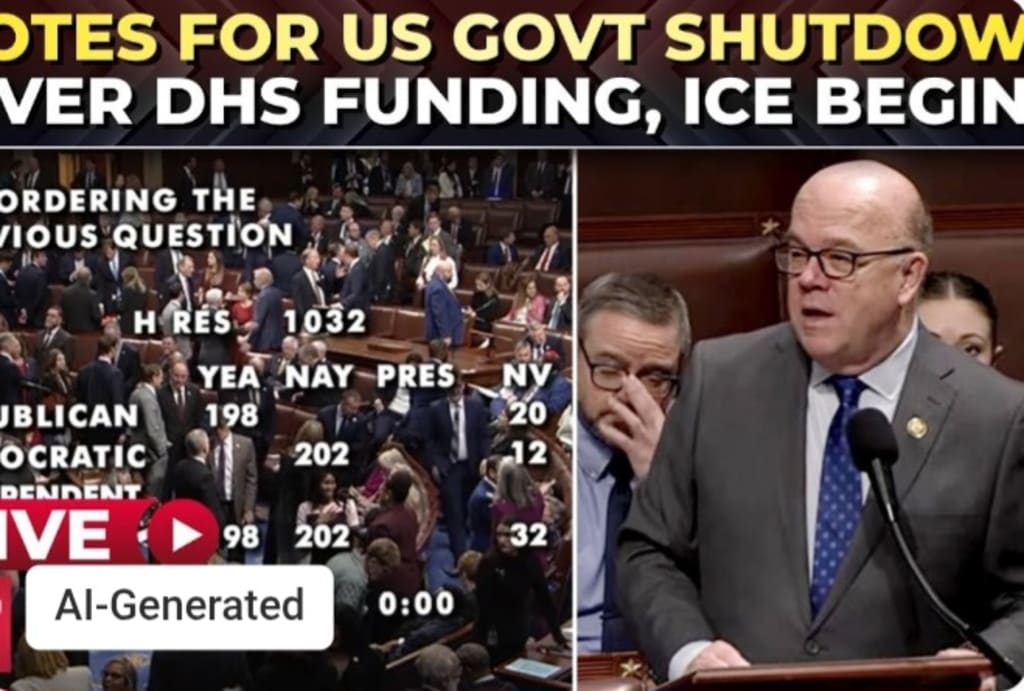
In a historic move, the U.S. House of Representatives voted decisively this week to temporarily prevent a looming government shutdown, providing a much-needed lifeline for the ongoing negotiations surrounding immigration policies and the role of the U.S. Immigration and Customs Enforcement (ICE). The measure is being hailed by some as a stopgap solution, buying time for lawmakers to hash out critical reforms. However, critics argue that it is little more than a temporary fix, leaving unresolved debates that could spill into the next round of budgetary debates.
This vote represents a complex balancing act in Washington, where both political gridlock and urgent concerns about national security, public safety, and immigration reform are dominating the conversation. In this article, we explore the significance of this vote, the underlying issues related to ICE, and the broader political implications that will impact both federal operations and the lives of millions of undocumented immigrants in the United States.
The Shutdown Crisis: Averted for Now
On the surface, the vote may seem like a standard legislative maneuver. However, the stakes are considerably higher than a simple budgetary decision. The government shutdown has been an ever-present threat in Washington for months, as budget disagreements between Democrats and Republicans have escalated. If Congress had failed to pass a funding bill, several key federal agencies, including ICE, would have been left without the necessary resources to operate effectively.
The decision to avoid a shutdown came after a protracted debate in Congress. While it may seem like a win for compromise, the reality is far from clear-cut. The stopgap measure, known as a Continuing Resolution (CR), provides temporary funding for federal agencies until the end of the year. While the CR will prevent the immediate disruption of government services, it also delays critical discussions on long-term funding solutions and important policy reforms, particularly in the realm of immigration enforcement.
ICE at the Center of Controversy
One of the main flashpoints in the ongoing budgetary and policy debates revolves around the future of ICE, the federal agency responsible for enforcing immigration laws in the U.S. As one of the most controversial components of the Department of Homeland Security, ICE’s operations have faced growing scrutiny in recent years, particularly under the leadership of the Trump administration.
Critics of ICE argue that the agency has become a symbol of the U.S.'s harsh immigration policies, focusing on aggressive deportation tactics that have led to family separations, the detention of vulnerable populations, and increasing fear within immigrant communities. Some members of Congress, particularly those on the progressive wing of the Democratic Party, have called for the abolition of ICE, arguing that its mission is incompatible with human rights standards.
On the other hand, proponents of ICE stress the agency's role in safeguarding national security and protecting U.S. citizens from criminal activity. Immigration enforcement, according to ICE supporters, is a vital tool in protecting the integrity of U.S. borders and ensuring that those who enter the country do so through legal and orderly channels.
The push to reform ICE or even eliminate the agency has become a key point of contention in the broader debate over immigration reform. The passage of the Continuing Resolution has temporarily quelled the immediate threat of a government shutdown, but it also buys lawmakers critical time to work on solutions to this divisive issue.
The Road Ahead: Negotiating Immigration Reform
With the CR in place, lawmakers now have several months to negotiate the future of ICE and broader immigration reform. Both Democrats and Republicans are under pressure to deliver on promises made to their constituents, but striking a deal that satisfies both sides will be a challenging task.
For Democrats, particularly those in the more progressive wing of the party, the issue of immigration enforcement and ICE reform is personal. Many of these lawmakers represent districts with large immigrant populations, and they are increasingly concerned about the disproportionate impact that ICE's aggressive tactics have on communities of color and immigrant families. They argue that reforming or even dismantling ICE is an essential step toward creating a more humane immigration system.
Republicans, on the other hand, are largely focused on maintaining strong enforcement measures to protect U.S. citizens and prevent illegal immigration. They have raised concerns that any attempt to weaken or abolish ICE would send the wrong message to potential immigrants and could undermine efforts to combat illegal immigration and human trafficking.
At the center of these debates lies a fundamental question: How can the U.S. balance its commitment to national security with the need to protect the rights of immigrants? Many advocates for reform argue that there is a middle ground—a way to ensure effective immigration enforcement while also prioritizing humane treatment and due process.
In the coming months, lawmakers will need to navigate the political minefield that is immigration reform. The stakes are high, not just for the future of ICE but for the broader direction of U.S. immigration policy. Whether they will succeed in finding common ground remains to be seen.
The Political Implications of the Shutdown Vote
The House's vote to avert a government shutdown has far-reaching political consequences. For one, it sets the stage for the 2024 presidential election, with immigration and government spending likely to be key topics in the campaigns. Both parties will use the shutdown debate to rally their bases, framing the issue as part of a larger ideological battle over the future of the country.
The political calculation surrounding the shutdown also underscores the divide between progressive and moderate Democrats. While some in the party are pushing for bold reforms, others are more concerned with maintaining fiscal discipline and ensuring the functioning of government agencies like ICE. Republicans, meanwhile, will likely continue to push for stringent immigration policies and government spending cuts as part of their broader vision for U.S. governance.
Ultimately, the resolution of this issue will depend on political negotiations, public opinion, and the willingness of both parties to make compromises. The vote to end the government shutdown has provided a temporary reprieve, but the real challenge is just beginning. The future of ICE, immigration policy, and the broader direction of U.S. governance will remain at the forefront of political discourse as lawmakers continue to tackle these deeply divisive issues.
Conclusion
The House's vote to avert a government shutdown is a critical moment in the ongoing battle over immigration policy and government spending. It buys lawmakers time to negotiate on key issues, including the controversial role of ICE in immigration enforcement. While the immediate crisis has been avoided, the challenges surrounding immigration reform are far from over. As both parties continue to debate the future of ICE and broader immigration policies, the stakes could not be higher for millions of immigrants and U.S. citizens alike. The coming months will be crucial in determining the direction of U.S. immigration policy and the future of ICE.
About the Creator
Keep reading
More stories from Ayesha Lashari and writers in The Swamp and other communities.
Fake Apps, NFC Skimming, and Other Android Security Risks Emerging in 2026
As we enter 2026, the world of Android security is facing new and ever-evolving challenges. With the rise in smartphone usage and the increasing reliance on mobile applications for everything from banking to shopping, security threats have also escalated. Android, being the most widely used mobile operating system, continues to be a prime target for hackers, cybercriminals, and malicious entities. In this article, we’ll explore the latest Android security risks emerging in 2026, with a focus on fake apps, NFC skimming, and other security threats.
By Ayesha Lasharia day ago in The Swamp
Why Black History Matters in America?
The United States of America is celebrating their 250th anniversary in 2026. I'm proud to be an American and as someone who was born here, I wouldn't imagine myself living anywhere else. This is a country where opportunities are possible. Where anyone can be successful in anything they desire to do. Equality, community, and togetherness are the backbones of what America is and should be about. However, we have an administration who wants to erase and disregard those who have made positive, meaningful impacts in our country, specifically Black figures, such as Martin Luther King, Jr., Rosa Parks, and Maya Angelou. President Trump and his administration have been constantly complaining and fighting against what they call the "Woke agenda". They use this excuse as a distraction from other issues they refuse to address, such as the high cost of living, climate change, and inflation. That equality is dividing America, when in reality, it's bringing us together. Being woke is not tied to a specific political party. No matter where you stand on the political spectrum, you can still care about other people and their plights. Compassion and empathy for others isn't tied to a political party, either. We were taught as children to treat others the way we want to be treated and not judge others because they're different from us. Caring about others isn't a personal attack on your beliefs. It doesn't make you any less of a person. People who are easily offended over African American figures, past or present, or anything related to it, are grasping at straws. Current and future generations need to know who people like Harriet Tubman and Shirley Chisholm were, especially in the classroom. Black History is part of American History. It should be recognized, not hidden or forgotten. Besides, you can't shield children from everything, just because your feelings are easily hurt.
By Mark Wesley Pritchard 4 days ago in The Swamp
“Keep on Dreaming”: Could Europe Really Defend Itself Without the U.S.?
Europe’s leaders have been talking for years about strategic autonomy — the idea that the continent could one day defend itself without relying on the United States. But recent comments from NATO’s Secretary‑General have underscored how far that goal still is from reality. � The Guardian +1 “If anyone thinks Europe can defend itself without the U.S., keep on dreaming,” NATO chief Mark Rutte told lawmakers, bluntly dismissing the notion that Europe is currently capable of going it alone. � European Interest This stark assessment has triggered a major debate across European capitals: Can Europe truly protect its territory and interests without American military support — and what would it take if Washington steps back? Why the U.S. Still Matters for European Security Since the end of World War II, American military power has been the backbone of European defence. The U.S. provides capabilities that European countries, even collectively, struggle to replicate: Nuclear deterrence: NATO’s nuclear umbrella — with U.S. weapons and strategy at its core — remains a primary deterrent against existential threats like Russia. � European Interest Intelligence, surveillance, and reconnaissance (ISR): U.S. satellites, sensors, and data systems currently give NATO a broad, real‑time picture of threats — something Europe lacks independently. � CEPA Strategic airlift and logistics: Long‑range transport aircraft and aerial refuelling tankers allow forces to move rapidly and sustain operations — areas where U.S. capabilities still dwarf European lift capacity. � Brookings Command and control systems: Integrated battle management and space assets that coordinate multi‑domain operations remain dominated by U.S. technology. � CEPA Without these “enablers,” even a large European force would struggle to operate cohesively against a high‑end military threat. � Defense News What Experts Say: The Military Gap Reports by defence analysts paint a clear picture of the scale of the challenge: Troop readiness: Europe’s combined armed forces total around 1.5 million personnel, but many nations lack the readiness levels, logistics, and long‑range capabilities needed for high‑intensity operations. � Brookings Equipment shortfalls: To fill gaps left by a hypothetical U.S. withdrawal, Europe would need about 50 new brigades and massive investments in tanks, artillery, aircraft, and ammunition — a level of force modernisation far beyond current budgets. � bruegel.org Strategic investment: Analysts estimate Europe would need to spend hundreds of billions more and increase defence budgets to around 3–4% of GDP to begin replacing U.S. capabilities — far above the current norm of about 1.5–2%. � Start Insight These gaps aren’t just about numbers — European militaries were largely designed to operate with U.S. support, not replace it. � Brookings The Cost of Autonomy: Financial and Industrial Hurdles Building a truly independent defence posture would be enormously expensive and politically contentious: Huge Investment Needed Europe could need €1 trillion or more over the next few decades to stand on its own feet, according to estimates from international security institutes. � Strategic Culture Foundation Raising Defence Spending Most European states commit around 2% of GDP to defence, a NATO target. But analysts say that level isn’t enough for genuine autonomy — many argue it would have to rise “well beyond” that, potentially 3–4% or more. � Start Insight Industrial Fragmentation European defence industries are fragmented. Different weapon systems, procurement processes, and national priorities make joint development, production, and interoperability difficult. � The Guardian Long Time Horizon Even with political will and funding, experts say it could take a decade or more for Europe to build the technologies and capabilities it would need to defend itself independently. � Defense News Political and Strategic Obstacles Even if the money were available, political factors complicate defence autonomy: Lack of Unified Strategy European countries still disagree over key defence priorities, threat perceptions, and how to structure a collective force. There is no single defence doctrine shared across the continent. � The Guardian National Rivalries Countries often prefer national procurement, industrial jobs, and bilateral arrangements rather than pooling sovereignty in a European army. � The Guardian Debate Over Nuclear Deterrence Europe’s only nuclear powers, France and the UK, maintain independent arsenals — but they function differently from NATO’s broader deterrent and are not designed to replace U.S. tactical nuclear capabilities. � Defense News Signs of Change: Moves Toward Strategic Autonomy Despite the challenges, Europe is making incremental progress: The EU has launched defence initiatives aimed at boosting joint capability and readiness, including proposals to mobilise hundreds of billions in investment and accelerate collaborative armaments development. � europarl.europa.eu Some European leaders, especially in France, argue for a stronger “European pillar” within NATO — not a replacement for the alliance, but a force that could operate autonomously when necessary. � The Guardian Nations such as Germany and the UK have increased defence spending and announced long‑term upgrades to their militaries. Still, experts caution that even these advances fall short of full independence and — for now — mainly serve to strengthen NATO rather than supplant the U.S. role. � chathamhouse.org Could Europe Deter Major Threats Without the U.S.? In theory, a military alliance of European states could defend against limited threats or regional instability. But against a large, well‑equipped adversary like Russia — or in high‑intensity collective defence — Europe lacks: Integrated strategic airpower and missile defence Space‑based ISR and cybersecurity assets Heavy logistical lift and rapid force projection A unified command structure with shared doctrine and supply chains � Brookings Without these, any European effort would rely on improvisation, higher casualties, slower response times and logistical bottlenecks — a “bloodier” conflict, analysts warn. � Defense News Conclusion: Realism vs. Aspirations The idea of a fully independent European defence has long been an aspiration for some leaders and strategic thinkers. But as NATO’s Secretary‑General bluntly put it: Europe today cannot defend itself without the United States. � European Interest That doesn’t mean Europe is doomed to permanent dependency — far from it. Many countries are investing more, coordinating better, and debating structural reforms that could lay the foundations for greater autonomy in the future. Yet the financial cost, political obstacles, capability gaps, and time required mean that real independence — if it ever comes — is still decades away. For now, the transatlantic alliance remains the cornerstone of European security, and even the most ardent proponents of autonomy acknowledge that achieving true military self‑sufficiency is a massive, long‑term project — not something Europe can simply “dream” into reality overnight.
By Zahid Hussain6 days ago in The Swamp



Comments
There are no comments for this story
Be the first to respond and start the conversation.