
Hillary Clinton Says She “Wants to See Truth Come Out” After Finishing Epstein Testimony
Former Secretary of State responds to scrutiny as political tensions intensify around renewed inquiries
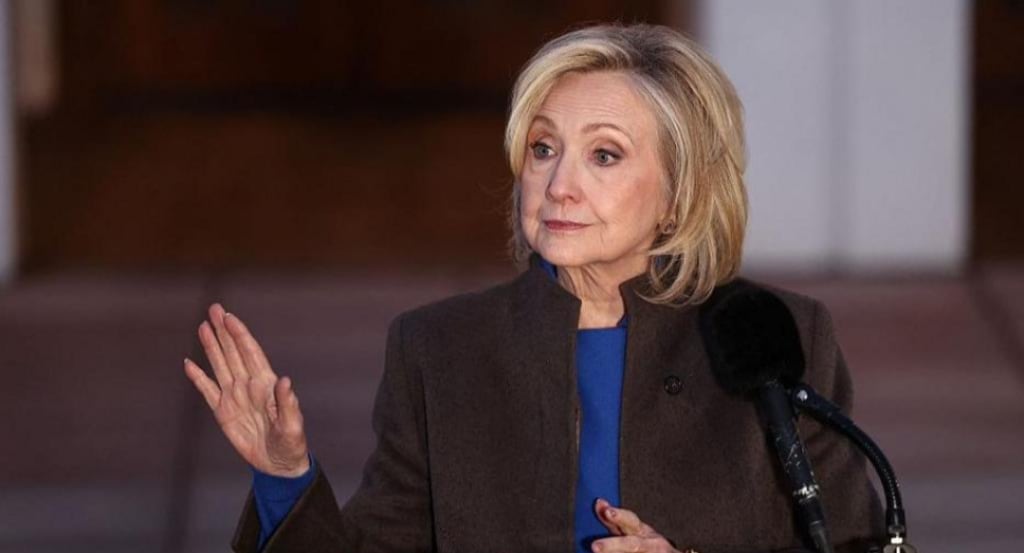
Hillary Clinton has said she “wants to see the truth come out” following her testimony connected to renewed congressional scrutiny surrounding Jeffrey Epstein. The former Secretary of State’s remarks come amid heightened political tension, as lawmakers continue examining records and testimony tied to Epstein’s network of high-profile associates.
Clinton’s statement signals an attempt to address public concern directly, emphasizing transparency while navigating an issue that remains politically charged years after Epstein’s death.
Background: Why Epstein Still Matters
Jeffrey Epstein, the financier who was arrested in 2019 on federal sex trafficking charges, died in jail while awaiting trial. His connections to political leaders, business executives, and public figures have fueled ongoing investigations, media scrutiny, and public debate.
Court filings, depositions, and civil proceedings have periodically revealed the names of individuals who had contact with Epstein. However, legal experts repeatedly caution that being mentioned in records does not equate to criminal wrongdoing.
Despite this distinction, the political sensitivity surrounding Epstein’s associations has kept the case in public conversation.
Clinton’s Testimony
Following her testimony, Clinton reportedly stated that she wants “the truth to come out,” framing her participation as part of a broader effort to clarify facts.
Her comments suggest a desire to counter speculation and reinforce confidence in the investigative process. In highly politicized inquiries, public figures often face intense scrutiny regardless of the substance of their testimony.
Clinton’s response appears aimed at underscoring cooperation rather than defensiveness, signaling that she supports transparency in the matter.
Political Context
The renewed focus on Epstein-related testimony unfolds against a backdrop of deep partisan divisions in Washington. Congressional investigations frequently become flashpoints in political battles, particularly when prominent figures are involved.
Some Republican lawmakers argue that thorough examination of Epstein’s network remains necessary to ensure accountability and public trust. Meanwhile, Democratic leaders often warn against turning oversight processes into partisan tools.
The language surrounding these inquiries—whether described as accountability efforts or political maneuvers—shapes public perception.
Oversight and Public Trust
Congress has broad authority to conduct investigations, particularly when issues of public interest arise. However, maintaining credibility requires clear standards, evidence-based questioning, and procedural fairness.
Observers note that public confidence depends on whether investigations are perceived as:
Transparent
Fact-driven
Nonpartisan
Focused on verified evidence
Clinton’s emphasis on truth suggests recognition of the broader trust issue at stake.
Media Amplification and Public Reaction
High-profile testimony connected to Epstein inevitably attracts significant media attention. Headlines referencing political figures generate immediate public interest, particularly on social media platforms where narratives can spread rapidly.
Public reaction has been mixed. Some Americans express support for continued investigation, arguing that transparency is essential. Others view repeated attention on the case as politically motivated.
The persistence of conspiracy theories surrounding Epstein’s death further complicates public discourse, often blurring the line between verified information and speculation.
Legal and Ethical Considerations
From a legal perspective, congressional testimony operates under defined procedures. Witnesses may be questioned under oath, and false statements carry legal consequences.
However, legal experts emphasize key distinctions:
Being named in documents is not proof of misconduct
Association does not imply criminal behavior
Due process protections remain essential
Responsible reporting and political commentary must differentiate between documented evidence and conjecture.
The Broader Impact on Political Discourse
The Epstein case continues to serve as a lightning rod in American politics. Because individuals from across the political spectrum were at times associated with Epstein, the issue resists easy partisan framing.
Still, political narratives often emerge quickly. Each party may highlight connections perceived as damaging to opponents while downplaying others.
Clinton’s statement may be interpreted as an effort to refocus attention on verified facts rather than partisan framing.
Transparency Versus Political Strategy
Analysts note that high-profile testimony can function on two levels: as a genuine fact-finding process and as a political messaging platform.
For public figures, the stakes are reputational as well as legal. Even absent evidence of wrongdoing, prolonged scrutiny can shape public perception.
Clinton’s emphasis on wanting the truth to emerge suggests an attempt to align herself with transparency while distancing from speculation.
What Happens Next?
The outcome of ongoing inquiries remains uncertain. Congressional investigations can extend for months, sometimes producing extensive documentation and sometimes concluding with limited findings.
Future developments may depend on:
Release of additional documents
Committee reports
Legal proceedings in related civil cases
Political developments influencing oversight priorities
For now, Clinton’s testimony represents one chapter in a broader, ongoing examination of Epstein’s network and its implications.
Public Expectations
The enduring interest in Epstein’s case reflects deeper public concerns about accountability, elite influence, and institutional transparency.
Many Americans express frustration that powerful individuals appear insulated from consequences. Investigations into high-profile figures thus carry symbolic weight beyond specific legal findings.
Clinton’s call for truth resonates within this broader context, acknowledging that public trust depends on credible and thorough inquiry.
Conclusion
Hillary Clinton’s statement that she “wants to see the truth come out” after completing her Epstein-related testimony highlights the intersection of transparency, politics, and public scrutiny. As investigations continue, maintaining procedural fairness and clear communication will be essential.
The Epstein case remains a complex and sensitive issue, shaped by legal nuance, media amplification, and partisan tension. Whether the current round of testimony will resolve lingering questions remains to be seen.
For now, the focus remains on ensuring that investigative processes prioritize evidence over rhetoric. In an era marked by political polarization, the pursuit of verified truth may be the most important outcome of all.
About the Creator
Keep reading
More stories from Aarif Lashari and writers in The Swamp and other communities.
Day Set to Turn Into Night: The Longest Solar Eclipse of the Century Now Has an Official Date
Astronomers have officially confirmed the date of what is being described as the longest solar eclipse of the century — a rare celestial event expected to transform daylight into an eerie twilight across parts of the globe. With its exceptional duration and unusually wide path of visibility, scientists say this eclipse will be one of the most remarkable astronomical spectacles in modern history.
By Aarif Lasharia day ago in The Swamp
A Gathering of Evil Bosses
“I’m the queen of chin jutting while I smooth my hair, attacking, insulting, and deflecting to protect my appointer.” “Oh, please, Blondi, my hair is curled, highlighted, and longer than yours. I feature television commercials telling immigrants that we will give them a free plane ride home, and if they voluntarily turn themselves in, they will be allowed to legally apply for re-entry. It runs everywhere, and I look good in it! You can’t compete because of your blond hair. Mine is nicer, and my lips are prettier than yours.”
By Andrea Corwin 9 days ago in The Swamp



Comments
There are no comments for this story
Be the first to respond and start the conversation.