
Gold Rises as Dollar and Yields Slip Ahead of Key US Jobs Data
Investors Turn to Safe-Haven Gold as Markets Await Crucial Employment Numbers from the United States
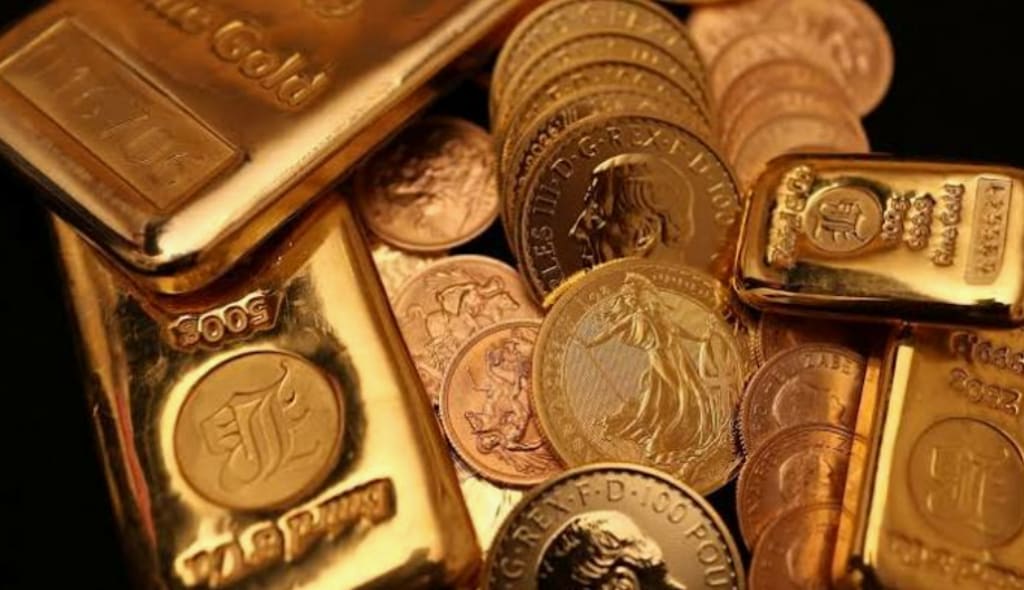
Gold prices moved higher as the US dollar weakened and bond yields slipped, with investors closely watching upcoming US jobs data that could influence financial markets worldwide. This moment reflects how sensitive global markets are to economic indicators and why gold continues to be a trusted safe-haven asset during uncertainty.
As traders, economists, and everyday investors await fresh employment figures, the rise in gold prices signals cautious optimism mixed with fear of potential economic slowdown.
🌍 Why Gold Is Rising Now
Gold often acts as a safe-haven asset—a place investors move their money when markets are uncertain. When the dollar weakens or interest rates fall, gold becomes more attractive because it does not yield interest but holds intrinsic value.
In this case, gold prices increased as:
The US dollar index declined, making gold cheaper for foreign buyers
Treasury yields dropped, reducing the opportunity cost of holding gold
Investors positioned themselves ahead of critical economic data
This combination created a favorable environment for gold to climb.
📉 The Role of the US Dollar and Bond Yields
The relationship between gold, the dollar, and bond yields is complex but important.
Dollar Weakness
Gold is priced in US dollars, so when the dollar falls, gold becomes cheaper for investors using other currencies. This increased demand often pushes gold prices higher.
Falling Bond Yields
Bond yields represent returns on government debt. When yields drop, investors earn less from bonds, making gold more attractive as a store of value.
Together, a weaker dollar and lower yields create the perfect storm for gold price increases.
📊 Why US Jobs Data Matters So Much
The upcoming US jobs report is one of the most influential economic indicators in the world. It provides insights into:
Employment growth
Wage inflation
Labor market strength
Economic momentum
Central banks, investors, and governments use this data to predict interest rate decisions. Strong job numbers could push interest rates higher, while weak data could signal economic slowdown.
Both scenarios have major implications for gold.
🏦 Federal Reserve Policy and Gold
The US Federal Reserve closely watches employment data when deciding whether to raise, cut, or hold interest rates. Interest rates directly affect gold prices.
If Jobs Data Is Strong
The Fed may keep rates high or increase them
Higher rates strengthen the dollar
Gold prices may fall
If Jobs Data Is Weak
The Fed may cut rates
Lower rates weaken the dollar
Gold prices may rise
This is why traders closely monitor every employment report.
🌐 Global Economic Uncertainty Boosts Gold Demand
Beyond US jobs data, broader global uncertainties are also driving investors toward gold. These include:
Geopolitical tensions
Inflation concerns
Stock market volatility
Recession fears
Gold is seen as a hedge against economic instability and currency devaluation. In times of crisis, demand for gold often increases sharply.
🪙 Gold as a Safe-Haven Asset
For thousands of years, gold has been a symbol of wealth and security. Unlike paper currency, gold is a physical asset with limited supply. It cannot be printed by governments or central banks.
In modern financial markets, gold serves several purposes:
Hedge against inflation
Portfolio diversification
Protection during market crashes
Store of value during currency depreciation
This timeless role keeps gold relevant even in the digital age.
📈 Market Sentiment Ahead of the Jobs Report
Ahead of major economic releases, markets often become cautious. Investors reduce risk exposure and move funds into safe assets like gold, government bonds, and stable currencies.
The rise in gold prices suggests that traders are preparing for potential surprises in the jobs data. Unexpectedly weak numbers could trigger stock market declines and strengthen gold further.
💼 What This Means for Everyday Investors
Gold price movements may seem distant, but they affect everyday people in several ways:
1. Investment Portfolios
Gold ETFs, coins, and jewelry prices can change based on market conditions.
2. Currency and Inflation
Gold trends often reflect inflation expectations and currency strength.
3. Economic Confidence
Rising gold prices sometimes indicate declining confidence in the economy.
For individuals, understanding gold’s movement can help in financial planning and investment decisions.
🧠 Expert Opinions on Gold’s Outlook
Many analysts believe gold could remain volatile in the short term due to economic uncertainty and central bank decisions. Some predict further gains if interest rates fall, while others warn of corrections if economic data surprises positively.
However, most experts agree that gold remains a long-term hedge against inflation and financial instability.
🔮 The Future of Gold in a Changing Economy
As digital currencies and financial technologies evolve, some people question whether gold will lose its importance. Yet, history suggests that gold’s role as a safe haven will continue.
Even with cryptocurrencies gaining popularity, gold remains widely trusted by central banks, governments, and investors worldwide.
In the future, gold may coexist with digital assets as part of diversified portfolios, rather than being replaced.
✨ Final Thoughts
Gold’s rise as the dollar and yields slipped highlights how interconnected global financial markets are. Ahead of key US jobs data, investors are positioning themselves for uncertainty, showing that gold still plays a crucial role in modern finance.
Whether the jobs report signals economic strength or weakness, gold will remain a barometer of investor sentiment and global economic health. For centuries, gold has served as a financial anchor during turbulent times—and it continues to shine in today’s unpredictable world.
About the Creator
Why Black History Matters in America?
The United States of America is celebrating their 250th anniversary in 2026. I'm proud to be an American and as someone who was born here, I wouldn't imagine myself living anywhere else. This is a country where opportunities are possible. Where anyone can be successful in anything they desire to do. Equality, community, and togetherness are the backbones of what America is and should be about. However, we have an administration who wants to erase and disregard those who have made positive, meaningful impacts in our country, specifically Black figures, such as Martin Luther King, Jr., Rosa Parks, and Maya Angelou. President Trump and his administration have been constantly complaining and fighting against what they call the "Woke agenda". They use this excuse as a distraction from other issues they refuse to address, such as the high cost of living, climate change, and inflation. That equality is dividing America, when in reality, it's bringing us together. Being woke is not tied to a specific political party. No matter where you stand on the political spectrum, you can still care about other people and their plights. Compassion and empathy for others isn't tied to a political party, either. We were taught as children to treat others the way we want to be treated and not judge others because they're different from us. Caring about others isn't a personal attack on your beliefs. It doesn't make you any less of a person. People who are easily offended over African American figures, past or present, or anything related to it, are grasping at straws. Current and future generations need to know who people like Harriet Tubman and Shirley Chisholm were, especially in the classroom. Black History is part of American History. It should be recognized, not hidden or forgotten. Besides, you can't shield children from everything, just because your feelings are easily hurt.
By Mark Wesley Pritchard 13 days ago in The Swamp
10 Countries With the Most Billionaires in 2025–26: Where Does India Rank?
The world’s billionaires have always captured our imagination. From tech innovators to industrial moguls, these individuals don’t just hold immense wealth—they shape industries, influence economies, and sometimes even politics. But have you ever wondered which countries produce the most billionaires? And more importantly, where does India stand in this elite club in 2025–26?
By Aqib Hussain4 days ago in The Swamp
Diaries to Nietzsche
Quotation from Friedrich Nietzsche "He who wrestles long with monsters should beware lest he himself become a monster. And if you gaze long into an abyss, the abyss also gazes into you. Man is not destroyed by suffering, but by the meaning he makes of it."
By LUCCIAN LAYTH2 days ago in Critique




Comments
There are no comments for this story
Be the first to respond and start the conversation.