
Global Tires Market Size & Forecast 2025–2033
Riding the Road of Innovation: How Technology, EVs, and Mobility Trends Are Reshaping the Global Tire Industry


Global Tires Market Overview
The Global Tires Market is on a steady growth trajectory as the world’s transportation ecosystem continues to expand and modernize. According to Renub Research, the global tire market is expected to reach US$ 194.95 billion by 2033, up from US$ 140.33 billion in 2024, registering a compound annual growth rate (CAGR) of 3.72% during 2025–2033.
This expansion is being driven by rising vehicle production, rapid urbanization, growing logistics and e-commerce activities, and a surge in electric vehicle (EV) adoption. At the same time, advancements in tire technology—focused on durability, fuel efficiency, safety, and sustainability—are redefining how tires are designed, manufactured, and used across the globe.
What Is a Tire and Why It Matters
A tire is a circular, elastic component mounted on a wheel rim, designed to transmit engine power to the road, absorb shocks, support vehicle weight, and ensure stability and control. Manufactured primarily from natural and synthetic rubber, steel cords, and textile reinforcements, tires are engineered to perform across diverse terrains and climatic conditions.
Modern tires play a crucial role not only in vehicle safety and comfort but also in fuel efficiency and environmental performance. Innovations such as run-flat tires, low rolling resistance compounds, tubeless designs, and eco-friendly materials have elevated tires from simple mechanical components to high-tech mobility solutions.
Key Growth Drivers in the Global Tires Market
Rising Vehicle Production and Ownership
One of the strongest growth drivers for the global tire market is the continuous rise in vehicle production and ownership, particularly in emerging economies. Increasing disposable incomes, expanding middle-class populations, and improved access to financing are fueling demand for passenger vehicles and two-wheelers in countries such as India, China, and Brazil.
As vehicle ownership rises, so does demand for both OEM (Original Equipment Manufacturer) tires and replacement tires. In addition, the rapid growth of logistics, transportation, and last-mile delivery services has significantly boosted demand for commercial vehicle tires.
A notable example is Sailun Group’s December 2023 announcement to expand its tire manufacturing investment in León, Guanajuato, Mexico, through a joint venture with TD International Holding. The facility will produce passenger, light truck, and commercial truck tires, strengthening North America’s supply chain and supporting global demand.
Technological Advancements in Tire Manufacturing
The tire industry is undergoing a technological transformation. Manufacturers are heavily investing in research and development to create tires that are smarter, safer, quieter, and more environmentally friendly.
Key innovations include:
Low rolling resistance tires to improve fuel efficiency
Noise-reducing tread patterns for enhanced driving comfort
Advanced rubber compounds for longer tread life
Sustainable and bio-based raw materials
In May 2023, Kumho Petrochemical and Hankook Tire & Technology signed a memorandum of understanding to jointly develop Eco-SSBR (solution-polymerized styrene-butadiene rubber), reinforcing the industry’s shift toward sustainable tire solutions.
Expansion of Electric and Hybrid Vehicles
The global transition toward electric and hybrid vehicles is creating a specialized demand for EV-compatible tires. Electric vehicles require tires with:
Lower rolling resistance
Higher torque resistance
Enhanced load-bearing capacity due to battery weight
Responding to this trend, manufacturers are launching EV-specific tire lines. In March 2023, Sumitomo Rubber Industries introduced the FALKEN “e. ZIEX” series, specifically designed to improve efficiency and performance in electric vehicles. As EV adoption accelerates worldwide, this segment is expected to be a major growth catalyst for the tire market.
Challenges Facing the Global Tires Market
Volatility in Raw Material Prices
Tire manufacturing is heavily dependent on raw materials such as natural rubber, synthetic rubber, carbon black, and crude oil derivatives. Prices of these inputs are highly volatile due to weather conditions, geopolitical tensions, and supply-demand imbalances. This volatility impacts production costs, pricing strategies, and profit margins, posing a persistent challenge for manufacturers.
Environmental Regulations and Sustainability Pressure
Governments around the world are enforcing stricter regulations related to emissions, tire labeling, and waste management. Tire disposal and recycling remain major environmental concerns due to non-biodegradable materials and illegal dumping. While sustainability initiatives are essential, compliance often requires significant investment in cleaner technologies and recycling infrastructure.
Market Segmentation Analysis
By Design
Radial Tires Market
Radial tires dominate the global market due to their superior performance characteristics. They offer better fuel efficiency, improved traction, enhanced ride comfort, and longer tread life. These advantages make radial tires the preferred choice for passenger vehicles and most commercial vehicles worldwide.
Bias Tires Market
Bias (cross-ply) tires remain relevant in heavy-duty, agricultural, and off-road applications. Their strong sidewalls and lower cost make them suitable for rugged terrains where durability outweighs comfort and speed.
By End-Use
OEM Market
OEM tires are supplied directly to vehicle manufacturers during assembly. Rising global vehicle production, especially in passenger cars and SUVs, is driving OEM tire demand. Automakers increasingly collaborate with tire manufacturers to develop customized solutions that meet safety, efficiency, and performance standards.
Replacement Market
The replacement tire segment accounts for a significant share of global demand. Regular wear and tear, varying road conditions, and increased vehicle usage ensure a steady aftermarket demand, particularly in developing economies.
By Vehicle Type
Passenger Cars
Passenger car tires represent one of the largest segments, supported by rising car ownership, urban commuting needs, and frequent replacement cycles. Innovations in all-season, winter, and performance tires continue to stimulate demand.
Two Wheelers
The two-wheeler tire market is expanding rapidly in Asia-Pacific, driven by high motorcycle and scooter usage in countries such as India, Indonesia, and Vietnam. High replacement frequency and innovations in tubeless and puncture-resistant tires support sustained growth.
Commercial Vehicles and OTR
Medium and heavy commercial vehicles, along with off-the-road (OTR) vehicles used in mining, agriculture, and construction, contribute significantly to tire demand due to harsh operating conditions and shorter replacement cycles.
Regional Insights
United States Tires Market
The U.S. tire market is mature and innovation-driven, characterized by high vehicle ownership and strong replacement demand. Consumers increasingly prefer fuel-efficient, all-season, and premium tires, while regulatory standards push manufacturers toward sustainable solutions.
France Tires Market
France benefits from a strong automotive manufacturing base and strict safety and quality regulations. Seasonal tire requirements and a growing focus on low-emission mobility support steady demand for high-performance and eco-friendly tires.
India Tires Market
India is one of the fastest-growing tire markets globally, driven by infrastructure expansion, rising vehicle sales, and strong two-wheeler demand. Government initiatives such as “Make in India” are boosting domestic production. In March 2025, CEAT launched its SportDrive series of ultra-high-performance and run-flat tires for luxury vehicles, reflecting the market’s move toward premiumization.
Brazil Tires Market
Brazil’s tire market is supported by its large agricultural sector and extensive commercial vehicle fleet. High replacement demand and increasing domestic manufacturing capacity contribute to long-term market growth.
Saudi Arabia Tires Market
Extreme climatic conditions in Saudi Arabia necessitate durable, heat-resistant tires. In November 2024, Black Arrow Tyre Co. (Blatco) partnered with Golden Star Rubber to establish the Middle East’s largest tire manufacturing facility in Yanbu, with an initial capacity of 4 million tires per year.
Competitive Landscape
The global tire market is highly competitive, with key players focusing on innovation, sustainability, and geographic expansion. Major companies profiled in the market include:
Apollo Tyres Ltd.
Bridgestone Corporation
Continental AG
Hankook Tire & Technology Co., Ltd.
MRF Tyres
Sumitomo Rubber Industries, Ltd.
The Goodyear Tire and Rubber Company
The Michelin Group
Toyo Tire Corporation
Yokohama Tire Corporation
Each company has been analyzed across five viewpoints: overview, key personnel, recent developments, SWOT analysis, and revenue performance.
Final Thoughts
The global tires market is steadily evolving, shaped by technological innovation, sustainability imperatives, and changing mobility patterns. While challenges such as raw material volatility and environmental regulations persist, opportunities in electric vehicles, smart tire technologies, and emerging markets continue to fuel long-term growth.
As transportation becomes smarter, greener, and more connected, tires will remain a critical component at the intersection of safety, efficiency, and sustainability. For manufacturers, investors, and policymakers alike, the road ahead for the global tires market is one of cautious optimism and transformative potential.
About the Creator
Janine Root
Janine Root is a skilled content writer with a passion for creating engaging, informative, and SEO-optimized content. She excels in crafting compelling narratives that resonate with audiences and drive results.
Keep reading
More stories from Janine Root and writers in The Swamp and other communities.
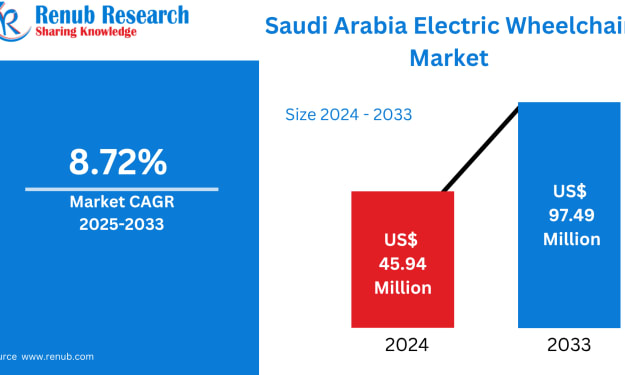
Saudi Arabia Electric Wheelchair Market Size & Forecast 2025–2033
Saudi Arabia Electric Wheelchair Market Overview The Saudi Arabia Electric Wheelchair Market is witnessing steady and transformative growth as the Kingdom prioritizes healthcare modernization, inclusivity, and improved quality of life for people with mobility impairments. According to Renub Research, the market is anticipated to expand from US$ 45.94 million in 2024 to US$ 97.49 million by 2033, growing at a robust CAGR of 8.72% during 2025–2033.
By Janine Root 17 days ago in The Swamp
What to Know About Trump’s Desire to Take Over Greenland
When Donald Trump first floated the idea of the United States taking over Greenland, many people laughed it off as a joke. Fast forward to now, and the conversation is no longer humorous. Trump’s renewed interest in Greenland has sparked international debate, diplomatic pushback, and serious questions about global power, sovereignty, and Arctic strategy.
By Aqib Hussain5 days ago in The Swamp
FPS: The Last Flame Challenge Winners
Welcome to our first Winners Announcement of the year and to the final challenge in the Fall Poetry Series. The Last Flame invited writers to sit with endings, using fire as a central image to consider what remains when something burns out: ash, warmth, memory, silence, or the faint promise of what comes next. The strongest pieces treated endings as gradual rather than sudden, allowing them to flicker, dim, and linger.
By Vocal Curation Team5 days ago in Resources


Comments
There are no comments for this story
Be the first to respond and start the conversation.