
🌍 Global Surge in Electricity Prices: A Political Time Bomb Before 2026 Elections
From Europe to Asia, rising power bills are fueling protests, policy shifts, and political crises — as the world prepares for decisive 2026 elections.


⚡ Introduction: The Price of Power in a Polarized World
The world today stands at a volatile intersection of economics and politics — and electricity lies at the heart of it. Over the past three years, global energy markets have witnessed historic fluctuations. The combination of post-pandemic recovery, geopolitical tensions, and supply chain breakdowns has pushed power prices to levels unseen in decades.
For ordinary families, this means skyrocketing monthly bills. For businesses, it means production costs that threaten survival. But for politicians, it means something even more dangerous — voter anger. As more countries head toward key elections in 2026, the rising cost of electricity is transforming into a global political time bomb.
🏭 The Perfect Storm: How the Energy Crisis Escalated
The roots of the crisis run deep. It began subtly after the COVID-19 pandemic, when energy demand rebounded faster than supply could recover. Just as economies began to stabilize, the Russia–Ukraine conflict disrupted global gas pipelines, particularly to Europe, sending shockwaves through international markets.
Meanwhile, OPEC and allied oil-producing nations cut back production to maintain price control, which backfired for consumer nations. The cost of crude oil surged, and with it, the prices of electricity generation. Developing countries, which depend heavily on fuel imports, were hit hardest — Pakistan, Bangladesh, Nigeria, and parts of Latin America faced rolling blackouts and industrial slowdowns.
At the same time, climate policies created an additional dilemma. As governments rushed toward renewable goals, the transition away from fossil fuels was often poorly managed. The result was an unstable grid — too green to be cheap, too fossil-dependent to be reliable.
💰 Impact on Global Economies
The economic consequences of this energy spiral are staggering.
Europe has spent over $800 billion in subsidies and price caps to cushion households.
Asia’s emerging markets, from India to Indonesia, have seen inflation rates jump as energy imports devour foreign reserves.
In the U.S., power bills have risen nearly 30% since 2021, placing immense pressure on middle-class voters.
For industries, higher electricity costs have meant reduced competitiveness. Small factories are shutting down, data centers are migrating to cheaper regions, and household disposable income is shrinking — a recipe for social frustration.
🏛️ Political Fallout: The Return of Populism
Energy crises have always had political consequences, but this time the scale is global.
In Germany, far-right and nationalist parties have gained traction by blaming “green policies” for economic hardship.
In France, protests over electricity tariffs have merged with broader anti-government demonstrations, reminiscent of the “Yellow Vest” movement.
Across Africa, governments are facing street protests as fuel and power shortages disrupt daily life.
In the United States, rising costs have become a central talking point ahead of the 2026 midterms, with candidates on both sides exploiting public discontent.
Energy prices have effectively become the new inflation — an issue every political party must address to survive.
🌱 Green Energy: Promise or Illusion?
Proponents of renewable energy argue that this crisis proves the need to accelerate the green transition. Solar and wind technologies are expanding rapidly, but their dependence on weather and storage limitations still prevent them from replacing fossil fuels completely.
Critics counter that rapid decarbonization, without infrastructure readiness, is the main reason for the instability. In truth, both sides are partially correct. The path to sustainability must be balanced, ensuring both affordability and reliability.
China, for instance, continues to dominate the renewable manufacturing chain, giving it enormous influence. Meanwhile, Europe’s shift to green energy remains fragile, dependent on subsidies and political will.
📊 Public Sentiment and Social Divide
The greatest tragedy of this crisis lies not in numbers but in inequality. While wealthier households can install solar panels or invest in energy-efficient homes, millions of poorer citizens remain trapped. In developing nations, electricity is not just a bill — it’s a question of survival.
Blackouts mean children cannot study, hospitals cannot operate efficiently, and small businesses face closure. This widening energy inequality threatens to deepen the divide between the rich and poor — both within and across nations.
💬 My Personal Opinion:
In my view, the global energy crisis has exposed how fragile our interconnected systems truly are. Governments across the world treated electricity as an infinite resource, while neglecting to invest in infrastructure, storage, and equitable access.
The coming years will test whether world leaders can prioritize long-term energy reform over short-term political gain. If they fail, we could see an era of “energy populism” — where promises replace policies and public anger drives the global agenda.
It is time to treat affordable energy not as a privilege, but as a human right — because societies without power, literally and politically, cannot survive.
🔍 SEO Keywords:
energy crisis 2026, global electricity prices, political unrest, renewable transition, energy inequality, fuel shortage, economic inflation, electricity bills, global power crisis, climate energy debate, energy populism.
❓ Final Question to Readers:
Do you believe the world’s energy crisis will push voters to elect new populist leaders in 2026 — or can global cooperation still prevent an economic meltdown before it’s too late?Start writing...
About the Creator
Filmon Ke Raaz | Movie Mysteries Explained
Filmon Ke Raaz is a storytelling platform where movies are explained in a simple and engaging way. We uncover hidden meanings, untold facts, and deep mysteries behind thriller, horror, and mystery films.
Keep reading
More stories from Filmon Ke Raaz | Movie Mysteries Explained and writers in The Swamp and other communities.
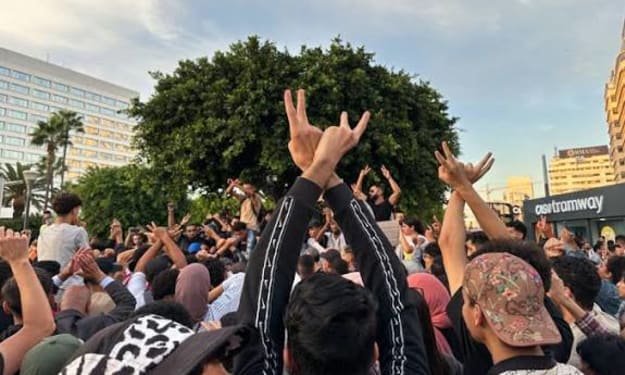
🇲🇦 2025 Moroccan Gen Z Protests: Youth Demand Change, Government Responds
Introduction In early 2025, Morocco has become the stage of one of the most powerful youth-driven movements in recent years. Thousands of young Moroccans — most of them from Generation Z — have taken to the streets demanding social justice, better education, more job opportunities, and greater political freedom. What started as a small online campaign on TikTok and X (formerly Twitter) quickly evolved into a nationwide protest movement that is reshaping Morocco’s political landscape and echoing across North Africa.
By Filmon Ke Raaz | Movie Mysteries Explained2 months ago in The Swamp
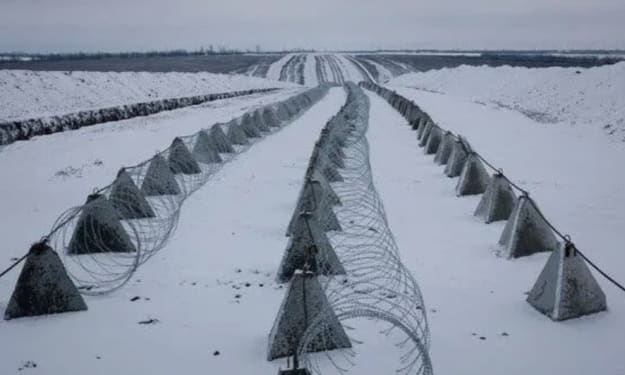
European Leaders Meet for Latest Round of Ukraine Talks
European leaders have convened for the latest round of high-level talks on Ukraine, signaling renewed diplomatic urgency as the war enters another critical phase. The meetings, bringing together heads of government, foreign ministers, and defense officials, reflect Europe’s determination to maintain unity while navigating mounting military, economic, and political pressures linked to the conflict.
By Ayesha Lashari4 days ago in The Swamp
'20/20'
"Do It Again" the track that would ultimately open the Beach Boys final album on Capitol Records which was released on February 10th 1969 had originally been released as a single in August of 1968. The track was the first of many post-Pet Sounds era throwbacks to the early Beach Boys sound which would become continually more cliched and eventually lead the Beach Boys to the level of self-parody they would eventually succumb to in the 1980s while their closest contemporaries The Beatles nearing the end of their run in 1969 would go on to be viewed as the most influential band of all time. However, the song itself is not bad on its surface, and it opens with a futuristic sounding (for 1969) drumbeat captured by then-Beach Boys engineer Stephen Desper using tape delays on the drums performed by Dennis Wilson and John Guerin. The song has been re-recorded numerous times over the years on various Beach Boys-related projects most notably the 2011 re-recording at Capitol studios featuring the five surviving Beach Boys at the time backed instrumentally by various members of both the Brian Wilson Band and Mike Loves touring "Beach Boys" to promote the then upcoming Beach Boys 50th Anniversary reunion tour in 2012. The hammering and power drill sound at the end of the song was an excerpt from a track called "Workshop" that was to be a part of the uncompleted "SMiLE" album.
By Sean Callaghan5 days ago in Beat


Comments
There are no comments for this story
Be the first to respond and start the conversation.