
Global Electric Wheelchair Market Size and Forecast 2025–2033: Mobility Innovation Driving Independence Worldwide
From Assistive Device to Smart Mobility Solution, Electric Wheelchairs Are Transforming Lives Across the Globe


Introduction: A Market Empowering Freedom and Dignity
Mobility is more than movement—it is freedom, independence, dignity, and participation in everyday life. For millions of people worldwide living with disabilities, chronic illnesses, or age-related mobility limitations, electric wheelchairs have become life-changing solutions. What was once a basic assistive device is now evolving into a sophisticated mobility platform, powered by advanced batteries, smart controls, and user-centered design.
According to Renub Research, the global electric wheelchair market is expected to grow from US$ 3.96 billion in 2024 to US$ 8.53 billion by 2033, registering a strong CAGR of 8.91% from 2025 to 2033. This growth is fueled by rising healthcare awareness, an aging global population, increasing prevalence of disabilities, rapid technological advancements, and growing government support for assistive technologies.
As societies push toward inclusivity and accessibility, electric wheelchairs are no longer niche products—they are essential mobility tools shaping the future of healthcare and rehabilitation.
Electric Wheelchair Market Overview
Electric wheelchairs, also known as motorized wheelchairs, are battery-powered mobility devices designed for individuals who cannot manually operate traditional wheelchairs. These devices use sealed lead-acid (SLA) or increasingly lithium-ion batteries to power motors connected to the wheels, enabling effortless movement through joysticks, switches, or alternative control systems.
Modern electric wheelchairs are equipped with:
Advanced braking systems
Programmable controllers
Adjustable headrests and backrests
Pressure-relief cushions (gel, foam, or air-filled)
Terrain-adaptive wheels for grass, gravel, or uneven surfaces
Beyond simple transportation, electric wheelchairs now support posture correction, pressure management, independence, and long-term comfort, making them a vital component of both home care and clinical rehabilitation.
Key Growth Drivers of the Electric Wheelchair Market
1. Rapidly Growing Elderly Population
The global demographic shift toward an aging population is one of the most powerful drivers of the electric wheelchair market. According to the World Health Organization, one in six people worldwide will be over the age of 60 by 2030, and by 2050, this number will exceed 2.1 billion.
With aging comes increased risk of arthritis, osteoporosis, muscular degeneration, neurological disorders, and reduced mobility. Electric wheelchairs offer older adults:
Safe and reliable mobility
Reduced dependency on caregivers
Improved quality of life
Ability to remain socially active
As the number of people aged 80+ is projected to triple by 2050, demand for comfortable, user-friendly mobility solutions will continue to surge.
2. Technological Advancements Transforming Mobility
Technology is redefining what electric wheelchairs can do. Innovations in battery efficiency, lightweight materials, and smart controls are making these devices more accessible, durable, and customizable.
Key technological trends include:
Lithium-ion batteries with longer life and faster charging
Lightweight frames using aluminum and carbon fiber
Voice-controlled and touch-free navigation systems
App-based control for performance tracking
AI-assisted movement and obstacle detection
Integration with smart home ecosystems
In October 2023, Sunrise Medical introduced the LECKEY MyWay+ Gait Trainer, designed to help children with mobility impairments gain independence. This innovation reflects how the industry is expanding beyond mobility into rehabilitation and developmental support.
3. Rising Healthcare Awareness and Disability Inclusion
Global awareness about mobility limitations and disability rights has increased significantly. Governments, healthcare providers, and NGOs are promoting inclusive infrastructure and assistive technologies, pushing electric wheelchairs into mainstream healthcare systems.
Electric wheelchairs are now widely prescribed for:
Post-surgical recovery
Long-term rehabilitation
Neurological disorders
Chronic illnesses
Elderly care
This growing acceptance is accelerating adoption across hospitals, clinics, and home-care settings worldwide.
Challenges Facing the Electric Wheelchair Market
1. Regulatory Hurdles Across Regions
Electric wheelchairs are classified as medical devices in many countries, making them subject to strict safety and quality regulations. Manufacturers must navigate:
Lengthy approval timelines
Complex compliance requirements
Region-specific certifications
These barriers increase production costs, delay product launches, and limit cross-border distribution, especially for smaller companies.
2. Maintenance and Repair Complexities
Electric wheelchairs require specialized servicing for motors, electronics, and batteries. In rural or low-income areas, access to trained technicians can be limited, increasing downtime and discouraging adoption. High repair costs remain a concern, particularly for older users on fixed incomes.
Regional Market Insights
North America: Market Leader in Adoption
North America dominates the global electric wheelchair market due to:
Advanced healthcare infrastructure
High disability awareness
Favorable reimbursement policies
Rapid technological adoption
The U.S. and Canada continue to invest heavily in assistive technologies, making the region a hub for innovation and market growth.
United States Electric Wheelchair Market
The United States represents one of the largest electric wheelchair markets globally. According to the CDC (July 2024), 28.7% of U.S. adults live with a disability, and 12.2% experience serious mobility challenges.
Government programs such as Medicare and Medicaid support adoption, while private insurance increasingly covers advanced mobility devices. However, high costs and regulatory complexity remain barriers.
Europe: Aging Population Driving Demand
Europe is experiencing rapid growth due to its aging population and strong government support for assistive technologies.
Germany Electric Wheelchair Market
Germany leads the European market with 18.89 million people aged 65 and above, significantly higher than the UK, France, Italy, and Spain. The country’s robust healthcare system and focus on rehabilitation technology continue to fuel demand for electric wheelchairs.
Asia-Pacific: Fastest-Growing Market
Asia-Pacific is emerging as the fastest-growing region due to urbanization, expanding healthcare access, and increasing awareness of disability inclusion.
India Electric Wheelchair Market
India’s electric wheelchair market is growing steadily due to:
Rising elderly population
Increasing mobility disorders
Government disability inclusion initiatives
Expansion of home healthcare
Challenges such as high costs and rural access limitations persist, but growing adoption is expected to drive long-term growth.
Middle East & Africa: Emerging Opportunities
Saudi Arabia Electric Wheelchair Market
Saudi Arabia’s market is expanding due to increased healthcare investment, disability awareness, and government initiatives under Vision 2030. The focus on improving quality of life for people with disabilities is accelerating demand for electric mobility solutions.
Electric Wheelchair Market Segmentation
By Product Type
Centre Wheel Drive
Front Wheel Drive
Rear Wheel Drive
Standing Electric Wheelchairs
Others
By Age Group
Below 20 years
21 to 60 years
Above 60 years
By End Users
Hospitals
Clinics
Home Care
By Region
North America (U.S., Canada)
Europe (Germany, UK, France, Italy, Spain, others)
Asia-Pacific (China, Japan, India, Australia, ASEAN)
Latin America (Brazil, Mexico, Argentina)
Middle East & Africa (Saudi Arabia, UAE, South Africa)
Competitive Landscape: Key Players Driving Innovation
Leading companies are investing heavily in R&D, customization, and digital integration to stay competitive. The global market includes major players such as:
Invacare Corporation
Dassault Systèmes SA
Sunrise Medical
Karman Healthcare, Inc.
Pride Mobility Products Corp.
Permobil AB
Sermax Mobility Ltd.
Carex Health Brands, Inc.
These companies are analyzed across five strategic dimensions:
Company Overview
Key Leadership
Product Portfolio
Recent Developments & Strategies
Revenue Performance
Future Outlook: A Smart, Inclusive Mobility Ecosystem
The electric wheelchair market is no longer just about mobility—it’s about empowerment, personalization, and digital healthcare integration. Over the next decade, we can expect:
AI-powered navigation and safety systems
Smart wheelchairs connected to healthcare apps
Affordable models for emerging markets
Lightweight, foldable designs for travel
Improved battery sustainability
As global healthcare systems shift toward home-based care and independence-focused rehabilitation, electric wheelchairs will play a central role in redefining mobility and accessibility.
Final Thoughts
The global electric wheelchair market is on a transformative growth path, driven by demographic shifts, technological breakthroughs, and a worldwide commitment to inclusion. With the market projected to reach US$ 8.53 billion by 2033, electric wheelchairs are becoming essential tools for millions seeking independence, comfort, and dignity.
From smart mobility solutions to personalized healthcare devices, electric wheelchairs are no longer just assistive tools—they are symbols of progress, innovation, and human-centered design in a rapidly aging world.
About the Creator
jaiklin Fanandish
Jaiklin Fanandish, a passionate storyteller with 10 years of experience, crafts engaging narratives that blend creativity, emotion, and imagination to inspire and connect with readers worldwide.
Keep reading
More stories from jaiklin Fanandish and writers in The Swamp and other communities.
Saudi Arabia Electric Wheelchair Market Size & Forecast 2025–2033
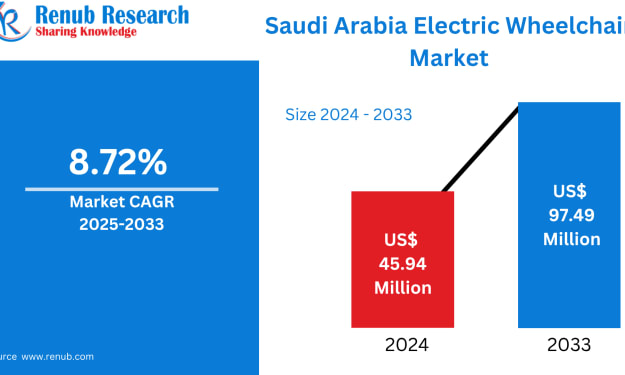
Saudi Arabia Electric Wheelchair Market Overview The Saudi Arabia Electric Wheelchair Market is on a strong growth trajectory, supported by expanding healthcare infrastructure, an aging population, and national reforms aimed at improving accessibility and quality of life. According to Renub Research, the market is projected to grow from US$ 45.94 million in 2024 to US$ 97.49 million by 2033, registering a CAGR of 8.72% during 2025–2033.
By jaiklin Fanandish3 days ago in The Swamp
How Local Startups Are Quietly Arming the Pakistan Navy With New Drones
Start writing...In an era where maritime challenges are rapidly evolving, Pakistan’s defense ecosystem is embracing a new frontier: indigenous unmanned aerial systems (UAS). While headlines often spotlight big-ticket defense acquisitions and international collaborations, a quieter yet powerful revolution is underway at home. Local startups—driven by engineering talent, innovation, and a deep understanding of strategic needs—are developing drones to support the Pakistan Navy, marking a significant shift in how defense technologies are sourced and deployed.
By Fiaz Ahmed Brohi7 days ago in The Swamp
Ukraine Endures Its Bitterest Winter as Russia Targets Heating and Power
As winter grips Ukraine with unprecedented severity, millions of citizens are confronting not only freezing temperatures but also a growing energy crisis caused by ongoing Russian attacks on heating and power infrastructure. The combination of harsh weather and targeted strikes has left families, hospitals, and essential services struggling to cope, raising concerns about humanitarian and civilian safety amid the war.
By Aarif Lashariabout 17 hours ago in The Swamp
Smart phones, Humans and Aliens.
WARNING. I will be tapping into one of your favorite creative tensions: The absurdity of humans worshipping their glowing rectangles as if they were tiny oracles. There’s something deliciously poetic about that contradiction, and it lends itself beautifully to an instructive proviso.
By Novel Allen5 days ago in Poets



Comments
There are no comments for this story
Be the first to respond and start the conversation.