
Ghost Of 1971 Returns: Why China Brings Back PNS Ghazi In India’s Backyard
"China’s renewed focus on naval power near India rekindles memories of the PNS Ghazi incident of 1971, highlighting growing strategic tensions in the Indo-Pacific."


The waters of the Indian Ocean have once again become a theater of strategic maneuvering, as China’s renewed naval activity near the Indian coast recalls one of the most dramatic naval episodes in South Asian history. The so-called “Ghost of 1971” – the PNS Ghazi – is figuratively returning to India’s backyard, as Beijing ramps up its maritime presence and showcases capabilities that echo the tense Indo-Pakistani war era.
The PNS Ghazi, Pakistan’s pioneering submarine, sank off the coast of India during the 1971 war under mysterious circumstances, becoming a symbol of Pakistan’s naval ambitions and the risks of submarine warfare. Decades later, the narrative of undersea operations, intelligence gathering, and naval dominance still resonates in South Asia, particularly as China asserts its maritime strategy across the Indo-Pacific. Chinese naval deployments, including the use of advanced submarines and surface combatants, near strategic Indian waters have raised alarms in New Delhi, drawing parallels with the historical precedent of the Ghazi.
China’s motivation for enhancing its naval footprint near India is multi-faceted. Firstly, the Indo-Pacific has emerged as a critical arena for global trade, energy security, and strategic influence. With India asserting its maritime domain and forming alliances like the Quad with the U.S., Japan, and Australia, Beijing perceives a need to project power and deter perceived containment. The resurgence of submarine operations, echoing the PNS Ghazi’s covert missions, is seen as a tool to monitor and, if necessary, challenge Indian naval movements in these strategic waters.
Additionally, China’s technological advancements in submarine capabilities, including nuclear-powered submarines and sophisticated sonar evasion tactics, signal a new era of undersea strategy. Unlike the era of the PNS Ghazi, when naval technology was relatively nascent in the subcontinent, today’s Chinese submarines combine stealth, endurance, and precision strike capabilities. These developments have not gone unnoticed in India, where naval analysts emphasize the importance of undersea warfare preparedness, intelligence sharing, and fleet modernization to counter potential Chinese incursions.
The geopolitical implications extend beyond mere naval posturing. India-China relations, already strained by border disputes in Ladakh, are further complicated by maritime competition. The Indian Ocean is vital for India’s trade, energy imports, and strategic depth. Any increase in Chinese submarine or naval activity near critical chokepoints like the Strait of Malacca or the Lakshadweep region could threaten India’s maritime security, supply lines, and regional influence. Historical memories of the Ghazi incident serve as a stark reminder of how quickly naval tensions can escalate into broader conflicts.
Analysts also note that China’s naval maneuvers are part of a broader strategy to showcase regional power and test international norms. By operating in proximity to India’s maritime boundaries, Beijing is signaling both capability and intent, reminding regional actors that the balance of power is shifting. In response, India has intensified its naval exercises, increased cooperation with the U.S. and other Quad members, and deployed advanced anti-submarine warfare technology to ensure readiness against potential threats.
The symbolic echo of the PNS Ghazi underscores the psychological dimension of modern naval strategy. Just as the Ghazi’s mysterious sinking in 1971 left an indelible mark on India-Pakistan naval relations, China’s renewed presence aims to exert both operational and psychological pressure. The goal is not only to gather intelligence or patrol waters but also to signal dominance, resilience, and strategic foresight. For India, understanding this interplay of history, technology, and strategy is crucial in shaping naval doctrines and maintaining maritime security.
Public and political discourse in India reflects this historical consciousness. Media reports and think-tank analyses often reference the Ghazi episode when discussing Chinese naval activity, framing the narrative in terms of strategic vigilance and national security. The memory of past conflicts serves as both a warning and a guiding principle, emphasizing the need for robust maritime preparedness, technological investment, and regional diplomacy to counter evolving threats.
In conclusion, the “Ghost of 1971” has returned not as a physical submarine but as a symbol of enduring naval competition in India’s maritime backyard. China’s renewed focus on undersea operations and naval presence near India evokes memories of the PNS Ghazi while highlighting the evolving strategic landscape of the Indo-Pacific. For India, the lessons are clear: maritime vigilance, technological advancement, and strategic alliances are essential to safeguard sovereignty and maintain regional balance. The past, in this case, is not merely a memory—it is a blueprint for understanding and responding to contemporary challenges in the seas that define South Asia’s security future.
About the Creator
Fiaz Ahmed Brohi
I am a passionate writer with a love for exploring and creating content on trending topics. Always curious, always sharing stories that engage and inspire.
Keep reading
More stories from Fiaz Ahmed Brohi and writers in The Swamp and other communities.
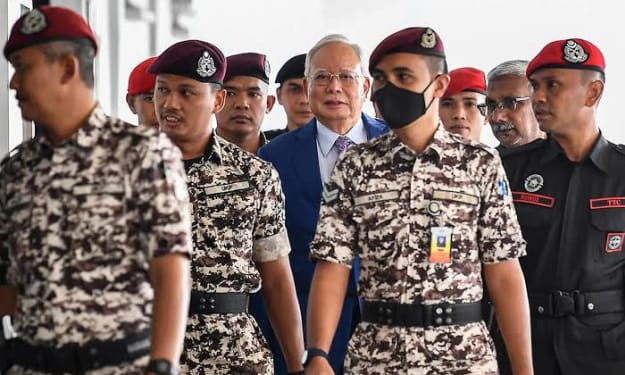
Malaysian court rejects Najib’s bid to serve sentence under house arrest
Malaysia’s judiciary has once again made headlines as a court rejected former Prime Minister Najib Razak’s bid to serve his prison sentence under house arrest, marking a significant moment in the Southeast Asian nation’s ongoing struggle with political corruption. The decision underscores the Malaysian courts’ firm stance on accountability, even when it involves high-profile political figures.
By Fiaz Ahmed Brohi30 days ago in The Swamp



Comments
There are no comments for this story
Be the first to respond and start the conversation.