
Germany News: 13 Million Living at Risk of Poverty
New data exposes widening inequality in Europe’s largest economy Working families and pensioners feel the squeeze of inflation Why prosperity is no longer shared equally in Germany Urban rents and food prices drive social concern Charities warn of growing demand for aid across the country Economic strength masks a deepening social divide

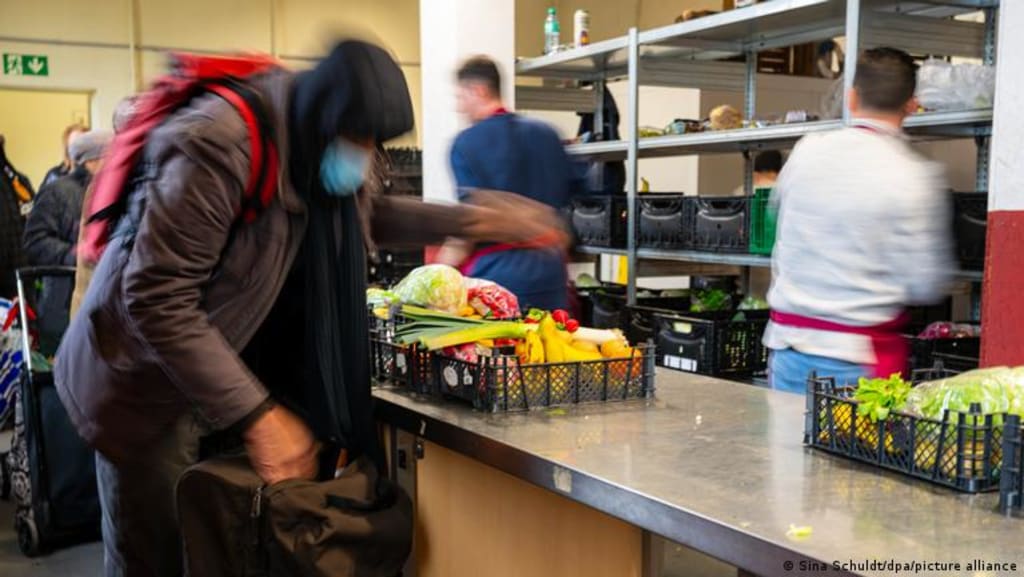
Germany, Europe’s largest economy and a symbol of postwar prosperity, is confronting a sobering reality: nearly 13 million people are now considered at risk of poverty, according to the latest figures released by national statistical authorities. The data highlights growing inequality in a country long associated with economic stability and a strong social safety net.
The figures define those at risk of poverty as individuals earning less than 60 percent of the median national income. While Germany continues to post moderate economic growth, rising living costs and stagnating wages for many workers have pushed millions closer to financial insecurity.
A Widening Gap
Economists say the problem is not a sudden collapse but the result of years of structural pressures. Housing prices have soared in major cities such as Berlin, Munich and Hamburg, while energy and food costs surged following global supply disruptions and geopolitical tensions.
“Germany has not experienced mass unemployment, but it has seen a sharp rise in the cost of basic necessities,” said Claudia Weber, a social policy analyst based in Frankfurt. “For low-income households, even small price increases translate into real hardship.”
Single parents, pensioners, migrants and part-time workers are among the groups most affected. In some urban areas, more than one in five residents are classified as at risk of poverty.
Working but Still Poor
One of the most troubling trends is the rise of the “working poor.” Millions of Germans now hold jobs yet struggle to cover rent, utilities and food. Temporary contracts and part-time employment remain common in service industries, limiting financial security even for those who are officially employed.
“I work full time, but I still have to choose between paying rent and buying new clothes for my children,” said Sabine Müller, a supermarket employee in Cologne. “It feels like I am always one unexpected bill away from disaster.”
Trade unions argue that wage growth has failed to keep pace with inflation, especially in sectors such as retail, hospitality and care services.
Regional Differences
Poverty risk varies sharply across the country. Eastern German states continue to show higher rates than the west, reflecting long-standing disparities in income and employment opportunities. Rural areas also face challenges as young people migrate to cities, leaving behind aging populations with limited access to services.
Large cities present a paradox: they offer jobs but also impose some of the highest living costs. Rent increases have outpaced salary growth, forcing many families into overcrowded housing or long commutes from distant suburbs.
Pressure on the Welfare System
Germany’s welfare system, designed to prevent extreme poverty, is under growing strain. Social benefits such as housing assistance and unemployment support have been adjusted in recent years, but critics say the increases have not matched inflation.
Charities report rising demand for food banks and emergency aid. “We see more families every month who have never needed help before,” said a spokesperson for a Berlin-based relief organization. “These are not people who are unemployed. They are people whose income simply does not stretch far enough anymore.”
Political Debate Intensifies
The poverty figures have fueled political debate ahead of upcoming regional elections. Opposition parties accuse the government of focusing too much on fiscal discipline and not enough on social protection.
Government officials acknowledge the challenge but emphasize recent reforms, including higher minimum wages and expanded child benefits. “We are investing in social cohesion,” said a spokesperson from the labor ministry. “But the global economic situation has made progress more difficult.”
Still, many policy experts argue that deeper reforms are needed, including stronger rent controls, expanded public housing and targeted tax relief for low-income earners.
Impact on Children
Child poverty remains a particular concern. Roughly one in five children in Germany lives in a household at risk of poverty, according to social organizations. Educators warn that financial insecurity can limit access to extracurricular activities, healthy food and educational resources.
“When children grow up worrying about money, it affects their learning and their future opportunities,” said Martina Klein, a school principal in Dortmund. “We see students arriving hungry or without basic supplies.”
Long-term studies show that children raised in poverty are more likely to face unemployment and health problems later in life, reinforcing cycles of disadvantage.
Looking Ahead
Germany’s economic outlook remains uncertain. Slower growth, an aging population and continued global instability could make poverty reduction even more difficult in the coming years.
Experts stress that the issue is not just about income but about dignity and inclusion. “A society can be wealthy on paper and still leave millions behind,” said Weber. “The real test is whether prosperity is shared.”
For many Germans, the statistics reflect everyday experience: shrinking budgets, rising anxiety and a sense that the promise of stability is slipping away. While Germany remains one of Europe’s strongest economies, the growing number of people at risk of poverty serves as a warning sign that economic success alone does not guarantee social security.
As policymakers debate solutions, the lives behind the numbers continue to tell a story of quiet struggle in a country often seen as immune to such problems. Whether Germany can reverse this trend will depend on how effectively it balances economic competitiveness with social responsibility in the years ahead.
About the Creator
Fiaz Ahmed
I am Fiaz Ahmed. I am a passionate writer. I love covering trending topics and breaking news. With a sharp eye for what’s happening around the world, and crafts timely and engaging stories that keep readers informed and updated.
Keep reading
More stories from Fiaz Ahmed and writers in The Swamp and other communities.
China Warns Panama as Hong Kong Firm Contests Ruling on Canal Ports
China has issued a sharp warning to Panama after a Hong Kong-based company challenged a government ruling affecting its control of key ports near the Panama Canal, intensifying tensions over one of the world’s most strategically important shipping routes. The dispute centers on a long-standing concession held by a Hong Kong logistics firm that operates container terminals at both entrances of the canal — one on the Atlantic side and the other on the Pacific. Panamanian authorities recently announced a legal review of the contract, citing concerns over national security, transparency and compliance with updated port regulations. Beijing has responded by accusing Panama of politicizing commercial matters and undermining investor confidence, framing the case as part of growing international pressure on Chinese-linked companies operating critical infrastructure abroad. Strategic Waterway Under Scrutiny The Panama Canal handles roughly five percent of global maritime trade and is vital to supply chains linking Asia, the Americas and Europe. Control over port operations near the canal has long been viewed as strategically sensitive, particularly as rivalry between China and the United States intensifies. The Hong Kong firm has operated the ports for more than two decades, expanding capacity and investing billions of dollars in infrastructure. It argues that the Panamanian government’s move to review or potentially revoke its concession violates contractual obligations and international investment protections. In a statement, the company said it would contest the ruling in court and pursue arbitration if necessary. “We have complied with Panamanian law and fulfilled our investment commitments,” the firm said. “Any attempt to cancel or revise the concession on political grounds would harm Panama’s reputation as a reliable destination for foreign investment.” Beijing’s Warning China’s foreign ministry reacted forcefully, urging Panama to “provide a fair and non-discriminatory business environment” and warning against decisions influenced by external political pressure. “Economic cooperation should not be turned into a geopolitical tool,” a ministry spokesperson said. “China firmly opposes any actions that damage the legitimate rights of Chinese enterprises under the pretext of national security.” Though the firm is registered in Hong Kong and operates independently, Chinese officials have increasingly treated disputes involving Hong Kong-based companies as matters of national interest, particularly when they involve infrastructure tied to global trade. Analysts say Beijing fears the case could set a precedent for other countries to challenge Chinese-linked port investments under security arguments. Panama’s Position Panamanian officials insist the review is a legal and administrative matter rather than a political one. The government has launched an audit of several port concessions as part of a broader effort to ensure compliance with updated laws and transparency standards. “This is about sovereignty and legality,” said one senior official familiar with the process. “No company, foreign or domestic, is exempt from review when national infrastructure is involved.” The government has not yet announced whether it plans to cancel or renegotiate the contract but has said it will wait for the courts to rule on the matter. The dispute comes at a delicate time for Panama, which has sought to balance economic ties with China while maintaining close relations with the United States, the canal’s former administrator and still its largest user. U.S. Concerns in the Background Washington has long expressed unease about Chinese involvement in ports near the canal, warning that such control could give Beijing leverage over a critical chokepoint in global trade. Although no evidence has emerged of interference with canal operations, U.S. officials have urged Panama to ensure that port management remains transparent and secure. The latest dispute is likely to intensify diplomatic pressure on Panama from both sides. “This is a textbook example of great-power competition playing out in a smaller country,” said a regional security analyst. “Panama is being pulled between its economic interests and its strategic alliances.” Business Risks and Investor Confidence For the Hong Kong firm, the stakes are high. The ports represent one of its most profitable overseas operations and a flagship example of its global expansion strategy. Losing control of them would not only hit revenues but also damage its reputation as a stable international operator. Investors are watching closely. Panama has promoted itself for decades as a logistics hub with predictable rules and strong protections for foreign companies. A prolonged legal battle could raise questions about regulatory risk in the country. “If contracts can be revisited for political reasons, it creates uncertainty,” said an international trade lawyer based in Miami. “That uncertainty can deter future investment.” Broader Implications The case reflects a wider trend of governments reexamining foreign involvement in ports, power grids and telecommunications networks. From Europe to Southeast Asia, infrastructure once viewed purely as commercial is increasingly seen through a security lens. China has expanded its presence in ports across Latin America, Africa and Europe as part of its global trade strategy. While these investments are often welcomed for their economic benefits, they have also triggered fears about dependence on Chinese capital and influence. Panama’s decision could therefore resonate far beyond its borders, shaping how other nations approach similar contracts with Chinese-linked firms. What Comes Next The Hong Kong company’s legal challenge is expected to move through Panama’s courts in the coming months. If unsuccessful, arbitration under international investment treaties could follow, potentially dragging the dispute on for years. Meanwhile, diplomatic pressure is likely to grow. Beijing will continue to frame the issue as discrimination against Chinese business, while Panama seeks to assert its authority over strategic assets without alienating major partners. As the canal remains central to global trade and geopolitics, the outcome of this confrontation will be closely watched by governments, shipping companies and investors alike. What began as a contract dispute has now become a test of how commercial interests, national sovereignty and great-power rivalry intersect at one of the world’s most important maritime crossroads.
By Fiaz Ahmed 4 days ago in The Swamp
Why Black History Matters in America?
The United States of America is celebrating their 250th anniversary in 2026. I'm proud to be an American and as someone who was born here, I wouldn't imagine myself living anywhere else. This is a country where opportunities are possible. Where anyone can be successful in anything they desire to do. Equality, community, and togetherness are the backbones of what America is and should be about. However, we have an administration who wants to erase and disregard those who have made positive, meaningful impacts in our country, specifically Black figures, such as Martin Luther King, Jr., Rosa Parks, and Maya Angelou. President Trump and his administration have been constantly complaining and fighting against what they call the "Woke agenda". They use this excuse as a distraction from other issues they refuse to address, such as the high cost of living, climate change, and inflation. That equality is dividing America, when in reality, it's bringing us together. Being woke is not tied to a specific political party. No matter where you stand on the political spectrum, you can still care about other people and their plights. Compassion and empathy for others isn't tied to a political party, either. We were taught as children to treat others the way we want to be treated and not judge others because they're different from us. Caring about others isn't a personal attack on your beliefs. It doesn't make you any less of a person. People who are easily offended over African American figures, past or present, or anything related to it, are grasping at straws. Current and future generations need to know who people like Harriet Tubman and Shirley Chisholm were, especially in the classroom. Black History is part of American History. It should be recognized, not hidden or forgotten. Besides, you can't shield children from everything, just because your feelings are easily hurt.
By Mark Wesley Pritchard 6 days ago in The Swamp



Comments
There are no comments for this story
Be the first to respond and start the conversation.