
Germany: Merz Says 2026 Can Be a 'Year of New Beginnings'
Christian Democratic Union leader Friedrich Merz outlines vision for Germany amid economic challenges and political shifts


As Germany steps into 2026, the country finds itself at a crossroads. Christian Democratic Union (CDU) leader Friedrich Merz recently declared that the upcoming year could mark a "year of new beginnings" for the nation, signaling both political ambition and a vision for economic recovery. Merz’s remarks have sparked debate across Germany, highlighting both hopes and challenges that lie ahead for Europe’s largest economy.
Merz, known for his pro-business stance and assertive approach to politics, delivered his statement during a policy briefing in Berlin. Speaking to party members and the press, he emphasized the need for Germany to embrace reform, strengthen its economic foundations, and take decisive steps in areas like energy, technology, and international diplomacy.
Economic Outlook and Challenges
Germany has faced a complex economic landscape in recent years. While it remains Europe’s largest economy, it has struggled with high energy costs, the aftereffects of global supply chain disruptions, and slower-than-expected growth. Merz highlighted these challenges in his speech, suggesting that 2026 offers an opportunity to pivot toward policies that encourage innovation, investment, and job creation.
“Germany has the talent, resources, and resilience to reinvent itself,” Merz said. “If we take bold steps today, we can ensure that 2026 is remembered as a year when Germany regained momentum, competitiveness, and optimism.”
He specifically called for increased investment in renewable energy, digital infrastructure, and technology-driven industries. Given Germany’s longstanding reliance on traditional manufacturing and automotive sectors, the push toward modernization reflects the urgency to stay competitive on a global scale.
Political Implications
Merz’s remarks are not just about economics; they carry clear political undertones. As the CDU seeks to regain influence in federal politics, positioning 2026 as a year of opportunity allows Merz to present a hopeful narrative to voters. Political analysts note that Merz’s vision emphasizes stability, growth, and pragmatic leadership—qualities that appeal to centrist voters who may be wary of extremes on either side of the political spectrum.
However, critics argue that Merz’s statements risk overpromising in a period of uncertainty. Germany continues to face political fragmentation, with multiple parties vying for influence in both regional and national elections. While Merz frames 2026 as a potential turning point, achieving significant change will require navigating coalition politics, bureaucratic hurdles, and entrenched policy debates.
International Perspective
Germany’s position in the European Union also factors into Merz’s vision. As global tensions persist, particularly regarding Russia, China, and energy markets, Germany’s leadership role in Europe is under scrutiny. Merz stressed that Germany must not only focus on domestic recovery but also take proactive steps in international diplomacy and trade.
“Germany can be a beacon of stability and innovation in Europe,” he said. “By addressing our internal challenges, we strengthen our ability to lead, collaborate, and influence decisions that shape the continent and the world.”
Public Reception and Industry Reactions
Public reaction to Merz’s announcement has been mixed. Business leaders generally welcomed his emphasis on economic growth and investment, particularly in renewable energy and technology sectors. Several industry groups noted that a focused strategy could help Germany attract foreign investment and create high-value jobs, aligning with the nation’s need to maintain its competitive edge globally.
On the other hand, some citizens and political opponents questioned whether Merz’s optimism reflects the lived realities of ordinary Germans. Concerns about inflation, housing costs, and energy affordability remain high, and skeptics argue that rhetoric must be paired with actionable policies to create meaningful change.
Looking Ahead
As Germany enters 2026, Merz’s call for a “year of new beginnings” encapsulates both aspiration and challenge. The coming months will test the CDU leader’s ability to translate vision into concrete reforms, address economic pressures, and navigate political complexities. For many Germans, Merz’s message offers a sense of hope and direction, while also highlighting the stakes involved in shaping the country’s next chapter.
In a rapidly changing world, Germany’s trajectory will depend on leadership, innovation, and the nation’s willingness to adapt. Whether 2026 truly becomes a year of new beginnings remains to be seen, but Merz’s message underscores a desire to seize opportunity and steer Germany toward renewed prosperity and global relevance.
About the Creator
Fiaz Ahmed Brohi
I am a passionate writer with a love for exploring and creating content on trending topics. Always curious, always sharing stories that engage and inspire.
Keep reading
More stories from Fiaz Ahmed Brohi and writers in The Swamp and other communities.
Astronaut Amanda Nguyen Says Backlash from Blue Origin Flight Left Her Depressed
Amanda Nguyen, one of the recently celebrated astronauts aboard Blue Origin’s latest spaceflight, has opened up about the emotional challenges she faced following her historic journey. While the mission marked a significant milestone in her career and for women in space exploration, Nguyen revealed that the backlash from the public and media left her grappling with depression, highlighting an often-overlooked side of fame and achievement in high-profile fields like aerospace. Nguyen, who has trained extensively and dedicated years to preparing for this opportunity, was initially celebrated for her courage and pioneering spirit. Blue Origin’s flight, designed to bring civilians into suborbital space, has been hailed as a step forward in commercial space travel. For Nguyen, it was not just a personal achievement but a symbol of progress, particularly for young women aspiring to enter STEM fields. However, the excitement was soon overshadowed by a wave of criticism. Social media platforms erupted with debates over the ethics, costs, and environmental impacts of space tourism. Some commentators questioned the need for civilian spaceflights, while others criticized the perceived elitism of those able to afford such trips. For Nguyen, who saw her flight as a platform to inspire and educate, the intense scrutiny was difficult to navigate. Speaking candidly in a recent interview, Nguyen shared, “I thought reaching space would be the happiest moment of my life, but the backlash made me feel isolated and questioned my worth. It was overwhelming, and I struggled with depression as I tried to process the criticism.” Her words shed light on a reality that many high-achieving individuals face: public recognition often comes with immense pressure and judgment. Mental health experts note that the unique pressures faced by astronauts and public figures in pioneering fields can be intense. Dr. Laura Mendes, a psychologist specializing in high-stakes professions, explains, “Astronauts are trained for extreme physical and cognitive challenges, but the social and emotional aspects are often underestimated. The sudden shift from being celebrated to being scrutinized can trigger anxiety, depression, and self-doubt.” Nguyen’s experience serves as a reminder that emotional resilience is just as important as technical skill in the aerospace industry. Despite the negativity, Nguyen emphasized the importance of focusing on her broader goals. She has continued to engage with educational initiatives, giving talks at schools and universities to encourage young people, especially girls, to pursue careers in science and space exploration. “I don’t want the criticism to define me. Space exploration is about curiosity, progress, and learning, and that’s what I aim to inspire,” she said. Blue Origin, meanwhile, has expressed support for Nguyen and her fellow passengers, recognizing the challenges that come with the spotlight. The company has highlighted her contributions to the mission and praised her commitment to education and public engagement. A spokesperson noted, “We understand the scrutiny that comes with such high-profile flights and stand by our astronauts. Their achievements are significant for the entire space community.” Nguyen’s story also sparks a broader conversation about how society responds to groundbreaking achievements. While criticism is part of public life, experts argue that constructive dialogue should focus on education, ethics, and innovation rather than personal attacks. By supporting pioneers like Nguyen, communities can foster a culture that celebrates exploration while encouraging responsible debate. In reflecting on her journey, Nguyen acknowledges the lessons she has learned about resilience and mental health. “I realized that it’s okay to feel vulnerable, and seeking help doesn’t diminish your accomplishments. Sharing my experience may help others who feel overwhelmed by public scrutiny,” she said. Her openness underscores the importance of mental health awareness in fields traditionally dominated by technical achievements. As Nguyen continues to inspire the next generation, her experience highlights both the excitement and the challenges of modern space travel. While the journey to the stars is thrilling, it also comes with an emotional landscape that is often hidden from public view. Her story reminds us that behind every historic flight is a human being navigating the pressures of expectation, criticism, and personal growth. The backlash that once left Nguyen feeling depressed has, in a sense, become a catalyst for advocacy. By speaking out, she is helping to change the narrative around mental health in high-pressure professions and encouraging a more compassionate view of those who dare to reach for the stars. In doing so, Amanda Nguyen’s legacy extends beyond the rocket and into the hearts of those she inspires.
By Fiaz Ahmed Brohi2 months ago in The Swamp
The Forsyth House Fire
Since 1851, Forsyth House has stood on the corner of Union Street and Gordon Street in the heart of Glasgow. Its iconic, or was... because on Sunday 8th of March, 2026, a fire broke out in a small, seemingly un-named shop in the building and tore all that history down. As I write, the rubble is still unsettled and the street is still blocked off. Central Station is quiet on the upper level, and around 30 small businesses have quite literally gone up in smoke.
By S. A. Crawford3 days ago in The Swamp
The US Navy Decommissioned Middle East Minesweepers Last Year. Here’s What They Did
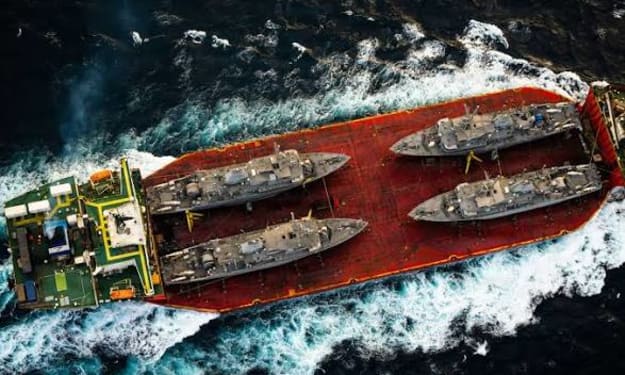
Last year, the United States Navy officially decommissioned a fleet of minesweepers that had been stationed in the Middle East, concluding decades of service aimed at safeguarding critical maritime routes in one of the world’s most strategically important regions. These vessels, which included Avenger-class minesweepers, played a crucial role in ensuring the safety of naval and commercial traffic, countering the threat of naval mines, and supporting coalition operations. Minesweepers are specialized ships designed to detect and neutralize naval mines, which are explosive devices placed in waterways to disrupt shipping and military operations. In the Middle East, particularly in the Persian Gulf and surrounding waters, these ships were tasked with protecting vital oil shipping lanes, military supply routes, and key ports from potential threats posed by adversaries. According to Navy officials, the decommissioned minesweepers were deployed for a range of missions, including mine countermeasure exercises, port security operations, and joint drills with regional partners. “These vessels have served as a critical first line of defense, ensuring safe navigation for both military and civilian vessels,” said Rear Admiral James Goldrick, who oversees maritime security operations in the region. “Their contributions have been invaluable in maintaining stability and operational readiness.” During their service, the minesweepers used a combination of sonar systems, remotely operated vehicles (ROVs), and mechanical sweeping gear to detect and clear mines. This capability was particularly important in the Persian Gulf, a narrow waterway where even a small naval mine could severely disrupt maritime traffic and the global oil supply. Their operations required close coordination with coalition partners, including the navies of the United Kingdom, Saudi Arabia, and other regional allies. The decommissioning process involved carefully retiring the ships from active service, removing sensitive equipment, and transferring or scrapping vessels according to military regulations. Many of the minesweepers had served for decades, and technological advancements had rendered some systems outdated compared to newer mine countermeasure platforms, including unmanned surface vessels (USVs) and advanced sonar systems. While these ships are no longer in operation, their legacy continues through training programs and lessons learned that have informed the Navy’s modern mine countermeasure strategies. Crews trained on these vessels developed expertise in navigation, mine detection, and coordination under potentially hostile conditions, skills that are now being transferred to personnel operating next-generation platforms. The role of minesweepers in the Middle East was particularly critical during periods of heightened tension, when adversaries threatened the Gulf’s shipping lanes with the potential deployment of mines. Their presence acted as both a deterrent and a practical measure to ensure uninterrupted flow of oil and commerce. Naval analysts point out that the retirement of these vessels reflects a broader shift in naval strategy, moving toward unmanned systems and multi-mission ships that can handle mine countermeasures while performing other operational tasks. Despite their decommissioning, the US Navy remains committed to maintaining security in the region. Newer platforms, such as the Independence-class littoral combat ships, equipped with modular mine countermeasure packages, are gradually replacing the traditional minesweepers. These vessels use advanced technologies, including unmanned underwater vehicles (UUVs) and autonomous systems, to detect and neutralize threats more efficiently and with reduced risk to personnel. Experts highlight that the minesweepers’ retirement does not signal a reduction in the Navy’s commitment to the region. Instead, it reflects an adaptation to modern naval warfare, where unmanned and highly networked systems can perform tasks that previously required manned vessels. “The mission remains the same: to ensure maritime freedom of navigation and protect commercial shipping,” said one naval strategist. “We are simply using new tools to achieve it more effectively.” Over their decades of service, the Middle East-deployed minesweepers completed thousands of operational hours, conducted joint exercises with allied navies, and played a critical role in securing one of the world’s most vital maritime regions. Their crews often worked in challenging conditions, including extreme heat, tight operational areas, and periods of geopolitical tension, demonstrating professionalism and dedication. Looking ahead, the Navy plans to expand its use of unmanned systems and integrate new mine countermeasure capabilities into the fleet. Lessons learned from the retired minesweepers will continue to inform doctrine, training, and operational planning, ensuring that future personnel can respond effectively to mine threats in both the Middle East and other strategic theaters. The decommissioning of these minesweepers marks the end of an era for the US Navy in the Gulf, but their contributions remain a cornerstone of maritime security in the region. As technology evolves, the legacy of these vessels and their crews lives on in the Navy’s ongoing mission to safeguard critical waterways, protect global commerce, and support coalition partners in maintaining regional stability. By retiring the old ships and integrating modern platforms, the US Navy aims to continue projecting strength, ensuring safe navigation, and adapting to the evolving maritime threats of the 21st century.
By Fiaz Ahmed 3 days ago in The Swamp



Comments
There are no comments for this story
Be the first to respond and start the conversation.