
Gasfield in Northern Iraq Hit by Drone Attack: Reports
Rising tensions in Iraq as energy infrastructure comes under targeted drone strike

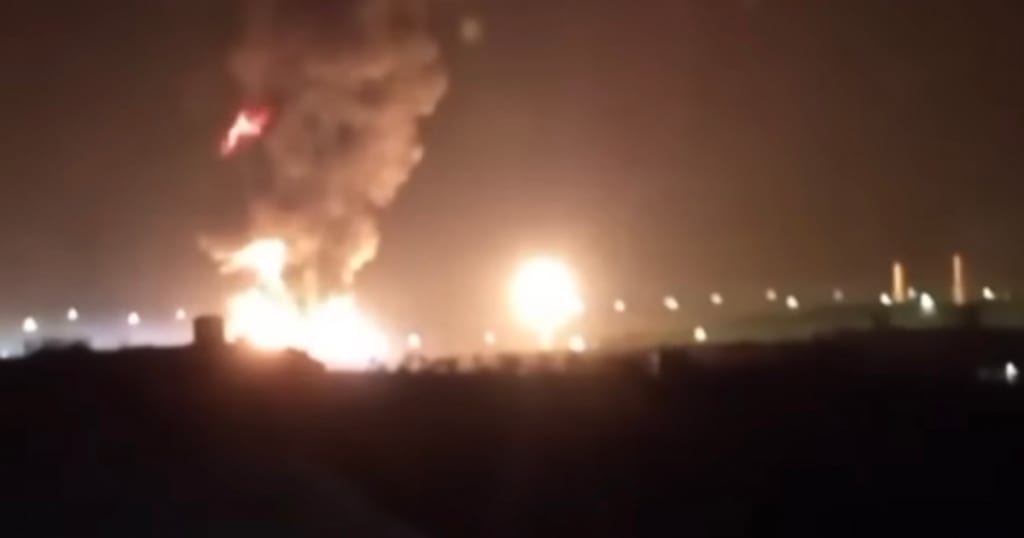
Northern Iraq was shaken by reports of a drone attack on a key gasfield, raising concerns about the security of the region’s energy infrastructure. While details are still emerging, local officials and media sources indicate that the attack targeted facilities crucial for natural gas production, potentially disrupting supply and prompting emergency responses from authorities.
The Attack and Immediate Response
According to preliminary reports, drones struck the gasfield early in the morning, with explosions and fires observed at multiple points within the facility. Emergency response teams were immediately dispatched, and the affected area was cordoned off to prevent further damage or casualties. While no official death toll has been confirmed, sources suggest that there were minor injuries among the staff present at the site.
Local authorities have begun an investigation to determine the origin of the drones and the exact motivation behind the attack. Security forces are working to assess whether this was a targeted strike against Iraq’s energy sector or part of a broader regional escalation.
Impact on Iraq’s Energy Sector
Northern Iraq holds a significant portion of the country’s gas reserves, and the attacked gasfield contributes substantially to domestic energy supply and exports. Any disruption caused by such attacks can have immediate economic consequences, affecting power generation, industrial activity, and the livelihoods of communities dependent on stable energy access.
Energy analysts are closely monitoring the situation, noting that drone attacks on critical infrastructure represent a growing threat in the Middle East. Such incidents not only compromise production but also increase insurance and security costs for operators, potentially influencing foreign investment in the sector.
Regional Tensions and Security Challenges
The attack comes amid heightened tensions across Iraq and neighboring regions. Drone strikes have become an increasingly common tactic used by armed groups and state actors to exert pressure without committing to large-scale ground operations. Northern Iraq, with its strategic energy infrastructure and proximity to conflict-prone areas, remains vulnerable to such attacks.
Analysts point out that the use of drones in the region reflects a shift in modern conflict strategies. Small, commercially available or modified drones can carry explosives and strike with precision, allowing perpetrators to target high-value assets while minimizing their exposure to counterattacks.
International Implications
The attack on the gasfield has implications beyond Iraq. Energy markets are sensitive to disruptions in global gas supply, and even localized attacks can influence prices and geopolitical negotiations. Neighboring countries and international energy stakeholders are likely to watch developments closely, evaluating the risk to regional energy trade and investment.
Moreover, the incident underscores the ongoing challenge of securing critical infrastructure in conflict-affected areas. International partners may increase support to Iraq in terms of security training, surveillance technology, and crisis management to prevent similar attacks in the future.
Government and Military Statements
Iraqi officials have condemned the attack and vowed a swift investigation. The Ministry of Oil and local security forces emphasized that measures are being taken to prevent operational disruptions and ensure the safety of workers.
Military sources, speaking on condition of anonymity, suggested that intelligence teams are analyzing drone debris to trace the attack’s origin. They also indicated that surveillance systems and anti-drone defenses are being strengthened at other high-value installations to deter potential future incidents.
Public Reaction
Locals expressed concern over the attack, highlighting both safety risks and economic implications. Social media platforms in Iraq are flooded with discussions about the incident, as citizens worry about the continuity of energy supply and the potential for escalating violence in their region.
Business leaders in the energy sector also warned that repeated incidents could discourage investment and undermine efforts to modernize Iraq’s energy infrastructure.
Conclusion
The drone attack on the northern Iraq gasfield highlights the persistent vulnerabilities of critical infrastructure in conflict-prone regions. While immediate casualties appear limited, the incident has far-reaching consequences for energy security, regional stability, and economic confidence.
Authorities are actively investigating, emergency teams are responding, and energy analysts continue to assess the potential impact on both local and international markets. The use of drones in modern conflicts presents a new challenge, one that requires rapid adaptation by governments, security forces, and private operators to safeguard vital assets.
As the investigation unfolds, the world watches Iraq’s response to this alarming demonstration of how emerging technologies can threaten global energy stability.
About the Creator
Fiaz Ahmed Brohi
I am a passionate writer with a love for exploring and creating content on trending topics. Always curious, always sharing stories that engage and inspire.
Keep reading
More stories from Fiaz Ahmed Brohi and writers in The Swamp and other communities.
Pope Leo Arrives in Turkey on His First Foreign Trip of the Papacy
A Historic Visit Aimed at Dialogue, Peace, and Global Unity When Pope Leo stepped off the plane in Turkey for the first foreign trip of his papacy, it marked more than a simple diplomatic visit. It symbolized a new chapter—one that aims to strengthen dialogue between cultures, support peace in a troubled region, and show the world the direction his leadership hopes to take. The visit has already captured international attention, raising questions about what the Pope hopes to achieve and how Turkey, a nation bridging Europe and Asia, will receive him.
By Fiaz Ahmed Brohi4 months ago in The Swamp
Parallel Protests
I haven't written for quite some time, but I have A LOT of thoughts about yesterday's protest rally against our government's involvement and complicity in America's war on Iran, on the harbourside of my home city Bristol, and I need to put them somewhere. My gorgeous girlfriend is always a loving and listening ear and sharing it all with her will always be a healthy and happy way of processing the mental and emotional weight, but getting it straight in my brain to share means writing it all down in straight lines, so, here we are and thanks for being here.
By Steph Cole9 days ago in The Swamp
In Defense Of Liars, Thieves, And Scumbags
We live in a world filled with those who are dishonest, untrustworthy, or act unethically. Just because you don't think so doesn't make it any less true. And in that world filled with those types of individuals, there are people who would still defend them to their last breath. It's a strange anomaly we are all witnessing more and more. But what can we do about it?
By Jason Ray Morton about 10 hours ago in The Swamp




Comments
There are no comments for this story
Be the first to respond and start the conversation.