
G7 vs BRICS: The Battle for Global Influence and Economic Power
Uncover the Key Differences Between G7 and BRICS as They Compete for Global Leadership and Shape the Future of International Governance

In today’s shifting geopolitical landscape, alliances and coalitions are crucial in shaping global governance. Two significant power blocs, the G7 and BRICS, have emerged as key players. Both represent different approaches to global economic and political issues, yet each exerts considerable influence. In this analysis, we explore their structure, goals, and impact on global governance.
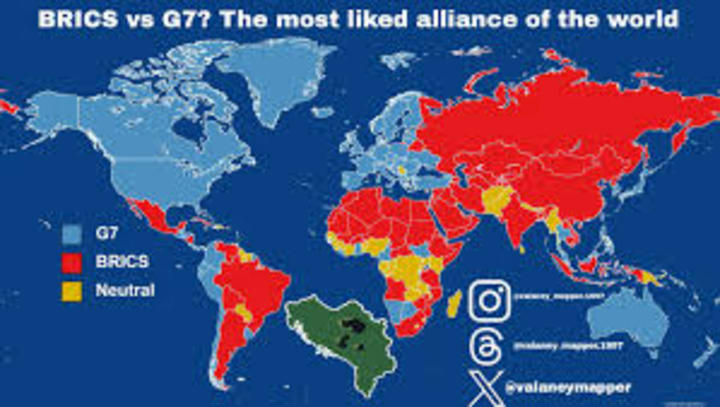
The G7: An Economic Powerhouse
Composed of Canada, France, Germany, Italy, Japan, the United Kingdom, and the United States, the Group of Seven (G7) is a coalition of advanced economies. Formed in the 1970s during a period of economic upheaval, the G7 has traditionally focused on stabilizing the global economy, safeguarding international security, and promoting trade.
Defining Features of the G7
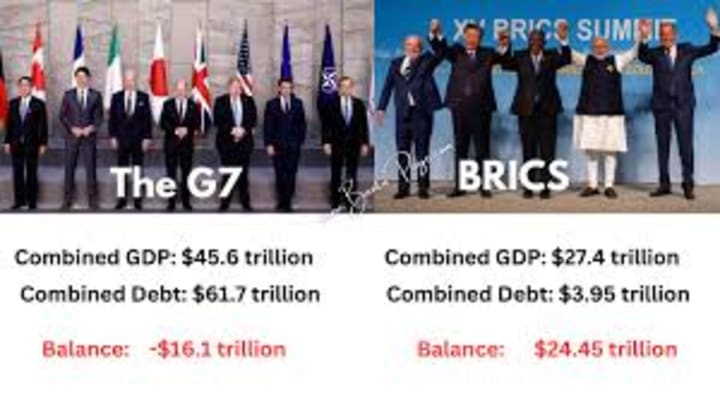
Economic Prowess: Together, G7 countries produce approximately 40% of global GDP, a testament to their financial clout. This economic influence allows them to shape key global policies, particularly within financial markets and international trade.
Political Unity: Despite differences in domestic policies, G7 countries often present a unified stance on pressing issues such as climate change, terrorism, and global health crises. Their collective influence has a substantial impact on multilateral negotiations.
Consensus-Driven Decisions: Operating under a consensus-based model, the G7 ensures that all member states agree before taking action. While this fosters collaboration, it can also slow down decision-making, particularly during crises that demand swift responses.
Annual Summits: Each year, G7 leaders convene to address global challenges, issuing joint declarations that set the agenda for the coming year. These meetings provide a platform for coordinating international strategies and policies.
Global Responsibility: The G7 is actively involved in addressing global inequalities, health emergencies (most notably during the COVID-19 pandemic), and climate change. Their interventions often involve resource mobilization and partnerships with other nations to tackle these challenges head-on.
Influence Over Financial Institutions: G7 nations dominate key financial institutions like the International Monetary Fund (IMF) and the World Bank. This leverage allows them to guide global economic policies and extend financial assistance to emerging and developing countries.
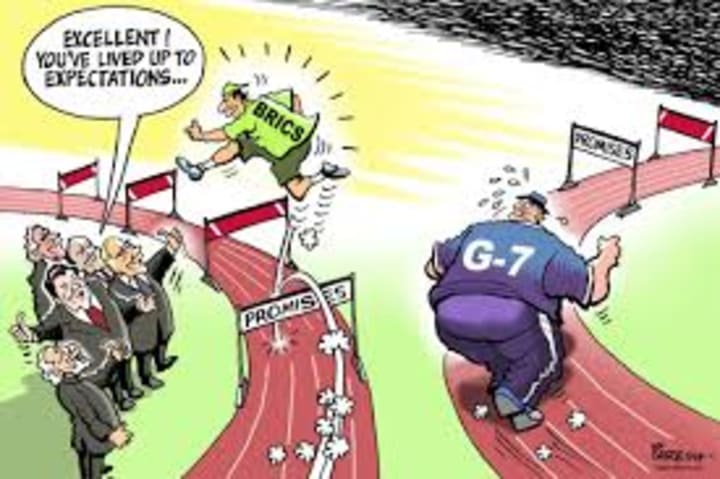
Formed in 2009, BRICS—comprising Brazil, Russia, India, China, and South Africa—represents a group of emerging economies. Their primary mission is to challenge the status quo in global governance by offering alternatives to Western-dominated institutions. BRICS focuses on fostering economic development, reducing global inequalities, and promoting inclusive growth.
Defining Features of BRICS
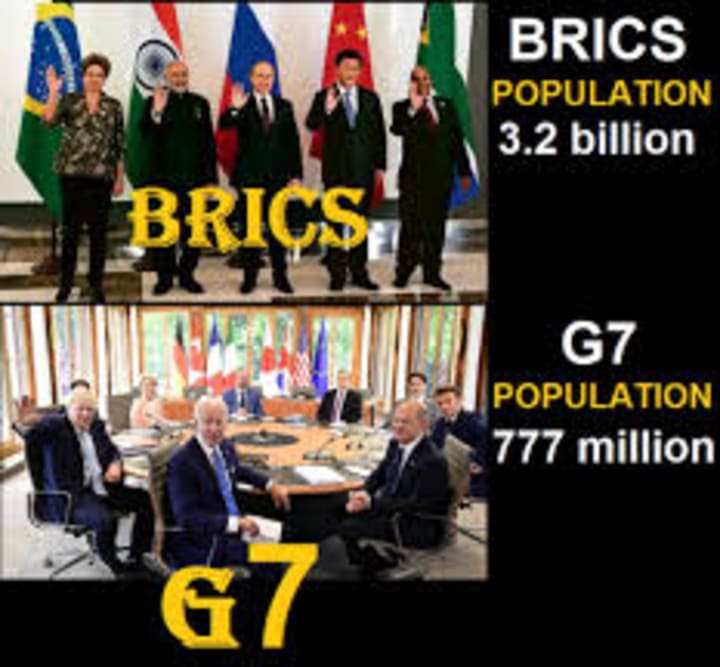
Economic Growth: BRICS nations together account for over 40% of the global population and approximately 23% of global GDP. Their rapidly expanding markets are increasingly central to global economic discourse.
Diverse Perspectives: Unlike the homogeneity of the G7, BRICS is characterized by its vast geographic and developmental diversity. This variety enables the group to present a more inclusive and multi-faceted approach to global issues, often advocating for reform in international governance structures.
Focus on Development: Economic development and poverty alleviation are central to BRICS’ agenda. The group seeks to reform global financial institutions to better serve developing countries, advocating for a more equitable global economy.
Multipolar World Order: BRICS aims to diminish the dominance of Western powers in global governance. Its members often pursue independent foreign policies, promoting a more balanced distribution of power on the international stage.
Collaborative Decision-Making: Like the G7, BRICS also emphasizes collective decision-making, ensuring that all member states have a voice in shaping the group’s policies. However, the diversity of its membership means that decisions are often shaped by a broader array of perspectives.
Cultural Exchange: BRICS promotes people-to-people ties, fostering greater cultural cooperation. Initiatives in education, arts, and research are key to strengthening diplomatic relations and building mutual understanding among its members.
Institutional Reforms: A cornerstone of BRICS’ mission is advocating for reforms in global governance institutions like the United Nations Security Council and the IMF. Their goal is to give developing nations more influence, reflecting the evolving realities of the 21st century.
Comparing Economic and Political Influence
Both G7 and BRICS wield significant influence, but in markedly different ways. The G7, with its economic might and unified political stance, remains a key player in global governance. However, it is often criticized for representing only advanced economies, excluding the voices of emerging and developing nations.
BRICS, on the other hand, represents a broader swath of the global population and is rapidly gaining economic clout. Its diversity of membership offers a more inclusive approach to global challenges, and its call for reform resonates with many countries that feel marginalized by Western-dominated institutions.
Economic Strategies and Initiatives
Both groups have established institutions to further their economic objectives. The G7, through its influence over organizations like the IMF and World Bank, shapes global financial policies, especially in times of crisis. These institutions have historically provided financial support to nations in need, but their programs have often been criticized for imposing stringent conditions on recipient countries.
BRICS, in response to the perceived dominance of Western financial systems, created the New Development Bank (NDB) and the Contingent Reserve Arrangement (CRA). These institutions are designed to provide financial stability and development support, particularly for infrastructure projects in emerging economies. BRICS aims to reduce its dependence on Western financial institutions, seeking to build more resilient economies through intra-group collaboration.
Summits and Collaboration
Both the G7 and BRICS hold annual summits where leaders gather to discuss global challenges. These meetings play a crucial role in shaping the policies and strategies of each group. While the G7 focuses on maintaining global stability through its economic and political dominance, BRICS summits emphasize cooperation among emerging economies, fostering a multipolar world order.
Beyond economic discussions, both groups also prioritize cultural exchanges. BRICS, in particular, encourages educational programs, research collaboration, and people-to-people ties, helping to bridge cultural divides and build stronger diplomatic relationships.
Conclusion: The Future of Global Governance
The G7 and BRICS represent two different visions for the future of global governance. While the G7 focuses on maintaining its economic dominance and promoting stability, BRICS is advocating for a more inclusive and equitable global order. As the balance of global power continues to shift, the interplay between these two groups will likely shape the future of international relations. Each has its strengths, and the evolving dynamic between them will be crucial in addressing the world's most pressing challenges.
About the Creator
David Snam
Greetings, I'm David Snam, a passionate storyteller weaving narratives that resonate with the heart and mind. My tales blend the surreal with the everyday, inviting you to explore worlds where the ordinary transforms into the extraordinary.
Keep reading
More stories from David Snam and writers in The Swamp and other communities.
Floyd Shivambu's Shocking Exit: EFF Deputy President Resigns Amid Explosive VBS Scandal
In South Africa's turbulent political theater, few entities have ignited as much fervor as the Economic Freedom Fighters (EFF). Since its inception in 2013, the EFF has positioned itself as a vanguard of radical economic reform, drawing both staunch allies and vocal critics. Yet, the party now finds itself in a maelstrom, with the VBS Mutual Bank scandal intensifying and Floyd Shivambu’s sudden resignation thrusting the leadership into disarray. This development casts a long shadow over the party's future, raising questions about its direction and stability.
By David Snam2 years ago in The Swamp
The Forsyth House Fire
Since 1851, Forsyth House has stood on the corner of Union Street and Gordon Street in the heart of Glasgow. Its iconic, or was... because on Sunday 8th of March, 2026, a fire broke out in a small, seemingly un-named shop in the building and tore all that history down. As I write, the rubble is still unsettled and the street is still blocked off. Central Station is quiet on the upper level, and around 30 small businesses have quite literally gone up in smoke.
By S. A. Crawforda day ago in The Swamp
Record 52 Israeli billionaires make Forbes list with $308B combined wealth
A record‑breaking number of Israeli billionaires have appeared on Forbes magazine’s 2026 annual World’s Billionaires list, underscoring the country’s growing economic muscle on the global stage. This year, a total of 52 individuals with Israeli citizenship made the list, with their combined net worth reaching about $308 billion — a historic high and a significant increase compared to previous years. The combined wealth figure represents roughly a 24% increase from the previous year and about a 50% jump since 2024, reflecting strong performance in global markets and particularly robust gains in technology, investment, and startup sectors. Technology and Markets Fueling Wealth Growth Israel has long been nicknamed the “startup nation” thanks to its vibrant high‑tech ecosystem. Local companies specializing in artificial intelligence, semiconductors, cybersecurity, cloud computing, and other advanced technologies have seen explosive growth in recent years, attracting significant venture capital and spurring lucrative acquisitions. These gains have helped boost the fortunes of entrepreneurs, founders, and investors who are now among the country’s wealthiest. Despite ongoing geopolitical tensions in the region, including recent conflicts that rattled global markets, Israeli stock exchanges showed resilience. Investors responded positively after brief periods of volatility, helping to elevate asset values — an outcome that benefited billionaire portfolios tied to publicly traded firms and private equity stakes alike. Top Israeli Wealth Holders on the Global Stage Leading the pack of Israeli billionaires is Miriam Adelson, who is ranked as the richest Israeli on the list with an estimated net worth of roughly $37.5 billion. Her fortune is closely linked to holdings in the Las Vegas Sands casino conglomerate and media assets, and she ranks among the top 60 richest individuals worldwide. Following Adelson are brothers Idan Ofer and Eyal Ofer, two generations‑spanning tycoons whose diversified investments span shipping, real estate, energy, banking, and technology. Both have built empires that position them well within the global billionaire rankings, with net worth estimates in the mid‑$30 billion range. Another notable success story comes from mobile gaming: Dmitry Bukhman and his brother Igor Bukhman, co‑founders of the gaming company Playrix, are also among Israel’s wealthiest. Each brother is estimated to be worth around $13.6 billion, thanks to the global popularity of titles like Township, Homescapes, and Fishdom. What This Means for Israel’s Economy The surge in billionaire wealth from Israel highlights several broader economic trends. First, it underscores the importance of the technology and innovation sector in the country’s economic strategy. Israeli startups and scale‑ups routinely attract global capital and are fertile ground for high‑value exits, whether through acquisitions by larger firms or successful public market debuts. Second, the record number of billionaires despite regional instability suggests a degree of economic resilience and investor confidence. Even as geopolitical tensions influence markets, sectors such as cybersecurity, AI, and biotech continue to draw strong interest. Long‑term investors view Israel as a hub of ingenuity with sustainable growth potential. Third, the diversification of wealth sources — from gaming to real estate to international investments — protects Israel’s billionaire class from downturns in any single industry. This diversification, amplified by global reach, means these wealthy individuals and families can balance risks associated with regional uncertainty. Global Wealth Context The surge in Israeli billionaire fortunes parallels broader global insights from Forbes’ 2026 list, which shows wealth expanding across continents. A record 3,428 individuals made the full billionaire ranking this year — an all‑time high — and their combined global wealth reached more than $20 trillion. Much of this growth has been driven by gains in technology and market valuations. Still, while countries like the United States, China, and India host far more billionaires, Israel’s per‑capita concentration of ultra‑wealthy citizens remains notable. It continues to rank among the top nations in terms of billionaire count relative to population size. Looking Ahead Economists and industry analysts say the upward trajectory in billionaire wealth likely reflects a combination of technological innovation, resilient capital markets, and favorable economic policies. If Israel can sustain investments in key sectors such as cybersecurity, AI, and life sciences, the nation could continue to produce influential business leaders whose impact stretches well beyond its borders. As wealth continues to concentrate among the global elite, the presence of 52 Israeli billionaires on Forbes’ 2026 list sends a powerful message about the country’s economic maturity and global relevance — even in times of regional uncertainty.
By Fiaz Ahmed 4 days ago in The Swamp



Comments
There are no comments for this story
Be the first to respond and start the conversation.