
From Drones to Underground Armies: The Tech Revolution Fueling Today’s Escalations
Forget Tanks—This Is How Modern Powers Quietly Conquer Territories

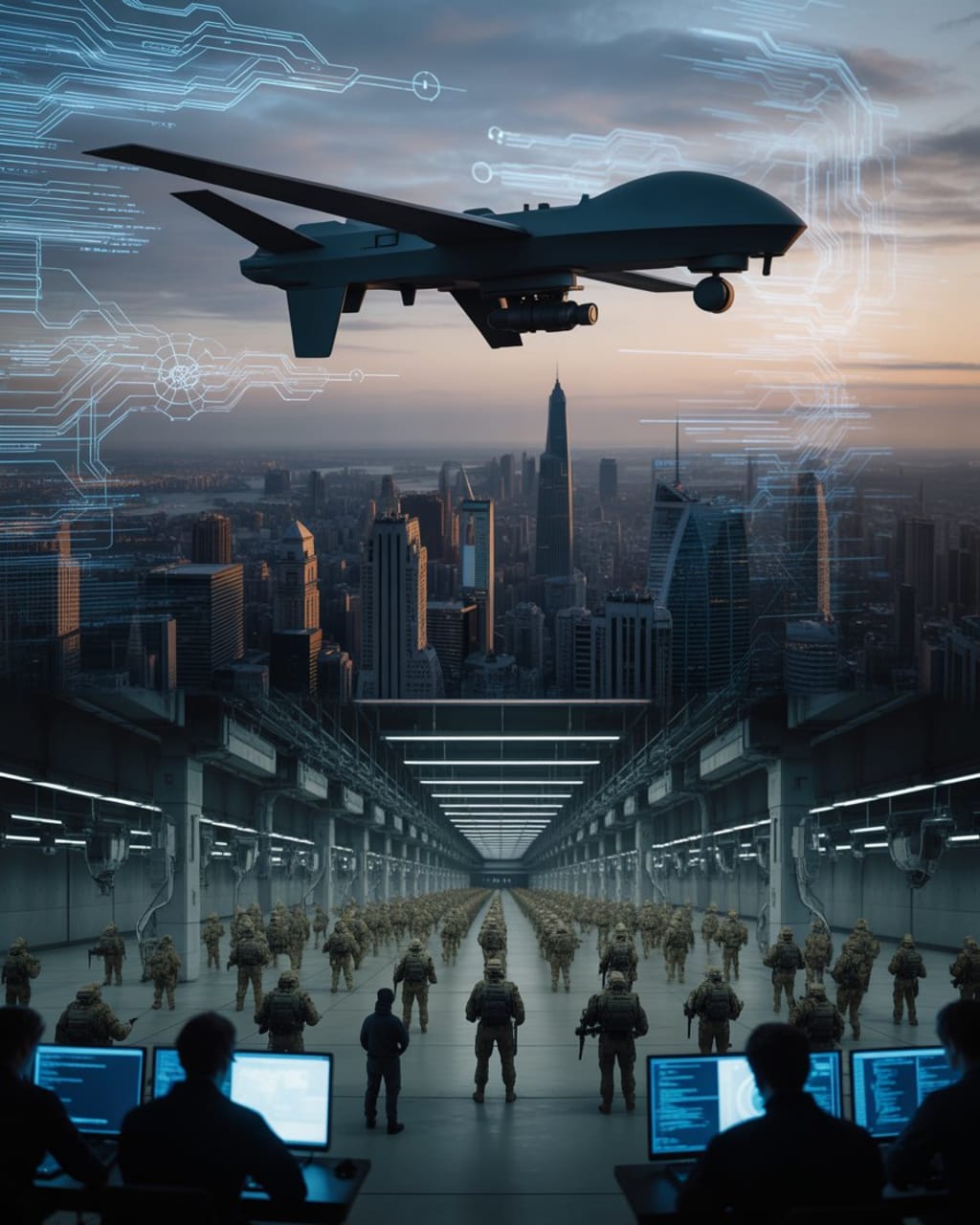
In 2025, the face of warfare no longer resembles the gritty front lines of history textbooks. Tanks rust idle while satellites, drones, AI systems, and underground militias dictate the terms of conflict. Welcome to the new battlefield—one that’s fought in shadows, online, and often without a single soldier crossing a border.
While the world scrolls past news blurbs about escalating tensions in Ukraine, Gaza, Sudan, or Taiwan, something much bigger—and far more silent—is underway: a full-blown revolution in how wars are fought, fueled not by numbers, but by networks.
Drones: The Frontline You Don’t See
Drones have gone from being reconnaissance tools to leading kill operations, reshaping how nations approach aggression. In Ukraine, commercial drones have been weaponized with grenades. In Gaza, drone swarms have played pivotal roles in both surveillance and surprise strikes. In Pakistan and India, drone incursions have triggered diplomatic tremors.
And it’s not just governments. Non-state actors—from paramilitary groups to militias—can now purchase, retrofit, and deploy drones off the internet for the price of a used laptop.
What’s terrifying? These tools aren’t just spying anymore. They’re killing.
In 2024 alone, drone-related strikes accounted for over 20% of cross-border incidents globally, many happening in areas technically not at war. That blurred line—between peace and war, civilian and combatant—is exactly what makes this tech so dangerous.
Underground Armies and Tunnel Wars
While eyes are fixed on the skies, battles are raging below the surface.
In Gaza, Israel’s “Operation Iron Swords” uncovered more than 500 kilometers of militant-built tunnels—complete cities underground, housing weapons, command posts, and even detention centers. These subterranean highways allow fighters to disappear, reappear, and strike with ghost-like precision.
Iran-backed groups in Lebanon have adopted similar strategies, burrowing beneath hills to hide missile stockpiles. In Sudan, tribal militias have begun adapting underground storage and travel routes to evade drone detection. What was once guerrilla warfare is now strategic, tech-backed maneuvering—out of sight, and often out of international accountability.
AI: The Invisible General
Behind many of these operations is artificial intelligence—quietly making decisions, analyzing risk, and guiding strikes.
AI now determines targets, predicts troop movements, and helps select when and where a drone should strike. Israel’s "Gospel" system used AI to map Hamas targets in seconds—something that once took intelligence analysts days.
But here’s the ethical dilemma: When a machine decides who lives and who dies, where does accountability lie?
In 2025, the fog of war is becoming not just a human challenge, but an algorithmic one. And as more countries adopt autonomous decision-making systems, the risk of error—or catastrophic escalation—skyrockets.
Cyber Armies: Wars Without Borders
Forget missiles. The first shot in modern warfare is fired through fiber optics.
In early 2025, major Iranian infrastructure was briefly disabled—not by bombs, but by malware. Ukraine’s resistance has leaned heavily on cyber defense, hacking into Russian communications and disarming surveillance systems.
China and the U.S. are locked in a silent standoff, with state-backed hackers probing power grids, banks, and military databases every day. And unlike nuclear warheads, cyber weapons can be deployed without global scrutiny.
It's war in real-time, invisible to the eye, but devastating to the heart of a nation.
Militias, Mercenaries, and the Privatization of War
Enter the freelance fighters. Governments now hire private military contractors (PMCs) who operate outside formal military codes. The Wagner Group in Russia. Blackwater’s successors in the Middle East. Thousands of unofficial soldiers, trained and armed, yet not bound by traditional laws of war.
And they’re not just on the battlefield—they’re online too. Coordinated disinformation campaigns, psychological warfare, and bot-fueled panic are all part of the new arsenal.
In short: war has become both privatized and personalized.
Why the World Isn’t Watching—But Should Be
The most chilling part? Much of this transformation is happening out of view.
Mainstream media can’t keep up. These aren’t traditional wars with clean timelines, uniforms, or victory flags. They’re patchwork conflicts—sporadic, high-tech, and deeply human in cost.
The victims? Civilians caught in drone crossfires. Communities displaced by underground strikes. Entire economies are sabotaged through keystrokes.
This isn’t the future of war—it’s the present. And unless we recognize the shift, we risk sleepwalking into a world where conflict becomes a constant background hum, like static in a radio we’ve all grown too used to.
The Final Word: Power Has Changed Hands
Forget tanks and trenches. The new conquerors are engineers, coders, drone pilots, and AI systems. Control no longer lies in who has the most soldiers—but who has the smartest software, the stealthiest systems, and the most flexible rules of engagement.
This is War 3.0—and it’s already here.
About the Creator
Kamran Zeb
Curious mind with a love for storytelling—writing what resonates, whatever the topic.
Keep reading
More stories from Kamran Zeb and writers in The Swamp and other communities.
Japanese Stocks Soar to Record Highs Amid Speculation of Snap Election
Japanese equities surged to fresh record highs this week, as investors reacted positively to growing speculation of a snap parliamentary election. The Nikkei 225 and Topix indexes have reached levels not seen in decades, reflecting a renewed sense of optimism about the country’s political and economic trajectory. Market watchers say the momentum is being fueled by expectations that the government will seek a fresh mandate to strengthen its economic agenda. A Market on the Rise The Nikkei 225, Japan’s premier stock index, recently climbed to an all-time high, while the broader Topix index followed suit. Analysts attribute the rise to a combination of domestic political signals and global market trends. With signs that a snap election may be called, investors appear to be positioning themselves for a stable, pro-business government that could implement economic policies favoring growth and corporate earnings. Historically, Japanese markets tend to respond positively to political certainty. Investors prefer a clear and decisive government agenda, which can reduce uncertainty and provide confidence in future policy decisions. The current surge in stock prices seems to reflect this sentiment, as traders anticipate that an early election could consolidate support for the ruling coalition, providing a smoother path for upcoming economic initiatives. Political Expectations Driving Investor Behavior Reports suggest that Prime Minister Fumio Kishida and his advisors are considering a snap election to reinforce their mandate, particularly ahead of major fiscal and policy decisions. Markets often react strongly to such developments, as political stability is closely linked to economic planning and investment confidence. “This is a classic case of politics driving market optimism,” said Hiroshi Tanaka, a senior economist at Tokyo-based Nomura Securities. “Investors are betting that a successful election will give the government the authority to push forward with policies that could stimulate corporate earnings and overall economic growth.” The expectation of a snap poll has also fueled speculation in specific sectors. Technology, manufacturing, and export-oriented companies have seen their stock values rise sharply, as these industries are expected to benefit from government policies supporting innovation, trade, and infrastructure development. Global Influences and Investor Sentiment While domestic politics play a key role, global factors have also contributed to the stock market’s momentum. Strong corporate earnings reports, stable interest rates, and an overall positive outlook for international trade have combined to create an environment conducive to market growth. The yen’s recent fluctuations against the dollar have also attracted investor attention. A slightly weaker yen tends to benefit exporters, as Japanese goods become more competitively priced in global markets. This dynamic has contributed to the bullish sentiment among foreign and domestic investors alike. Market analysts warn, however, that while optimism is high, investors should remain cautious. Political developments can be unpredictable, and unexpected changes in government policy or global economic conditions could quickly alter market dynamics. Sector Highlights and Key Performers Several sectors have emerged as key beneficiaries of the current market surge. Technology companies, including those specializing in robotics, semiconductors, and consumer electronics, have seen notable gains. These firms are expected to capitalize on both domestic policy incentives and international demand. The manufacturing sector has also performed well, particularly companies involved in automotive and heavy machinery production. Analysts believe that government-backed infrastructure projects and potential incentives for green technology and sustainable manufacturing could further support these industries. Additionally, export-oriented businesses are benefiting from favorable foreign exchange conditions. A slightly softer yen enhances profit margins for companies selling products overseas, attracting investor interest and pushing stock prices higher. Investor Strategies and Market Outlook Financial advisors are recommending a balanced approach amid this rally. While the market’s upward trajectory is encouraging, the possibility of volatility remains. Investors are being advised to diversify portfolios, consider long-term growth prospects, and remain aware of political and economic developments that could influence market conditions. “The current momentum is exciting, but we must remember that markets are forward-looking and can react sharply to any change in expectations,” noted Keiko Mori, an investment strategist at Mitsubishi UFJ Financial Group. “It’s essential for investors to stay informed and remain disciplined in their strategies.” Looking ahead, the market’s trajectory will likely hinge on the timing and outcome of the anticipated snap election. If the government secures a strong mandate, Japan’s stock market could continue its record-breaking run, supported by policy measures aimed at fostering innovation, infrastructure growth, and corporate profitability. Conversely, any political setbacks or global economic disruptions could temper enthusiasm and lead to short-term corrections. Analysts emphasize the importance of monitoring both domestic political developments and international economic trends to understand the market’s future direction. Conclusion Japan’s stock market rally underscores the deep connection between political developments and investor sentiment. The prospect of a snap election has ignited optimism, pushing the Nikkei 225 and Topix indexes to unprecedented levels. While opportunities abound, market participants are reminded that volatility remains a constant companion, and informed, strategic investment decisions are crucial. As Japan navigates the dual challenges of political strategy and economic growth, investors around the world will be watching closely, eager to see whether the market’s record highs are a prelude to sustained expansion or a momentary peak fueled by election-year speculation.
By Muhammad Hassan3 days ago in The Swamp
Miss Persephone's Manual to a Seemingly Ordinary Life
Miss Persephone was found at the dining table, her blue eyes swollen, her tears arriving and retreating like the tides of the ocean. Earlier that day, her family had visited her in the retirement home where she had lived for eight years. It was her eightieth birthday.
By Imola Tótha day ago in Fiction




Comments
There are no comments for this story
Be the first to respond and start the conversation.