
Freedom
As a principle of politics, 'freedom' has two meanings. Freedom in the first sense is considered to be a quality of human existence, which means that where other elements-objects or creatures of nature are regulated by the immutable laws of nature, the same human beings, after acquiring knowledge of the laws of nature, Makes it a means to fulfill its objectives.


Concept of Freedom:
As a principle of politics, 'freedom' has two meanings. Freedom in the first sense is considered to be a quality of human existence, which means that where other elements-objects or creatures of nature are regulated by the immutable laws of nature, the same human beings, after acquiring knowledge of the laws of nature, Makes it a means to fulfill its objectives. So he can give his life any form he wants. Freedom in another sense is a condition of man' in which man is capable of fulfilling self-determined goals and is not subjected to any external constraints. It is important to note that the idea of the 'state' of freedom comes to us only when we accept the 'virtue' or capacity of freedom in human beings. The main concern of political theory is with the 'state of freedom'.
Ordinarily, the basis of the demand for freedom is 'man's being a rational being'. Explaining this idea, J.R. Lucas wrote in his book 'The Principles of Politics- 1976' that "the essential meaning of freedom is that the rational people should be able to do what they think is best." and his activities should not be bound by any external restriction.
In formal terms, the concept of freedom is considered to be the 'absence of restrictions' and such freedom is sought for rational people. The principle which considers all human beings to be equally rational, demands equal freedom to all, but the principle which considers only a few as rational, it opposes it. In fact, true freedom is that which is equally enjoyed by all.
Barker has quoted Kant in the 'Principles of Social and Political Theory -1951', giving special emphasis on the moral basis of freedom, that 'reasonable nature is an end in itself.
Since man comes in the category of this rational nature, therefore man should always be considered as an end, never as a means only.
Even though there are no formal restrictions, the actual circumstances prevent a man from doing much. For example, a man cannot do the desired thing when he is in pain. Man is not only rational but also a sensitive animal. He may be compelled due to hunger, thirst, or suffering.
The broadest meaning of freedom, therefore, would be that man should not be under any compulsion from within or outside so that he does not feel any obstacle in doing what he considers best. At the same time, the principle of freedom also demands that a man who does not demand independence despite being subject should awaken his sleeping conscience by showing the way to freedom.
For the meaningful use of freedom, it is also necessary to have reasonable restrictions on it, otherwise, it will become free. In a state of freedom, the freedom of one man may become the compulsion of another. If the big fish wants the freedom to make the small fish its food, then the small fish will have to wash its hands with its life.
LT Hobhouse has said in his work 'The Elements of Social Justice - 1922' that "the unfettered liberty of one man would mean that everyone else would be fettered by the shackles of utter dependence". Therefore, if seen from the other side, everyone can get freedom only when some restrictions are imposed on everyone.
That is why freedom demands law and order and the first condition attached to it is that others have the same and equal right to freedom. In this way, liberty is bound by equality, but mere adoption of the law of equality will not suffice.
The 'equal right' to knock each other down would not fall within the definition of liberty; The principle of freedom should be used in the context of walking on the path of welfare, not in the context of walking on the path of destruction.
Different thinkers have expressed different views about the relationship between freedom and power. Thomas Hobbes says that all the benefits of the power of the state can be taken only when the freedom of the individual is severely limited. In this way, he has considered the freedom of the individual as secondary.
In contrast, John Locke and J.S. Thinkers such as Mill argue that for individual liberty to be meaningful, it is necessary to limit the authority of the state as much as possible. The state must adequately protect the democratic liberties of the citizens in order to obtain the moral support of the citizens.
Of these, the freedom of thought and expression, the freedom to assemble and form associations, is of particular importance. If these freedoms are not protected, the citizens turn to rebellion against the state.
D.D. on the relationship of law and liberty Rafael has expressed the idea in his book 'Problems of Political Philosophy-1976'. Since freedom is bound by the limitations of social life, therefore freedom can be granted to a person so far as it does not interfere with the freedom of others. Where the liberty of one person may threaten the liberty of another, it becomes necessary to impose restrictions on it.
Any such restriction can be imposed only by law. The extent to which the law can restrict our personal liberty, or which restrictions of law cannot be considered against the principle of liberty - is a complex subject.
Rafael has identified 4 areas in which the restrictions of law are considered reasonable. These areas are the areas of crime, the areas of civil disputes, the areas of economic control, and the areas of the social welfare system.
Other notions of freedom are as follows:
I. Political Freedom:
The political freedom of an individual is that by which he participates in the selection of his government, policy-making, and administration of the country. Political freedom is the backbone of democracy but democracy itself is not proof of freedom. There may be some other system of governance that is permission-oriented and a democratic system is restrictive. Therefore, political freedom is not sufficient for individual freedom.
II. Internal Freedom:
It demands that one should be guided in his activities by his own will, not to be subdued by momentary impulse or circumstance. This freedom can be destroyed by one's own moral weakness or by momentary impulses. It is not related to being forced by others. So it is different from individual liberty.
III. Powerful Freedom:
It demands that a person should be able to fulfill his desires and choose the option of his choice from many options. This freedom is dependent on the efficiency of the individual; It has nothing to do with the laziness of others.
A person may be capable of doing what he cannot do under the law, and he himself may be incapable of doing what no one is stopping him from doing. Therefore, freedom in the form of power is also different from individual freedom.
Therefore, Hayek says that in order to recognize the proper form of freedom, it is better to preserve its original meaning (absence of restriction).
Freedom and Equality:
Hayek says that the goal of freedom is the progress of society and not the advancement of the individual. While evaluating any particular freedom in society, it should not be looked at how many individuals have got it, but it should be seen how important that freedom is in itself.
Hence Hayek does not believe in equal distribution of liberty. He says that no one should be free in society, it is better than some people being free. Similarly, it is better to give some freedom to some people than to give some freedom to all, even if others may be deprived of it.
While determining the importance of freedom, it should not be looked at how many people will be able to use it, but it should be seen that to what height will it take civilization? According to Hayek, people are important because they are the means of social progress, not because they are the ends themselves.
Thoughts of Milton Friedman:
Friedman, an American economist, and Nobel laureate is a strong supporter of 'laissez-faire liberalism' in the field of political thought.
In the field of political thought, he expressed various views, which are as follows:
Capitalism and Freedom:
Friedman, in his book 'Capitalism and Freedom -1962', considering the relationship between the economic system and the political system, concluded that capitalism is a necessary condition for freedom. CB Macpherson has said that Friedman has tried to repeat the old arguments of Herbert Spencer with a new song.
He has written that from the point of view of liberalism, the freedom of the individual or the family is the last criterion to test any social system. Competitive capitalism is essential for the freedom of the individual, that is, it is such a system of economic freedom which is a necessary condition of political freedom.
That is to say, a society that is socialist in economic terms cannot be democratic from the political point of view, that is, it cannot protect individual liberty.
In the words of Friedman:
" Friedman, an American economist, and Nobel laureate is a strong supporter of 'laissez-faire liberalism' in the field of political thought. In the field of political thought, he expressed various views, which are as follows"
Capitalism and Freedom:
Friedman, in his book 'Capitalism and Freedom -1962', considering the relationship between the economic system and the political system, concluded that capitalism is a necessary condition for freedom. CB Macpherson has said that Friedman has tried to repeat the old arguments of Herbert Spencer with a new song.
He has written that from the point of view of liberalism, the freedom of the individual or the family is the last criterion to test any social system. Competitive capitalism is essential for the freedom of the individual, that is, it is such a system of economic freedom which is a necessary condition of political freedom.
That is to say, a society that is socialist in economic terms cannot be democratic from the political point of view, that is, it cannot protect individual liberty.
In the words of Friedman, “Economic arrangements are important for the achievement of the goal of political independence because they affect the accumulation or dispersal of power. Competitive capitalism is an economic organization that directly provides for economic freedom and also promotes political freedom because it separates economic power from political power and thus converts one type of power to another. helps to fill the gap.”
Economic and Political Dimensions of Freedom ;
Friedman has tried to establish a logical relationship between the economic and political dimensions of freedom. In advanced societies, liberalism faces the challenge of how to coordinate economic activity with individual liberty.
There are only two ways to coordinate the economic activities of millions of people. The first method is that of centralized administration, which is based on the use of force, that is, it is a technique of 'totalitarian' governance. The second method is the voluntary cooperation of individuals, that is, it is a technique of merging the democratic government with the market system.
Logically there is no possibility of political freedom in centralized socialist planning whereas in the capitalist system there is a full possibility of political freedom.
Thus the market system would be sufficient to protect economic freedom, but the problem of political freedom would still remain. Therefore, according to Friedman, the meaning of political freedom is that no man can be forced by his companions in any way.
Government Functions:
Friedman demands the maximum extension of individual liberty that the government should perform only those functions which the market system cannot do at all or which cost so much to do that the use of the political system would be more appropriate for them.
The function of the government is to support the market system and perform the rest of its functions, not to control it, that is, the government should not be concerned with welfare or regulation. The job of the government is to maintain law and order, define property rights, enforce contracts, provide protection to the helpless and orphans, etc.
Thoughts of Aijia Berlin:
According to Berlin, the state can only protect the negative liberty of the individual, protecting the positive liberty does not fall within the domain of the state. According to Berlin, negative liberty means not stopping the individual from choosing his own path according to his conscience.
Positive liberty demands that the individual should have complete control over himself. The extent to which a person can exercise positive liberty depends on his character, ability, or means, the state cannot do anything about it. The state can only do that, as far as it can, it does not impose any restriction on the activities of the person himself.
If a person cannot fly in the sky like a free bird, or swim in the sea like a sheltered fish, then this is his own deficiency. In such a condition he cannot complain that he is being deprived of political freedom, that is, the ability or inability to fulfill his aspirations is the individual's own matter, the state has nothing to do with it. Berlin has rejected authoritarianism and promoted the liberal-individualist theory.
Concept of Creative Freedom:
Macpherson has argued that the moral failure of capitalism is that it allows capitalists to earn 'surplus-value, but the moral failure of possessive individualism is that it allows a very large class of artisans to use their abilities and skills. Prevents creative use.
In the words of Macpherson, “The capacity of a horse or a machine shall be defined as how much work it can do, whether it is used or not, but a man can remain a man only when he uses his power and skill for those purposes.” which he himself has determined by his own consciousness.
Macpherson believes that there are two types of ideas found in Western democratic theory, the first idea is 'maximum extension of utilities' while the second idea is 'maximum expansion of powers'. Utilitarian point of view.
The second view is a moral concept in which man is not seen as a mere consumer but as a doer or a creator. Its ability to work is its main feature. McPherson distinguishes two types of power - harnessing the power and developmental power.
Harnessing power means how much man can use the abilities of others for the achievement of his objectives, whereas developmental power means how many men can develop and use his abilities?
McPherson has written that under a market society the developmental power of the poor is negligible and the exploitation power is almost nil, whereas the exploitation power of the capitalists is linked to the value of their wealth because on its strength they can buy their own abilities by buying others' abilities. can be used for profit.
Macpherson has listed the human potential under the developmental power as follows - the capacity for reasoning knowledge; Ethical judgment and action potential; The capacity for artistic creation or thinking, the capacity for the emotional activity of friendship and love, and the ability to transform the gift of nature. This view of human capabilities is much broader than the idea of the capacity of labor to produce material.
Macpherson believes that the greater expansion of the evolutionary power of man is the key to his 'creative freedom'.
Three types of obstacles can arise in its path:
(1) Lack of adequate means of subsistence
(2) Lack of access to cultivation using labor and
(3) Lack of protection from encroachment by others.
All these deprivations give rise to two types of problems – technological and material problems and cultural and ideological problems. McPherson firmly believes that the solution to these problems is not possible in the framework of a market society because the developmental power of the poor is constantly transferred to the capitalists.
Its solution is possible only in a socialist society. Since in a socialist society the means of production would be under social ownership, they would be available to individuals to make creative use of their respective capacities. In this type of society, individuals will not be compelled to make perverse use of their skills according to the needs of the market.
Negative and Positive Freedom:
If a person wants to do something and can do it, then he should not be stopped from doing it. Such freedom is called negative or formal freedom. This type of freedom indicates that there will be no assistance from the state in the work of the individual. While granting negative liberty to the individual, the state only exercises restraint on itself, does not tamper with the social order.
Obviously, this kind of freedom is not enough for the masses because when society suffers from huge economic inequalities, the supporters of negative liberty include Aijia Berlin, F.A. The names of Hayek, Milton Friedman, etc. are prominent.
Positive or material independence means that the state should make efforts to remove the social and economic disabilities of the weaker sections so that everyone can get a suitable opportunity to mobilize his means of happiness. This may require detailed regulation of socio-economic life but these regulations and restrictions are in the interest of society.
In general, political, civil, or legal liberty is negative liberty in its own limited sense. But socio-economic freedom demands positive freedom. For example, freedom from hunger, thirst, or helplessness is a sign of positive freedom because for its establishment the state will have to make concerted efforts.
It is the positive side of freedom that translates it into a social concept because this principle of liberty demands the removal of those restrictions and compulsions which are born of the social order, and which are also practical to remove. Supporters of positive liberties include TH Green, HJ Lawsky, JS Mill, Christian Bay, etc.
In short, negative freedom will be important for those people who are able to live their life the way they want, but for those who are surrounded by socio-economic compulsions and are completely unable to decorate their life, a system of positive freedom will be necessary.
About the Creator
Amit Kumar
Hello Guys how are you. I hope you guys are doing well. I am a bloger. I write blogs related to earning money and related to health. Apart from this, I also write blogs on animals.
Keep reading
More stories from Amit Kumar and writers in The Swamp and other communities.
Russia’s City 40, graveyard of the Earth
Ozersk, codenamed City 40, was the motherland of the Soviet nuclear munitions program. Now it's one of the world’s most polluted places, but numerous of its residers continue to see it as a paradise, director Samira Goetschel writes. Deep in the vast timbers of Russia’s Ural Mountains lies the interdicted megacity of Ozersk. Behind guarded gates and acerbic lines, walls stand a beautiful riddle – a narcotic place that seems to live in a different dimension. Codenamed City 40, Ozersk was the motherland of the Soviet nuclear munitions program after the alternate world war. For decades, this megacity of people didn't appear on any charts, and its occupants’ individualities were canceled from the Soviet tale. Moment, with its beautiful lakes, scented flowers, and graphic tree-lined thoroughfares, Ozersk resembles a suburban 1950s American city – like one of those too-perfect places depicted in The Twilight Zone.
By Amit Kumar4 years ago in Earth
A Gathering of Evil Bosses
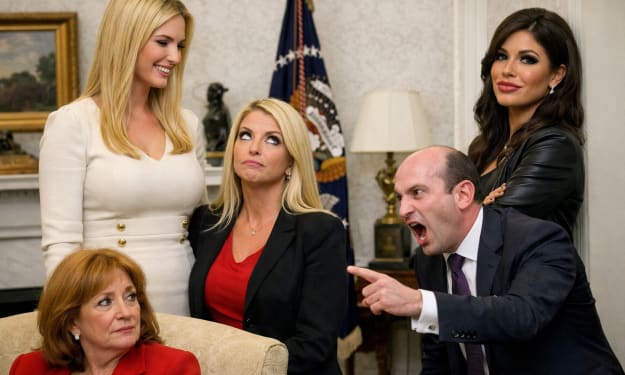
“I’m the queen of chin jutting while I smooth my hair, attacking, insulting, and deflecting to protect my appointer.” “Oh, please, Blondi, my hair is curled, highlighted, and longer than yours. I feature television commercials telling immigrants that we will give them a free plane ride home, and if they voluntarily turn themselves in, they will be allowed to legally apply for re-entry. It runs everywhere, and I look good in it! You can’t compete because of your blond hair. Mine is nicer, and my lips are prettier than yours.”
By Andrea Corwin 17 days ago in The Swamp
The Last Time a U.S. Navy Submarine Sunk an Enemy Ship in Combat
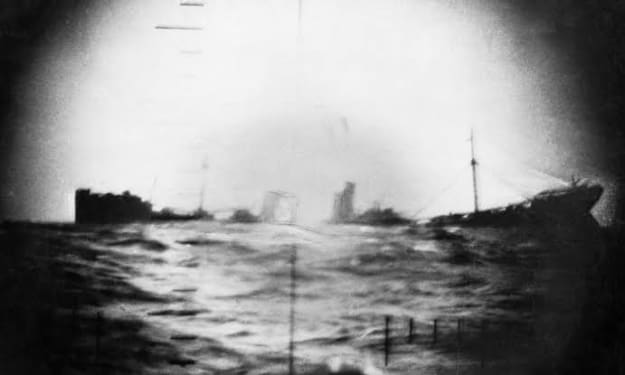
The U.S. Navy’s submarine force is among the most powerful and secretive elements of America’s military, but in the nearly 80 years since World War II, its boats have rarely been called on to directly sink enemy ships in combat. The last confirmed instance of an American submarine sinking an enemy vessel in open wartime conditions occurred during the Gulf War in 1991, when a Los Angeles‑class nuclear‑powered fast attack submarine engaged and destroyed an Iraqi Tench‑class patrol ship in the northern Arabian Gulf. That action — swift, precise, and largely unheralded at the time — marked the closing chapter of a long tradition of submarine warfare that had its most intense chapters during the Pacific campaigns of World War II. Since then, strategic deterrence, surveillance, intelligence gathering, and special operations support have become the primary missions of U.S. submarines, even as their weaponry and reach have grown far more capable. The 1991 Engagement: Submarine Combat in the Gulf In January 1991, during Operation Desert Storm, the United States and coalition forces launched a massive campaign to expel Iraqi forces from Kuwait after Saddam Hussein’s invasion of 1990. The conflict featured overwhelming air and ground power, but the U.S. Navy’s submarines also played critical roles in controlling littoral waters, collecting intelligence, and denying the Iraqi military freedom of movement. The submarine USS Baton Rouge (SSN‑689), a Los Angeles‑class fast attack boat, was operating in the northern Arabian Gulf when it detected an Iraqi patrol ship attempting to harass coalition vessels. Using its sophisticated sonar and combat systems, the submarine tracked the target and made the decision to engage under established rules of engagement governing wartime operations. At approximately 3 nmi from the target, Baton Rouge fired a Mark 48 torpedo, the same heavyweight anti‑ship/anti‑submarine weapon that remains a staple of U.S. submarine armament today. The torpedo struck the Iraqi patrol ship, which rapidly sank. There were no U.S. casualties, and the action was completed without broader escalation — reflecting both the tactical precision and strategic restraint that characterise modern U.S. submarine warfare. Though this engagement marked the last official sinking of an enemy warship by a U.S. submarine in direct combat, submarines continued to contribute significantly in other ways throughout the Gulf War and in subsequent conflicts, including launching Tomahawk land‑attack cruise missiles and supporting special forces. From World War II to the Gulf: The Evolution of Submarine Warfare The submarine’s role in combat was drastically different during World War II, when they were at the vanguard of naval warfare in both the Atlantic and Pacific Theatres. In the Pacific, U.S. submarines targeted Japanese shipping relentlessly, contributing to the isolation and eventual defeat of Japan by cutting supply lines and sinking warships and merchant vessels alike. By contrast, the late 20th‑ and early 21st‑century conflicts have seen submarine operations geared more toward deterrence, power projection, and precision strike. Nuclear‑powered submarines now conduct intelligence, surveillance, and reconnaissance (ISR) missions and carry Tomahawk missiles capable of striking targets thousands of miles inland — making traditional surface engagements rarer. The Modern Strategic Context Today’s submarines remain among the most advanced weapons systems in the U.S. arsenal. The latest Virginia‑class attack boats combine stealth, long endurance, and multi‑domain strike capabilities. Yet direct surface engagements like the one in 1991 are unlikely to be common. Modern naval strategy emphasises deterrence and precision fires, using submarines to gather information, conduct covert operations, and strike land targets rather than to seek out enemy ships. The changing character of naval combat also reflects broader geopolitical shifts. Many potential adversaries lack significant surface fleets, focusing instead on missile systems, submarines of their own, or asymmetric sea denial strategies. When surface combat occurs in future conflicts, the consequences — including civilian harm and escalation — will also weigh on commanders’ decisions about whether and how to engage. Why the 1991 Engagement Still Matters The action in the northern Arabian Gulf remains significant for several reasons: Historical continuity: It was the last time an American submarine sank an enemy warship in traditional naval combat. Tactical precision: The engagement demonstrated the ability of submarines to strike decisively and safely in crowded littoral waters. Strategic restraint: The action was tightly controlled, aligning with broader military objectives without triggering disproportionate escalation. Submarines today may seldom end their missions with a sunken enemy ship on the bottom of the sea, but their impact on global security is no less profound. From ballistic missile deterrence to covert ISR and land‑attack missions, the silent service continues to shape strategic outcomes in ways that often remain invisible to the general public. If future conflicts bring renewed surface engagements, lessons from the 1991 Gulf War action — precision, restraint, and integration with broader strategy — will inform how submarine commanders act. Until then, the sinking by Baton Rouge stands as the most recent chapter in a long and storied tradition of U.S. submarine warfare.
By Fiaz Ahmed 2 days ago in The Swamp
"Scream 7" (2026): Running out of Fresh Screams
This is the seventh time we’ve had a Ghostface crisis. Scream 7 is the latest edition of the Scream franchise. Sydney Prescott and her family are under attack by another anonymous killer dressed in a Ghostface costume. While having issues with her daughter, Tatum, they run from the bloody murders, trying to determine who is behind it all.
By Marielle Sabbag6 days ago in Horror


Comments
There are no comments for this story
Be the first to respond and start the conversation.