
Free Speech, Consequences, and the Celebration of Death
When laughter meets assassination, the issue isn’t censorship it’s accountability.

On the day Charlie Kirk was assassinated, America didn’t just lose a man. We lost a voice who believed in debate, in open dialogue, in putting ideas against one another instead of fists or bullets. And yet, before his family even had time to mourn, social media lit up with celebration. Laughter. Mockery. Dancing on the grave of a man killed in front of his wife and children.
For years, we’ve been told that conservatives are the danger to democracy. That our words are violent. That our beliefs are intolerable. We’ve watched as ordinary people lost jobs for supporting Trump, for opposing open borders, or for refusing to align with every demand of the LGBTQ lobby. Businesses were pressured. Boycotts were organized. Lives were ruined not because people committed crimes, but because they had the “wrong” opinion.
Now the tables have turned. Employees caught celebrating Kirk’s assassination online are finding themselves out of work. And suddenly, the very people who pioneered cancel culture are crying foul. They call it censorship. They call it an attack on free speech.
But let’s be clear: this is not a violation of the First Amendment. Free speech protects you from government punishment, not from the consequences of your own words in the public square. If you openly mock the murder of a husband and father, your employer has every right to say: that is not the kind of person we want representing our company.
And honestly? That’s not censorship. That’s accountability.
When Democrats spent years pushing boycotts against bakers, CEOs, and teachers who wouldn’t fall in line, it wasn’t called censorship then. It was called justice. When conservatives lost jobs, businesses, and platforms because they refused to toe the progressive line, it wasn’t called an attack on democracy. It was called consequences.
So let’s not pretend this is different. If anything, it’s the clearest example of karma you’ll ever see.
Here’s the truth: I don’t care where someone works, or what they believe about taxes, healthcare, or foreign policy. But if you laugh at a man’s assassination if you mock a father dying in front of his children you have disqualified yourself from basic decency. I don’t need to shop at your store. I don’t need to use your company’s services. I don’t need to help fund the paycheck of someone who thinks murder is funny.
And I won’t.
Because this isn’t about left or right. It’s not about Democrat or Republican. It’s about whether we, as a nation, have lost the ability to grieve for another human being simply because he wore the wrong label.
We will never heal as long as death is cheered and division is worshiped.
The left spent years demanding that conservatives be punished for their words. Now that the same fire touches their side, they suddenly discover the value of forgiveness and freedom. But forgiveness means nothing if it only applies to your tribe. Freedom means nothing if it only applies to your speech.
The assassination of Charlie Kirk revealed two Americas: one that mourns, prays, and remembers with dignity and one that mocks, sneers, and cheers for death.
Which America will you stand with?
About the Creator
Keep reading
More stories from Robert Lacy and writers in The Swamp and other communities.
Two Americas: How We Grieve, How We Rage
On September 11th, 2001, America was attacked. Nearly twenty-five years later, most of us still remember where we were. But what many also remember is what stood out even more than the flames and the falling towers: the way people came together. Neighbors who had never spoken embraced. Democrats and Republicans bowed their heads side by side. There was no thought of “which side are you on?” when the entire nation was in tears.
By Robert Lacy6 months ago in The Swamp
Parallel Protests
I haven't written for quite some time, but I have A LOT of thoughts about yesterday's protest rally against our government's involvement and complicity in America's war on Iran, on the harbourside of my home city Bristol, and I need to put them somewhere. My gorgeous girlfriend is always a loving and listening ear and sharing it all with her will always be a healthy and happy way of processing the mental and emotional weight, but getting it straight in my brain to share means writing it all down in straight lines, so, here we are and thanks for being here.
By Steph Cole10 days ago in The Swamp
Epstein Used Modelling Agent to Recruit Girls, Brazilian Women Tell BBC
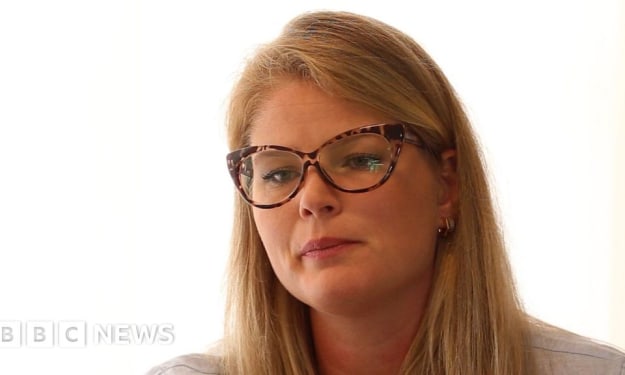
Several Brazilian women have told the BBC that they were approached by Jeffrey Epstein’s associates under the guise of modelling opportunities, claiming the financier used a modelling agent to recruit girls for his social circle. These testimonies provide further insight into the mechanisms Epstein allegedly employed to identify and manipulate vulnerable young women. The women, who spoke on the condition of anonymity due to safety concerns and ongoing investigations, said they were contacted in their teens by a modelling agent affiliated with Epstein. According to their accounts, the agent promised legitimate work in fashion and entertainment but subtly introduced them to environments connected with Epstein and his associates. “I thought it was a normal casting for modelling work,” one woman recalled. “At first, everything seemed professional, but soon I realized that the offers were not what they seemed, and the real purpose was much more disturbing.” These claims align with other reports from the United States and Europe, where Epstein allegedly leveraged positions of influence and networks in industries like modelling, fashion, and entertainment to gain access to young women and girls. Investigators have long described Epstein as using a combination of wealth, power, and charm to manipulate his victims. According to the Brazilian women, the modelling agent often acted as a gatekeeper, establishing initial trust and framing Epstein’s circle as aspirational or glamorous. Once introduced, the young women were encouraged—or in some cases pressured—into situations where they were expected to participate in activities benefiting Epstein or his associates. Legal experts note that using an intermediary such as a modelling agent is consistent with patterns observed in other high-profile trafficking cases. “Perpetrators often exploit professional or aspirational networks to make victims feel safe and validated,” said a criminal law specialist. “This strategy can mask exploitation under the appearance of legitimate opportunities.” Some of the women described traveling to other countries for meetings or photoshoots arranged by the agent. They recounted feeling anxious and confused about the situation but hesitant to refuse due to promises of career advancement or financial incentives. Brazilian authorities have previously investigated reports of minors being recruited under false pretenses for international modelling assignments. While not all cases are linked to Epstein, his operations appear to have intersected with similar networks that target young women seeking careers in fashion and entertainment. BBC journalists contacted representatives for Epstein’s estate and known associates, who did not provide comment. Epstein died in 2019 while in custody, but civil lawsuits and ongoing criminal investigations continue to reveal the extent of his network and recruitment strategies. Advocates for victims of sexual exploitation emphasize that these accounts highlight the importance of vigilance in industries that recruit young women. “Modeling and entertainment sectors must implement stricter safeguards to prevent predatory behavior,” said a representative from a non-profit organization supporting survivors. “The use of intermediaries can be an effective tool for traffickers, and awareness is critical.” Psychologists who work with survivors note that victims often experience long-term trauma, particularly when deception and manipulation are involved. Early experiences of being lured under false pretenses can affect trust, self-esteem, and emotional well-being for years. The Brazilian testimonies contribute to a growing body of evidence illustrating how Epstein and his associates allegedly exploited systemic vulnerabilities. While criminal convictions have been limited due to his death, civil cases and investigative journalism continue to expose the networks he used to operate across borders. For the women who came forward, sharing their experiences is part of an ongoing effort to raise awareness and prevent future exploitation. Their accounts emphasize the need for better protections for young people entering high-pressure industries like modelling, as well as the broader societal responsibility to recognize and intervene in situations where wealth and power may be abused. As investigations continue, authorities in multiple countries are reviewing the roles of intermediaries, facilitators, and enablers who may have contributed to Epstein’s operations. The Brazilian women’s testimonies are expected to inform both ongoing civil litigation and broader discussions about reform in vulnerable industries, ensuring that lessons are learned from one of the most notorious abuse networks in recent history.
By Fiaz Ahmed a day ago in The Swamp



Comments
There are no comments for this story
Be the first to respond and start the conversation.