
Foreign Money, Foreign Flags: How Qatar and Turkey Are Gaining a Foothold in Jerusalem
Soft power strategies are redefining control over East Jerusalem Aid projects and symbols signal growing regional ambitions Jerusalem becomes a new arena for Middle Eastern rivalry Charities and cultural centers expand foreign presence Geopolitics played out through money and monuments Why Qatar and Turkey are investing in Jerusalem’s future Foreign funding blurs the line between humanitarian aid and politics

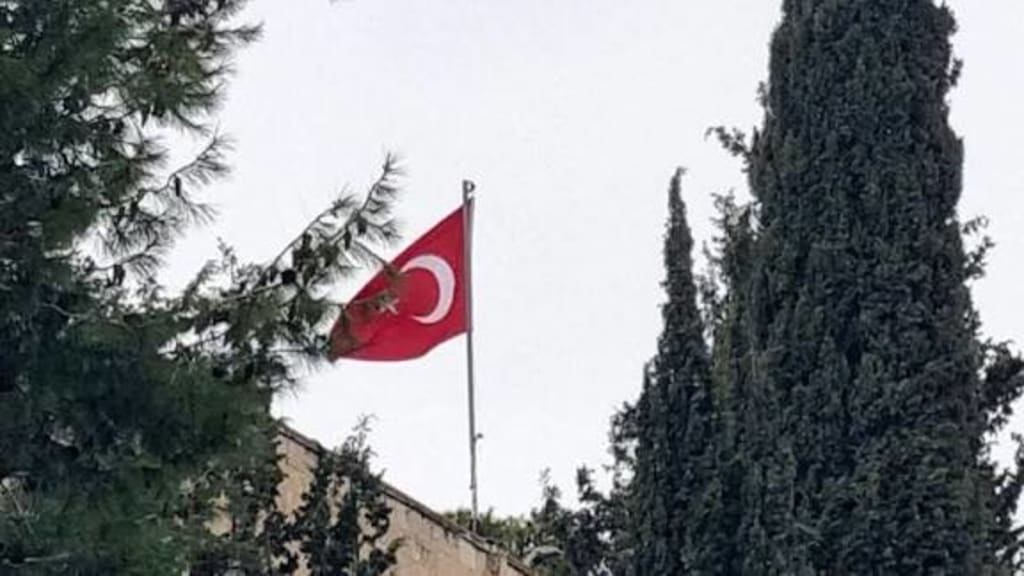
Jerusalem has long been a focal point of religious, political, and strategic competition. In recent years, however, a quieter struggle has been unfolding alongside the city’s visible tensions: the growing influence of foreign powers through money, aid projects, and symbolic presence. Qatar and Turkey, two regional players with ambitions to expand their political and cultural reach, have steadily increased their footprint in East Jerusalem and surrounding areas, raising concern among Israeli officials and reshaping local dynamics.
Unlike traditional military or diplomatic intervention, this influence is exercised through funding, charities, construction projects, and public messaging. The result is a form of soft power that blends humanitarian assistance with political signaling.
Investment as Influence
Qatar has emerged as one of the most significant foreign financial actors in Palestinian territories, including Jerusalem. Through government-backed charities and development funds, Doha has financed housing projects, schools, and social assistance programs aimed at Palestinians living in East Jerusalem.
Supporters argue that Qatar’s involvement fills a humanitarian gap left by limited international funding and the city’s complex governance structure. However, critics say the funding also strengthens political networks sympathetic to Hamas and other Islamist movements, increasing Doha’s leverage in one of the most sensitive cities in the world.
Turkey’s role has taken a different but complementary path. Ankara has focused heavily on religious and cultural institutions, restoring Ottoman-era buildings and supporting Islamic heritage sites near the Al-Aqsa Mosque compound. Turkish-funded organizations have opened cultural centers, sponsored events, and provided aid packages that carry Turkish flags and imagery.
For Turkey’s leadership, this involvement is framed as protection of Islamic holy sites and historical responsibility dating back to the Ottoman Empire. For Israel, it represents a challenge to sovereignty and a visible assertion of foreign influence inside the city.
Symbols and Street-Level Presence
The growing presence of Qatari and Turkish symbols in East Jerusalem has not gone unnoticed. Posters, banners, and social media campaigns linked to foreign-funded groups increasingly appear during religious holidays and periods of unrest.
These symbols carry political meaning. They suggest that foreign powers are not only donors but also stakeholders in Jerusalem’s future. For residents, such displays can offer a sense of external support and solidarity. For Israeli authorities, they raise concerns about radicalization and the politicization of humanitarian aid.
Security officials warn that foreign funding can fuel tensions by empowering groups that oppose Israeli control of the city. While not all recipients are politically motivated, the blurred line between charity and ideology has become a major source of controversy.
Strategic Motivations
Qatar and Turkey’s engagement in Jerusalem reflects broader regional ambitions. Qatar seeks to maintain relevance in Palestinian politics and reinforce its role as a mediator in conflicts involving Gaza and Israel. Its financial involvement strengthens relationships with influential actors and keeps Doha positioned as an indispensable player in regional diplomacy.
Turkey, under President Recep Tayyip Erdoğan, has adopted a more assertive posture on issues involving Muslim communities worldwide. Jerusalem holds enormous symbolic value for Turkish domestic politics, where defending Palestinian rights plays well with nationalist and religious audiences.
Both countries also see an opportunity created by the relative decline of traditional Arab influence in Jerusalem. With Egypt, Jordan, and Saudi Arabia focused on their own domestic priorities, Qatar and Turkey have stepped into a space once dominated by older regional powers.
Israeli Response and Legal Measures
Israel has increasingly moved to restrict foreign-funded organizations operating in Jerusalem. Authorities have shut down some Turkish-backed groups, accusing them of acting as political fronts rather than neutral charities. New regulations aim to monitor foreign donations and limit activities deemed to undermine public order.
These actions have triggered diplomatic friction. Turkey has accused Israel of suppressing humanitarian work, while Qatar has defended its assistance as purely civilian. The disputes highlight the difficulty of separating genuine aid from geopolitical competition.
Israel’s government argues that sovereignty over Jerusalem requires strict control over who operates within the city, especially when funding comes from states with openly critical positions toward Israeli policies.
Impact on Local Communities
For Palestinians living in East Jerusalem, foreign funding can provide tangible benefits: food assistance, housing repairs, and access to education programs. Many residents view Qatari and Turkish involvement pragmatically, focusing on immediate needs rather than geopolitical implications.
Yet reliance on external funding also deepens political divisions. Some community leaders fear that outside influence could weaken local institutions and make neighborhoods dependent on foreign agendas. Others worry that the city could become a battleground for rival regional powers using soft power instead of diplomacy.
A New Layer of Conflict
Jerusalem’s status has always been shaped by international interests, but the methods are evolving. Instead of embassies and armies, influence now flows through charities, restoration projects, and cultural campaigns. This quiet expansion of foreign presence complicates an already fragile situation.
Analysts say this trend reflects a broader Middle Eastern shift toward non-military competition. Countries project power through aid, media, and religion, avoiding direct confrontation while still shaping outcomes on the ground.
Conclusion
The growing foothold of Qatar and Turkey in Jerusalem demonstrates how foreign money and symbols can reshape political realities without formal agreements or military action. What appears as humanitarian support often carries strategic weight in a city where every gesture is deeply political.
As Israel tightens regulations and regional powers continue their outreach, Jerusalem remains a stage for international rivalry played out through schools, mosques, and social programs rather than troops and treaties. The struggle for influence in the holy city is no longer only about borders and sovereignty—it is also about who builds, who pays, and whose flag is seen on the streets.
About the Creator
Fiaz Ahmed
I am Fiaz Ahmed. I am a passionate writer. I love covering trending topics and breaking news. With a sharp eye for what’s happening around the world, and crafts timely and engaging stories that keep readers informed and updated.
Keep reading
More stories from Fiaz Ahmed and writers in The Swamp and other communities.
China Unveils ‘Flying Aircraft Carrier’ in Major Leap for Aerial Warfare Technology
China has unveiled what it describes as a “flying aircraft carrier,” a large unmanned aerial vehicle capable of launching and controlling swarms of smaller drones in midair. The project represents a significant advance in military aviation and signals Beijing’s growing ambition to dominate next-generation warfare technologies. Defense analysts say the system could dramatically change how future air battles are fought by extending range, increasing surveillance capability, and overwhelming enemy defenses with coordinated drone attacks. The aircraft, officially presented by China’s state aerospace industry as a high-altitude long-endurance drone platform, is designed to act as a mobile command hub in the sky. Unlike traditional aircraft carriers that operate at sea, this airborne platform can deploy multiple drones directly from the air, allowing operations deep inside contested zones without relying on nearby bases. A New Concept in Air Power The “flying aircraft carrier” is reportedly capable of carrying dozens of small drones inside its fuselage and releasing them during flight. Once deployed, these drones can perform missions such as reconnaissance, electronic warfare, decoy operations, and potentially precision strikes. Chinese engineers say the system allows the mothership drone to remain at high altitude while its smaller drones spread out across a wide area. This reduces the risk to manned aircraft and complicates enemy air defenses, which must track and intercept multiple targets simultaneously. Military experts describe the design as part of a broader shift toward unmanned and networked combat systems. Rather than relying solely on fighter jets or bombers, future conflicts may involve swarms of autonomous or semi-autonomous drones working together under centralized command. Strategic Motivation China’s unveiling of the flying aircraft carrier comes amid intensifying competition with the United States and its allies over air and space superiority. Beijing has invested heavily in hypersonic weapons, stealth aircraft, and artificial intelligence-driven combat systems. The drone carrier concept fits into this strategy of developing asymmetric capabilities that can counter advanced Western militaries. Analysts believe the aircraft could be particularly useful in scenarios involving Taiwan or disputed areas of the South China Sea. By launching drones from high altitude, China could conduct surveillance or electronic interference without placing piloted aircraft directly in harm’s way. The system may also help overcome limitations in range. Smaller drones normally have restricted flight endurance, but being carried close to the operational zone by a larger aircraft extends their reach dramatically. Technological Features According to Chinese aerospace officials, the flying aircraft carrier uses advanced composite materials to remain lightweight while carrying heavy payloads. It reportedly has a long wingspan, allowing it to glide efficiently at high altitudes for extended periods. The aircraft is equipped with artificial intelligence systems to coordinate drone launches, manage flight paths, and process battlefield data in real time. This allows it to act as both a transport platform and a command-and-control center. Some reports suggest the system can integrate with satellite networks and ground stations, enabling remote operators to guide missions while relying on onboard AI for rapid decision-making. This blend of automation and human oversight reflects China’s growing investment in intelligent warfare. Global Reactions and Concerns The announcement has drawn attention from military analysts around the world. Many view it as another step in the rapid militarization of drone technology. Western defense experts warn that swarm-based systems could overwhelm existing missile defense and radar networks. Unlike traditional aircraft, drones are cheaper and easier to replace. A flying aircraft carrier capable of launching dozens at once could saturate enemy defenses and create confusion on the battlefield. Human rights organizations and arms control advocates have also raised concerns about the ethical implications of autonomous weapons. They argue that expanding drone swarms increases the risk of miscalculation and accidental escalation, especially if AI systems are allowed to operate with limited human supervision. Civil and Commercial Implications While the primary focus is military, Chinese engineers have hinted that similar technology could have civilian applications. Aerial drone carriers could be used for disaster response, delivering rescue drones over large areas after earthquakes or floods. They could also support environmental monitoring and long-distance communications. However, experts caution that military development is clearly the driving force behind the project. Any civilian use would likely be secondary and carefully controlled by the state. Part of a Broader Drone Strategy China is already the world’s largest producer and exporter of drones, both civilian and military. Its armed drones are used by several countries for surveillance and counterterrorism operations. The flying aircraft carrier concept builds on this dominance by introducing a new layer of complexity: drones that deploy other drones. This development mirrors similar research in the United States, where the Pentagon has tested systems that launch smaller drones from bombers or cargo planes. The difference is that China appears to be pushing the idea toward operational deployment more aggressively. Implications for Future Warfare The emergence of flying drone carriers suggests a future in which battles are fought increasingly by machines rather than pilots. Such systems reduce risks to human life on the attacking side but raise serious questions about accountability and control. They also blur the line between air and space warfare, as high-altitude drone platforms can remain aloft for long periods, gathering intelligence and directing operations across vast regions. Conclusion China’s unveiling of a flying aircraft carrier marks a significant milestone in the evolution of aerial warfare. By combining a high-altitude drone with a swarm of smaller unmanned aircraft, Beijing is signaling its intent to lead in autonomous military technology. While the system’s full capabilities remain unclear, its potential impact on regional security and global military balance is substantial. As nations race to develop similar technologies, the flying aircraft carrier could become a symbol of a new era in warfare—one defined by artificial intelligence, drone swarms, and battles fought increasingly in the skies without pilots onboard.
By Fiaz Ahmed about 14 hours ago in The Swamp
Chinese Whistleblower Granted U.S. Asylum After Exposing Human Rights Abuses
In a significant development that underscores the peril faced by human rights defenders worldwide, a U.S. immigration judge has granted asylum to a Chinese national, Guan Heng — a whistleblower who exposed alleged human rights abuses in China’s Xinjiang region. The ruling, delivered on January 28, 2026, marks a rare victory for asylum seekers in an era of increasingly stringent immigration policies and reflects growing international concern over the treatment of dissidents and minority populations in China. �
By Ayesha Lashari6 days ago in The Swamp


Comments
There are no comments for this story
Be the first to respond and start the conversation.