
Fair Starts & Fair Futures
Lessons from Danish Social Liberalism for new British social contract

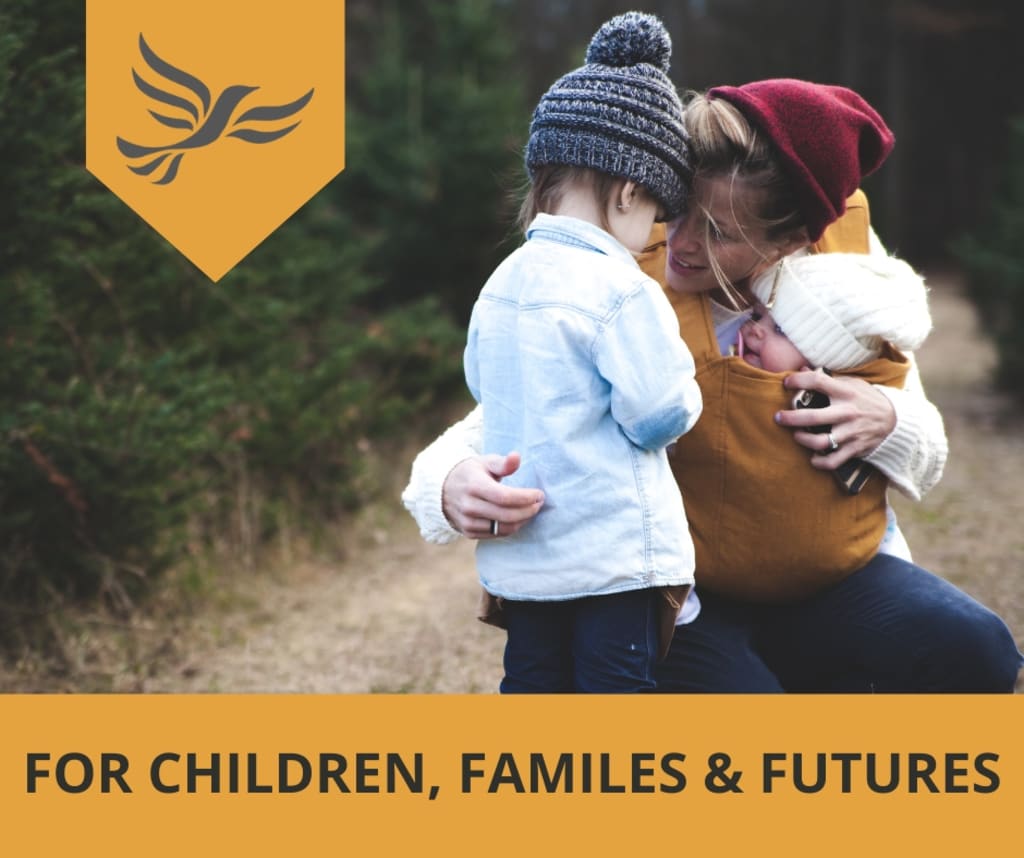
There’s a tired refrain in British politics that “we can’t be Scandinavia.” The taxes are too high, the state too big, the culture too different. Yet the truth is this: Britain can’t afford not to learn from Scandinavia — and particularly from Denmark, where social liberalism has built one of the most trusted, efficient and humane welfare states on earth.It’s a country where taxes are high but widely accepted; where the social contract rests on reciprocity, not resentment; and where a century of reform has created a system both generous and sustainable.
For liberals who believe in both economic dynamism and social justice, Danish social liberalism offers the roadmap Britain sorely lacks.At its heart lies a conviction as radical today as it was in 1905, when Denmark’s Radikale Venstre first set out its creed: the welfare state is not a drag on freedom or enterprise, but its guarantor. A society that invests in people — early, universally, and fairly — lays the foundations for lifelong prosperity.
If Britain wants to rebuild its social contract, it must stop reciting Westminster excuses and start learning hard-headed lessons from Copenhagen.
Capitalism with a Conscience
Danish social liberalism is not socialism in disguise. It’s pragmatic, reformist capitalism — flexible markets underpinned by shared security. Radikale Venstre has spent a century pushing governments of left and right to align economic dynamism with social solidarity. The result: a welfare system that is both generous and trusted.
Denmark spends about half its GDP through public services, yet delivers high employment, low inequality and world-class childcare, education and retraining. Welfare is seen not as a cost to be contained, but as an investment in productivity and freedom. Britain, by contrast, treats its welfare state as decadent luxury and a down payment on dependency.
Top-heavy, fragmented, and skewed towards the old, the UK spends almost as much on pensions as on the entire education system, while young families struggle with unaffordable childcare, housing and wage stagnation. Denmark’s success shows that supporting children and working-age families is not sentimentalism; it’s sound economics.
‘Scandi style’ universalism is not alien in the UK. We apply it to pensions (through the triple lock) and to old age benefits (through winter fuel) while we ‘means test’ working age welfare policies and support for children. The social liberal shift would be to reverse this approach. Realigning state support to favour universalism at the start of life, by giving children a level playing field and their parents a hand up, while means testing support for people in old age. Never rescinding support for those in need, but ensuring those with means do not unnecessarily draw from the state.
A Welfare State Built for Work and Family
The Danish model starts with families. Universal, affordable childcare enables more than 90% of Danish children aged one to five to attend high-quality daycare. Fees are capped, and every local authority must offer a place to each child over six months. The effect is profound: parents, especially mothers, can work and build careers without being punished by childcare costs. Britain, meanwhile, continues the economic absurdity of pricing parents — mostly mothers — out of work because childcare devours their wages. Reforming this system is both feminist and pro-family values.
A new British social contract should include:Universal childcare as social infrastructure, funded and staffed to Danish standards. Fair parental leave — a universal nine-month entitlement, well-paid and shared, with a reserved portion for fathers to encourage equal parenting. A youth guarantee: every under-25 offered work, education or training within six months of leaving school or losing a job. These are not left-wing indulgences; they are economically literate policies that boost participation and productivity.
Flexicurity: Freedom with a Safety Net
Denmark’s labour-market model — “flexicurity” — is the jewel of social liberalism. Employers can hire and fire with ease, but workers enjoy strong income protection, active retraining and personalised job-search support. The state invests in transition, not in keeping afloat dying industries. The principle is simple but profound: security enables flexibility. People take risks, start businesses and retrain mid-career because they trust the safety net beneath them.Britain’s punitive welfare-to-work regime offers the opposite: meagre support, bureaucratic suspicion, and little dignity.
Replacing that with a Danish-style contract of mutual responsibility — rights matched by obligations — would unleash rather than constrain enterprise
Universalism Reimagined: Meals, Families and Fairness
Universal provision builds stability and a sense of fairness. Denmark’s childcare, healthcare and education systems are for everyone, not just the poorest. This removes stigma and creates a sense of shared purpose. Britain, by contrast, has means-tested its welfare state into fragments.
‘Scandi style’ universalism is not alien in the UK. We apply it to pensions (through the triple lock) and to old age benefits (through winter fuel) while we ‘means test’ working age welfare policies and support for children. The social liberal shift would be to reverse this approach. Realigning state support to favour universalism at the start of life, by giving children a level playing field and their parents a hand up, while means testing support for people in old age. Never rescinding support for those in need, but ensuring those with means do not unnecessarily draw from the state.
Three reforms would begin to rebuild that universal base: Universal Baby Boxes for expectant parents, Universal Free School Meals for all primary aged children; and the removal of the failed 'two child benefit cap'.
The 'baby box' - a care package for expectant parents containing everything from clothes, nappies and milk bottles to books, recipe cards and blankets - is arguably the jewel in the crown of the Scandinavian social contract. Not because it is the greatest spend, not because of its proven ability to reduce child poverty, but because of its symbolism.
Here is a low cost policy which shows new families that they matter to the state - that their unborn child has value and that the state stands ready to invest in a fair start for them.
The baby box was first developed in Finland and has been rolled out in Scotland. The rest of the UK muse follow suit. This is no hand out for the undeserving - as no doubt the right wing press will opine. This is a hand up for every child and every expectant parent. The opening gambit of a new ambitious social contract that aims to end inequality, reverse declining birth rate and boost productivity and growth through the health and wellbeing of our citizens.
The next step happens in schools. Every child in state-funded primary education should receive a free, nutritious lunch. Evidence from the Food Foundation and the IFS shows that universal meals improve concentration, health and attainment — and save money in the long run by alleviating health inequalities. The evidence that free school meals work is now irrefutable. Universal provision must now be the goal of every progressive politician.
Every child should count equally in our welfare system. Lifting the two-child benefit cap would immediately lift hundreds of thousands of children out of poverty. The estimated cost of £3 billion a year pales in comparrison the estimated damage the cap has done. Forcing families below the poverty line and decimating the life chances and economic output of entire generations.
These are modest investments by Scandinavian standards — and easily affordable with a fairer tax and spending structure.
Fiscal Realism and Intergenerational Fairness
The Danish secret isn’t taxation alone — it’s trust. Citizens believe their taxes buy value: free childcare, university education, healthcare and real security. British taxpayers, by contrast, have lost all trust in the institutions of government. Northing short of radical political reform will bring it back.
But fairness in our tax system can still demonstrate to British people that the state can change.
We must extend windfall taxes on energy giants that have enjoyed extraordinary profits since the invasion of Ukraine, while also taxing water companies who relentlessly pollute our natural world and cracking down on the social media giants who spread disinformation, interfere in our democracy and knowingly harm our children.
A modest levy across these high-margin sectors would yield roughly £6 billion annually — without distorting investment incentives.
The next stage of fiscal realignment must be a rebalancing of the generations. Rachel Reeves was wrong when she implemented 90% cuts to winter fuel payments. But no one has disputed the fact that many well off pensioners simply don't need the support.
Introducing means-testing for Winter Fuel Payments and moderate the pension triple-lock for the top income quintile of retirees would put billions back at the disposal of a government prepared to back children and families with a working age welfare manifesto.
Streamlined tax administration, closing avoidance loopholes, and reprioritising departmental underspends could form the third pillar in funding a fair deal.
The Social Liberal Moment
This is not a call for Denmark-style taxes or copy-and-paste institutions. It is a call for Danish-style ambition — for a politics that believes the state can enable freedom rather than smother it. British liberalism must escape its twin traps of austerity and inertia. In the post financial crash era, British Liberalism has too often defined itself by what it won't do. Won't borrow too much, won't spook the markets, won't shy away for public service cuts. But in 2025, restraint without vision is paralysis.
A confident liberalism should say: yes, the state must be efficient — but it must also be effective, fair, and trusted. The time has come for interventionist liberals to find their voice again in pursuit of a better deal for citizens and stronger economy for all. The alternative is clear: continue managing decline and intergenerational resentment. Instead we could lead the development of a social contract that invests in children, families and opportunity for all.
About the Creator
Shaun Ennis
Shaun from Manchester. I love to write. When I find the time, I write about politics - my passion and my job - and occasionally history - my escapism.
Expect to find thoughts on the housing crisis, political reform and Ancient Egypt.
Keep reading
More stories from Shaun Ennis and writers in The Swamp and other communities.
Houdini Housing
Across England, a quiet injustice is taking place that more Liberal Democrats should be talking about. A growing number of Labour-controlled councils are choosing to remove thousands of people from social housing waiting lists by scrapping the lowest-priority bands.
By Shaun Ennis7 months ago in The Swamp
Parallel Protests
I haven't written for quite some time, but I have A LOT of thoughts about yesterday's protest rally against our government's involvement and complicity in America's war on Iran, on the harbourside of my home city Bristol, and I need to put them somewhere. My gorgeous girlfriend is always a loving and listening ear and sharing it all with her will always be a healthy and happy way of processing the mental and emotional weight, but getting it straight in my brain to share means writing it all down in straight lines, so, here we are and thanks for being here.
By Steph Cole6 days ago in The Swamp
Russia Is Providing Iran Intelligence to Target U.S. Forces, Officials Say
The escalating conflict between Iran and the United States has taken a troubling turn, as U.S. officials say Russia has been providing intelligence that could help Tehran target American military forces in the Middle East. The revelation signals a potentially dangerous new phase in the war, raising concerns that the conflict could draw in major global powers and deepen geopolitical tensions. According to several officials familiar with U.S. intelligence assessments, Russia has reportedly supplied Iran with information about the locations of American military assets, including warships and aircraft operating across the region. The intelligence sharing is believed to have begun shortly after the latest round of hostilities erupted, following U.S. and Israeli strikes on Iranian targets. The reports mark the first indication that another major U.S. rival may be indirectly involved in the conflict. While there is no evidence that Moscow is directing Iran’s military operations, analysts say even limited intelligence assistance could significantly improve Tehran’s ability to strike U.S. positions with greater precision. Precision Strikes Raise Questions Recent Iranian attacks on U.S. and allied targets have shown a level of accuracy that surprised some military observers. Iranian forces have reportedly targeted early-warning radar systems, command centers, and critical infrastructure used by U.S. forces. Experts suggest that such precision could be enhanced by access to more advanced intelligence data. Iran’s own satellite capabilities are limited, and the country does not operate a large constellation of military reconnaissance satellites. Russia, however, has far more advanced intelligence and surveillance capabilities, developed over decades and refined during its ongoing war in Ukraine. This technological advantage means that any intelligence provided by Moscow could give Iran a clearer picture of American troop movements, naval deployments, and air operations across the Middle East. Growing Strategic Partnership The alleged intelligence sharing reflects the deepening relationship between Russia and Iran in recent years. Since the start of the Russia-Ukraine war in 2022, Tehran has been one of Moscow’s key partners, providing drone technology and other military assistance that Russia has used extensively in Ukraine. Now, according to analysts, the partnership may be evolving into a two-way strategic relationship. In this scenario, Russia could repay Iran for its support by offering intelligence and other forms of indirect assistance in Tehran’s confrontation with Washington. Some experts believe Moscow may also see strategic advantages in the ongoing Middle East conflict. A prolonged war could distract Western governments from the Ukraine conflict and drive up global energy prices—developments that could benefit Russia economically and politically. Washington Responds Cautiously The White House has been cautious in responding to the reports. Officials have acknowledged the intelligence findings but have not publicly detailed the extent of Russia’s involvement. Some U.S. officials have suggested that even if intelligence sharing is occurring, it may not dramatically alter the battlefield. Still, the possibility that Russia could be helping Iran target American forces has raised alarm among defense analysts and policymakers. The concern is not only about immediate battlefield consequences but also about the broader implications for global security. If confirmed, the development would represent a significant escalation in the conflict, potentially turning a regional war into a confrontation involving multiple global powers. Risk of a Wider Conflict The Middle East is already experiencing heightened tensions as Iranian forces and allied groups respond to U.S. and Israeli military actions. Thousands of drones and missiles have reportedly been launched at military bases and other targets in the region since the conflict intensified. The addition of Russian intelligence support could complicate efforts to de-escalate the crisis. It may also increase the risk of miscalculation, especially if American forces perceive Russian involvement as a direct threat. Diplomats and security experts warn that the situation illustrates how interconnected global conflicts have become. The wars in Ukraine and the Middle East are no longer isolated struggles; instead, they increasingly overlap through alliances, arms transfers, and intelligence cooperation. As the conflict continues to unfold, the world is watching closely to see whether diplomatic efforts can contain the crisis—or whether it will evolve into an even more dangerous international confrontation.
By Fiaz Ahmed 3 days ago in The Swamp




Comments
There are no comments for this story
Be the first to respond and start the conversation.