
Europe and Beyond: Are We Heading Toward a Global Economic Storm?
A concerned look at the state of France, the United Kingdom, and their ties to America, Africa, and Asia.

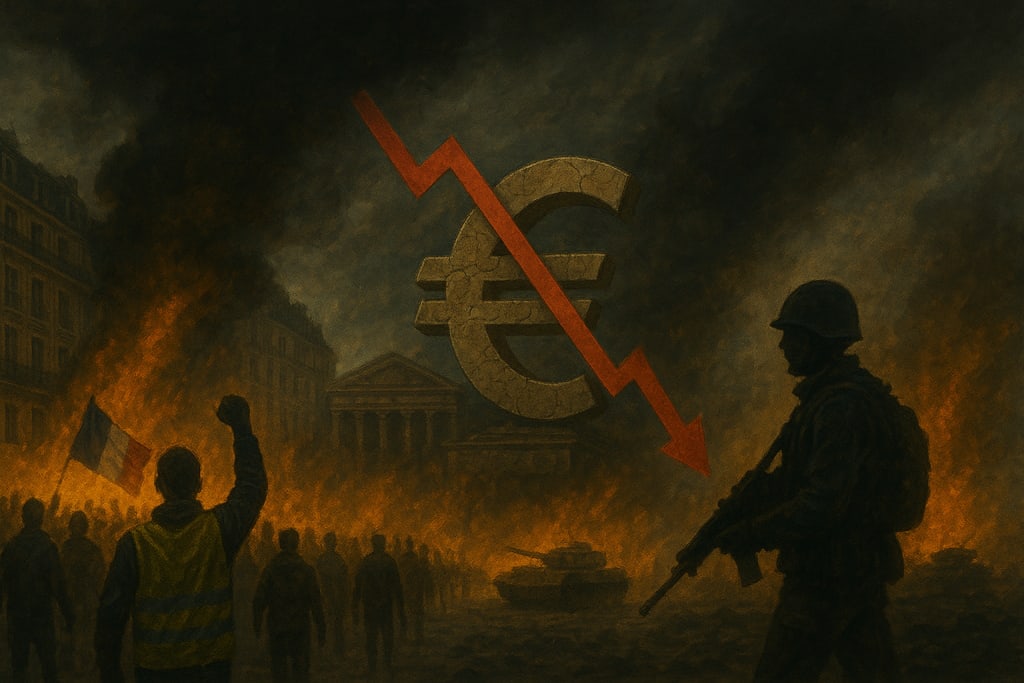
When we think about the future of Europe and the wider world, one question looms large: how much trouble are we really in? Recent headlines suggest that France and the United Kingdom, two pillars of European influence, are both wrestling with serious challenges that could ripple across continents.
France is in political disarray. The government has collapsed, Prime Minister François Bayrou has resigned, and mass protests are filling the streets. More than 350 arrests have already been reported. Fitch Ratings has downgraded France’s credit standing to A+, a warning signal of instability. The Bank of France has also cautioned that political uncertainty could weigh heavily on growth, as consumers and businesses grow wary of investing or spending.
The United Kingdom, meanwhile, is trudging along with sluggish economic performance. Growth in 2024 was only 0.9 percent, and debt now hovers at 97.2 percent of GDP. Although there have been efforts to portray Britain as a safe and attractive place for investment, political unrest and protests, including large rallies in London, complicate this message.
Across Europe, economists and policy makers are asking the same question: are we on the brink of another recession within the next six to twelve months?
The European Central Bank has signaled caution, holding interest rates steady as fears mount. There is no certainty of a deep downturn, but the clouds are gathering.
One cannot talk about Europe’s troubles without addressing the ongoing war between Russia and Ukraine. The conflict has sent energy costs soaring, ignited inflation, and deepened the cost of living crisis across the continent. The war is not only straining household budgets but also reshaping trade and forcing governments to rethink long term energy policy.
While Europe struggles, the question naturally arises: what does this mean for America?
The United States is also facing its own difficulties. The cost of living has risen steeply, with some cities now requiring six figure incomes just to achieve a modest standard of comfort. Internationally, however, the U.S. has been busy shoring up relationships. A new trade deal with the European Union aims to strengthen transatlantic ties. In Africa, the American focus is shifting toward business partnerships and growth, while in Asia the U.S. is balancing competition with China and deepening ties with allies such as Japan and India.
This web of connections highlights something important: Europe’s struggles will not remain Europe’s alone. The outcome of political instability in France, the slow growth in the United Kingdom, and the uncertain path of the war in Ukraine will affect energy prices, trade flows, and financial markets across the globe. The ripple effect will reach America, Africa, and Asia.
For ordinary people, the question is immediate and personal. What does this mean for the standard of living? For social safety nets? For benefits that citizens depend on? Inflation already reduces the buying power of those benefits, and governments under strain may look for ways to tighten budgets. The concern is real, especially for those most vulnerable to economic downturns.
At the same time, governments are preparing. In the United Kingdom, for example, a large scale pandemic readiness exercise is planned for the autumn. While another lockdown is not being forecast, the desire to be prepared for future emergencies is clear.
The larger picture remains unsettled. The risk of a global conflict on the scale of another world war is low, but tensions are rising. Nations are walking a tightrope between diplomacy and defense, cooperation and competition.
As a concerned observer, it is difficult not to ask: are we drifting toward a new era of instability, or will these trials give way to resilience and innovation?
The future of Europe, America, Africa, and Asia is bound together. The next year will test not only economies but also the strength of relationships across continents.
About the Creator
Cathy (Christine Acheini) Ben-Ameh.
https://linktr.ee/cathybenameh
Passionate blogger sharing insights on lifestyle, music and personal growth.
⭐Shortlisted on The Creative Future Writers Awards 2025.
Keep reading
More stories from Cathy (Christine Acheini) Ben-Ameh. and writers in The Swamp and other communities.
Europe and South America Seal a Trade Pact for the Trump Era
Global trade is changing — and fast. In an era defined by tariffs, protectionism, and shifting alliances, Europe and South America have quietly made history. After more than two decades of negotiations, the European Union and the Mercosur bloc have sealed a major trade pact, creating one of the world’s largest free-trade zones.
By Aqib Hussain6 days ago in The Swamp



Comments (1)
I am literally pronouncing the prime ministers name with a fake french accent to keep myself from shaking in my boots. The prime minister has resigned. Damn. 😳 No wonder the businesses and spending are in shambles. I prevented myself from going to London on the day of the protest. Crowds to me equals danger. No matter what they are crowding for. Nice to know what the US is doing in the light of all this. Things aren't looking so bright at all. Especially with the large scale pandemic readiness exercise planned for the UK. Nicely presented, and very well researched Cathy 🤗❤️