
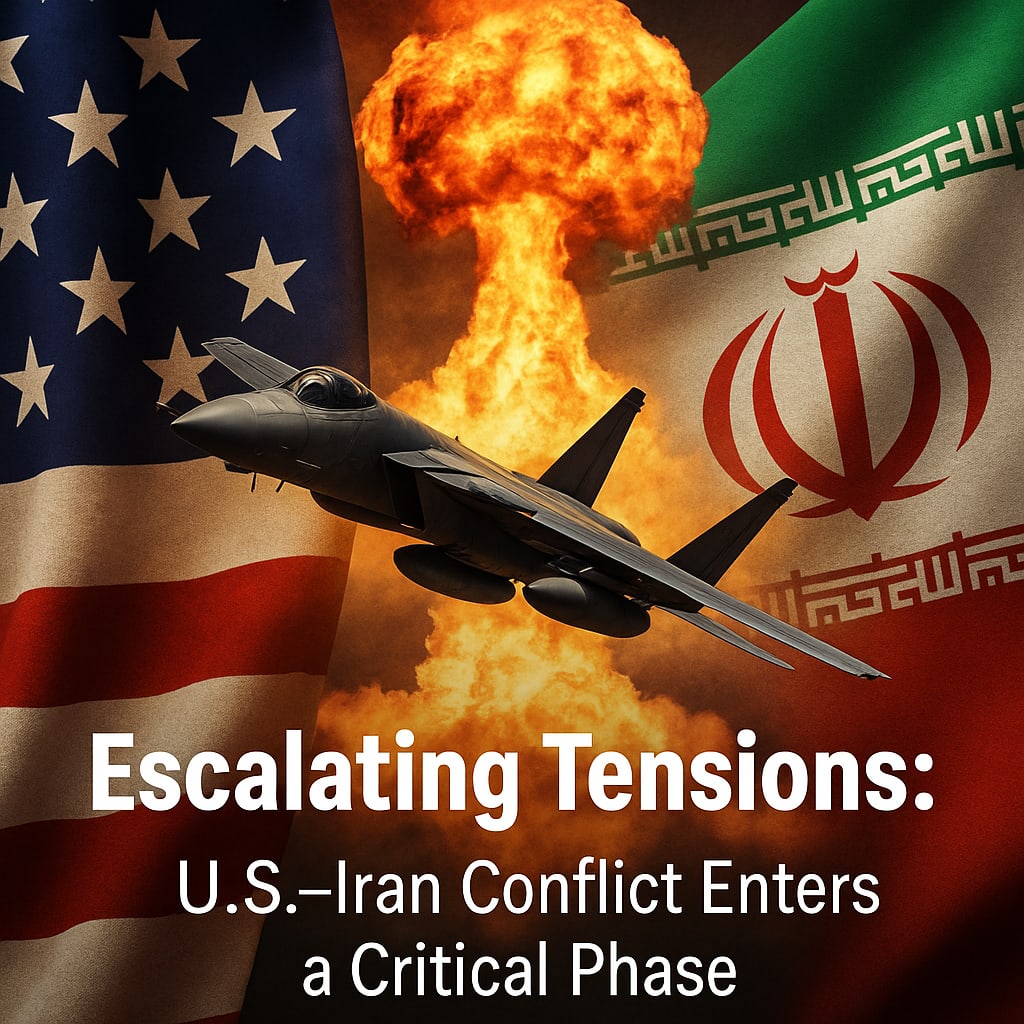
Escalating Tensions: U.S.–Iran Conflict Enters a Critical Phase
How a single strike shattered months of diplomacy and reignited fears of regional war.

Introduction
In June 2025, the United States, under the leadership of former President Donald Trump, launched coordinated military strikes on three of Iran’s key nuclear facilities: Fordow, Natanz, and Isfahan. This marked a significant turning point in U.S.–Iran relations, which have been strained for decades. Described by Trump as a “spectacular military success,” the strikes were aimed at halting Iran’s nuclear ambitions and were carried out in coordination with Israeli intelligence
Background of Diplomatic Efforts
Before the military intervention, both nations had engaged in indirect diplomatic negotiations. Starting in April 2025, U.S. envoy Steve Witkoff and Iranian Foreign Minister Abbas Araghchi participated in six rounds of talks facilitated in Oman and Italy. The discussions focused on Iran’s uranium enrichment activities, in exchange for relief from U.S. sanctions.
Though initial discussions were termed “constructive,” progress was hindered by mutual distrust and a lack of agreement on Iran's nuclear capabilities. As talks deteriorated, the U.S. reinstated its “maximum pressure” policy, introducing harsh sanctions that crippled Iran’s economy, particularly its oil exports.
In response, Iran unveiled the Qassem Bassir missile system, capable of striking targets over 1,200 kilometers away. This move escalated regional tensions and raised fears of military confrontation.
Details of the U.S. Strike: Operation Midnight Hammer
The operation, officially named Operation Midnight Hammer, was executed using B-2 stealth bombers, Tomahawk missiles launched from U.S. submarines, and advanced bunker-buster bombs designed to penetrate fortified underground facilities.
According to the U.S. Department of Defense, the strikes caused severe damage to Iran’s nuclear infrastructure. While former President Trump claimed the facilities were “completely obliterated,” Pentagon officials maintained that further assessment would be necessary to evaluate the long-term impact on Iran’s nuclear capabilities.
Domestic and Global Reactions
The U.S. political landscape reacted sharply to the strikes. Supporters, mostly from the Republican Party, defended the operation as a necessary measure to prevent Iran from becoming a nuclear threat. However, critics, particularly from the Democratic Party, questioned the legality of the action, citing the lack of Congressional authorization and the risks of unilateral military escalation.
Globally, the reaction was mixed. United Nations Secretary-General António Guterres called for restraint and urged both sides to avoid actions that could destabilize the region. China and Russia strongly condemned the strikes, labeling them as a violation of international law. European allies, while expressing concern, urged both countries to return to diplomatic engagement.
Iran’s Military Response
Iran responded swiftly. Over 150 ballistic missiles and 100 drones were launched toward Israeli targets. Although many were intercepted by the Iron Dome defense system, several managed to cause injuries and infrastructural damage in Jerusalem and surrounding areas.
The Iranian Revolutionary Guard Corps declared that all U.S. forces in the Middle East were now considered potential targets. Iranian allies, including Hezbollah in Lebanon and the Houthi movement in Yemen, also threatened retaliatory actions, heightening fears of a broader regional conflict.
Prospects for Future Diplomacy
Despite the severity of the situation, U.S. officials stated that the objective of the operation was not regime change, but the neutralization of nuclear threats. Vice President J.D. Vance confirmed that the attacks were targeted and in compliance with U.S. strategic objectives. Secretary of State Marco Rubio expressed hope for renewed diplomatic dialogue if Iran agrees to international oversight.
On the other hand, Iran’s leadership condemned the airstrikes, accusing the United States of breaching the UN Charter. Foreign Minister Araghchi appealed to the International Atomic Energy Agency (IAEA) to investigate the legality of the operation and indicated that Tehran reserved the right to respond further.
Conclusion
The U.S.–Iran conflict has entered a dangerous and uncertain phase. The airstrikes have not only disrupted ongoing diplomatic efforts but have also reignited fears of a prolonged regional war. As global powers urge restraint, both nations stand at a crossroads. The coming weeks will determine whether this conflict escalates further or if diplomacy, however fragile, can once again take center stage.
About the Creator
Asad Ali
I'm Asad Ali, a passionate blogger with 3 years of experience creating engaging and informative content across various niches. I specialize in crafting SEO-friendly articles that drive traffic and deliver value to readers.
Parallel Protests
I haven't written for quite some time, but I have A LOT of thoughts about yesterday's protest rally against our government's involvement and complicity in America's war on Iran, on the harbourside of my home city Bristol, and I need to put them somewhere. My gorgeous girlfriend is always a loving and listening ear and sharing it all with her will always be a healthy and happy way of processing the mental and emotional weight, but getting it straight in my brain to share means writing it all down in straight lines, so, here we are and thanks for being here.
By Steph Cole10 days ago in The Swamp
US and Mideast Countries Seek Kyiv’s Drone Expertise as Russia-Ukraine Talks Put on Ice
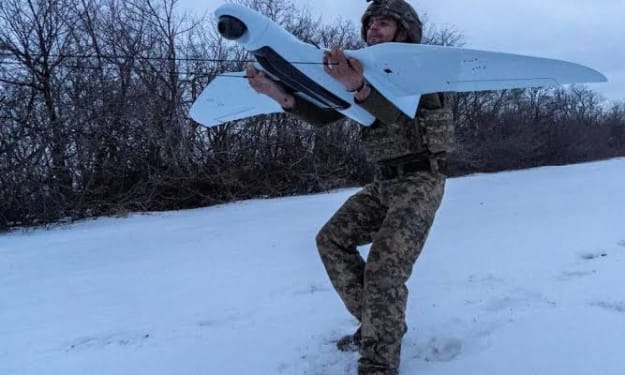
The ongoing war in Ukraine has unexpectedly transformed Kyiv into one of the world’s most influential centers of drone warfare expertise. Now, as tensions escalate in the Middle East and diplomatic talks between Russia and Ukraine stall, the United States and several Middle Eastern countries are turning to Ukraine for help in defending against drone attacks. According to Ukrainian President Volodymyr Zelenskyy, governments in both Washington and the Gulf region have approached Kyiv seeking guidance on how to counter Iranian-made attack drones. Over the past four years of war with Russia, Ukraine has gained extensive battlefield experience defending its cities, infrastructure, and military positions from waves of unmanned aerial vehicles used by Russian forces. These drones — many of them based on the Iranian-designed Shahed drone — have become a defining feature of the conflict. Russia has launched tens of thousands of them against Ukrainian targets since the invasion began in 2022, forcing Ukraine to rapidly innovate new defensive techniques and technologies. In recent weeks, Zelenskyy said he held discussions with leaders from several Middle Eastern countries, including the United Arab Emirates, Qatar, Bahrain, Jordan, and Kuwait. These governments are increasingly concerned about the threat posed by Iranian drone technology in the region and are eager to learn from Ukraine’s combat-tested experience. The interest comes as tensions in the Middle East have intensified following a new round of hostilities involving Iran. Iranian drones have been deployed in attacks across the region, raising alarms about the vulnerability of critical infrastructure such as oil facilities, airports, and power plants. Ukraine’s response to similar threats has relied on a combination of innovation and necessity. Because traditional air-defense systems are expensive and limited in supply, Ukrainian engineers and military planners developed alternative strategies. These include electronic warfare systems that jam drone signals, mobile anti-aircraft units, and even specialized interceptor drones designed to hunt down and destroy incoming UAVs. One particularly notable innovation has been the development of extremely low-cost counter-drone systems. Some Ukrainian interceptor drones cost as little as $1,000, making them far cheaper than conventional missile-based defenses that can cost hundreds of thousands of dollars per shot. This affordability has drawn the attention of military planners around the world. In modern conflicts where drones are used in large numbers, traditional missile systems can quickly become economically unsustainable. Ukraine’s approach — combining inexpensive technologies with layered defense strategies — has shown how countries can defend themselves against mass drone attacks without exhausting their defense budgets. The new cooperation discussions also reflect a broader geopolitical shift. Ukraine’s experience in drone warfare has effectively turned the country into a laboratory for modern combat technologies. Lessons learned on Ukrainian battlefields are now influencing defense strategies far beyond Europe. At the same time, Kyiv is carefully weighing how much assistance it can provide. Zelenskyy emphasized that any sharing of expertise or equipment must not weaken Ukraine’s own defensive capabilities. The country remains locked in a prolonged war with Russia, and protecting its airspace remains the top priority. “We help defend those who help Ukraine bring a just end to the war,” Zelenskyy said in remarks outlining Kyiv’s approach to international cooperation. Meanwhile, diplomatic efforts to end the war between Russia and Ukraine have been put on hold. A new round of U.S.-brokered talks had been expected to take place this week, but the escalating crisis in the Middle East has diverted international attention and delayed negotiations. The pause in diplomacy underscores how interconnected global conflicts have become. Developments in one region can quickly reshape the strategic landscape elsewhere, drawing new actors into existing conflicts. For Ukraine, the sudden demand for its expertise represents both an opportunity and a challenge. On one hand, sharing its knowledge could strengthen alliances and expand its global influence. On the other, Kyiv must balance those partnerships with the urgent demands of its own war effort. As drone warfare becomes an increasingly dominant feature of modern battlefields, Ukraine’s experience may prove to be one of the most valuable strategic assets to emerge from the conflict.
By Fiaz Ahmed 7 days ago in The Swamp
Worth the Wait: Puerto Viejo, Costa Rica
Beach bumming in a small Caribbean beach town sounded like a perfect way to end our 6-month trip through Mexico and Central America. Or so we thought. The foul, fishy stench of rotten seaweed hit our nostrils as we stepped from the cramped bus and looked out at a rather depressing, empty, and underwhelming black sand beach. It was pouring with rain, and we had to quickly fish out our ponchos. We thought, this couldn’t be it, could it?
By Sh*t Happens - Lost Girl Travel7 days ago in Wander



Comments (1)
I feel that the leaders of these two countries are just making a face to each other through words