
Electric Two-Wheeler Market Forecast and Opportunities (2025–2033)
Riding the Future: How Electric Two-Wheelers Are Transforming Global Mobility

Electric Two-Wheeler Market Outlook
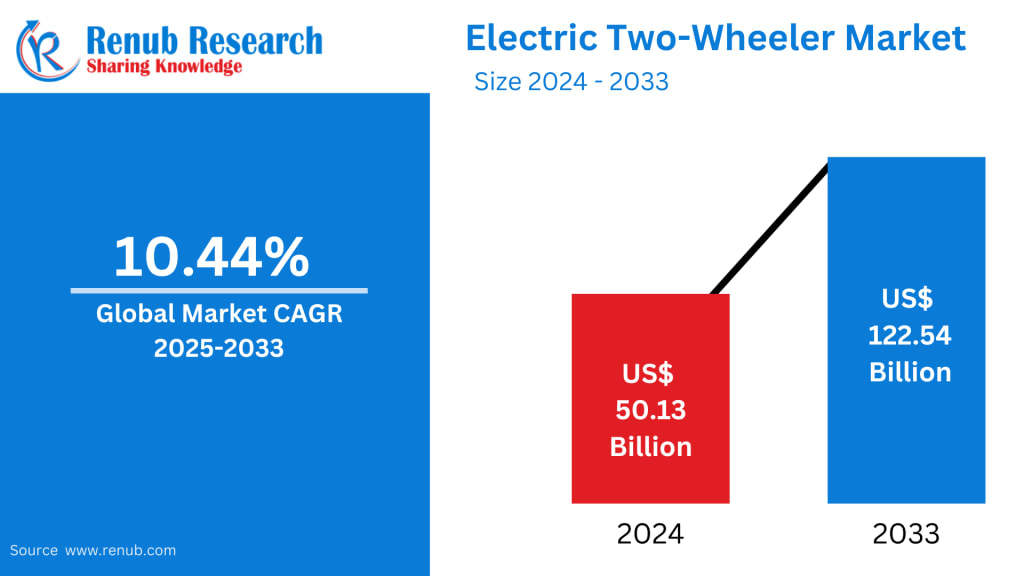
The global Electric Two-Wheeler Market is entering a decisive growth phase as sustainability, affordability, and urban mobility converge. According to Renub Research, the market is valued at US$ 50.13 billion in 2024 and is forecast to reach US$ 122.54 billion by 2033, expanding at a robust CAGR of 10.44% during 2025–2033.
This impressive expansion is driven by rising demand for eco-friendly transportation, rapid advancements in battery technologies, supportive government incentives, and heightened environmental awareness worldwide. Electric scooters and motorcycles are no longer niche products—they are becoming mainstream solutions for daily commuting, logistics, and last-mile delivery.
Electric Two-Wheeler Market Overview
An electric two-wheeler refers to a motorcycle or scooter powered entirely by an electric motor instead of an internal combustion engine. These vehicles rely on rechargeable batteries—predominantly lithium-ion—and deliver a cleaner, quieter, and more energy-efficient alternative to petrol-powered bikes.
Modern electric two-wheelers are available across a wide spectrum, from entry-level commuter scooters to high-performance electric motorcycles. Key features include low running costs, reduced maintenance, instant torque, smart connectivity, and zero tailpipe emissions. With cities grappling with congestion and pollution, electric two-wheelers are emerging as a practical solution for both urban and semi-urban transportation.
Key Advantages of Electric Two-Wheelers
Electric two-wheelers offer compelling benefits that continue to accelerate their adoption globally:
Environmental Sustainability: Zero tailpipe emissions significantly reduce air pollution and carbon footprint.
Cost Efficiency: Lower fuel and maintenance costs compared to conventional two-wheelers.
Quiet and Smooth Operation: Reduced noise pollution enhances rider comfort.
Technological Innovation: Improvements in battery life, fast charging, and connectivity.
Government Support: Subsidies, tax rebates, and EV-friendly policies encourage adoption.
As urban centers increasingly prioritize green mobility, electric two-wheelers stand out as an affordable, efficient, and future-ready solution.
Future of the Electric Two-Wheeler Market
The future of the electric two-wheeler industry is exceptionally promising. Continuous progress in battery energy density, charging speed, and vehicle performance is narrowing the gap between electric and conventional vehicles. Innovations such as swappable batteries, lightweight vehicle designs, and AI-enabled smart dashboards are enhancing user experience and convenience.
Rising fuel prices, stricter emission norms, and expanding charging infrastructure—especially across Asia Pacific and Europe—will further accelerate market penetration. With strong investments from both established manufacturers and EV start-ups, electric two-wheelers are poised to become the backbone of urban mobility over the next decade.
Growth Drivers of the Global Electric Two-Wheeler Market
1. Rising Environmental Awareness
As climate concerns intensify, consumers are actively seeking cleaner transport options. Electric two-wheelers play a crucial role in reducing greenhouse gas emissions and urban air pollution. Governments worldwide are aligning policies with carbon neutrality goals, directly benefiting the electric mobility ecosystem.
2. Supportive Government Incentives
Subsidies, tax exemptions, and purchase incentives significantly reduce the upfront cost of electric two-wheelers. Large-scale investments in charging infrastructure are further boosting consumer confidence. Policy frameworks in China, India, Europe, and North America continue to favor electric vehicle adoption.
3. Advancements in Battery Technology
Lithium-ion batteries have transformed the market with higher energy density, longer lifespan, and declining costs. Faster charging, improved safety, and extended range are easing consumer concerns around performance and reliability.
Challenges Facing the Electric Two-Wheeler Market
High Initial Purchase Cost
Despite long-term savings, the upfront cost of electric two-wheelers remains higher than conventional alternatives, especially in price-sensitive markets.
Limited Charging Infrastructure
Inadequate public charging networks—particularly in rural and developing regions—continue to restrain adoption. However, infrastructure expansion is gaining momentum globally.
Electric Motorcycle Industry Outlook
Electric motorcycles are gaining popularity due to their high torque, sporty performance, and urban commuting efficiency. Manufacturers are investing heavily in R&D to improve range, durability, and design aesthetics. As congestion worsens in major cities, electric motorcycles offer a compelling, sustainable commuting solution for both individuals and fleet operators.
Lithium-Ion Battery Dominance
Lithium-ion batteries dominate the electric two-wheeler market due to their lightweight nature, high efficiency, and long cycle life. Continuous innovation and economies of scale are reducing costs, making lithium-ion-powered two-wheelers increasingly affordable and accessible.
Regional Market Insights
United States
The U.S. electric two-wheeler market is expanding steadily, supported by environmental awareness, urban mobility needs, and federal incentives. Improvements in charging infrastructure and product availability are attracting new consumers.
Canada
Canada’s market is gradually gaining momentum, driven by sustainability initiatives, fuel cost concerns, and supportive government policies.
United Kingdom
The UK is witnessing strong adoption due to emission regulations, rising fuel prices, and government grants. Urban commuters increasingly favor electric scooters and motorcycles.
France
France’s electric two-wheeler market is growing rapidly, backed by subsidies, tax incentives, and expanding charging networks. European expansion plans by manufacturers are further strengthening growth prospects.
India
India represents one of the fastest-growing markets globally. Government schemes, rising fuel prices, and urban pollution challenges are driving massive adoption of electric scooters and motorcycles.
China
China remains the largest and most mature electric two-wheeler market worldwide, driven by supportive policies, local manufacturing dominance, and widespread use in delivery and logistics.
Brazil
Brazil’s market is still emerging but shows strong potential due to urban congestion, rising fuel prices, and increasing environmental awareness.
Saudi Arabia
Saudi Arabia’s electric two-wheeler market is at a nascent stage but is gaining traction through sustainability initiatives and infrastructure development aligned with long-term economic diversification goals.
Global Electric Two-Wheeler Market Segmentation
By Type
Electric Motorcycles
Electric Scooters
By Battery Type
Nickel Metal Hybrid
Sealed Lead Acid
Lithium-Ion
By Drive Type
Hub Drive Motor
Mid-Drive Motor
By Voltage
36V
48V
60V
72V
Above 72V
Competitive Landscape
Leading players in the global electric two-wheeler market are focusing on innovation, geographic expansion, and strategic partnerships. Key companies profiled include:
BMW AG
GOVECS AG
Hero Electric Vehicles Pvt. Ltd.
Mahindra GenZe
Terra Motors Corporation
Vmoto Limited
Zero Motorcycles, Inc.
Each company is analyzed across overview, leadership, recent developments, product portfolio, and financial insights.
Final Thoughts
The Electric Two-Wheeler Market (2025–2033) is on a powerful growth trajectory, reshaping how the world approaches urban transportation. With strong backing from governments, rapid technological advancements, and growing consumer acceptance, electric two-wheelers are set to play a pivotal role in achieving global sustainability goals.
As affordability improves and infrastructure expands, electric scooters and motorcycles will increasingly dominate city roads—offering a cleaner, smarter, and more efficient future for mobility worldwide.
About the Creator
Diya Dey
Market Analyst
Managers of Swiss Bar Are Suspected of Negligence in Deadly Fire, Police Say
A tragic fire at a bustling bar in a Swiss ski resort has left the nation in shock, prompting authorities to open a criminal investigation into the circumstances surrounding the disaster. Police have revealed that the managers of the bar are now suspected of negligence, as the blaze claimed multiple lives and injured several others. The incident occurred late last week at the Bar Alpenblick, located in one of Switzerland’s most popular winter sports destinations. According to eyewitnesses, the fire spread rapidly through the establishment, trapping patrons inside before emergency crews could arrive. The exact cause of the fire is still under investigation, but authorities have indicated that preliminary evidence points toward a failure to adhere to proper safety regulations. Rapid Spread and Chaos Survivors describe the scene as chaotic and terrifying. “It was like a wall of fire,” one witness recounted. “People were screaming and trying to get out, but the exits were overcrowded, and some doors were locked.” Emergency services responded within minutes, but by the time firefighters arrived, the blaze had engulfed much of the bar. Local hospitals have confirmed that several individuals suffered severe burns and smoke inhalation. The exact death toll is yet to be finalized, but reports indicate that more than a dozen people lost their lives in the tragic accident. Authorities are working tirelessly to identify victims and notify their families. Investigation and Alleged Negligence Swiss police have emphasized that the investigation will focus on the bar’s management and their potential role in the tragedy. “We are examining whether safety protocols were ignored, including fire exits, alarm systems, and crowd management measures,” said a police spokesperson. Early reports suggest that the bar may not have complied with the full range of fire safety standards mandated by Swiss law. Negligence in this context could encompass a variety of failures, including blocked emergency exits, malfunctioning fire alarms, and inadequate staff training on emergency evacuation procedures. If managers are found culpable, they could face serious legal consequences, ranging from fines to criminal charges. Community Response The fire has sent shockwaves throughout the local community and the wider nation. Ski resorts, local authorities, and hospitality associations have expressed condolences and pledged support for the victims and their families. Social media platforms have been flooded with messages of solidarity, as well as calls for stricter safety measures in bars and entertainment venues. Local officials are also considering a broader review of fire safety regulations across Switzerland, particularly in high-traffic areas like ski resorts, where large gatherings of tourists are common. “This tragedy is a stark reminder that safety measures are not optional,” one municipal official said. “We must ensure that establishments are held accountable for protecting their patrons.” Safety Regulations and Compliance Switzerland has some of the strictest fire safety regulations in Europe, including requirements for fire exits, emergency lighting, sprinklers, and routine inspections. However, incidents like the Bar Alpenblick fire highlight potential gaps in enforcement or compliance. Experts note that in busy tourist areas, the risk of overcrowding and safety oversights can be high. Hospitality industry analysts have also pointed out that training staff for emergency situations is crucial. In high-risk environments like bars and nightclubs, knowing how to guide patrons to safety can make the difference between life and death. In this case, investigators are examining whether employees were adequately trained and whether management enforced safety protocols. Legal Implications If charges of negligence are filed, the managers of the Bar Alpenblick could face serious repercussions. Swiss law allows for criminal liability if individuals fail to fulfill their duty of care, resulting in injury or death. Legal proceedings in such cases often involve detailed examinations of safety records, staff training logs, and structural compliance with fire codes. Experts warn that this case could set a precedent for similar establishments in Switzerland and across Europe. “The public expects venues to be safe,” a legal analyst noted. “When negligence leads to fatalities, the courts can send a strong message about accountability.” Moving Forward As the investigation continues, local authorities are urging other bars and entertainment venues to double-check their fire safety measures. Patrons are also being reminded to familiarize themselves with emergency exits and evacuation procedures, even in familiar settings. Meanwhile, the community continues to mourn the loss of life. Vigils and memorials are being held across the region, honoring those who perished in the blaze. The tragedy has sparked a nationwide conversation about the responsibilities of business owners, the enforcement of safety regulations, and the measures necessary to prevent such disasters in the future. Conclusion The deadly fire at the Bar Alpenblick stands as a sobering reminder of the importance of safety compliance and responsible management. As police investigate the alleged negligence of the bar’s managers, families, friends, and communities await answers, justice, and measures that ensure such a tragedy never happens again. Authorities have promised transparency and thoroughness in the investigation, and the nation watches closely as this case unfolds. Beyond legal consequences, the incident serves as a wake-up call to businesses and regulators alike: safety must always come first, especially where lives are at stake.
By Muhammad Hassan7 days ago in The Swamp




Comments
There are no comments for this story
Be the first to respond and start the conversation.