
Electoral bonds verdict updates Supreme Court declares
electoral bonds scheme unconstitutional

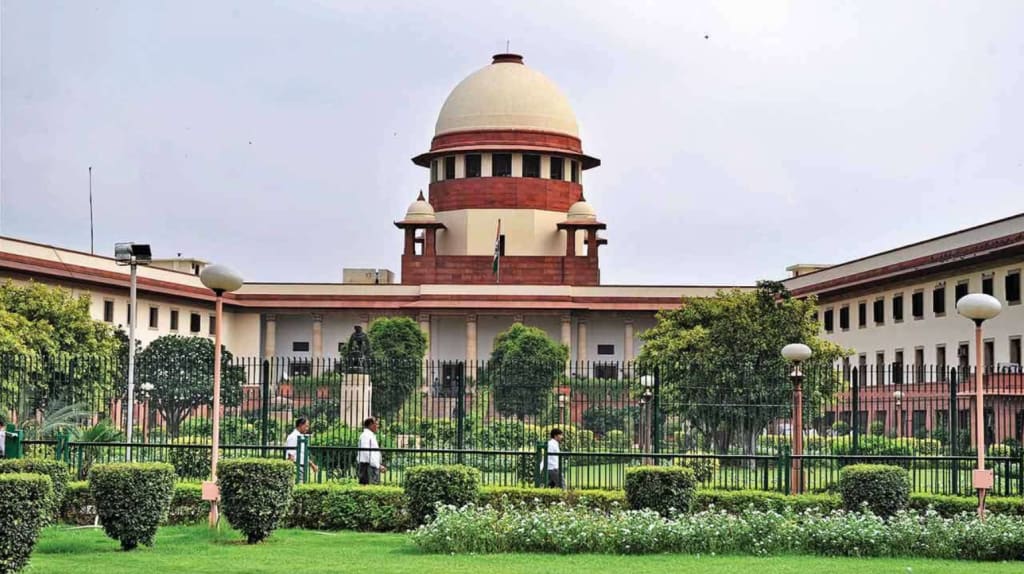
Supreme court says anonymity in the electoral bonds scheme was ‘selective’, not ‘fool-proof’; upholds right to keep political affiliations private from state intrusion, indirect influences; BJP say it respects the verdict and opposition parties welcome the decision saying it ensures ‘level playing field’
In a landmark unanimous judgment, the Supreme Court on February 15 struck down as “unconstitutional and manifestly arbitrary” the electoral bonds scheme, which provides blanket anonymity to political donors, as well as critical legal amendments allowing rich corporations to make unlimited political donations.
The five-judge Constitution Bench also quashed the amendments made to the Income Tax Act and the Representation of People Act which made the donations anonymous.
While the court arrived at a unanimous decision with the Chief Justice delivering the lead verdict, Justice Sanjiv Khanna has penned a concurring opinion with a slightly different reasoning.
Notably, the State Bank of India was ordered to furnish details of the electoral bonds received by political parties to the Election Commission of India by March 6. The ECI will subsequently publish such details on its official website by March 13.
Electoral bonds that have not been encashed by political parties yet have been ordered to be returned following which the issuing bank will refund the amount to the purchaser’s account.
Meanwhile, the BJP said that The BJP said that it respected the verdict of the Supreme Court but insisted that the scheme had a “laudable objective of bringing transparency in poll funding”.
Several Opposition parties welcomed the decision, with the Congress saying it will reinforce the power of votes over notes. Congress president Mallikarjun Kharge hoped the Modi government will stop resorting to such “mischievous ideas” in future. Welcoming the judgment, the CPI(M) said it was an “unscrupulous scheme designed to help the ruling party” and it was now essential to introduce reforms for political and electoral funding.
Also know The Legality of the electoral bonds scheme:
The legality of the electoral bonds scheme explained:
A five-judge Constitution Bench is set to hear final arguments in the case on October 31- what does the challenge entail? What are the concerns raised by the ECI and the RBI? How has the centre defended the scheme? What has the top court said so far?
The Supreme Court on October 16 referred the challenge to the validity of the electoral bonds scheme which facilitates anonymous donations to political parties to a Constitution Bench of five judges. A Bench led by the Chief Justice of India (CJI) D.Y. Chandrachud and also comprising Justices Sanjiv Khanna, B.R. Gavai, J.B. Pardiwala, and Manoj Misra is set to hear final arguments in the case on October 31 after a gap of more than two years, as the last effective hearing took place in March 2021. The case has been pending in the Supreme Court for over eight years now and its outcome is expected to have a significant bearing on the Lok Sabha elections scheduled to take place next year.
The scheme, which was notified by the government on January 2, 2018, introduced money instruments through which companies and individuals in India can donate to political parties anonymously. Consequently, Congress leader Dr.Jaya Thakur, the Communist Party of India (Marxist), and the NGO Association for Democratic Reforms (ADR) challenged the scheme by contending that it opens the “floodgates” to anonymous political donations thereby infringing upon the voters’ right to information.
The Union government on the other hand defended the scheme by pointing out that anonymity in political donations is required to ensure that there is no apprehension of retribution from other political parties. It was also argued that the scheme ensures that ‘white’ money is used for political funding through proper banking channels.
Supreme court upholds right to keep political affiliations private from state intrusion, indirect influences.
Electoral bonds case supreme court upholds right to keep political affiliations private from state intrusion, indirect influences
Supreme court verdict on electoral bonds: the top court rules that the right to privacy includes political affiliations, protecting against misuse and suppression.
“Forming political beliefs and opinions is the first stage of political expression. Political expression cannot be exercised freely in the absence of privacy,” Chief Justice Chandrachud observed. He added that a lack of privacy about political affiliations would “disproportionately affect” people whose views do not match with that of the mainstream.
About the Creator
Angel Sri
Passionate creator weaving words into captivating stories. Transforming ideas into engaging content that sparks curiosity and connection.
Instagram- angel__sri
“We Were Tricked”: How One Woman Lured Foreign Men to Fight on Russia’s Front Line
As the war in Ukraine grinds on, stories continue to emerge that reveal the conflict’s hidden human costs. Among the most disturbing are accounts from foreign men who claim they were deceived into joining Russia’s front-line forces—not through official recruitment offices, but through personal relationships built online. One such story centers on a woman accused of luring foreign nationals with promises of love, opportunity, and safety, only for them to end up in one of the world’s most dangerous war zones.
By Fiaz Ahmed Brohi5 days ago in The Swamp
Miss Persephone's Manual to a Seemingly Ordinary Life
Miss Persephone was found at the dining table, her blue eyes swollen, her tears arriving and retreating like the tides of the ocean. Earlier that day, her family had visited her in the retirement home where she had lived for eight years. It was her eightieth birthday.
By Imola Tóth2 days ago in Fiction


Comments
There are no comments for this story
Be the first to respond and start the conversation.