
Donald Trump’s New Peace Initiative: Is Real Peace Possible Between Israel and Palestine?
Israel Palestine peace plan Donald Trump peace initiative Gaza conflict 2025 Middle East diplomacy Palestinian statehood Global reactions to peace deal

Introduction
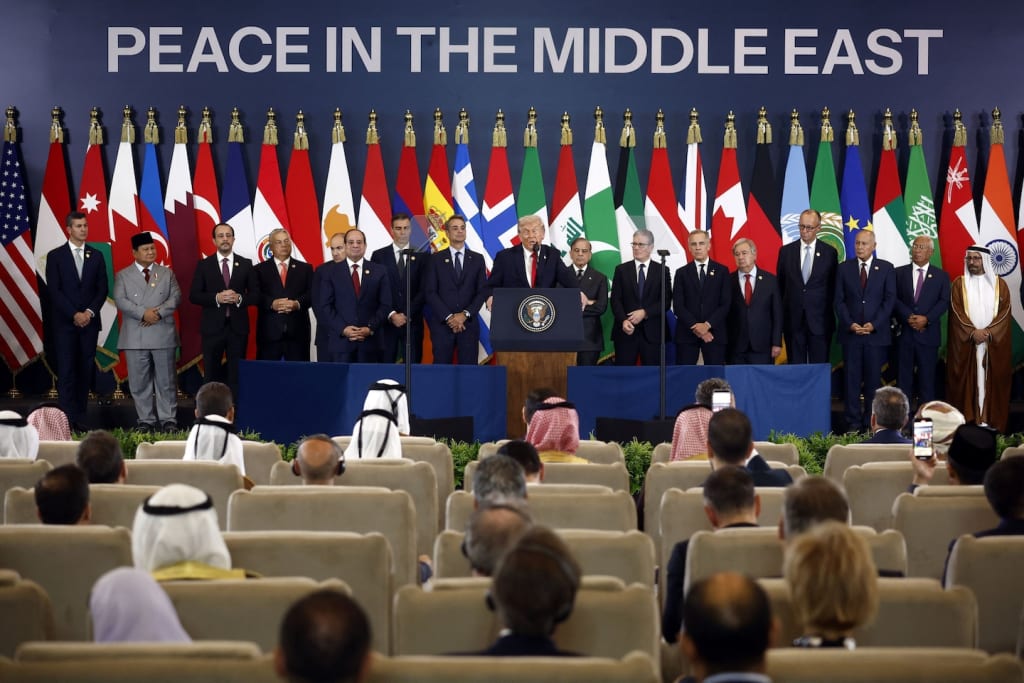
The Israel–Palestine conflict remains one of the longest and most complex disputes in modern history. Once again, it has become the center of global political attention — this time due to Donald Trump’s new peace initiative. The former U.S. president has presented a 20-point peace plan, which, according to some Muslim countries, is a step in the right direction, while others have dismissed it as imbalanced and politically motivated.
But one crucial question dominates the discussion:
Can genuine peace truly be achieved between Israel and Palestine?
Background: A Conflict at Another Turning Point
In recent months, tensions in Gaza have reached alarming levels. Continuous airstrikes, humanitarian crises, and massive loss of civilian lives have drawn widespread international concern.
Amid this turmoil, Trump unveiled a peace proposal that aims to offer a framework for coexistence between the two sides.
According to the plan:
> “Palestinians will be guaranteed a sovereign state, while Israel will be assured of long-term security.”
Although the idea sounds fair in theory, the real-world situation remains far more complicated.
Highlights of Trump’s 20-Point Peace Plan
Here are some key points of the proposed peace framework:
1. Establishment of a transitional Palestinian government with limited sovereignty.
2. International financial support for Gaza’s reconstruction and development.
3. The status of Jerusalem to be decided in future negotiations.
4. Recognition of Israel’s right to self-defense.
5. Gradual disarmament of militant factions in Gaza.
6. Deployment of international observers to monitor ceasefire compliance.
7. Formation of a joint peace commission involving the U.S., Turkey, Saudi Arabia, and Egypt.
8. Immediate humanitarian aid delivery and rebuilding of essential infrastructure.
These points suggest a framework focused on stability, but critics argue that the plan avoids addressing core political realities — such as occupation, refugees, and sovereignty.
Palestinian Reaction: Between Hope and Distrust
The Palestinian political factions have shown mixed responses. Hamas, while expressing support for “any real peace effort,” firmly rejected any plan that legitimizes Israeli occupation.
A Hamas spokesperson stated:
> “Peace is possible only when Palestinian lands are returned, and Jerusalem is recognized as a neutral and shared city.”
This response reflects deep-rooted distrust toward both Israel and U.S.-backed proposals, given their history of unfulfilled promises.
Israel’s Stance: Security First
Israel, on the other hand, has welcomed parts of the plan — especially those that ensure military and territorial security.
Prime Minister Netanyahu remarked:
> “We want peace, but not at the cost of our security.”
Behind this statement lies Israel’s fundamental concern: maintaining control over borders, airspace, and security zones. For Israel, any peace agreement that weakens its military edge is viewed as unacceptable.
Global Response: Mixed Signals from the World
European Union: Adopted a cautious tone, calling the plan “an initial step” but emphasizing that peace will only succeed if both parties show genuine political will.
Turkey and Qatar: Supported humanitarian aspects of the proposal but criticized it for ignoring Israeli blockades and settlement issues.
Arab League: In its emergency session, many member states insisted that no peace framework can be valid without the explicit consent of Palestinian leadership.
The mixed reactions underline how fragmented the regional and global political landscape remains when it comes to the Palestinian issue.
The Human Side: Gaza’s Endless Pain
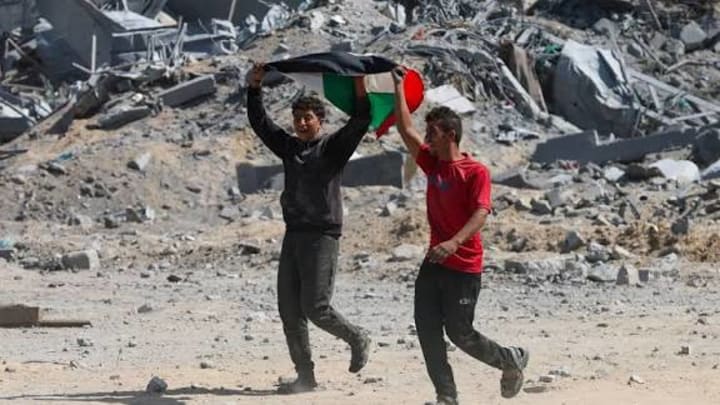
Beyond political strategies and diplomatic statements, the people of Gaza continue to suffer. Hospitals are overcrowded with the injured, food supplies are scarce, and thousands live in makeshift shelters.
Children are growing up in fear; elderly men and women keep asking the same painful question:
> “When will peace finally come?”
These human stories remind the world that peace is not just about political agreements — it is about the right to live with dignity.
Analytical View: Can Trump’s Plan Succeed?
If we look through the lens of history, every major U.S.-led peace initiative has often leaned in favor of Israel — at least in perception. This has made Palestinians skeptical of American mediation.
Trump’s plan, too, seems to prioritize Israeli security while offering Palestinians limited autonomy.
Another challenge lies in the absence of mutual trust. Both sides view each other through the lens of past violence and betrayal. Without building confidence and addressing emotional wounds, no written agreement can endure.
For the plan to work, both sides must compromise — Israel must show flexibility regarding settlements and military policies, while Palestinian factions need to unite politically and renounce militant strategies.
My Personal Opinion
As an observer, I believe Trump’s peace initiative is symbolically significant, but substantively weak.
Real peace cannot emerge from political showmanship or temporary ceasefires — it must be rooted in justice, equality, and mutual respect.
If Israel genuinely wants long-term stability, it must reconsider its treatment of Palestinian civilians and lift its control over Gaza. Likewise, Palestinian leadership must engage constructively instead of reacting emotionally.
True peace requires courage — the courage to forgive, to compromise, and to see humanity beyond borders.
Conclusion
Donald Trump’s new peace initiative has once again stirred global debate. For some, it marks a new beginning; for others, it’s just another political illusion.
One thing, however, is certain:
The Middle East does not need another plan — it needs real justice.
When justice is served, peace will follow naturally. Until then, every initiative — no matter how ambitious — will remain a dream written on paper.
About the Creator
Filmon Ke Raaz | Movie Mysteries Explained
Filmon Ke Raaz is a storytelling platform where movies are explained in a simple and engaging way. We uncover hidden meanings, untold facts, and deep mysteries behind thriller, horror, and mystery films.
Keep reading
More stories from Filmon Ke Raaz | Movie Mysteries Explained and writers in The Swamp and other communities.
Russian Drone Strikes and Airspace Violations in Europe — A Growing Security Crisis
Introduction In recent weeks, reports of Russian drone strikes and airspace violations across several European countries have raised serious global concerns. Against the backdrop of the ongoing Ukraine war, the threat now seems to be expanding beyond the battlefields and into the heart of Europe.
By Filmon Ke Raaz | Movie Mysteries Explained5 months ago in The Swamp
The Forsyth House Fire
Since 1851, Forsyth House has stood on the corner of Union Street and Gordon Street in the heart of Glasgow. Its iconic, or was... because on Sunday 8th of March, 2026, a fire broke out in a small, seemingly un-named shop in the building and tore all that history down. As I write, the rubble is still unsettled and the street is still blocked off. Central Station is quiet on the upper level, and around 30 small businesses have quite literally gone up in smoke.
By S. A. Crawford3 days ago in The Swamp
The Rage-Click Republic: How We Monetized the End of Reason
The sun is screaming over the horizon of a digital desert, and we are all huffing the exhaust from a machine designed to turn our collective brain-rot into corporate profits and shareholder dividends. Go grab a snack. It’s going to be a long, and bumpy ride through the psych-ward of the 21st century.
By Meko James 3 days ago in The Swamp
Hottest in the Office
Dear Rafi, You’re very distracting to work around. For the first second I saw you the other day, I thought you were some type of executive. It took a moment to realize no, you were just the new guy, dressed up for the job he wants. Be still, my heart.
By Gabriel Shames6 days ago in Pride



Comments
There are no comments for this story
Be the first to respond and start the conversation.