
Do We Need to Implement a Media Blackout Against Trump?

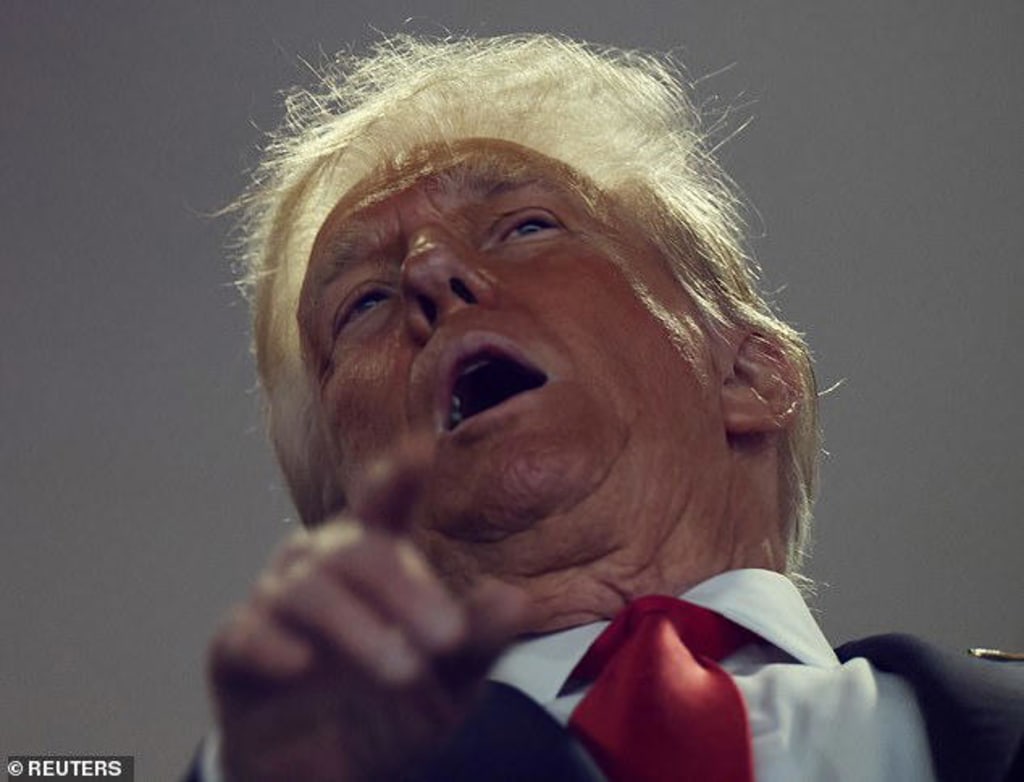
A unilateral press blackout on Donald Trump—where no outlet reports on him, no journalist engages with his social media, and no commentator amplifies his provocations—would be a radical but potentially transformative act of media resistance. It would deny him the oxygen of attention, which he has weaponized for years to dominate headlines, distract from accountability, and manipulate public discourse.
I. Introduction: The Attention Economy and Trump’s Power
Donald Trump’s political power has always been tethered to his ability to command attention. From his early days as a tabloid fixture to his presidency and beyond, Trump has mastered the art of media manipulation. He thrives on chaos, spectacle, and provocation—not to inform, but to dominate.
As Michael Tomasky writes in The New Republic, Trump’s decisions are often driven by “pure instinct—id unchecked by superego; animal urge unmitigated by conscience”. His media strategy is not about policy or governance; it’s about control. And the press, even when critical, has often played into his hands.
II. The Case for a Media Blackout
A unilateral press blackout would mean:
- No coverage of Trump’s rallies, statements, or social media posts.
- No amplification of his insults, provocations, or conspiracy theories.
- No engagement with his Truth Social content.
- No interviews, op-eds, or punditry centered on his persona.
This is not censorship. It’s editorial discretion. It’s the press choosing not to reward behavior that undermines truth, dignity, and democracy.
III. Why It’s Necessary
1. He Weaponizes Attention
Trump’s insults—like calling reporter Catherine Lucey “Piggy”—aren’t just offensive. They’re strategic. They dominate news cycles, drown out substantive issues, and rally his base through outrage.
Every time the press responds, he wins. He becomes the center of gravity, pulling coverage away from policy, ethics, and governance.
2. He Undermines Journalism
Trump has called the press “the enemy of the people,” threatened broadcast licenses, and praised authoritarian crackdowns on media. His attacks aren’t just rhetorical—they’re part of a broader effort to delegitimize independent journalism.
Engaging with him on his terms reinforces his narrative that the media is biased, corrupt, and out to get him.
3. He Distracts from Accountability
When Trump is under scrutiny—whether for the Epstein files, legal investigations, or policy failures—he creates chaos. He insults reporters, spreads conspiracy theories, or stages dramatic events. The goal is distraction.
A blackout would deny him that tool. It would force coverage to focus on facts, not spectacle.
IV. Historical Parallels and Media Theory
Media theorists like Neil Postman and Marshall McLuhan warned that spectacle can overwhelm substance. Trump is the embodiment of that danger. He turns every issue into a performance, every crisis into a ratings opportunity.
Authoritarian leaders like Viktor Orbán have used similar tactics—attacking the press, flooding the zone with propaganda, and demanding loyalty. Trump’s admiration for Orbán is well-documented, and his media strategy mirrors these authoritarian playbooks.
V. The Risks of a Blackout
A blackout is not without risks:
- Trump could claim censorship and rally his base.
- Alternative platforms (e.g., Truth Social, Newsmax) would still amplify him.
- Journalists might struggle to cover legitimate news involving Trump without platforming his provocations.
But these risks are outweighed by the potential benefits: restoring journalistic integrity, reducing misinformation, and shifting focus to issues that matter.
VI. What It Would Take
A successful blackout would require:
- Unified editorial standards across major outlets.
- Clear guidelines for when Trump coverage is warranted (e.g., legal rulings, policy actions).
- Media literacy campaigns to explain the rationale to the public.
- Support from press associations, journalism schools, and watchdog groups.
It would also require courage—the willingness to resist clicks, ratings, and the gravitational pull of Trump’s chaos.
VII. Conclusion: Silence as Resistance
Trump lives for attention. He weaponizes it. He distorts it. And he uses it to erode truth, dignity, and democracy. A unilateral press blackout would be a bold act of resistance—one that says: we will not be manipulated. We will not reward cruelty. We will not amplify lies.
It’s time to starve the spectacle. It’s time to reclaim journalism.
Sources:
- PBS – Trump’s Moves Against Media Mirror Authoritarian Tactics
- The New Republic – Trump’s Panic Over Epstein
- Live News Chat – Trump’s Media Blackout
About the Creator
Julie O'Hara - Author, Poet and Spiritual Warrior
Thank you for reading my work. Feel free to contact me with your thoughts or if you want to chat. [email protected]
Keep reading
More stories from Julie O'Hara - Author, Poet and Spiritual Warrior and writers in The Swamp and other communities.
"Quiet Quiet Piggy"
Donald Trump’s “Quiet, Piggy” remark to Bloomberg reporter Catherine Lucey has sparked widespread condemnation and raised serious questions about press freedom, misogyny, and presidential accountability. While formal consequences are unlikely, there are several avenues for response—from media solidarity and public pressure to legislative safeguards.
By Julie O'Hara - Author, Poet and Spiritual Warrior2 months ago in The Swamp
North Korea Vows Response as It Accuses the South of Flying Drones Across the Border
Tensions on the Korean Peninsula have once again intensified as North Korea accuses South Korea of flying drones across their shared border. In a strongly worded statement, Pyongyang warned that it would respond decisively to what it described as a serious violation of its sovereignty. The accusation has raised fresh concerns about stability in the region, especially at a time when military technology, political signaling, and psychological warfare are becoming increasingly intertwined.
By Aqib Hussain2 days ago in The Swamp
If You Love Me, You'll Do It
I met Jason when I was five years old. I could say that I loved him from the moment I saw him. He was so handsome to me and I felt in awe by his presence. When they introduced him as the new kid in school, I wanted to be his friend right away. I remember it like it was yesterday. I remember his smile and how he didn't seem shy. He appeared confident and ready to learn. I waved at him and said "hello," before anyone else could even say a word. He sat next to me, and I asked him if he wanted to be friends. He looked so happy as he said, "Yes!"
By Sidney Smith (Sid Smith)7 days ago in Fiction



Comments
There are no comments for this story
Be the first to respond and start the conversation.