
Devastation and frozen frontlines: Ukraine marks four years of Russia’s war
Frozen Frontlines and Enduring Losses as Ukraine Marks Four Years of War with Russia

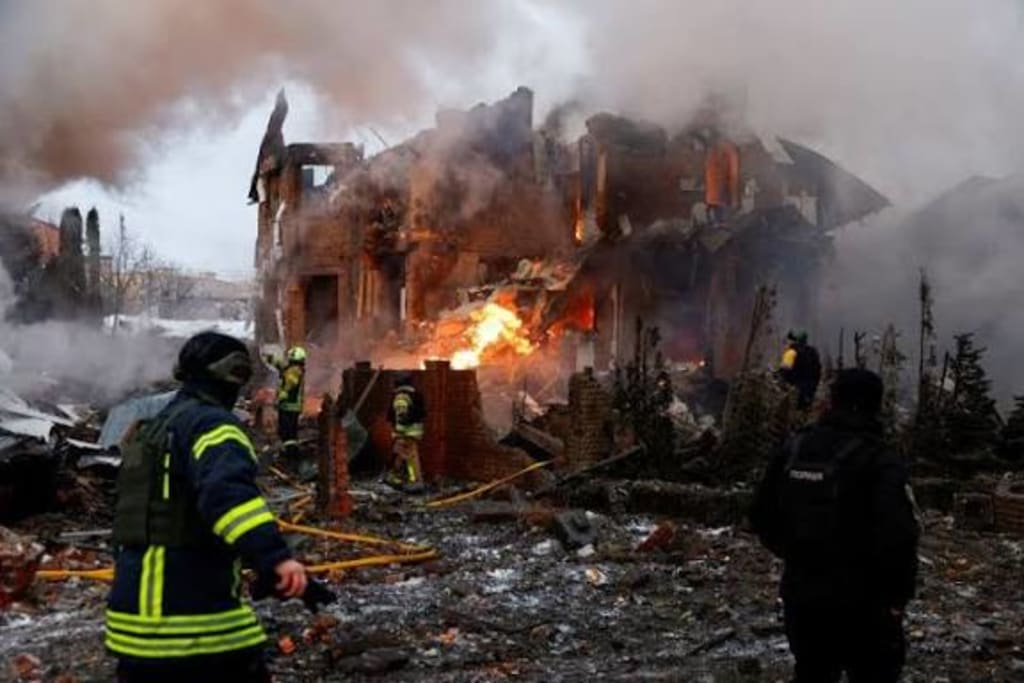
Ukraine marked four years since the start of Russia’s full-scale invasion with ceremonies of mourning, defiance, and renewed appeals for international support, as fighting continues along largely frozen frontlines stretching hundreds of kilometers across the east and south of the country. What began in February 2022 as a rapid assault intended to subdue Kyiv has evolved into a grinding war of attrition that has reshaped Europe’s security order and left deep scars on Ukrainian society.
In the capital and major cities, moments of silence were held for soldiers and civilians killed in the conflict. Churches rang bells, and families gathered at makeshift memorials adorned with flags and photographs. Ukrainian President Volodymyr Zelenskyy said the anniversary was not only a day of grief but also of resolve. “We remember everyone who gave their life for our freedom,” he said in a televised address. “And we continue to fight so that this sacrifice was not in vain.”
The war’s physical devastation is visible across much of the country. Entire towns in the Donetsk and Luhansk regions have been reduced to rubble after months of artillery duels. Critical infrastructure, including power plants and water systems, has been repeatedly targeted, forcing millions to endure blackouts during harsh winters. According to Ukrainian officials, tens of thousands of residential buildings have been destroyed or severely damaged, and millions of people remain displaced inside the country or abroad.
Despite heavy losses on both sides, the frontlines have moved little over the past year. Ukrainian forces have focused on defending key positions while launching limited counteroffensives aimed at disrupting Russian supply lines. Russia, under President Vladimir Putin, has poured additional troops and resources into the war, framing it domestically as a struggle against Western influence and NATO expansion.
Military analysts describe the conflict as increasingly defined by trench warfare, drone strikes, and long-range missile attacks rather than sweeping territorial advances. The stalemate has heightened concerns about the sustainability of Ukraine’s defense effort, especially as Western aid has faced political delays and debate. European and U.S. officials reiterated their support this week, but privately acknowledged that Ukraine’s battlefield success depends heavily on continued supplies of ammunition, air defenses, and financial assistance.
For ordinary Ukrainians, the anniversary underscored the emotional toll of prolonged war. In Kharkiv, close to the Russian border, residents spoke of exhaustion mixed with stubborn determination. “We have learned how to live with sirens and explosions,” said Olena, a schoolteacher whose apartment was damaged in a recent strike. “But what hurts most is not knowing when this will end.”
International reactions reflected both solidarity and anxiety. Leaders from several European nations issued statements praising Ukraine’s resilience and condemning Russia’s aggression. At the United Nations, diplomats warned that the conflict’s ripple effects—from energy prices to food insecurity—continue to impact countries far beyond Eastern Europe. Human rights groups renewed calls for accountability, pointing to evidence of war crimes and the forced displacement of civilians.
Four years on, the war has become a defining feature of a new geopolitical era marked by renewed great-power rivalry and the rearmament of Europe. Finland and Sweden have joined NATO, defense budgets have surged, and alliances have hardened along ideological lines. Yet on the ground in Ukraine, the struggle remains intensely personal: a daily fight for survival, sovereignty, and the hope of peace.
As Ukraine marked the somber milestone, Zelenskyy emphasized that the nation’s future still rests on unity and endurance. “We did not choose this war,” he said, “but we choose to stand. And as long as we stand together, Ukraine will live.”
The frozen frontlines may signal a pause in major territorial shifts, but the human cost continues to rise. For Ukrainians, the fourth anniversary was not an end point but another chapter in a war whose outcome will shape their country—and Europe—for generations to come.
About the Creator
Fiaz Ahmed
I am Fiaz Ahmed. I am a passionate writer. I love covering trending topics and breaking news. With a sharp eye for what’s happening around the world, and crafts timely and engaging stories that keep readers informed and updated.
Keep reading
More stories from Fiaz Ahmed and writers in The Swamp and other communities.
French nuclear attack sub arrives in Scotland By George Allison
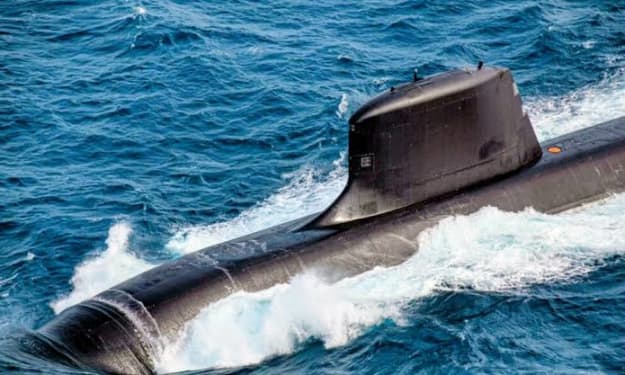
A French nuclear-powered attack submarine has arrived in Scotland, marking a rare and highly symbolic port visit that underscores growing military cooperation between European allies amid heightened security concerns across the North Atlantic and Arctic regions. The submarine, operated by the French Navy, docked at HMNB Clyde, home to the United Kingdom’s strategic nuclear deterrent and a key hub for NATO submarine operations. While officials declined to disclose the exact class of the vessel or operational details, defense sources confirmed it is a nuclear-powered attack submarine designed for intelligence gathering, undersea warfare, and protection of allied naval assets. A Signal of Strategic Unity The arrival comes at a time when European navies are increasing cooperation in response to rising geopolitical tensions and intensified submarine activity in the North Atlantic. French and British forces have long maintained close maritime ties, but such visits by nuclear-powered attack submarines remain uncommon and carefully coordinated. A spokesperson for the UK Ministry of Defence said the visit reflects “routine cooperation between close allies” and demonstrates shared commitment to maritime security. French officials echoed that sentiment, noting the importance of interoperability and joint readiness exercises. “This deployment is about presence and partnership,” a senior naval officer said. “Operating from a UK base strengthens our collective ability to monitor and protect vital sea lanes.” Why Scotland Matters HMNB Clyde is one of Europe’s most strategically important naval bases, hosting the UK’s fleet of nuclear-powered submarines and supporting NATO maritime patrols. Its location provides direct access to the North Atlantic and the waters between Greenland, Iceland, and the UK — an area of increasing strategic importance due to undersea cables, energy infrastructure, and shipping routes. By visiting the base, the French submarine crew gains experience operating alongside British forces while reinforcing NATO’s undersea posture. Analysts suggest the timing is deliberate, aimed at reassuring allies and deterring potential adversaries from testing Western naval defenses. “This is not just a courtesy call,” said a maritime security analyst. “It’s a message that European navies are closely aligned and prepared to operate together if needed.” Technical and Operational Significance French nuclear attack submarines are among the most advanced in Europe, capable of remaining submerged for months and carrying sophisticated sonar, torpedoes, and cruise missiles. Their missions typically include intelligence collection, escorting aircraft carriers, and tracking hostile submarines. During its stay in Scotland, the vessel is expected to undergo resupply and allow its crew limited shore leave, while also participating in joint training activities with the Royal Navy. These exercises help standardize procedures and improve communication between allied forces, particularly in undersea warfare — one of the most complex and secretive domains of modern defense. Public and Political Reaction Local authorities confirmed that safety protocols were in place and that the visit posed no risk to surrounding communities. Nuclear-powered submarines regularly enter and leave Faslane, and strict environmental and security measures govern all such movements. Some Scottish political groups renewed calls for greater transparency about military operations in the region, while others emphasized the economic and strategic value of hosting allied naval forces. The base remains a focal point in debates about nuclear weapons and defense policy, making visits by foreign submarines politically sensitive as well as militarily significant. A Broader European Context The visit reflects a wider trend of European defense integration, particularly between France and the UK — Europe’s two leading military powers. Both countries have increased naval deployments in recent years, with a focus on protecting critical infrastructure and ensuring freedom of navigation. Defense experts note that submarine diplomacy is subtle but powerful. Unlike aircraft or surface ships, submarines operate largely unseen, making their public port visits rare and symbolically important. “Submarines don’t usually make headlines unless something has gone wrong,” one analyst said. “So when one turns up openly in an allied base, it’s a calculated signal of cooperation and strength.” Looking Ahead The French submarine’s arrival in Scotland is expected to be followed by further joint exercises and reciprocal visits in the coming months. Officials on both sides describe the event as part of a long-term strategy to deepen operational ties and maintain a strong allied presence in strategically vital waters. As global security challenges continue to evolve beneath the waves, the quiet arrival of a French nuclear attack submarine at a Scottish naval base serves as a reminder that much of modern defense happens out of sight — but not without significance.
By Fiaz Ahmed a day ago in The Swamp
A Gathering of Evil Bosses
“I’m the queen of chin jutting while I smooth my hair, attacking, insulting, and deflecting to protect my appointer.” “Oh, please, Blondi, my hair is curled, highlighted, and longer than yours. I feature television commercials telling immigrants that we will give them a free plane ride home, and if they voluntarily turn themselves in, they will be allowed to legally apply for re-entry. It runs everywhere, and I look good in it! You can’t compete because of your blond hair. Mine is nicer, and my lips are prettier than yours.”
By Andrea Corwin 7 days ago in The Swamp
Craft Over Catharsis Challenge Winners
Craft Over Catharsis? What the hell does that even mean? The phrase came out of a curation meeting as a genuine question. We had been noticing that many challenge entries, across prompts, naturally gravitate toward trauma, grief, and personal reckoning. That makes sense. Writing is often cathartic. It's one of the ways we process what we've lived through.
By Vocal Curation Team6 days ago in Resources



Comments
There are no comments for this story
Be the first to respond and start the conversation.