
Democracy's Dirty Secrets
The Hidden Flaws in Modern Democracies No One Talk About


Democracy is often seen as the gold standard of governance, a system where people have a voice, leaders are held accountable, and justice prevails. But what if democracy isn’t as perfect as we think? Even in the most celebrated democratic nations, deep flaws exist, hidden beneath polished speeches, elections, and constitutional promises.
These flaws are not always obvious. Some are built into the very structure of the system, allowing corruption, inequality, and manipulation to thrive without breaking any laws. From elections that only offer an illusion of choice to laws that quietly favor the powerful, modern democracy has cracks that most people don’t see or talk about.
Understanding these flaws is the first step in fixing them. So, what are these hidden flaws? Let’s uncover them.
1. The Illusion of Choice: How Elections Can Be Rigged Without Fraud
Elections are the heart of any democracy, giving people the power to choose their leaders. But what if that choice isn’t as real as it seems? In many democratic systems, elections are technically free and fair, but they are manipulated long before the voting even begins.
This manipulation doesn’t always come in the form of blatant fraud. Instead, it happens through gerrymandering, restrictive voting laws, and media influence. Political parties redraw district lines to favor themselves, create obstacles for certain groups of voters, and use massive funding to dominate election narratives. In some cases, opposition candidates face legal barriers, making elections more of a staged performance than a genuine contest.
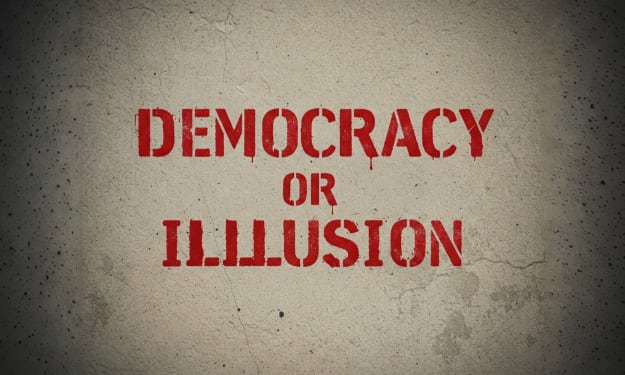
A true democracy ensures that every vote has equal weight and that people can make an informed choice. But when elections are subtly rigged through legal and structural means, democracy becomes an illusion rather than a reality.
2. When Laws Serve the Powerful: The Subtle Manipulation of Justice
Justice is supposed to be blind but in many democracies, it seems to have perfect vision when it comes to protecting the powerful.
Think about it: When was the last time you saw a billionaire or high-ranking politician truly held accountable for corruption? On the other hand, everyday citizens face harsh penalties for minor offenses. The rich and powerful use expensive lawyers, legal loopholes, and political connections to escape consequences.
At the same time, governments use the justice system as a weapon against those who challenge them. Activists, journalists, and whistleblowers face lawsuits, criminal charges, or surveillance simply for exposing corruption. If the law is only enforced against the weak, while the powerful walk free, can we really call that democracy?
3. The Corporate Takeover: Why Big Money Controls Policy, Not the People
Who really makes the rules in a democracy? Politicians? Voters? Or the billionaires and corporations funding elections behind the scenes?
In many democratic countries, corporate lobbying and campaign donations shape public policy more than citizen votes ever could. The biggest industries—oil, pharmaceuticals, finance, and tech—spend billions of dollars influencing government decisions. They fund political campaigns, hire armies of lobbyists, and flood the media with narratives that protect their profits.
Meanwhile, ordinary citizens rarely have that kind of influence. You can vote, protest, and sign petitions, but when billionaires and corporations fund entire political campaigns, who do you think politicians will listen to? The people or their donors?
If democracy is supposed to be for the people, why does it feel like it’s owned by the rich?
4. Media’s Silent Influence: How Narratives Are Shaped Without Censorship
Think the media is truly independent? Think again. While state-run media is an obvious sign of propaganda, in many democracies, media control is far more subtle but just as effective.
Major news outlets are owned by a handful of powerful corporations, each with their own political ties and financial interests. This means the news you see isn’t necessarily the news that matters, it’s the news that benefits those in power. Important stories are ignored, buried, or framed in a way that serves a particular agenda.
Even when governments don’t directly censor the press, they manipulate it through corporate funding, advertising deals, and legal pressure. Journalists who challenge the system often face career-ending backlash, while those who follow the script thrive.
So, if democracy relies on a free press, but the press isn’t truly free, what does that mean for democracy itself?
5. Public Participation or Political Theater? How Governments Control Dissent
Do you feel like your voice matters in a democracy? Do protests actually change policies? Do government petitions ever lead to action? In many so-called democratic nations, public participation is encouraged but only in ways that don’t threaten those in power.
Protests are technically legal, but authorities create laws that restrict them to “safe areas” where they won’t disrupt anything. Governments hold public discussions and town halls, but they are often just for show, almost always no real policy changes ever come from them.
Meanwhile, online activism is monitored, manipulated, or drowned in misinformation, making it harder for citizens to organize effectively. Leaders pretend to “listen to the people,” but in reality, the system ensures that public participation rarely results in real change.
6. The Corruption of Transparency: When Governments Pretend to Be Open
Imagine walking into a restaurant where the chef proudly tells you that everything is made with high-quality ingredients. You ask what’s in your meal, and instead of a simple answer, they hand you a 300-page book filled with complex chemical names and farming techniques.
This is how governments handle transparency in many modern democracies. Instead of outright hiding the truth, they bury it under layers of unnecessary complexity. Public reports, legal documents, and policy briefings are written in ways that make them unreadable to the average person. Even when information is technically available, finding the truth becomes a near-impossible task.
A real democracy ensures that transparency means clarity, not just accessibility.
If you need a law degree to understand what your government is doing, are they really being transparent?
7. Why Democracy Rarely Means Equality: The Wealth Gap in Political Influence
Does every vote really count the same? In theory, democracy means one person, one vote but in reality, money talks louder than any ballot.
Wealthy individuals and corporations don’t just have more financial power, they have more political power. They can fund campaigns, hire lobbyists, and influence policy decisions in ways that regular voters simply cannot. While working-class citizens struggle to get by, the ultra-rich shape tax laws, labor policies, and financial regulations to benefit themselves.
Meanwhile, those with fewer resources face systemic obstacles, low voter turnout due to economic struggles, lack of representation, and policies that keep wealth concentrated at the top. If democracy is meant to create fairness, why does it always seem to benefit the rich the most?
So:
Democracy is often praised as the fairest and most effective form of governance, but as we’ve uncovered, hidden flaws exist even in the most celebrated democratic nations. From the illusion of choice in elections to the silent influence of wealth, media control, and manufactured transparency, modern democracies are far from perfect.
However, acknowledging these flaws isn’t about rejecting democracy, it’s about demanding better. A true democracy is not just about voting every few years; it’s about ensuring that power remains in the hands of the people, not the elite few. Without public awareness, activism, and accountability, democracy can become a tool for those who know how to manipulate it.
The question is: Will we accept democracy as it is, or will we push for the democracy it should be?
About the Creator
Beyond The Surface
Master’s in Psychology & Philosophy from Freie Uni Berlin. I love sharing knowledge, helping people grow, think deeper and live better.
A passionate storyteller and professional trader, I write to inspire, reflect and connect.
Keep reading
More stories from Beyond The Surface and writers in The Swamp and other communities.
Top 6 Differences Between Real Democracy and Fake Democracy
Unmasking the Illusion: How to Distinguish True Democracy from Its Counterfeit Versions Democracy is often celebrated as the fairest system of governance. But is every nation that claims to be democratic truly democratic? The reality is more complicated. While some countries embody the core principles of democracy, transparency, fair elections, and civil liberties, others use the term as a façade, masking authoritarian control under a thin veil of voting and governance structures. The difference between real democracy and fake democracy isn’t always obvious, but recognizing these distinctions is crucial in understanding how power truly operates. In this article, I'm going to break down the 6 fundamental differences that separate genuine democracy from its deceptive counterparts.
By Beyond The Surfaceabout a year ago in The Swamp
Why Black History Matters in America?
The United States of America is celebrating their 250th anniversary in 2026. I'm proud to be an American and as someone who was born here, I wouldn't imagine myself living anywhere else. This is a country where opportunities are possible. Where anyone can be successful in anything they desire to do. Equality, community, and togetherness are the backbones of what America is and should be about. However, we have an administration who wants to erase and disregard those who have made positive, meaningful impacts in our country, specifically Black figures, such as Martin Luther King, Jr., Rosa Parks, and Maya Angelou. President Trump and his administration have been constantly complaining and fighting against what they call the "Woke agenda". They use this excuse as a distraction from other issues they refuse to address, such as the high cost of living, climate change, and inflation. That equality is dividing America, when in reality, it's bringing us together. Being woke is not tied to a specific political party. No matter where you stand on the political spectrum, you can still care about other people and their plights. Compassion and empathy for others isn't tied to a political party, either. We were taught as children to treat others the way we want to be treated and not judge others because they're different from us. Caring about others isn't a personal attack on your beliefs. It doesn't make you any less of a person. People who are easily offended over African American figures, past or present, or anything related to it, are grasping at straws. Current and future generations need to know who people like Harriet Tubman and Shirley Chisholm were, especially in the classroom. Black History is part of American History. It should be recognized, not hidden or forgotten. Besides, you can't shield children from everything, just because your feelings are easily hurt.
By Mark Wesley Pritchard 29 days ago in The Swamp
Investors brace for a bigger backlash from Middle East war
Global investors are increasingly on edge as the conflict in the Middle East deepens, raising fears of wider economic fallout and prolonged market volatility. What initially appeared to be a localized geopolitical crisis is now rippling through financial markets, affecting energy prices, currencies, and investor confidence worldwide. As uncertainty grows, market participants are reassessing risk exposure and preparing for a scenario in which the war triggers broader regional instability. One of the most immediate concerns for investors is the impact on oil and gas markets. The Middle East remains a central hub of global energy supply, and any disruption to production or shipping routes has the potential to push prices sharply higher. Recent weeks have already seen spikes in crude oil prices as traders factor in the possibility of attacks on key infrastructure or interruptions in major transit corridors. Higher energy prices not only strain corporate profits but also reignite inflationary pressures that many economies have struggled to bring under control. Rising energy costs pose a particular challenge for central banks. Policymakers in the United States, Europe, and parts of Asia had begun signaling optimism about slowing inflation and possible interest rate cuts. However, renewed inflation driven by fuel and transport costs could delay those plans. Investors fear that tighter monetary conditions may persist longer than expected, dampening economic growth and weakening equity markets. As a result, stock indices in several regions have shown increased volatility, reflecting nervous sentiment and rapid shifts in expectations. Beyond energy, the conflict is affecting supply chains and trade flows. The Middle East is a key transit point for goods moving between Asia, Europe, and Africa. Shipping disruptions, insurance cost increases, and rerouted cargo are already adding expenses for companies reliant on global logistics networks. These added costs may translate into lower margins for businesses and higher prices for consumers, reinforcing inflationary trends and pressuring household spending power. Currency markets have also reacted strongly. Traditionally, geopolitical crises prompt investors to move toward so-called safe-haven assets such as the U.S. dollar, gold, and government bonds. This pattern has re-emerged as the conflict intensifies. Emerging market currencies, particularly those dependent on imported energy, have weakened as investors seek stability. Meanwhile, gold prices have climbed as a hedge against uncertainty and potential financial shocks. The technology and tourism sectors are among those most vulnerable to prolonged instability. Travel demand tends to decline when conflict escalates, affecting airlines, hospitality companies, and regional economies reliant on tourism. Technology firms, while less directly exposed, may suffer from disrupted supply chains and reduced consumer spending if economic conditions deteriorate. Investors are therefore rotating toward defensive sectors such as utilities, healthcare, and consumer staples, which are perceived as more resilient in times of crisis. Another major concern is the risk of escalation beyond the immediate region. Financial analysts warn that if additional countries become involved or if shipping lanes are seriously threatened, the shock to markets could be far more severe. In such a scenario, global growth forecasts would likely be revised downward, and investor sentiment could turn decisively pessimistic. History has shown that wars involving key energy-producing regions tend to have lasting economic consequences, often reshaping investment strategies for years. Corporate earnings outlooks are also being reassessed. Multinational companies with operations or sales in the Middle East face potential revenue losses and operational challenges. At the same time, defense-related industries may see increased demand as governments expand military budgets in response to security concerns. This divergence highlights how geopolitical crises can produce both winners and losers in financial markets. In response to these uncertainties, many institutional investors are emphasizing diversification and risk management. Portfolios are being adjusted to include more commodities, fixed-income securities, and alternative assets that can provide protection against volatility. Short-term trading strategies are also becoming more common as investors attempt to navigate rapid market swings driven by news from the conflict zone. In conclusion, the Middle East war is no longer just a regional issue but a global financial concern. Investors are bracing for a bigger backlash as rising energy prices, disrupted trade routes, and heightened geopolitical risk threaten economic stability. While markets have not yet entered a full crisis mode, the growing sense of unease suggests that caution will dominate investment decisions in the months ahead. The trajectory of the conflict will play a decisive role in determining whether this period of turbulence becomes a temporary shock or a lasting challenge for the global economy.
By Fiaz Ahmed about 19 hours ago in The Swamp


Comments
There are no comments for this story
Be the first to respond and start the conversation.