

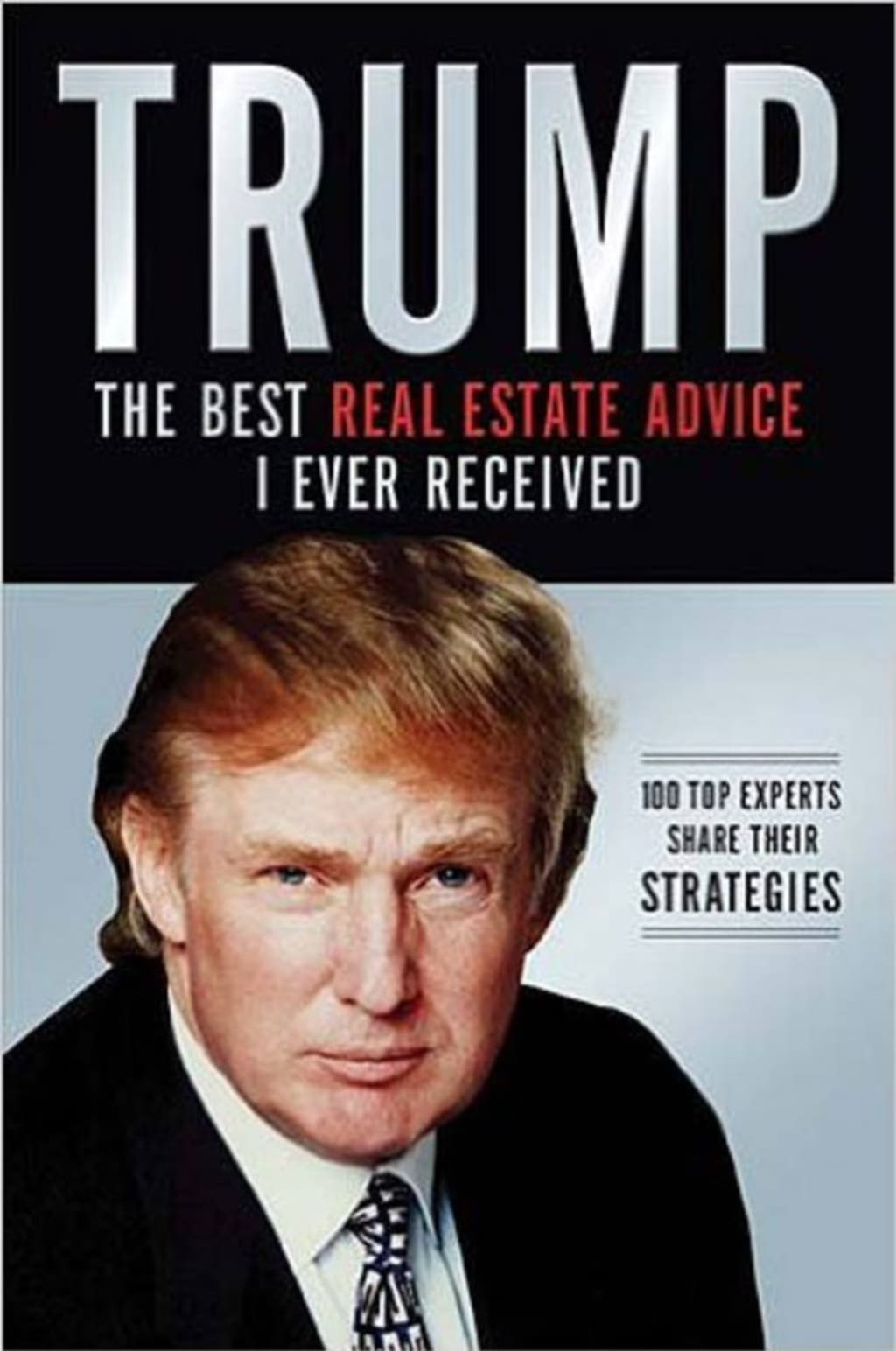
My intuition told me that you are the best candidate the first time you showed on the public for the Presidential campaign. You are deemed to be different from other former U.S. presidents if you would be, as I thought then.
I read about your story 20 years ago when you were a real estate business man. The story tells people how you succeeded in business as a young grad and later became an real estate magnate. It was inspiring and motivated me very much then.
Not only do you have business acumen, I think, but also the charisma of leadership. I admire your personal traits. You are a genuine and reliable man. You act what you said.
Some Americans dislike you because they might not understand you unless they leave or live outside USA for a period of time. They don't not know the other peoples' lives where there is no freedom of speech, no real human rights, etc. in their countries, or a country of a dictator, political coercion, a government of corruption, etc.
"Make America Great Again" is coming into effect and in the process.
The immigration rule and its operation seem to be a bit cruel and pains to some people or families. But who are the last beneficiaries? The Americans. The Americans are more likely to live in a good and safe country.
Winning in the globe trade business actually protects U.S. enterprises and makes "Made in USA" promising and viable. And we see a lowest unemployment rate of 3.8 in May 2018 since your presidency. You've carried out stern sanctions against those foreign corporations or countries who overlook the compliance rules in international business.
U.S. & North Korea Summit in Singapore
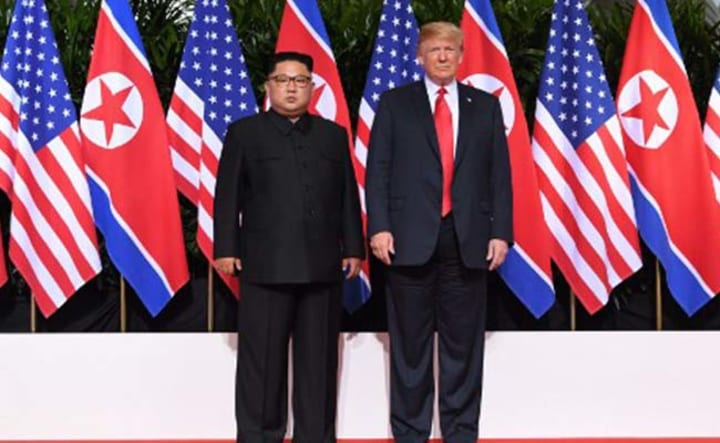
As you said to ABC News chief anchor George Stephanopoulos, "Over my lifetime I've done a lot of deals with a lot of people and sometimes the people you most distrust turn out to be the most honorable ones and the people that you do trust turn out to be not the honorable ones." We can perceive a little about your philosophy in whatever your business or political life. And, this is just a piece of your wisdom.
Last but not least, you are the right person to be the U.S. president at the right time when global economic or political crisis is easy to be triggered off, and the world really need a great America of power and justice.
You are great; so is America.
About the Creator
Otis Colon
Please read my book (memoir) "Determined to Leave" at ko-fi.com/determinedtoleave
Keep reading
More stories from Otis Colon and writers in The Swamp and other communities.
The Possible Secret Behind the Book 'Fire and Fury'
Michael Wolff is the author of an explosive new book, Fire and Fury: Inside the Trump White House. In this book, he describes the inner workings of the White House with main quotes from Trump's former chief strategist Steve Bannon. This book has brought about peoples' questioning of Trump's mental state and the capacity for his presidency.
By Otis Colon8 years ago in The Swamp
Parallel Protests
I haven't written for quite some time, but I have A LOT of thoughts about yesterday's protest rally against our government's involvement and complicity in America's war on Iran, on the harbourside of my home city Bristol, and I need to put them somewhere. My gorgeous girlfriend is always a loving and listening ear and sharing it all with her will always be a healthy and happy way of processing the mental and emotional weight, but getting it straight in my brain to share means writing it all down in straight lines, so, here we are and thanks for being here.
By Steph Cole7 days ago in The Swamp
Injured Russian Soldiers Can Compete at Paralympics
The participation of injured Russian soldiers in the 2026 Winter Paralympic Games in Milan and Cortina d’Ampezzo has become one of the most controversial issues surrounding the event. As athletes from around the world gather to compete, the decision by the International Paralympic Committee (IPC) to allow Russian competitors back into the Games has sparked debate across governments, sports organizations, and the global sporting community. The controversy centers on the fact that some of the athletes eligible to compete may be former Russian soldiers wounded in the war in Ukraine, who have transitioned into para-sports programs after sustaining serious injuries. Supporters argue that the Paralympic movement exists to provide opportunities for people with disabilities regardless of their background. Critics, however, say the move risks turning international sport into a platform for political messaging during an ongoing conflict. Russia’s Paralympic Recruitment Program According to investigative reporting, Russia has invested heavily in programs designed to integrate injured war veterans into professional para-sports. These initiatives aim to help wounded soldiers recover physically and psychologically while also promoting national sporting success. Reports suggest that dozens of veterans have already joined national teams, with hundreds more training in regional programs across the country. Government-supported training centers provide rehabilitation, adaptive sports equipment, and coaching to veterans who have lost limbs or sustained other disabling injuries during the war. For many of these individuals, sport becomes part of a broader recovery process, offering a sense of purpose after returning from the battlefield. Russian officials argue that the initiative is consistent with the core values of the Paralympic movement, which celebrates resilience and determination. From Moscow’s perspective, the participation of injured veterans demonstrates how sport can transform lives and help individuals rebuild after devastating injuries. IPC Decision and International Reaction The IPC voted in 2025 to reinstate Russia and Belarus into the Paralympic movement after years of suspension. As a result, a limited number of athletes from both countries were granted invitations to compete at the 2026 Winter Paralympics. The decision ended a period in which Russian athletes had been barred from competition due to doping scandals and the geopolitical fallout from the invasion of Ukraine. For the upcoming Games, a small group of Russian athletes — including skiers and snowboarders — have been allowed to participate. However, the move has triggered significant backlash. Ukraine and several European nations strongly oppose Russia’s return to international sporting events while the war continues. Some governments argue that allowing Russian athletes to compete under their national flag could undermine international pressure on Moscow. As a result, a number of countries have announced symbolic boycotts of the opening ceremony in protest of the IPC’s decision. Ethical and Political Debate The debate over injured Russian soldiers competing in the Paralympics highlights a broader tension between sport and politics. On one hand, the Paralympic movement emphasizes inclusion, arguing that athletes should not be punished for actions taken by governments or militaries. On the other hand, critics say the participation of soldiers wounded in an ongoing conflict could be interpreted as glorifying war. Ukrainian officials have been particularly vocal in their criticism. They argue that Russia’s use of Paralympic sport as a pathway for wounded soldiers may blur the line between rehabilitation and political messaging. According to some Ukrainian leaders, allowing these athletes to compete risks turning a global sporting event into a platform for propaganda. Meanwhile, many Paralympians themselves have expressed mixed feelings. Some athletes believe competitors should be judged solely on their athletic achievements and personal resilience. Others worry that the controversy could overshadow the achievements of thousands of athletes who have spent years preparing for the Games. Focus on the Spirit of the Games Despite the tensions, organizers hope the 2026 Winter Paralympics will remain a celebration of courage, skill, and determination. More than 600 athletes from over 50 countries are expected to compete in events ranging from alpine skiing to wheelchair curling. For many participants, the Games represent far more than medals. They symbolize the ability of people with disabilities to overcome obstacles and compete on the world stage. As the Paralympic flame is lit in Italy, the controversy surrounding injured Russian soldiers serves as a reminder that sport often reflects the complex realities of the world beyond the stadium. Whether the debate fades or intensifies during the competition remains to be seen, but one thing is certain: the Milano Cortina Games will unfold under the watchful eye of a global audience.
By Fiaz Ahmed 4 days ago in The Swamp
The Piggy Project
I’ve had so many names in this life I lose track of which ones were ever really mine and which ones I wore because someone needed me to. Some were handed to me before I had words to refuse them, before I knew what they meant, before I knew I could say no. Most weren’t meant to hurt. That doesn’t mean they didn’t leave marks. Marks that told me who I belong to, who I am by way of who claims me, recognizes me in the good and bad, who walks beside me.
By Fatal Serendipity6 days ago in Confessions


Comments
There are no comments for this story
Be the first to respond and start the conversation.