
COVID-19: Immediate future looks bleak for England
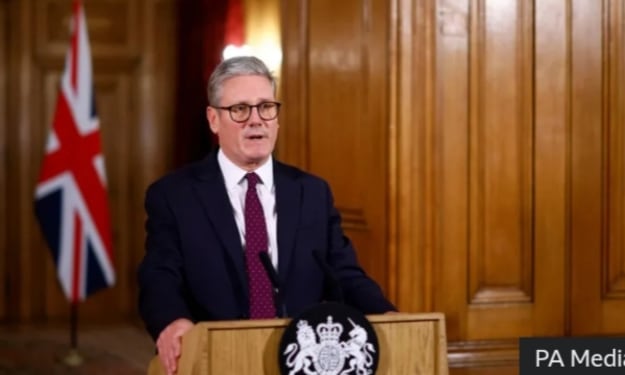
British PM announces four-week England lockdown


British Prime Minister Boris Johnson, the Conservative Party leader, establishes a second England-wide lockdown. The latest England lockdown, after documents reveal a significantly higher death toll than previously expected, had been inevitable. The British prime minister, after attending a cabinet meeting, broke the news.
"We'll seek to ease restrictions, going back into the tiered system on a local and a regional basis according to the latest data and trends," Johnson said. There are "no illusions" lockdowns lead to difficulties for businesses - he said he is "truly sorry" for that.
Johnson, highlighting European countries that have implemented lockdown measures, stresses Britons “are not alone in what [they’re] going through."
The announcement came at news conference delivered Saturday, 31 October 2020. The second England lockdown will last until Wednesday, 2 December 2020. Johnson, recognising there are several exceptions, outlines the measures:
- for education
- for work (if you cannot work from home)
- for exercise and recreation outdoors
- for medical reasons
- to shop for food and essentials
- to care for others
Bars and restaurants will close, reflecting the Spring lockdown, but takeaways can continue to operate as usual. Whilst shielding measures will not be re-introduced, noting how the elderly are at risk, aged over 70 are told to be especially careful.
The hospitality industry and non-essential shops, during this proposed four-week lockdown, will be impacted. Differing greatly from the restrictions seen during the Spring, academic institutions such as schools, colleges, and universities will be allowed to remain open. Supermarkets, not categorised as non-essential, will not be impacted.
"We cannot let this virus damage our children's futures even more than it has already," Johnson said.
The British prime minister urges parents to continue sending their children to school. The National Education Union, with a significantly different view, has presented a conflicting opinion.
"The health and safety of the country is being put at risk," the University and College Union said. It would be "self-defeating" to ignore how schools contribute to spreading the virus.
Further to non-essential shops and hospitality being shut down, the four-week lockdown is expected to include certain restrictions on travel. Reflecting this possibility, Scotland’s First Minister Nicola Sturgeon has urged people to not unnecessarily travel to England.
“Prevalence of the virus is currently lower in Scotland than in other parts of the UK and there are early signs that the tough restrictions in place since we moved quickly in late September have started to slow the rate of increase,” Sturgeon tweeted Saturday, 31 October 2020.
“We will base decisions on circumstances here - though what happens just across our border is clearly not irrelevant to our considerations. … Amongst other factors, this consideration will have to include whether any financial support will be available now as a result of steps in England, which would not be guaranteed to Scotland later.”
The UK, bringing the pandemic total to 1,011,660 persons impacted, recorded on Saturday, 31 October 2020 a further confirmed 21,915 coronavirus related cases. Another 326 persons, after receiving a positive test 28-days earlier, have died.
Johnson, previously considering such an idea "disastrous" for the UK's finances, resisted pressure placed on him to introduce England-wide restrictions. The British prime minister, fearing a national lockdown would greatly impact the economy, opted for a three-tier system focusing on local and regional areas of England.
The four-week lockdown, based on available projections, could prevent the virus from rebounding. Despite this point, noting there has not been enough focus given to combating COVID-19, have been numerous calls to fix the test and trace system.
"Over the next few days and weeks we plan a steady but massive expansion in the deployment of these quick turnaround tests," Johnson said. This is because of the "immediate prospect" of rapid turnaround coronavirus tests.
Parliament, on Wednesday, 4 November 2020, will debate and vote on Johnson’s measures.
About the Creator
Shain Thomas
I'm a freelance journalist. A member of both the NLGJA and SPJ, I currently write articles for Harsh Light News on Medium and HVY.Com. When I was a university student, I wrote articles for the NT Daily and TCU 360.
Keep reading
More stories from Shain Thomas and writers in The Swamp and other communities.
US leads world in COVID cases
United States: America, according to a recent BBC News report, leads the world in Coronavirus related deaths. Thursday, 29 October 2020 saw, in the United States, no fewer than 91,000 new COVID-19 cases reported. Thus far, according to a report published by Johns Hopkins University, more than nine million COVID-19 cases have been reported.
By Shain Thomas5 years ago in The Swamp
Parallel Protests
I haven't written for quite some time, but I have A LOT of thoughts about yesterday's protest rally against our government's involvement and complicity in America's war on Iran, on the harbourside of my home city Bristol, and I need to put them somewhere. My gorgeous girlfriend is always a loving and listening ear and sharing it all with her will always be a healthy and happy way of processing the mental and emotional weight, but getting it straight in my brain to share means writing it all down in straight lines, so, here we are and thanks for being here.
By Steph Cole6 days ago in The Swamp



Comments
There are no comments for this story
Be the first to respond and start the conversation.