
Court Upholds Press Protections: Government Blocked from Accessing Washington Post Materials
Federal Court Protects Press Freedom by Blocking Government Access to Washington Post Records

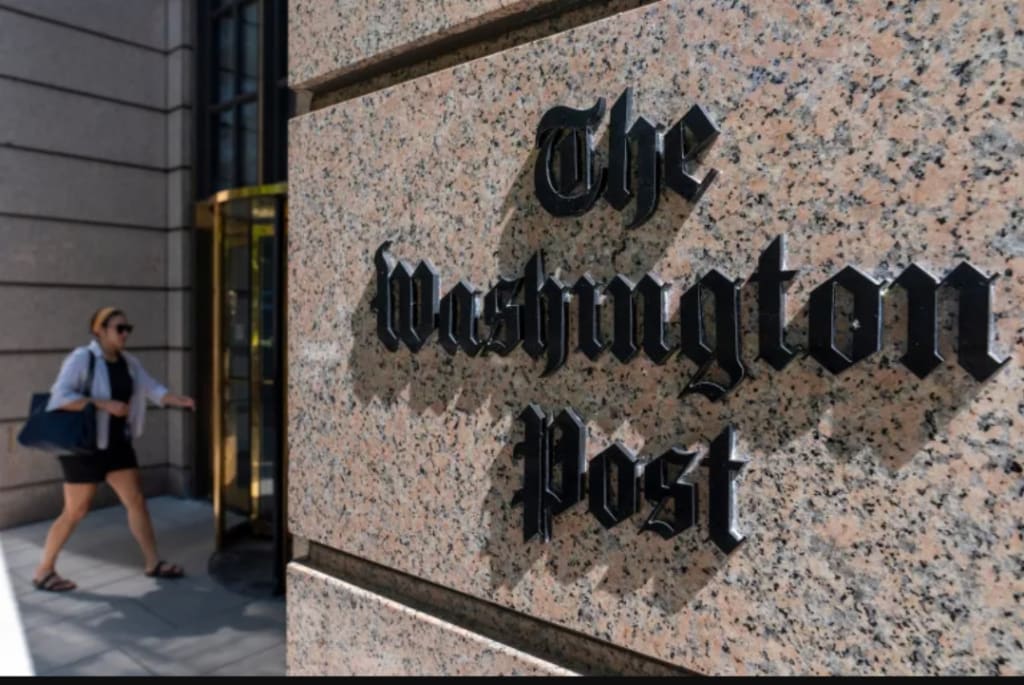
In a decisive ruling that underscores the importance of press freedom in the United States, a federal judge has barred the government from reviewing materials seized from The Washington Post, signaling strong judicial support for the First Amendment and journalists’ ability to operate without undue interference. The case highlights ongoing tensions between national security concerns and constitutional protections for the media.
The decision comes amid heightened scrutiny of government surveillance, record seizures, and investigations involving sensitive journalistic materials. Legal experts and press advocates have praised the ruling as a critical affirmation of the independent role of the press in a democratic society.
Background of the Case
The dispute began when federal authorities seized records related to reporting by The Washington Post as part of an ongoing investigation. These materials, which included internal documents and communications, were obtained under the premise that they might contain information relevant to law enforcement inquiries.
The Washington Post challenged the seizure, arguing that allowing government officials to access journalistic materials would violate the First Amendment and threaten the confidentiality of sources, a cornerstone of investigative journalism.
Judicial Ruling
The federal judge ruled in favor of The Washington Post, prohibiting the government from reviewing or using the seized materials. The court emphasized the need to protect journalists from undue government intrusion and reaffirmed that press protections are not optional, even in cases tied to national security or criminal investigations.
Legal experts note that the ruling reinforces established precedent that the government must demonstrate a compelling need before it can infringe upon journalistic materials. In this case, the court found that the authorities had not met the required standard to justify accessing the sensitive records.
Implications for Press Freedom
This decision is a significant victory for the press, particularly in an era when journalists frequently face legal pressure, subpoenas, and government scrutiny. By blocking access to the materials, the court:
Protects confidential sources, ensuring whistleblowers and informants can safely provide information.
Preserves editorial independence, allowing news organizations to report without fear of government interference.
Strengthens legal precedent, reinforcing that journalists enjoy constitutional protections against unnecessary seizures of materials.
Advocacy groups, including the Reporters Committee for Freedom of the Press, have hailed the ruling as a key safeguard for democracy, noting that it underscores the press’s role as a check on government power.
Government Response
Officials have expressed disappointment with the ruling, asserting that access to certain records is sometimes necessary for law enforcement purposes. However, legal analysts say the government still has avenues to pursue its investigation, but any future actions will need to adhere to strict judicial oversight to avoid infringing on press freedoms.
The ruling illustrates the delicate balance between government authority and constitutional rights, particularly when sensitive materials are involved. Courts are increasingly called upon to mediate conflicts between public safety and civil liberties.
Broader Context
This case is part of a larger national conversation about media rights, whistleblower protections, and government transparency. In recent years, several high-profile investigations have raised concerns about government overreach into press activities, including searches, subpoenas, and seizures of reporter records.
The Washington Post ruling reinforces that even in complex legal and security contexts, the First Amendment protections for the press remain robust and enforceable, preventing government overreach that could threaten investigative journalism.
What This Means for Journalists
For reporters and media organizations, the ruling sends a clear message: courts will actively guard against unjustified government intrusion into journalistic materials. This decision may encourage newsrooms to maintain rigorous standards for source protection and document security, knowing that the law supports their right to operate independently.
It also signals to whistleblowers and sources that their communications with journalists are less likely to be exposed to government review without a compelling, legally sanctioned reason.
Conclusion
The federal judge’s decision to block government access to Washington Post materials is a landmark moment for press freedom, reinforcing the constitutional rights of journalists and protecting the essential role of the media in a democratic society.
As government agencies continue to investigate matters of public interest, this ruling ensures that journalists can continue reporting without undue interference, safeguarding the integrity of news organizations and the confidentiality of sources.
In an era where media freedom is under increasing pressure worldwide, this case serves as a reminder that constitutional protections remain vital in defending the public’s right to information and the press’s ability to hold power accountable.
About the Creator
Asad Ali
I'm Asad Ali, a passionate blogger with 3 years of experience creating engaging and informative content across various niches. I specialize in crafting SEO-friendly articles that drive traffic and deliver value to readers.
The Forsyth House Fire
Since 1851, Forsyth House has stood on the corner of Union Street and Gordon Street in the heart of Glasgow. Its iconic, or was... because on Sunday 8th of March, 2026, a fire broke out in a small, seemingly un-named shop in the building and tore all that history down. As I write, the rubble is still unsettled and the street is still blocked off. Central Station is quiet on the upper level, and around 30 small businesses have quite literally gone up in smoke.
By S. A. Crawford3 days ago in The Swamp
Two Oil Tankers Seen at Kharg After Strikes, Satellite Firm Says
Satellite imagery captured in the aftermath of recent strikes near Iran’s most important oil export terminal indicates that at least two large crude carriers have appeared near the island’s main loading infrastructure, according to a commercial monitoring company. The images suggest that oil export activity at the strategic terminal may be cautiously resuming even as tensions in the region remain high. The new analysis focuses on facilities at Kharg Island, a small island in the northern Persian Gulf that handles the majority of Iran’s crude exports. The terminal has long been considered a critical node in the country’s energy sector and a potential vulnerability in times of conflict. According to analysts at Planet Labs, which provides high-resolution satellite imagery to governments and commercial clients, images taken within the past 48 hours show two very large crude carriers positioned near the island’s primary offshore loading jetties. The tankers appear to be anchored or slowly maneuvering close to export facilities that were reportedly targeted in recent strikes. The strikes themselves have not been officially confirmed in detail by Iran, though regional security officials and shipping monitors say explosions were reported near energy infrastructure earlier this week. The incident occurred amid rising tensions across the Persian Gulf, where multiple attacks on commercial shipping and energy facilities have raised fears of a broader confrontation. Satellite specialists said the appearance of the tankers could signal that operators believe the damage to loading facilities is limited or manageable. “The vessels appear positioned in a way consistent with preparing for or conducting loading operations,” one analyst familiar with the imagery said. “That would suggest the terminal is at least partially operational.” However, analysts cautioned that the presence of ships does not necessarily mean that oil is currently flowing at full capacity. In some cases, tankers are positioned near export terminals as a contingency while infrastructure is inspected or repaired. Kharg Island plays an outsized role in Iran’s energy exports. Industry estimates indicate that up to 90 percent of the country’s crude shipments historically passed through the terminal’s jetties and offshore loading buoys. Damage to those facilities could significantly affect Iran’s ability to move oil to international buyers. Shipping data compiled by maritime intelligence groups indicates that several tankers previously scheduled to approach the island delayed their arrival after reports of the strikes emerged. Insurance costs for vessels operating in the region have also risen sharply. Global energy markets have been closely watching developments. Even temporary disruptions to exports from the Gulf can ripple through oil markets because of the region’s role as the world’s largest crude supply hub. Traders reacted nervously earlier in the week, pushing prices higher as uncertainty about the security of shipping lanes spread. The narrow Strait of Hormuz, located just southeast of Kharg Island, is one of the most important maritime chokepoints in the world. Roughly a fifth of global oil shipments pass through the strait each day, making any escalation in the surrounding waters a major concern for global energy security. Security analysts say the latest imagery could indicate that Iranian authorities are attempting to project stability by maintaining visible export operations. Keeping tankers near loading terminals can signal to markets and buyers that exports are continuing despite military pressure. Regional naval forces have also increased patrols in the area. Several Western and Gulf states have warned commercial vessels to exercise caution when transiting near Iranian territorial waters. Shipping companies are monitoring security advisories closely, particularly as earlier incidents involving drones and missiles have demonstrated the vulnerability of large commercial vessels. Officials in United States and several European countries have declined to comment directly on the satellite images but have reiterated calls for restraint. Diplomatic channels remain active as governments seek to prevent a cycle of retaliatory strikes that could endanger civilian shipping and energy infrastructure. Meanwhile, energy analysts note that Iran has developed contingency plans over decades of sanctions and regional tensions. These include alternative loading arrangements, storage facilities, and ship-to-ship transfer methods designed to keep exports moving even under pressure. The satellite imagery does not yet provide a clear assessment of potential structural damage to Kharg’s export terminals. Cloud cover and the angle of observation make it difficult to determine whether pipelines, storage tanks, or loading arms were affected by the reported strikes. Even so, the mere presence of two tankers near the island has attracted close scrutiny from energy traders and security officials alike. Maritime traffic around Kharg is typically a reliable indicator of Iran’s export activity, and analysts say additional images in the coming days will help clarify whether loading operations are actually underway. For now, the images serve as one of the few independent glimpses into conditions at one of the world’s most strategically important oil terminals. As tensions remain elevated in the Gulf, the movements of just a few ships near Kharg Island could carry implications far beyond the region, influencing energy markets and geopolitical calculations around the globe.
By Fiaz Ahmed 2 days ago in The Swamp



Comments
There are no comments for this story
Be the first to respond and start the conversation.