
Communism, Capitalism, Socialism: The Battle for the Soul of Society
The 3 Ideologies That Shaped Humanity’s Dreams, Divisions, and Destiny

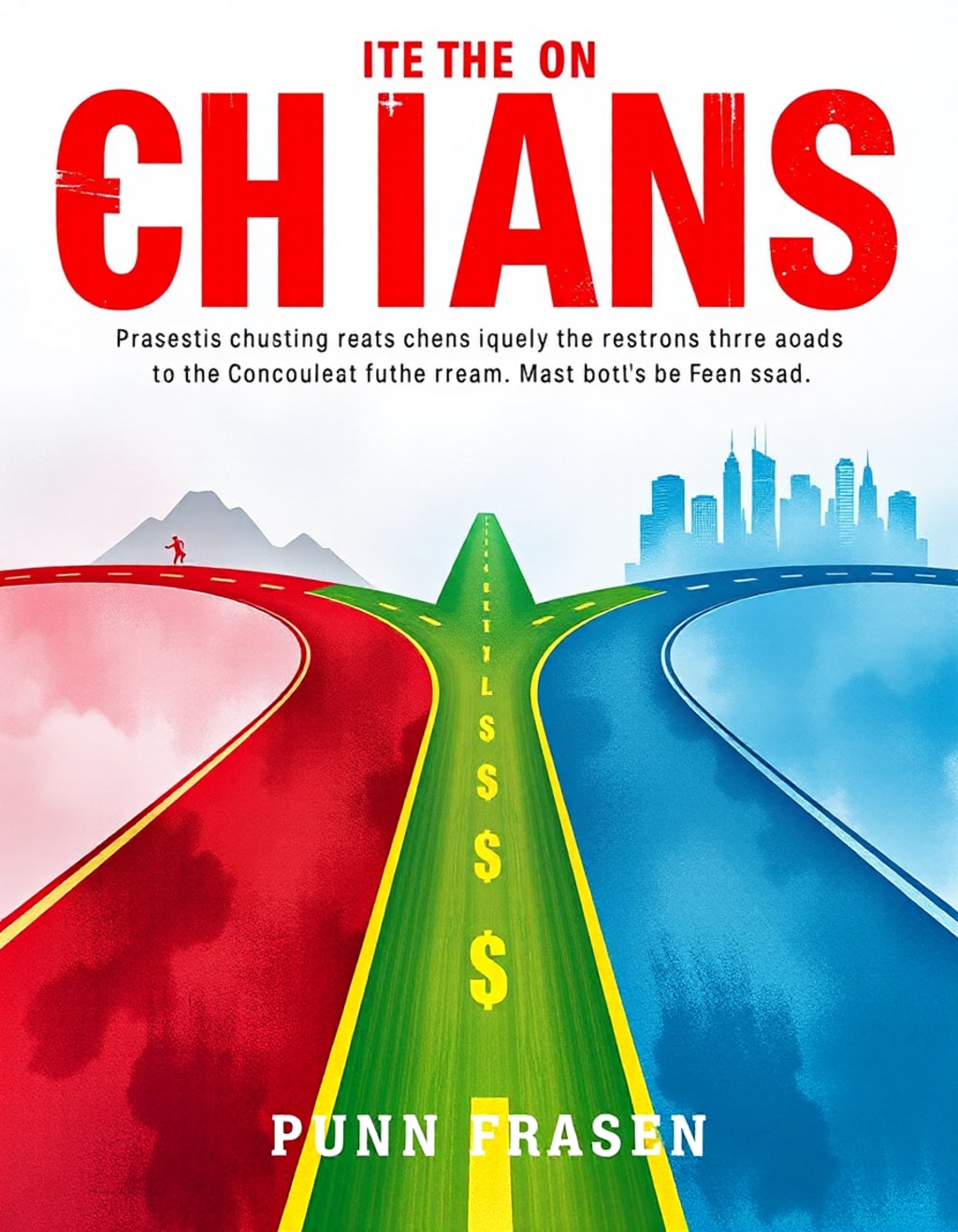
Introduction: The Great Ideological Divide
In the 20th and 21st centuries, few debates have shaped politics, economics, and societies like the clash between Communism, Capitalism, and Socialism. These three ideologies, each promising a path to prosperity and justice, have inspired revolutions, wars, and transformations — but also confusion, conflict, and compromise.
Understanding their origins, differences, and impacts is key to understanding the modern world. But beyond theory, their stories are about people — workers, business owners, families — living their daily lives in systems shaped by these powerful ideas.
Chapter 1: The Roots of the Ideologies
Communism
Born from the writings of Karl Marx and Friedrich Engels in the mid-19th century, communism envisioned a world without class divisions — where the means of production are owned collectively, and wealth is shared equally. It was a call to end exploitation and create a truly classless society.
The famous phrase: “From each according to his ability, to each according to his needs.”
The promise: No poverty, no rich or poor — only equality.
Capitalism
Capitalism, in contrast, grew with the Industrial Revolution and the rise of private enterprise. It champions private ownership, competition, and free markets. The driving idea is that individuals acting in their self-interest can create wealth and innovation.
The famous phrase: “The invisible hand” guiding markets (Adam Smith).
The promise: Economic freedom, innovation, and prosperity through competition.
Socialism
Sitting somewhere between communism and capitalism, socialism focuses on social ownership and government intervention to reduce inequality and provide social welfare. Socialism supports a market economy but calls for public services, workers’ rights, and social safety nets.
The famous phrase: “From each according to his ability, to each according to his contribution.”
The promise: Fairness, security, and shared prosperity.
Chapter 2: The Rise and Fall of Communism
The 20th century was the age of revolutions. The Russian Revolution of 1917 gave birth to the first communist state, the Soviet Union, which promised to be a beacon for the oppressed worldwide.
Communism spread in China, Cuba, North Korea, and Eastern Europe.
It aimed to eliminate capitalism and create workers’ utopias.
But the ideal faced harsh realities:
Authoritarian governments
Economic inefficiencies
Human rights abuses
By the 1990s, most communist regimes collapsed or reformed. The Soviet Union dissolved in 1991, ending an era.
Chapter 3: Capitalism’s Global Spread
Meanwhile, capitalism flourished, especially in the West:
Post-World War II, countries like the USA became economic superpowers.
The “American Dream” symbolized upward mobility.
Free markets powered technological innovation and consumer culture.
Yet, capitalism also created challenges:
Wealth inequality
Boom-and-bust economic cycles
Environmental degradation
Critics argue capitalism sometimes prioritizes profit over people and planet.
Chapter 4: Socialism’s Modern Role
Socialism evolved by learning from both communism’s failures and capitalism’s excesses.
Western Europe embraced social democracy, mixing capitalism with strong welfare states.
Universal healthcare, public education, and social safety nets became common.
Countries like Sweden, Norway, and Germany illustrate socialism’s softer face.
Socialism today pushes for policies addressing climate change, workers’ rights, and economic justice — without rejecting markets entirely.
Chapter 5: The Clash and Coexistence Today
In the 21st century, the battle between these ideologies continues, but the lines are blurrier:
China blends state-controlled capitalism with communist party rule.
The US debates between deregulation and social programs like Medicare for All.
Socialist movements rise in Latin America, Europe, and beyond, advocating for wealth redistribution.
People everywhere wonder:
Is pure capitalism or communism possible or even desirable?
Can socialism offer a balanced path?
Chapter 6: What This Means for You
Every day, your life is touched by these ideas:
The job you have — or don’t have.
The healthcare you receive.
The taxes you pay.
The rights you enjoy.
Understanding these ideologies helps you see beyond slogans and propaganda — to make informed choices, vote wisely, and demand accountability.
Chapter 7: Beyond Ideologies — Toward a New Future?
Many thinkers believe the future won’t be about communism or capitalism or socialism alone — but a new synthesis:
A focus on sustainability — protecting the planet for future generations.
Emphasis on technology and automation — rethinking work and wealth distribution.
Greater global cooperation — addressing inequalities that cross borders.
Your generation has the power to shape this new future.
Conclusion: The Battle Is Not Over
Communism, capitalism, and socialism are not just history lessons — they are living ideas influencing every corner of the world. Their stories are tangled with hope, tragedy, and ongoing struggles.
The question remains:
Which path will lead us to justice, prosperity, and peace?
Only time — and the choices of billions — will tell.
About the Creator
rayyan
🌟 Love stories that stir the soul? ✨
Subscribe now for exclusive tales, early access, and hidden gems delivered straight to your inbox! 💌
Join the journey—one click, endless imagination. 🚀📚 #SubscribeNow
Woman Pulled Out of UK Ultramarathon After Death Threats Over Afghanistan Fundraising
What began as an inspiring act of endurance and compassion turned into a disturbing reminder of the hostility that can surround humanitarian causes in today’s polarized world. A female runner participating in a major UK ultramarathon was forced to withdraw from the event after receiving death threats linked to her fundraising efforts for Afghanistan. The incident has sparked widespread debate about online abuse, freedom of expression, and the risks faced by individuals who publicly support controversial or misunderstood causes. A Race Meant to Raise Hope Ultramarathons are among the most physically demanding sporting events, often covering distances far beyond the traditional 42-kilometer marathon. For many participants, these races are not only athletic challenges but also platforms to raise awareness and funds for charitable causes. In this case, the runner had pledged to donate money raised during the event to humanitarian organizations supporting civilians in Afghanistan—particularly women and children affected by years of conflict, economic collapse, and restrictions on basic rights. Her goal, according to supporters, was to use her physical challenge as a way to highlight human suffering and encourage empathy. Instead, her campaign became the target of intense backlash. From Criticism to Threats While public criticism of charitable causes is not uncommon, the situation escalated rapidly when the runner began receiving explicit death threats online. Messages reportedly accused her of supporting extremism, misusing funds, or promoting political agendas—claims that humanitarian groups strongly deny. Race organizers and security officials assessed the threats and concluded that allowing her to continue would pose a serious safety risk. As a result, she was withdrawn from the event against her wishes, a decision that underscored the severity of the situation. The runner later expressed heartbreak over being unable to complete the race, stating that her intentions were purely humanitarian and that she never expected such extreme hostility. The Broader Issue of Online Abuse This incident highlights a growing problem faced by athletes, activists, and public figures: online abuse that spills into real-world danger. Social media platforms have made it easier than ever to mobilize support for causes—but they have also amplified harassment, misinformation, and threats. Experts warn that women, in particular, are disproportionately targeted when they speak out or engage in advocacy. When charitable efforts intersect with geopolitics, the risk often increases, as complex global issues are reduced to polarized narratives. The case has reignited calls for stronger moderation policies on social media platforms and more robust legal consequences for individuals who issue credible threats. Afghanistan and the Politics of Compassion Afghanistan remains one of the most sensitive humanitarian topics globally. Since the Taliban’s return to power, international aid has been politicized, misunderstood, or deliberately misrepresented. Many humanitarian organizations operate under strict oversight to ensure funds are used for civilian relief, not political or militant purposes. Despite this, public discourse around Afghanistan has become deeply polarized. Supporting Afghan civilians is sometimes falsely framed as endorsing political regimes, creating a dangerous environment for advocates and donors alike. Human rights groups argue that such misconceptions discourage public engagement and ultimately harm the very people most in need of assistance. Reaction From the Running Community The ultrarunning community in the UK and beyond responded with outrage and solidarity. Fellow athletes, race organizers, and charities condemned the threats and expressed concern about the precedent such incidents set. Many runners emphasized that endurance sports have long been tied to fundraising and social causes, from cancer research to refugee aid. Allowing intimidation to silence participants, they argue, undermines the spirit of both sport and charity. Several organizations have since pledged to strengthen safety protocols for athletes involved in fundraising, particularly those supporting international causes. A Chilling Effect on Activism Perhaps the most troubling aspect of the incident is its potential chilling effect. When individuals face serious threats for supporting humanitarian causes, others may choose silence over action. Activists warn that this dynamic benefits those who thrive on fear and misinformation. If compassion becomes risky, public engagement shrinks—and humanitarian crises deepen. At the same time, supporters stress that the overwhelming response of solidarity shows intimidation does not go unchallenged. Moving Forward The runner’s withdrawal from the ultramarathon is not just a story about sport—it is a reflection of the tensions shaping modern activism, where goodwill can collide with hostility in unexpected ways. As investigations into the threats continue, the incident serves as a stark reminder: supporting humanitarian causes should never come at the cost of personal safety. Ensuring that activists, athletes, and donors can act without fear will require cooperation from event organizers, law enforcement, and digital platforms alike. In the end, the endurance shown may not have been measured in miles run—but in the courage to stand for compassion in the face of intimidation.
By Fiaz Ahmed Brohi5 days ago in The Swamp
Ludacris and Nelly draw backlash over bookings at MAGA-coded music festival
Ludacris and Nelly headlining a mostly right-wing event is good for them. It’s also great for the genre of hip hop. The two rap veterans have showcased their talents on other stages. Why can’t they perform for mostly MAGA folks and grab that bag?
By Skyler Saunders5 days ago in Beat


Comments
There are no comments for this story
Be the first to respond and start the conversation.