
Chinese Airship S2000: The First to Supply Grid Power at 2000 Meters
China’s Revolutionary Airship Technology Marks a New Era in Renewable Energy Supply at High Altitudes

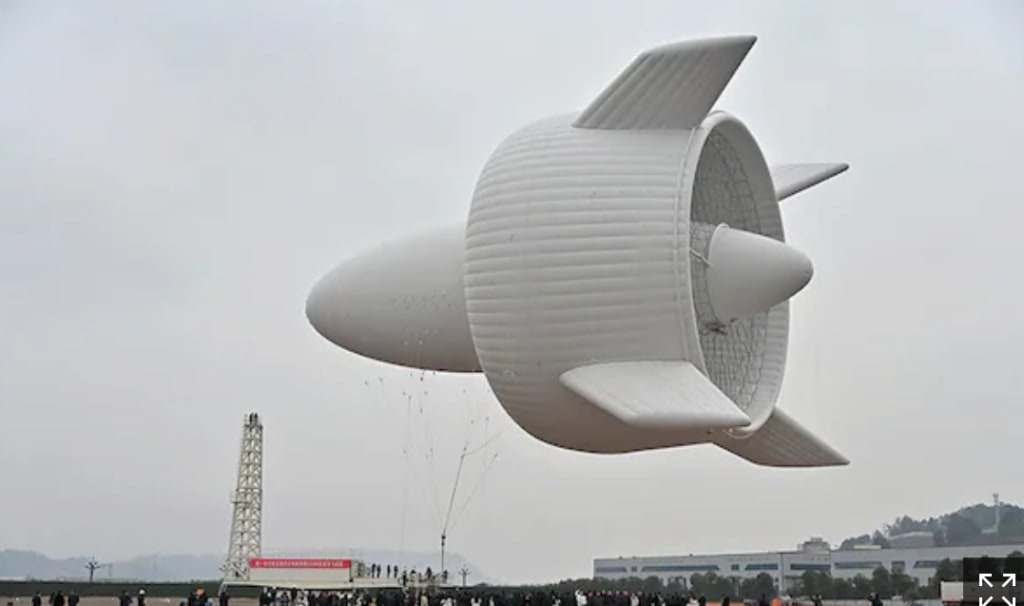
In a groundbreaking development for both renewable energy and aerospace technology, the Chinese Airship S2000 has become the first airborne vehicle to supply grid power at 2000 meters above ground. This milestone represents a new frontier in how renewable energy can be delivered to remote, high-altitude regions where traditional infrastructure has struggled to reach. By harnessing the power of wind turbines and solar panels, the S2000 is setting the stage for a future where airborne platforms can support the global energy grid.
The Airship S2000: A Technological Marvel
The S2000 is a next-generation airship developed by China’s leading aerospace companies, designed specifically to operate at high altitudes. This innovative airship is equipped with state-of-the-art solar panels, wind turbines, and battery storage systems, all integrated to supply clean, renewable energy to the power grid.
Unlike traditional airships, which are primarily used for surveillance, cargo transport, or tourism, the S2000 is built with a specialized energy generation system that allows it to operate as a mobile power station. The airship is capable of remaining at high altitudes for extended periods, thanks to its unique blend of solar power and wind energy generation capabilities.
With a capacity of supplying up to 100 kW of power, the S2000 is poised to revolutionize how energy is supplied to difficult-to-reach areas, such as mountainous regions, remote islands, and areas where traditional grid infrastructure has been too costly or complex to install.
How the S2000 Powers the Grid
The airship's ability to supply power at an altitude of 2000 meters is the result of carefully integrated energy generation technology. At this height, traditional grid infrastructure often faces challenges due to weather conditions, limited accessibility, and high construction costs. However, the S2000 is uniquely positioned to address these challenges through its combination of wind and solar energy systems.
1. Solar Panels
The solar panels installed on the S2000’s surface capture sunlight, converting it into electricity throughout the day. At altitudes of 2000 meters, solar intensity is higher, making it an efficient source of power generation. The airship’s solar array is designed to provide the base load of power needed to keep the onboard systems operational and contribute to the energy supply to the grid.
2. Wind Turbines
At such high altitudes, the wind conditions are consistently stronger, providing the perfect environment for wind turbines to generate power. The S2000 is equipped with lightweight and compact turbines that can capture wind energy and convert it into electricity. The turbines are capable of functioning even in low wind speeds, ensuring a steady supply of power.
3. Battery Storage
The S2000 airship also features an advanced battery storage system that allows excess energy generated during sunny or windy periods to be stored for later use. This ensures a continuous power supply even when weather conditions change, ensuring the airship can maintain consistent grid power, regardless of time of day or external conditions.
This combination of technologies makes the S2000 a versatile and reliable power generation platform, able to operate in areas where traditional power stations cannot be built.
Why 2000 Meters? The Advantages of High-Altitude Energy Generation
Operating at 2000 meters offers several key advantages for energy generation. The higher altitude ensures that the airship can access stronger and more consistent winds, while the air is less turbulent compared to lower altitudes. Additionally, the reduced air density at this height means less resistance for the airship’s turbines, allowing them to operate more efficiently.
Furthermore, solar energy is also more efficient at higher altitudes due to higher solar intensity. With fewer atmospheric particles to block sunlight, the S2000’s solar panels can absorb more energy, maximizing its potential to supply power.
High-altitude platforms like the S2000 can also access regions that are challenging for traditional power grids to reach. Remote, rugged, and isolated locations can now benefit from reliable and clean power, without the need for extensive and expensive infrastructure.
Environmental Benefits and Renewable Energy Goals
The S2000 is a clear demonstration of how renewable energy technologies can be integrated into aerospace platforms to address pressing global energy needs. The move to high-altitude power generation provides a new avenue for clean energy generation that is not only reliable but also environmentally friendly.
Unlike fossil-fuel-powered generators, the S2000 produces no emissions, contributing to efforts to combat climate change and reduce the global carbon footprint. The airship’s clean energy approach aligns with China’s ambitious renewable energy targets, which include reducing carbon emissions and increasing the use of wind, solar, and other green technologies in power generation.
By harnessing both solar and wind energy, the S2000 reduces reliance on terrestrial energy sources, such as coal or gas-fired power stations, which are typically more polluting and resource-intensive. This shift toward cleaner energy in high-altitude platforms could provide a template for other countries looking to meet their renewable energy goals while expanding their energy infrastructure into hard-to-reach areas.
The Potential Impact on Remote Areas and Disaster Relief
One of the most exciting possibilities for the S2000 is its potential to provide energy to remote communities and disaster-stricken areas. In places where traditional power infrastructure is either absent or has been destroyed, the S2000 could be deployed as a temporary mobile power station, providing vital electricity for medical operations, emergency services, and communication systems.
Additionally, the ability to operate in high-altitude regions means that the S2000 can support mountainous areas and remote islands, which have historically been difficult to serve with reliable grid power. The S2000 could become a vital tool for energy distribution in areas where terrestrial grids are not practical or feasible, especially in places prone to natural disasters.
The Future of Airborne Power Generation
The success of the S2000 marks a pivotal moment for the future of airborne energy generation. The concept of using airships or drones as mobile power stations could be expanded to more advanced forms of high-altitude renewable energy generation, especially as technology continues to evolve.
Future advancements may include larger airships capable of supplying even more energy to larger areas, potentially integrating battery storage technologies and autonomous systems to increase efficiency and scalability. As global demand for renewable energy grows, airborne power platforms like the S2000 could become a standard part of renewable energy solutions in regions that were once considered inaccessible.
Conclusion
The Chinese Airship S2000 has set a new precedent in high-altitude energy generation by becoming the first to supply grid power at 2000 meters. Combining the power of wind turbines, solar panels, and battery storage, the S2000 represents a significant leap forward in both renewable energy and aerospace technology.
With its potential to deliver clean, sustainable energy to remote regions and support global climate goals, the S2000 offers a promising glimpse into the future of high-altitude renewable energy platforms. As technology continues to evolve, we may soon see a world where airborne energy generation becomes a core part of the global energy grid, providing power in even the most isolated corners of the planet.
About the Creator
Muhammad Hassan
Muhammad Hassan | Content writer with 2 years of experience crafting engaging articles on world news, current affairs, and trending topics. I simplify complex stories to keep readers informed and connected.
Keep reading
More stories from Muhammad Hassan and writers in The Swamp and other communities.
KARACHI: BRIndex100 and BR Sectoral Indices on Wednesday (January 21, 2026)
On Wednesday, January 21, 2026, the Karachi Stock Exchange (KSE) witnessed notable movements across various indices, with the BRIndex100 and the BR Sectoral Indices showing significant shifts in their values. The day’s trading session revealed the market’s response to both global financial trends and local economic developments, offering traders and investors critical insights into the state of Pakistan’s economy. Let’s break down the performance of these indices and the broader trends influencing them.
By Muhammad Hassana day ago in The Swamp
"Exploring the Future of Urban Mobility: Can Electric 'Sky Taxis' Revolutionize Air Travel
Introduction The world of aviation is no stranger to innovation, with each decade bringing a new wave of technological advancements that redefine air travel. Today, one of the most exciting developments is the rise of electric "sky taxis"—small, electric-powered aircraft designed to transport passengers short distances within urban areas. These aerial vehicles promise to change the way we think about travel and could even reshape the future of airports themselves. But what does it take to make electric air taxis a reality, and how might airports play a pivotal role in their deployment? Let’s dive into this fascinating subject.
By Ayesha Lashariabout an hour ago in The Swamp
Netflix Stock Is Falling, Overshadowing the Streamer’s Earnings Beat
Netflix, one of the world’s leading streaming platforms, recently reported its quarterly earnings, exceeding analysts’ expectations in revenue and subscriber growth. However, despite these strong financial results, Netflix stock has been under pressure, highlighting the complex dynamics investors face when evaluating streaming companies in a highly competitive market.
By Aarif Lashari2 days ago in The Swamp



Comments
There are no comments for this story
Be the first to respond and start the conversation.