
China’s Military Tech Investments Face Real-World Test Amid India-Pakistan Tensions
As India-Pakistan tensions escalate, China’s cutting-edge military exports to Pakistan may face their first real battlefield test — with global implications for Beijing’s defense ambitions.

China’s Military Tech Investments Face Real-World Test Amid India-Pakistan Tensions
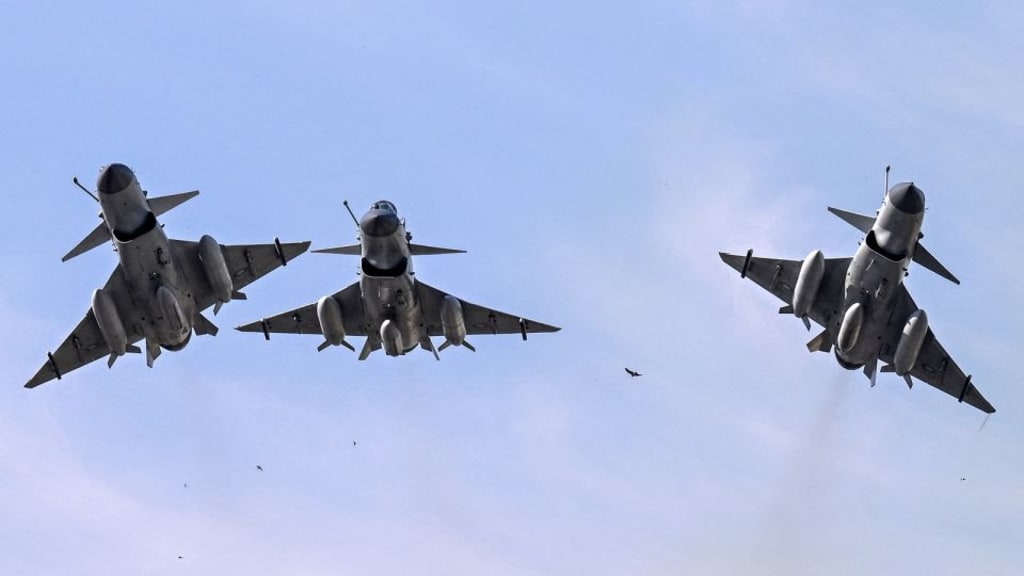
In the past two decades, China has poured billions of dollars into upgrading its military might. With ambitions to match or even surpass the United States in global influence, Beijing has heavily invested in advanced weaponry, artificial intelligence, satellite systems, hypersonic missiles, cyberwarfare tools, and unmanned combat systems. However, much of this military technology remains untested in a real-world battlefield scenario. That could change dramatically if tensions between its two South Asian neighbors — India and Pakistan — erupt into full-scale conflict.
While China has traditionally positioned itself as a mediator in the India-Pakistan rivalry, its strategic alliances and growing interests in the region make it an indirect stakeholder in any potential conflict. In such a scenario, Beijing’s modern military infrastructure — especially systems exported to Pakistan — could face its first major test.
The India-Pakistan Flashpoint
India and Pakistan have a long history of hostility, dating back to their violent partition in 1947. The two countries have fought multiple wars, and periodic flare-ups in Kashmir continue to strain relations. In recent years, border skirmishes and diplomatic breakdowns have brought the region close to the edge. With nationalist rhetoric rising in both countries and military posturing increasing, the possibility of limited or extended conflict remains a concern for global observers.
Pakistan has traditionally relied on military aid and technology from the United States and China. But in recent years, Beijing has become its primary defense supplier. From fighter jets and drones to radar systems and missile technology, Pakistan’s military is now heavily reliant on Chinese tech. If conflict breaks out, the performance of this Chinese-supplied hardware will be under intense scrutiny.
Billions Spent, but Little Combat Testing
China’s military budget in 2024 reached an estimated $230 billion, second only to the United States. It has used this budget to develop fifth-generation fighter jets like the J-20, hypersonic weapons such as the DF-17, and extensive surveillance systems using AI and facial recognition. China has also established a vast cyberwarfare capability and modernized its navy to project power in the South China Sea and beyond.
Despite this modernization, China’s People’s Liberation Army (PLA) lacks recent combat experience. Unlike the U.S., which has tested much of its tech in real-world wars in the Middle East and elsewhere, China has remained militarily untested since its 1979 war with Vietnam — a conflict that exposed weaknesses in planning and logistics.
This absence of combat testing means that China's high-tech systems remain largely theoretical in their effectiveness. A conflict between India and Pakistan could offer Beijing its first indirect battlefield test if Pakistani forces deploy Chinese-made drones, radars, missiles, and aircraft.
Chinese Exports to Pakistan: A Double-Edged Sword
Pakistan has acquired a wide range of Chinese defense equipment over the years. This includes the JF-17 Thunder multirole fighter, co-developed with China; Wing Loong drones for surveillance and airstrikes; HQ-9 missile defense systems; and modern radar systems. China has also supported the development of Pakistan’s missile and nuclear delivery capabilities.
If war breaks out and Pakistan uses these systems, their performance will either validate China’s status as a top-tier arms supplier or expose flaws that could hurt its global defense reputation. A strong showing could boost China's defense export market and support its broader geopolitical ambitions. Conversely, any failures could damage the credibility of Chinese tech and deter future buyers.
Strategic Implications for China
Beijing is likely to tread cautiously. It wants to avoid being dragged into an India-Pakistan war, especially since China shares borders and disputed territories with both nations. However, its deep ties with Pakistan — including the $60 billion China-Pakistan Economic Corridor (CPEC) — make it hard to remain entirely neutral.
China might also face pressure to offer logistical or technological support to Pakistan, which could invite criticism or even countermeasures from India and its allies. India, being a member of the Quad alliance alongside the U.S., Japan, and Australia, has increasingly aligned itself with anti-China rhetoric and strategies.
At the same time, Beijing may see a limited conflict as an opportunity to test and refine its military exports without risking direct confrontation. It could also use the crisis to gain diplomatic leverage in South Asia by portraying itself as a peace broker.
Conclusion
As tensions simmer between India and Pakistan, the spotlight is increasingly turning toward China and its role in regional stability. The billions it has spent on military advancement may soon face a real-world trial — not through its own soldiers, but through the battlefield performance of its closest military partner, Pakistan.
The outcome will not only influence the immediate balance of power in South Asia but could shape China’s global defense strategy, arms exports, and geopolitical credibility for years to come. Whether Beijing’s high-tech arsenal can truly deliver in a high-stakes conflict remains an open — and potentially explosive — question.
About the Creator
Adnan Rasheed
Author & Creator | Writing News , Science Fiction, and Worldwide Update| Digital Product Designer | Sharing life-changing strategies for success.
Keep reading
More stories from Adnan Rasheed and writers in The Swamp and other communities.
Pakistan’s First Combat Use of Chinese PL-15E Air-to-Air Missiles Confirmed After Debris Found in India
Pakistan’s First Combat Use of Chinese PL-15E Air-to-Air Missiles Confirmed After Debris Found in India May 8, 2025 In a significant development that signals a shift in South Asia’s aerial warfare dynamics, Pakistan has reportedly used the Chinese-made PL-15E air-to-air missile in a real combat scenario for the first time. The confirmation came after Indian authorities discovered debris from the missile in Hoshiarpur, Punjab, following recent cross-border skirmishes between Indian and Pakistani fighter jets.
By Adnan Rasheed9 months ago in The Swamp
Time to Dump Trump? Europeans Whisper Last-Resort Options to Save Greenland
In diplomatic circles across Europe, a phrase once unthinkable is now being whispered behind closed doors: What if the alliance can’t hold? As renewed pressure from former U.S. President Donald Trump resurfaces over Greenland, European officials are reportedly discussing last-resort options to safeguard the strategically vital Arctic territory — even if it means distancing themselves from Washington. While public statements remain carefully measured, private conversations suggest a growing anxiety: Greenland has become a geopolitical fault line, testing NATO solidarity, transatlantic trust, and Europe’s ability to defend its own interests. Why Greenland Is Suddenly at the Center of Global Power Politics Greenland is not just the world’s largest island. It is a strategic prize. Located between North America and Europe, Greenland sits at the crossroads of Arctic shipping lanes, missile defense routes, and untapped reserves of rare earth minerals. As climate change melts Arctic ice, access to these routes and resources is expanding — turning the region into a global competition zone. The United States already maintains a military presence in Greenland through Thule Air Base, vital to missile warning and space surveillance. But Trump’s earlier proposal to buy Greenland outright shocked European capitals and Denmark alike, reframing the island not as a partner but as a commodity. Now, with Trump once again influencing U.S. foreign policy discourse, European leaders fear that economic pressure, security leverage, or political coercion could return. Denmark’s Dilemma and Europe’s Unease Greenland is an autonomous territory within the Kingdom of Denmark, and Copenhagen has repeatedly stated that it is not for sale. Yet Denmark alone lacks the political and military weight to counter sustained pressure from Washington. That’s where Europe enters the picture. Behind the scenes, diplomats from Germany, France, and Nordic countries are reportedly discussing how to shield Denmark and Greenland from unilateral U.S. moves. These discussions are not about confrontation — at least not yet — but about contingency planning. The uncomfortable truth is this: Europe has long relied on the U.S. for Arctic security, and challenging Washington risks exposing Europe’s own strategic weaknesses. What Are the “Last-Resort Options”? European officials are careful not to spell out these ideas publicly, but analysts point to several possibilities under quiet consideration. 1. Deepening EU Involvement in Greenland One option is stronger European Union engagement with Greenland — economically, politically, and diplomatically. This could include increased investment in infrastructure, climate research, and sustainable mining projects to reduce Greenland’s reliance on external powers. By anchoring Greenland more firmly within Europe’s economic orbit, the EU could make any U.S. attempt at leverage far more complicated. 2. Expanded European Security Presence Another option involves enhancing European defense cooperation in the Arctic, potentially through joint patrols, surveillance missions, or NATO-aligned European initiatives that do not rely solely on U.S. leadership. This would be a delicate move, as NATO cohesion depends heavily on U.S. participation. Still, some European officials believe greater autonomy is overdue. 3. Legal and Diplomatic Shields Europe could also pursue stronger legal frameworks affirming Greenland’s right to self-determination and Denmark’s sovereignty. While largely symbolic, such measures would raise the diplomatic cost of any aggressive maneuver. In extreme scenarios, coordinated diplomatic resistance — even sanctions or formal rebukes — could be considered, though most officials view this as a true last resort. Why Trump Changes the Equation European leaders are accustomed to managing disagreements with Washington. What makes Trump different is unpredictability. During his presidency, Trump repeatedly questioned NATO commitments, framed alliances as transactional, and blurred the line between negotiation and coercion. His interest in Greenland was not just strategic — it was personal, public, and disruptive. The fear in Europe is not necessarily that Trump would “take” Greenland, but that he might use U.S. security guarantees as leverage, forcing concessions through pressure rather than partnership. For European capitals already dealing with Ukraine, energy insecurity, and domestic political shifts, another transatlantic crisis is the last thing they want. Greenland’s Own Voice Amid the power politics, Greenlanders themselves are increasingly vocal. Many in Greenland support greater autonomy or eventual independence — but not annexation. Local leaders have emphasized that Greenland’s future must be decided by its people, not foreign governments. European officials privately acknowledge that ignoring Greenlandic voices would undermine their moral position. Any European strategy, they argue, must prioritize economic development, environmental protection, and self-governance, not just strategic defense. A Test for Transatlantic Relations At its core, the Greenland issue is about more than territory. It raises uncomfortable questions: Can Europe protect its interests without U.S. backing? Is NATO flexible enough to survive internal disagreements? What happens when allies no longer trust each other’s intentions? For now, European leaders are trying to avoid open confrontation, hoping that diplomacy and quiet deterrence will keep tensions from escalating. But the whispers themselves are revealing. They suggest that Europe is, for the first time in decades, seriously contemplating a future where American leadership is not guaranteed. Why This Moment Matters The Arctic is warming faster than any other region on Earth — physically and politically. What happens in Greenland could set a precedent for how global powers compete in newly accessible regions. If Europe fails to act, it risks appearing passive and divided. If it acts too forcefully, it risks fracturing the transatlantic alliance that has underpinned its security since World War II. It is a narrow path — and one that demands strategic clarity Europe has often postponed. Final Thoughts “Time to dump Trump?” may sound dramatic, but it captures a deeper unease spreading across European capitals. Greenland has become a symbol of a shifting world — one where alliances are tested, assumptions are challenged, and old guarantees no longer feel automatic. Europe is not eager for a break with Washington. But the quiet conversations suggest a realization that preparation is not betrayal. Whether these whispered last-resort options remain theoretical — or become policy — will depend on how the next phase of U.S. politics unfolds. For Greenland, Europe, and the Arctic, the stakes could not be higher.
By Muhammad Hassan3 days ago in The Swamp


Comments
There are no comments for this story
Be the first to respond and start the conversation.