
China Grants $3.2 Billion Lifeline to Pakistan: What It Means for Both Nations
Beijing Extends Financial Support Amid Islamabad’s Ongoing Economic Crisis

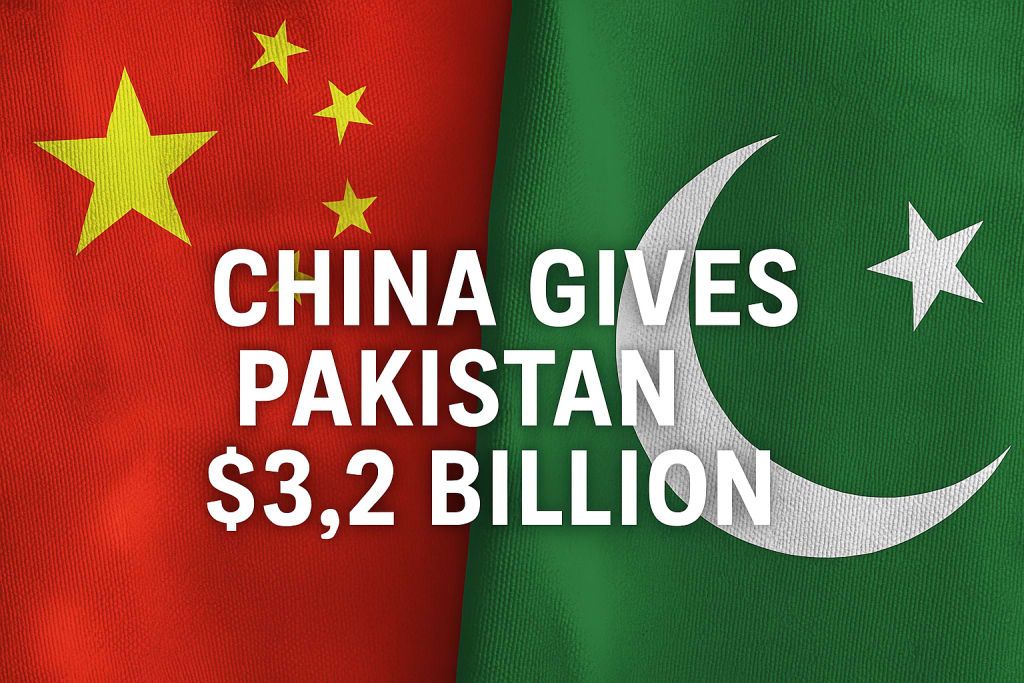
In a significant move that reaffirms its role as Pakistan’s closest economic ally, China has granted a $3.2 billion financial package to Pakistan in June 2025. This decision comes as a much-needed relief for the South Asian country, which has been grappling with foreign exchange shortages, rising inflation, and looming debt repayments.
The financial injection is expected to stabilize Pakistan’s foreign reserves and help it meet pressing economic obligations. However, this assistance also highlights the growing strategic and financial ties between Beijing and Islamabad — a partnership that continues to deepen despite international scrutiny.
Background: Pakistan’s Economic Woes
Pakistan has been in a prolonged state of economic instability for several years. In 2022 and 2023, the country narrowly avoided default with assistance from the International Monetary Fund (IMF) and friendly nations such as China, Saudi Arabia, and the UAE. However, with rising global oil prices, reduced exports, and devastating floods in 2022, Pakistan’s economy has remained on the edge.
By early 2025, Pakistan’s foreign exchange reserves had again dwindled to critically low levels, barely enough to cover one month of imports. The government, under Prime Minister Shehbaz Sharif, was urgently seeking support from international partners to stay afloat and avoid defaulting on its sovereign debt.
The Chinese Assistance: What It Entails
The $3.2 billion package announced by China includes:
A $1.8 billion refinancing of previous loans
A $1 billion deposit into Pakistan’s central bank to bolster reserves
$400 million in additional concessional funding for infrastructure and power sector development
The loan package is being provided through the Export-Import Bank of China and the State Administration of Foreign Exchange (SAFE). According to Pakistan’s Ministry of Finance, the terms are “concessional,” indicating low interest rates and extended repayment schedules.
This support comes shortly after Pakistan successfully concluded its IMF Stand-By Arrangement (SBA) in April 2025, strengthening its credit credibility in the eyes of foreign lenders.
Strategic Implications for China
China’s financial assistance to Pakistan is not just about economics — it is also deeply strategic. Pakistan is a critical partner in China’s Belt and Road Initiative (BRI), particularly through the China-Pakistan Economic Corridor (CPEC). CPEC, valued at over $60 billion, connects western China to the Arabian Sea via Gwadar Port in Balochistan.
A financially stable Pakistan is essential for the continuity of CPEC and for China’s broader regional ambitions. With India emerging as a rival power in Asia and increasing tensions in the Indo-Pacific, China needs a reliable partner in South Asia. By extending this financial support, Beijing reasserts its long-term commitment to Islamabad’s economic and geopolitical stability.
Reactions from the Global Community
While the financial assistance has been welcomed by Pakistan’s government and citizens alike, it has also sparked concern in some quarters. Critics argue that Pakistan’s reliance on Chinese loans has created a "debt trap" scenario, where long-term obligations to China may limit Islamabad’s financial independence.
The United States and several European Union officials have also expressed caution over China’s expanding influence through soft loans and investments in developing countries. However, Pakistan has dismissed these concerns, asserting that its relationship with China is “mutually beneficial and sovereign.”
Domestic Response in Pakistan
For many Pakistanis, the announcement of the $3.2 billion lifeline brings a sense of relief. The Pakistani Rupee appreciated slightly against the dollar following the announcement, and the stock exchange witnessed modest gains. Business leaders have urged the government to use this opportunity to strengthen economic reforms, improve tax collection, and promote exports.
Opposition parties, however, have raised concerns over transparency and the long-term sustainability of repeated foreign borrowing. Some critics have demanded that the government disclose the full terms and conditions of the loans and avoid overdependence on any single foreign partner.
Looking Ahead: What’s Next?
With this financial boost, Pakistan may have gained some breathing room, but the road ahead remains uncertain. Economic experts warn that unless Pakistan undertakes structural reforms — including reducing circular debt in the energy sector, broadening its tax base, and diversifying exports — such bailouts will only offer temporary relief.
For China, this assistance strengthens its position as Pakistan’s most trusted ally, but it also raises the stakes. A stable and economically viable Pakistan is essential for Beijing’s strategic investments to pay off.
As of now, the $3.2 billion assistance from China is a powerful symbol of economic diplomacy and partnership in a region marked by shifting alliances and rising tensions.
About the Creator
Asad Ali
I'm Asad Ali, a passionate blogger with 3 years of experience creating engaging and informative content across various niches. I specialize in crafting SEO-friendly articles that drive traffic and deliver value to readers.
New Bilt Cards Exclude Tax Payments, eBay, Facebook Marketplace, and More
In an era where credit card perks and rewards often define consumer choices, Bilt, a relatively new player in the rewards credit card space, is making waves. The Bilt Mastercard has been praised for its unique offering: the ability to earn points on rent payments without transaction fees, something nearly unheard of in the credit card world. However, recent updates to the card’s terms have raised eyebrows, as certain payment categories—including tax payments and popular online marketplaces—are now excluded from earning rewards. This change, while not entirely unexpected, represents a shift in Bilt’s strategy. Here’s a closer look at what this means for users, why it matters, and how cardholders can adjust their spending strategies. Understanding Bilt’s Original Appeal Bilt entered the credit card market with a bold promise: allow renters to earn rewards on a recurring expense that traditionally offered no benefits. Most credit cards charge fees for paying rent via third-party platforms, but Bilt waived these, allowing cardholders to earn points toward travel, fitness, and other perks. Beyond rent, Bilt had positioned itself as a card that could compete in everyday spending. Early users enjoyed points accumulation on dining, travel, and select online purchases, making the card a versatile option for those looking to maximize rewards without paying high annual fees. The combination of no-fee rent payments and a decent points system made Bilt particularly attractive to younger professionals and urban renters who often see rent as their largest monthly expense. What’s Changing: Exclusions Explained Recently, Bilt updated its terms, and certain transactions no longer earn rewards points. The key exclusions now include: Tax Payments – Payments made toward federal, state, and local taxes through the IRS or third-party platforms will not earn rewards. eBay Purchases – Online auction and marketplace transactions are excluded from earning points. Facebook Marketplace Transactions – Payments made for goods sold or purchased via Facebook Marketplace are also excluded. Other Specified Categories – Certain peer-to-peer payment platforms, digital wallets, or non-traditional marketplaces may fall under the exclusion list. These exclusions appear aimed at reducing the risk of “gaming” the rewards system. For example, some users may have previously tried to convert taxable payments into points or exploit marketplaces to generate rewards at low cost. By cutting off these categories, Bilt protects its rewards pool while nudging users toward traditional spending categories. Why Bilt Made These Changes Credit card issuers regularly adjust their rewards programs to balance user benefits with financial sustainability. While this might feel like a downgrade, it is a common industry practice. Bilt’s exclusions likely serve several purposes: Financial Risk Management: Large-scale rewards redemption on tax payments or online marketplaces could increase the company’s exposure. Encouraging Core Spending: Bilt wants users to spend on categories that align with their strategic partnerships, like travel, dining, and fitness. Fraud Prevention: Peer-to-peer and marketplace transactions often carry higher risks of fraud or chargebacks. Excluding these categories helps mitigate potential losses. By narrowing the earning categories, Bilt ensures its rewards system remains sustainable while still offering benefits in other areas that appeal to its target demographic. How This Affects Bilt Cardholders For existing users, this change means some spending that previously earned points will no longer qualify. Tax payments, which can be substantial, and online marketplace transactions are common ways some cardholders maximized points. The good news is that the card still rewards rent payments, a feature that continues to set Bilt apart. Additionally, purchases in restaurants, fitness, travel, and select partner merchants still earn points, meaning everyday discretionary spending remains valuable. Cardholders can adapt in several ways: Separate Spending Categories: Use Bilt for rent and traditional spending, and another card for taxes or marketplace purchases. Plan Rewards Strategy: Focus on high-reward categories to offset the excluded spending. Track Transactions: Regularly monitor which purchases earn points to avoid surprises. These strategies allow users to continue making the most of Bilt’s rewards without losing the benefits of everyday spending. What This Means for the Credit Card Market Bilt’s exclusions are not unusual when compared to other major credit cards. Chase, American Express, and Citi frequently adjust bonus categories and exclusions to maintain profitability and avoid reward exploitation. However, Bilt’s model is still distinctive. Most cards don’t offer points on rent at all, and Bilt continues to cater to urban renters and younger professionals, a demographic often underserved by traditional credit card rewards programs. In a competitive rewards landscape, Bilt’s focus on rent and lifestyle perks—like fitness and travel rewards—helps differentiate it from mainstream credit cards. While some exclusions may disappoint users, the overall value proposition remains strong for its core audience. Key Takeaways Bilt remains unique: Rent payments still earn points without fees, a feature few cards offer. Exclusions are targeted: Tax payments, eBay, and Facebook Marketplace are excluded to protect the rewards ecosystem. Cardholders can adapt: Using multiple cards for different spending categories ensures optimal rewards accumulation. Market positioning is strategic: Bilt continues to appeal to younger renters who prioritize lifestyle rewards and travel perks. For anyone considering Bilt, it’s important to weigh the value of rent-based rewards against the limitations on other transactions. If your primary goal is to earn points on rent and everyday discretionary spending in eligible categories, Bilt still offers a compelling choice. For those who frequently pay taxes with a credit card or shop heavily on online marketplaces, a supplemental card may be necessary. Final Thoughts The new exclusions on Bilt cards highlight a tension in the credit card world: balancing generous rewards with financial sustainability. While some users may be disappointed, the core advantage—earning points on rent without fees—remains untouched, preserving the card’s unique appeal. Bilt is evolving, as all credit card programs do, but its focus on lifestyle and rent rewards ensures it continues to fill a niche that traditional credit cards have largely ignored. By understanding the exclusions and adjusting spending habits, cardholders can still make Bilt a valuable tool in their financial toolkit. In the end, the Bilt Mastercard proves that even in a crowded credit card market, innovation—especially around everyday expenses like rent—can offer meaningful benefits to the right audience, despite necessary limitations in some spending categories.
By Muhammad Hassanabout 7 hours ago in The Swamp



Comments
There are no comments for this story
Be the first to respond and start the conversation.