
China and Taiwan: A Relationship Shaped by History, Power, and Tension
Why the future of cross-strait relations remains one of the world’s most sensitive geopolitical issues
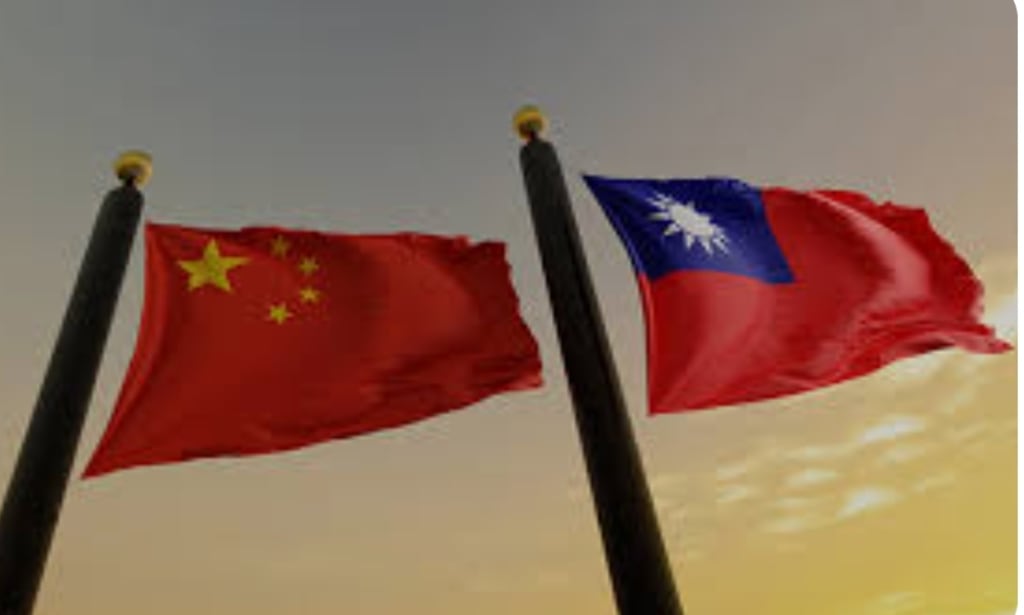
The relationship between China and Taiwan is one of the most complex and closely watched geopolitical issues of the modern era. Rooted in history but shaped by contemporary politics, economics, and military strategy, the China–Taiwan situation affects not only East Asia but global stability as well. Despite decades of tension, ambiguity, and negotiation, the question of Taiwan’s status remains unresolved.
Understanding this relationship requires looking beyond headlines to the historical, political, and cultural forces that continue to shape it.
A Historical Divide
The origins of the China–Taiwan divide date back to the mid-20th century. After the Chinese Civil War, the defeated Nationalist government retreated to Taiwan, while the Communist Party established control over mainland China. From that point onward, two separate political systems emerged, each claiming legitimacy.
China has consistently viewed Taiwan as part of its territory, while Taiwan has developed its own government, democratic institutions, and distinct political identity. This divergence laid the foundation for decades of tension across the Taiwan Strait.
Taiwan’s Political Identity
Today, Taiwan operates as a self-governing democracy with its own elections, military, and economic system. Many people in Taiwan identify strongly with this autonomy and support maintaining the current status quo—neither declaring formal independence nor accepting unification under Beijing’s rule.
This position reflects a desire for stability. Formal independence could provoke a strong reaction from China, while unification raises concerns about political freedoms and democratic rights. As a result, Taiwan’s leaders often walk a careful diplomatic line.
China’s Perspective and Strategy
From China’s perspective, Taiwan is a core national issue tied to sovereignty and territorial integrity. Chinese leadership has repeatedly stated that reunification is inevitable and that force remains an option if peaceful means fail.
In recent years, China has increased military activity near Taiwan, conducting exercises and patrols that signal strength and deterrence. These actions are intended to discourage moves toward independence and to demonstrate China’s growing regional power.
At the same time, China uses economic and diplomatic pressure, seeking to limit Taiwan’s international recognition and participation in global organizations.
The Role of the International Community
The China–Taiwan issue does not exist in isolation. Many countries, particularly major powers, are deeply invested in the outcome. While most nations officially recognize China, many maintain unofficial relations with Taiwan, including trade, cultural exchange, and security cooperation.
This delicate balance allows countries to support Taiwan’s stability without directly challenging China’s claims. However, it also creates diplomatic ambiguity that can quickly become strained during periods of heightened tension.
Economic Interdependence
Despite political disagreements, China and Taiwan are economically intertwined. Trade between the two sides is significant, with supply chains—especially in technology and manufacturing—deeply connected.
Taiwan plays a crucial role in global semiconductor production, making stability in the region vital for the global economy. Any disruption could have far-reaching consequences, affecting industries worldwide.
This economic interdependence adds another layer of complexity. While it creates incentives for cooperation, it also increases the stakes of conflict.
Military Balance and Deterrence
Military considerations play a central role in cross-strait relations. Taiwan invests heavily in defensive capabilities, focusing on deterrence rather than confrontation. Its strategy emphasizes resilience and the ability to withstand pressure.
China, meanwhile, continues to modernize its military, expanding naval and air capabilities. This growing imbalance raises concerns about miscalculation, where exercises or signals could escalate unintentionally.
For now, deterrence and strategic caution have prevented direct conflict, but tensions remain high.
Public Opinion and Generational Change
Public opinion in Taiwan has shifted over time. Younger generations, in particular, tend to identify less with mainland China and more with a distinct Taiwanese identity. This generational change influences politics and complicates future negotiations.
In China, nationalism and narratives of reunification are emphasized, shaping public expectations and limiting leadership flexibility. These internal dynamics on both sides make compromise increasingly difficult.
Why the Issue Matters Globally
The China–Taiwan relationship matters far beyond the region. It influences global trade, security alliances, and international law. A peaceful resolution would reinforce stability, while conflict could reshape global power structures.
As tensions rise and fall, the world watches closely, aware that decisions made across the Taiwan Strait could have consequences felt worldwide.
Conclusion
The relationship between China and Taiwan is defined by history, identity, and power. It is a story of unresolved conflict, cautious diplomacy, and competing visions of the future.
While the path forward remains uncertain, one thing is clear: maintaining dialogue, restraint, and mutual understanding is essential. In a rapidly changing world, the China–Taiwan issue stands as a reminder of how deeply the past continues to shape the present—and the future.
About the Creator
Keep reading
More stories from Ayesha Lashari and writers in The Swamp and other communities.
Snowfall in France: When Winter Transforms the Nation
Every winter, snow becomes one of the most closely watched weather events in France. From the peaks of the Alps and Pyrenees to unexpected snowfalls in northern and central regions, météo neige has the power to disrupt routines, reshape landscapes, and spark both excitement and concern. Snow in France is more than a seasonal occurrence—it is a national event that affects transport, economy, and public safety.
By Ayesha Lashari14 days ago in The Swamp


Comments
There are no comments for this story
Be the first to respond and start the conversation.