
Charter Schools And The Legacy Of White Flight
Segregation is reintroduced when charter schools like Lashon Academy serve different demographic groups than neighboring public schools.

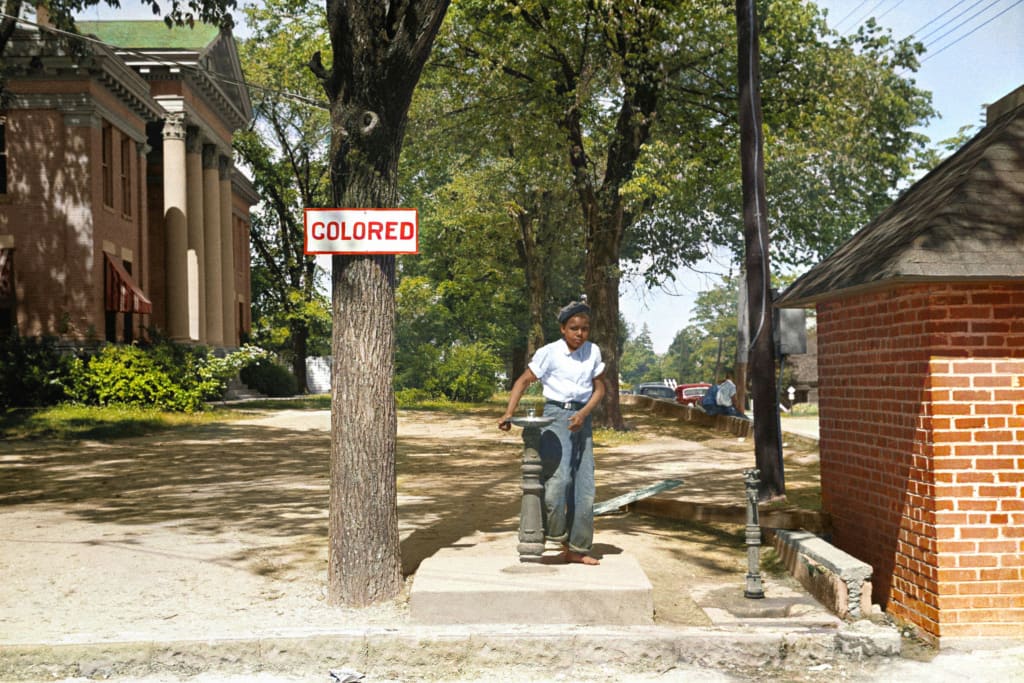
– A Woodland Hills real estate agent, 1978
When the LAUSD reluctantly tried to enforce the laws requiring the desegregation of schools, white, middle-class families fled the District. In 1970 half of the students in the school district were white. In 1978, after busing opponents had exhausted their legal appeals allowing the desegregation program to begin, white students were only 29.8% of the student body. In that year alone, 31,000 of them left the district. Some families moved to neighboring school districts while others enrolled in private schools. This mass exodus occurred even though only about five percent of students in the school system were affected by the mandatory busing program.
In the first iteration of the busing plan, parents were provided with the excuse that it was not fair to send their children on a 90-minute bus ride through LA traffic, making them pay the price for segregation. While the expressed sentiment may have been that “no one objects to people being bused here. It's us being bused there,” even a shift in the program so that minority students were instead brought into the Valley, did not end the criticism. One Black student recalls that “one girl couldn’t have us at her house because her dad objected.” In this case busing still worked: her classmate told her “‘You can’t come over, but I’ll meet you on the corner.’ And we hung out anyway.”
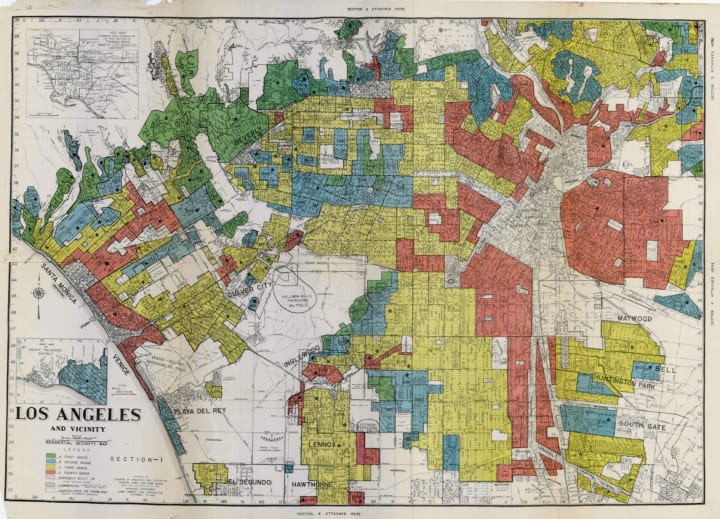
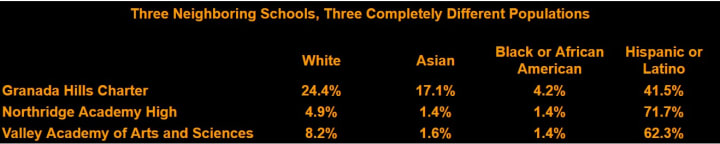
When charter schools were established in California, parents were given a new tool for avoiding integration. Before its conversion to a privately operated charter school, Granada Hills High was “one of the highest-achieving schools in the Los Angeles Unified School District.” However, some parents criticized the practice of busing students from downtown and the East Valley into “their” school. By separating itself from the LAUSD, Granada eliminated its participation in this program. Today, the school is effectively re-segregated:
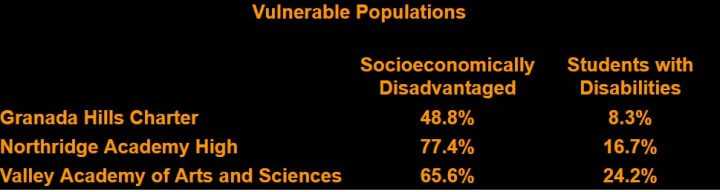
Granada is not only segregated based on race. Some students from socioeconomically disadvantaged families and those needing special education services have been pushed out of the charter school. While charter schools were presented as a vehicle for parental choice, this publicly funded private school is the one doing the choosing:
The advent of charter schools also provided a way for parents who had moved their children to private schools to have the government pay for the tuition. This may be a driving factor in the disparities in demographics that can exist when charter schools and district schools share a campus. As an example, when the nationwide chain of charter schools, Citizens of the World, expanded into the west San Fernando Valley, it claimed it would create a school with “a diverse community of students.” However, when compared to the student body of the LAUSD’s Shirley Avenue Elementary School, with which it shared a campus, the charter school had a much greater percentage of white students:

The white flight Charter School was able to take space from its public school counterpart through PROP-39. Under the rules that the LAUSD chose to use to implement this demand, Shirley had to give up space it used to provide Special Education services, even though it had a greater percentage of students who had disabilities than Citizens of the World. While nearly 88% of the students at the public school were socioeconomically disadvantaged, it still had to give up space used to enhance the education of these children.
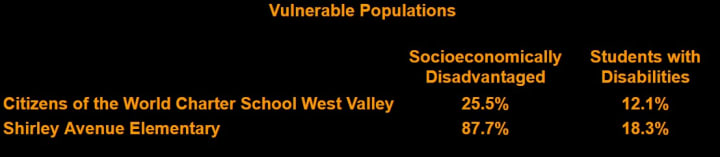
Compounding the damage to public school students, Citizens of the World demanded more space than it was entitled to. This meant that while public school children were forced to receive services in closets, the students at the charter school benefited from having extra space. Under state law Citizens of the World was assessed a $34,625.44 penalty for the space they were not utilizing, but they have only paid $4,189.00. Along with 36 other charter schools, they had a portion of these mandatory fees forgiven by José Cole-Gutiérrez and the Charter School Division without explanation or approval of the LAUSD School Board.

The Lashon Academy is another charter school in the Valley that serves demographic groups that are vastly different than its public school counterparts. This is one of the few cases where the charter school admits it brings in white students from other neighborhoods to use the space in other students’ schools. During a public hearing this month about its request to expand onto a private campus, the school’s spokeswoman stated that the move would:
“Brings us closer to our currently enrolled families residing in Sherman Oaks, Studio City, and Valley Village who have, like the majority of our families been traveling upwards of five miles to our current Van Nuys location.”
This taking of space in a predominantly socioeconomically disadvantaged school for the benefit of white children who mostly come from middle-class families not only presents a violation of ethical standards, it potentially violates the school’s charter. The areas specified in its statement are not what it specified as its area of service when it appealed to the County to approve its renewal.
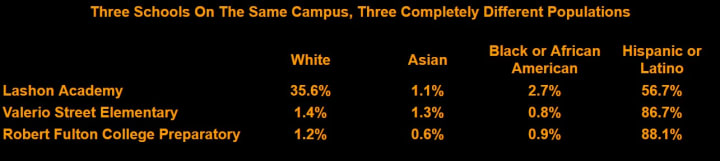
Lashon also regularly takes more space than it is entitled to under the rules implementing PROP-39, paying the LAUSD a total of $325,953 in overallocation fees. It appears it is on track to pay additional penalties for the school year that begins next month. During the LACOE hearing, the spokeswoman stated that if the County rejects its request for a material revision, the school has space at the Fulton campus. Once again, public school students are being denied space to receive services so that the charter school can reserve space just in case it needs it. The students who will most feel the effect of this theft of space are those who are socioeconomically disadvantaged or have special education needs.
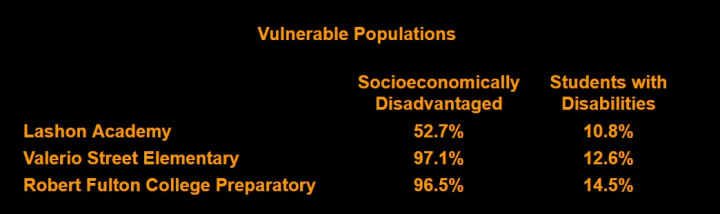
White flight in the 1970s meant that LAUSD schools “all but lost the chance to integrate schools that are now attended predominantly by children of minority families.” Those responsible for overseeing the operation of charter schools need to ensure that the damage done is not made worse through additional segregation, especially when public schools and charter schools operate on the same campus.
______
Carl Petersen is a parent advocate for public education, particularly for students with special education needs, who serves as the Education Chair for the Northridge East Neighborhood Council. As a Green Party candidate in LAUSD’s District 2 School Board race, he was endorsed by Network for Public Education (NPE) Action. Dr. Diane Ravitch has called him “a valiant fighter for public schools in Los Angeles.” For links to his blogs, please visit www.ChangeTheLAUSD.com. Opinions are his own.
About the Creator
Carl J. Petersen
Carl Petersen is a parent advocate for students with SpEd needs and public education. As a Green Party candidate in LAUSD’s District 2 School Board race, he was endorsed by Network for Public Education (NPE) Action. Opinions are his own.
Keep reading
More stories from Carl J. Petersen and writers in The Swamp and other communities.
Zinc Methionine Chelates Market Size and Forecast 2025–2033
Introduction As global agriculture enters a new era of efficiency, sustainability, and precision nutrition, the role of advanced feed additives is becoming more critical than ever. Among these, Zinc Methionine Chelates are gaining notable attention for their superior bioavailability, environmental benefits, and impact on animal productivity. Once considered a niche solution, chelated trace minerals are now reshaping livestock nutrition strategies across developed and emerging economies alike.
By jaiklin Fanandish4 days ago in The Swamp




Comments (2)
Excellent piece
Nicely done it.