
Canada PM Hails ‘Strategic Partnership’ With China to Adapt to ‘New Global Realities
A Shift in Tone at a Critical Moment
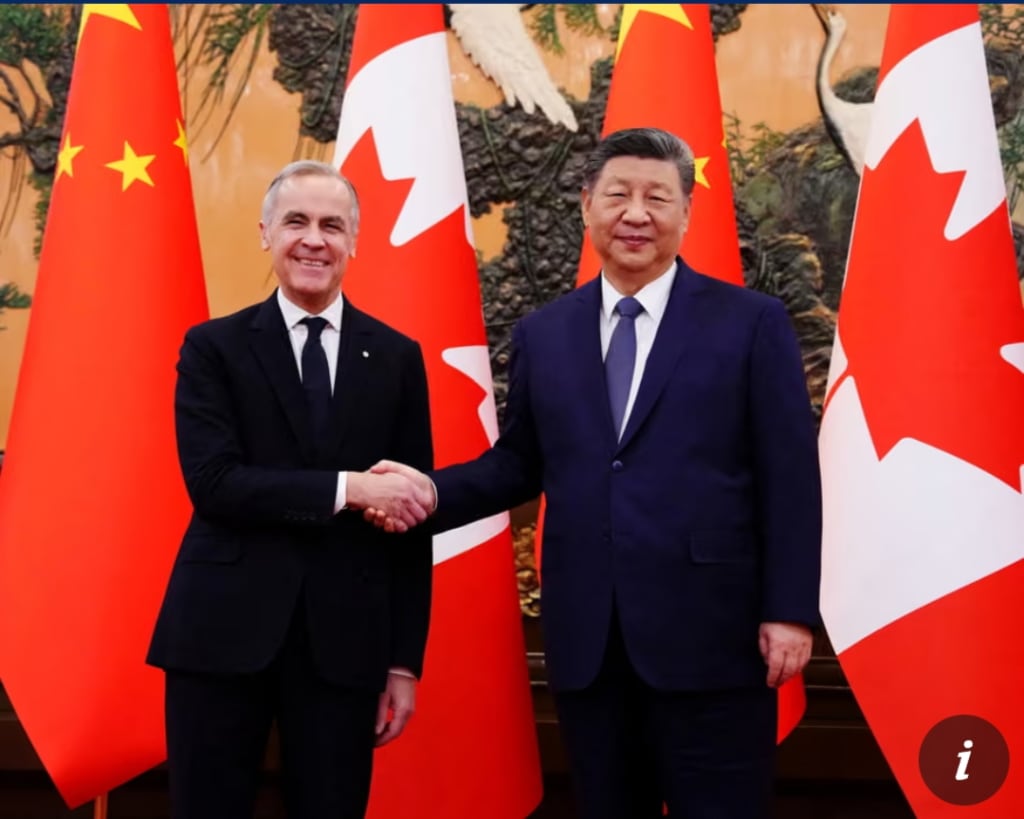
Canada’s prime minister has described relations with China as a “strategic partnership”, signaling a notable shift in tone at a time when global politics, trade, and security dynamics are rapidly changing. The statement reflects Ottawa’s attempt to adapt to what the prime minister called “new global realities”, including economic uncertainty, geopolitical competition, and the restructuring of international alliances.
The remarks have sparked debate at home and abroad, as Canada seeks to balance economic cooperation with China against concerns over human rights, national security, and alignment with traditional allies such as the United States and Europe.
Understanding the ‘New Global Realities’
The phrase “new global realities” captures a world shaped by multipolar power structures, slowing globalization, climate challenges, and ongoing conflicts. China’s growing influence in trade, technology, and diplomacy has forced many Western nations to reassess their strategies.
For Canada, these realities include:
Increased dependence on global supply chains
Intensifying US–China competition
Rising demand for cooperation on climate change and energy
Economic pressures at home requiring diversified trade partnerships
In this context, Ottawa appears to be emphasizing pragmatism over ideology, acknowledging that engagement with China remains necessary despite longstanding tensions.
Economic Motivations Behind the Partnership
China is Canada’s second-largest trading partner, and economic considerations play a major role in Ottawa’s approach. Canadian exports such as agricultural products, natural resources, and energy technologies rely heavily on access to Asian markets.
By framing relations as a strategic partnership, Canada aims to:
Stabilize trade ties amid global economic uncertainty
Attract investment in infrastructure, clean energy, and technology
Reduce overreliance on a single market, particularly the United States
Supporters argue that economic engagement provides leverage and stability, while critics warn it may expose Canada to economic coercion.
Diplomatic and Strategic Implications
The prime minister’s comments suggest a more nuanced diplomatic posture, one that seeks cooperation where possible while managing disagreements elsewhere. Canadian officials have emphasized that partnership does not mean unconditional alignment.
Key areas of potential cooperation include:
Climate change mitigation
Global health and pandemic preparedness
Trade facilitation and supply chain resilience
Multilateral diplomacy through institutions like the UN
At the same time, Canada has reiterated its concerns regarding human rights, rule of law, and regional security, particularly in relation to Hong Kong, Xinjiang, and the Indo-Pacific.
Domestic Debate and Political Reactions
The announcement has triggered mixed reactions within Canada. Business groups and trade advocates have largely welcomed the pragmatic tone, arguing that constructive engagement is essential for economic growth.
However, opposition parties and civil society groups have raised concerns, questioning whether the government is softening its stance on sensitive issues. Some lawmakers have called for clearer safeguards to protect national security and democratic values.
Public opinion remains divided, reflecting broader uncertainty about how democracies should engage with China in an era of strategic competition.
Canada’s Relationship With Traditional Allies
Canada’s recalibration toward China also raises questions about its relationships with traditional allies, particularly the United States. Washington has taken a more confrontational approach toward Beijing, emphasizing decoupling and strategic competition.
Canadian officials insist that the partnership with China does not undermine alliances but instead reflects independent foreign policy decision-making. Ottawa continues to coordinate closely with allies on security, intelligence, and defense matters, especially through NATO and Five Eyes.
Balancing these relationships will be critical to ensuring Canada does not become caught between competing global powers.
China’s Perspective on the Partnership
From Beijing’s perspective, Canada’s language signals an opportunity to reset strained relations. Chinese officials have long called for dialogue based on mutual respect and non-interference.
China views Canada as:
A resource-rich economy
A gateway to North American markets
A potential partner in climate and energy transitions
However, trust remains fragile after years of diplomatic disputes, trade restrictions, and political tensions.
Risks and Challenges Ahead
While the idea of a strategic partnership offers potential benefits, it also carries risks. Critics warn that increased engagement could expose Canada to:
Political pressure linked to trade or investment
Security vulnerabilities in technology and infrastructure
Diplomatic backlash from allies
Managing these risks will require clear policy frameworks, transparency, and strong regulatory oversight.
A Balancing Act for the Future
Canada’s evolving approach reflects the broader dilemma facing many mid-sized powers: how to navigate a world where economic interdependence coexists with strategic rivalry.
By framing relations with China as a strategic partnership, the Canadian government appears to be signaling flexibility and realism rather than a wholesale shift in values. The success of this approach will depend on whether Canada can protect its interests, uphold its principles, and maintain trust with both partners and allies.
Conclusion
The prime minister’s decision to hail a “strategic partnership” with China marks an important moment in Canadian foreign policy. It underscores a recognition that global power dynamics are changing and that rigid approaches may no longer be effective.
As Canada adapts to new global realities, its relationship with China will likely remain complex—defined by cooperation, competition, and cautious engagement. The challenge ahead lies in ensuring that pragmatism does not come at the expense of sovereignty, values, or long-term stability.
About the Creator
Keep reading
More stories from Aarif Lashari and writers in The Swamp and other communities.
European Troops in Greenland Will Not Impact Trump’s Takeover Plans, White House Says
The White House has stated that the deployment of European troops to Greenland will not affect former President Donald Trump’s plans regarding the strategic Arctic territory, a remark that has intensified diplomatic tensions among NATO allies and reignited debate over Greenland’s geopolitical future. The statement comes as European nations, alongside Denmark, bolster their military presence in Greenland amid growing concerns over sovereignty, security, and global power competition in the Arctic. While the White House emphasized that the troop presence is a matter of collective defense, it also signaled that US strategic interests in Greenland remain unchanged. Greenland’s Strategic Importance Greenland has long been viewed as a critical geopolitical asset due to its location between North America and Europe. The island hosts vital shipping routes, advanced missile early-warning systems, and untapped reserves of rare earth minerals essential for modern technology and defense industries. As climate change accelerates ice melt, Greenland’s accessibility has increased, transforming it into a focal point for military planning and economic competition. These factors have drawn heightened attention from global powers, including the United States, Russia, and China. European Troop Deployment Explained European troops were deployed to Greenland as part of a NATO-backed defensive initiative, aimed at reinforcing Arctic security and supporting Denmark’s sovereignty over the autonomous territory. Officials from Denmark and other European states have described the deployment as precautionary rather than provocative. The troops are tasked with surveillance, infrastructure protection, and joint exercises designed to enhance readiness in harsh Arctic conditions. NATO leaders insist the move reflects alliance unity and is not directed against any single country. White House Downplays Impact Despite the visible show of European military support, the White House stated that the deployment does not interfere with US strategic planning, including Trump’s previously expressed interest in expanding American influence over Greenland. A senior White House official said the United States continues to view Greenland as “vital to hemispheric defense,” adding that troop movements by allies do not alter Washington’s long-term objectives in the Arctic. The comment has sparked criticism from European leaders, who argue that Greenland’s status and defense arrangements should be determined collectively, not unilaterally. Trump’s Greenland Ambitions Revisited Trump first drew global attention in 2019 when he openly discussed the idea of acquiring Greenland, a proposal that was firmly rejected by Denmark and Greenland’s leadership. Since then, his remarks have resurfaced periodically, often framed around security concerns and economic opportunity. Supporters argue that US involvement could bring investment and enhanced defense capabilities to the island. Critics, however, view such ambitions as outdated imperial thinking that undermines international norms and the sovereignty of smaller nations. The White House’s latest remarks suggest that Trump’s interest in Greenland remains strategically driven, regardless of allied military actions. Denmark and Greenland Push Back Danish officials have reiterated that Greenland is not for sale and not subject to external takeover plans. Prime Minister Mette Frederiksen has emphasized that Greenland’s defense is a shared NATO responsibility, grounded in cooperation and mutual respect. Greenland’s autonomous government has also voiced concern over rhetoric suggesting external control. Leaders in Nuuk have stressed the importance of respecting Greenlanders’ right to self-determination and involving local communities in decisions affecting the island’s future. NATO Unity Tested The situation has placed NATO unity under strain. While the alliance maintains that its Arctic posture is defensive and cooperative, differing messages from Washington risk complicating diplomatic relations. Some European officials worry that downplaying the significance of allied troop deployments could weaken trust within NATO. Others fear that unilateral statements about Greenland could embolden rival powers seeking to exploit divisions within the alliance. Nevertheless, NATO leadership continues to frame the Arctic as a region requiring collective vigilance rather than competitive ambition. Global Reactions and Geopolitical Stakes International reactions have been swift. Russia and China, both increasingly active in the Arctic, have criticized NATO’s expanding footprint while closely monitoring US statements about Greenland. Analysts warn that conflicting narratives among Western allies could create openings for rival powers to advance their interests in the region. The Arctic, once considered a zone of cooperation, is increasingly viewed as a potential arena for great-power rivalry. Implications for Arctic Governance The controversy underscores broader questions about Arctic governance, sovereignty, and the future of international cooperation. As melting ice opens new trade routes and resource opportunities, competition is likely to intensify. Experts argue that maintaining stability will require clear communication among allies, respect for international law, and meaningful engagement with indigenous and local populations. Any perception of unilateral ambition risks destabilizing a fragile geopolitical balance. What Comes Next While European troops remain stationed in Greenland for the foreseeable future, diplomatic efforts are expected to continue behind the scenes. Denmark, Greenland, and NATO partners are likely to seek assurances that allied unity remains intact. Meanwhile, US officials insist that strategic discussions about Greenland are ongoing but emphasize that no immediate changes are planned. Conclusion: A Delicate Arctic Balance The White House’s assertion that European troops in Greenland will not impact Trump’s takeover plans highlights the complex and sensitive nature of Arctic geopolitics. As military presence increases and strategic interests converge, Greenland finds itself at the center of a growing international debate. Whether cooperation or competition will define the Arctic’s future depends on how global powers manage their ambitions. For now, Greenland remains a symbol of both opportunity and tension in an increasingly contested region.
By Aarif Lashari3 days ago in The Swamp
Mexico Electric Two-Wheeler Market Size and Forecast 2025–2033
Mexico Electric Two-Wheeler Market: A Market on the Move Mexico’s transportation landscape is undergoing a powerful transformation as electric mobility reshapes how people commute, deliver goods, and reduce environmental impact. According to Renub Research, the Mexico Electric Two-Wheeler Market is projected to reach US$ 1,746.40 million by 2033, up from US$ 834.6 million in 2024, growing at a CAGR of 8.55% between 2025 and 2033. This growth is being fueled by rising fuel prices, expanding urban populations, supportive government policies, and increasing awareness of sustainable transport alternatives.
By Marthan Sir3 days ago in The Swamp
The Devil's Cut
“Comrade, finally you’re awake.” The voice was smooth, sensual. A flickering incandescent bar was all that lit the white, sterile room. All Vladimir remembered was everything going black. He tried to move his arms and found them strapped to the gurney.
By Matthew J. Fromm4 days ago in Fiction


Comments
There are no comments for this story
Be the first to respond and start the conversation.