
Bitcoin Tests $63,000 in ‘Extreme Fear’; Analysts Warn Full Capitulation May Still Lie Ahead
Market sentiment plunges as Bitcoin nears key support, with analysts watching for signs of panic selling that could signal the next major turning point.
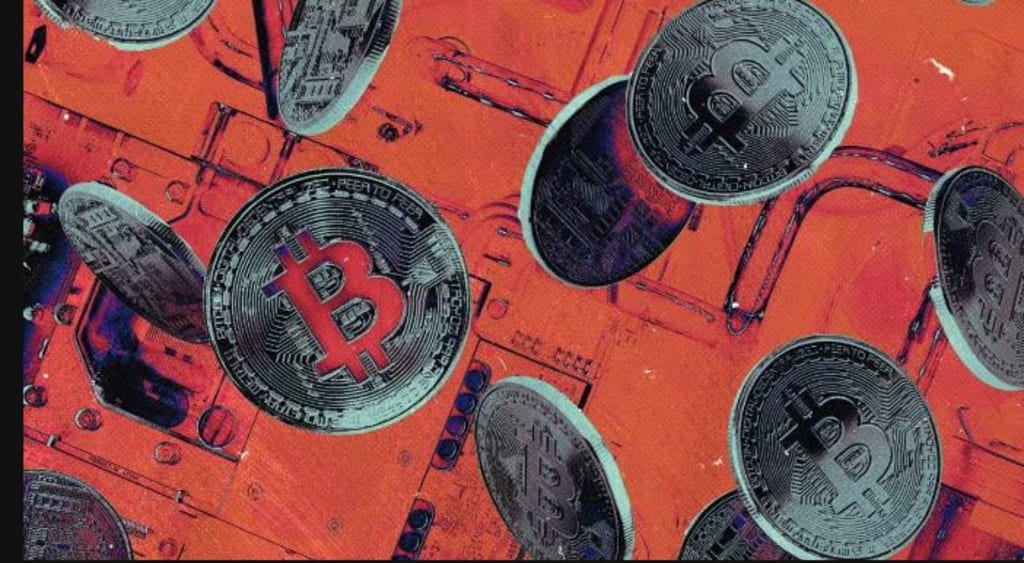
The recent price action highlights how quickly optimism can fade in the volatile world of digital assets, where macroeconomic signals, regulatory developments, and investor psychology combine to shape market direction.
A Market Defined by “Extreme Fear”
Sentiment indicators widely tracked by traders show that confidence has dropped significantly. The move toward “extreme fear” reflects growing anxiety among retail investors as Bitcoin struggles to regain upward momentum after earlier highs.
Periods of extreme fear are not unusual in crypto cycles. Historically, they often appear during consolidation phases or corrections that follow strong rallies. However, analysts caution that sentiment alone does not signal an immediate rebound.
Instead, fear can persist — and sometimes intensify — before markets stabilize.
The drop toward $63,000 has triggered liquidations across leveraged positions, amplifying volatility. Short-term traders reacting to rapid price swings have contributed to the sense that the market is fragile.
What Capitulation Means — and Why It Matters
Capitulation is a term used to describe the final stage of a market downturn, when investors sell en masse, often at significant losses. This phase is typically marked by heavy trading volume, sharp price declines, and widespread pessimism.
Many analysts believe Bitcoin has not yet reached that stage.
Data firms such as Glassnode track on-chain activity to identify signs of capitulation, including spikes in realized losses, miner selling pressure, and long-term holder behavior. While some stress signals are visible, they do not yet match the intensity seen during previous bear-market bottoms.
In other words, the market is nervous — but not fully exhausted.
Macro Pressures Continue to Weigh on Crypto
Bitcoin does not move in isolation. Broader economic forces continue influencing digital assets, particularly interest rate expectations, inflation data, and global liquidity conditions.
When borrowing costs rise or economic uncertainty increases, investors often rotate away from riskier assets — including cryptocurrencies. This dynamic has been evident in recent months, with Bitcoin reacting to shifts in monetary policy expectations.
Institutional participation has grown over the years, which means crypto markets are increasingly sensitive to traditional financial indicators. That connection can deepen corrections when macro sentiment turns negative.
The Role of Market Structure
Beyond macro factors, market structure plays a critical role in shaping price movements. The growth of derivatives trading, leveraged positions, and algorithmic strategies has made Bitcoin more reactive to sudden shifts.
Large liquidation cascades can accelerate declines even when underlying fundamentals remain unchanged. When prices approach key support levels — such as $63,000 — automated selling can intensify downward momentum.
Major exchanges including Binance and Coinbase have seen spikes in trading activity during recent volatility, illustrating how quickly sentiment translates into action.
For traders, these structural factors mean that short-term price swings may exaggerate broader trends.
Long-Term Holders vs. Short-Term Traders
One of the most closely watched dynamics in Bitcoin cycles is the behavior of long-term holders. Historically, market bottoms often form when short-term traders exit while long-term investors accumulate.
Current data suggests long-term holders remain relatively resilient. Although some profit-taking has occurred, large-scale distribution — a hallmark of late-cycle downturns — has not fully materialized.
This divergence creates tension in the market. Short-term fear drives volatility, while long-term conviction prevents a deeper collapse. Analysts say this push-and-pull can prolong consolidation phases.
The Psychology of Fear Cycles
Crypto markets are heavily influenced by emotion. Fear cycles can create feedback loops: falling prices generate anxiety, which triggers selling, which leads to further declines.
Social media, rapid news cycles, and constant price visibility intensify these reactions. Retail investors often respond faster than institutions, increasing volatility during uncertain periods.
However, experienced traders frequently view extreme fear as a potential opportunity. Historically, some of Bitcoin’s strongest rebounds have emerged from moments of maximum pessimism — though timing those turning points is notoriously difficult.
Signals Analysts Are Watching
To determine whether capitulation is approaching, analysts are monitoring several key indicators:
Realized losses: Rising losses suggest investors are selling below purchase price.
Miner activity: Increased selling from miners can indicate financial stress.
Liquidity conditions: Tight liquidity often amplifies downward moves.
Derivatives positioning: High leverage raises the risk of liquidation cascades.
Exchange inflows: Large transfers of Bitcoin to exchanges can signal intent to sell.
So far, these signals point to stress but not panic — a distinction that shapes expectations for the next phase.
Possible Paths Forward
Analysts generally outline three potential scenarios:
Extended consolidation
Bitcoin could trade sideways as markets absorb macro uncertainty and leverage resets.
Delayed capitulation
A sharper decline could occur if economic conditions worsen or a major catalyst triggers selling.
Gradual recovery
Stabilization near current levels could allow confidence to rebuild without a dramatic crash.
The path depends largely on external factors rather than crypto-specific developments alone.
The Bigger Picture for Bitcoin
Despite short-term volatility, Bitcoin’s longer-term narrative remains tied to adoption, institutional involvement, and its role as a digital store of value. Corrections are a recurring feature of that journey.
Previous cycles show that extreme fear does not necessarily signal structural weakness. Instead, it often reflects the market recalibrating expectations after periods of rapid growth.
For investors, the challenge lies in distinguishing between temporary sentiment shifts and fundamental changes.
Final Thoughts
Bitcoin’s test of the $63,000 level has pushed market sentiment into extreme fear territory, reviving familiar debates about whether the worst of the correction is over. While stress is evident, analysts say the defining moment of capitulation may not have arrived yet.
That uncertainty leaves the market in a fragile state — caught between caution and opportunity. Whether Bitcoin stabilizes, drops further, or begins a new recovery phase will depend on a complex mix of psychology, macroeconomics, and market structure.
In crypto, fear can be powerful. But history suggests it is rarely the final chapter.
About the Creator
A Gathering of Evil Bosses
“I’m the queen of chin jutting while I smooth my hair, attacking, insulting, and deflecting to protect my appointer.” “Oh, please, Blondi, my hair is curled, highlighted, and longer than yours. I feature television commercials telling immigrants that we will give them a free plane ride home, and if they voluntarily turn themselves in, they will be allowed to legally apply for re-entry. It runs everywhere, and I look good in it! You can’t compete because of your blond hair. Mine is nicer, and my lips are prettier than yours.”
By Andrea Corwin 7 days ago in The Swamp
India to Make Rafale Jets with France in Boost to Defence Ties, Macron Says
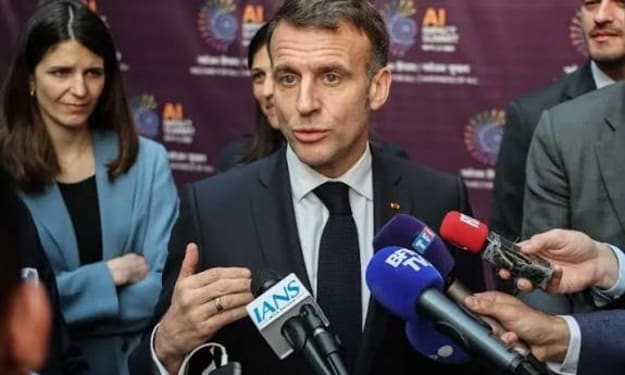
India and France have announced a significant step forward in their defence partnership, with plans to manufacture Rafale jets in India in collaboration with French aerospace companies. French President Emmanuel Macron confirmed the development during a press briefing, describing the move as a major milestone in strategic and technological cooperation between the two nations. The joint production initiative is expected to enhance India’s domestic defence manufacturing capabilities, support local employment, and deepen bilateral ties in the aerospace and defence sectors. The Rafale program, initially introduced to India in 2016 with a procurement deal for 36 jets, has now evolved into a collaborative production venture aimed at both operational readiness and industrial development. Strengthening Strategic Partnership President Macron emphasized that the decision reflects France’s commitment to India as a key partner in Asia. “This agreement demonstrates our shared vision for strategic autonomy and defence modernization,” he said. French officials noted that the initiative goes beyond procurement, encompassing technology transfer, joint research, and indigenous manufacturing, in line with India’s Make in India policy. The Defence Ministry in New Delhi described the development as a “transformative step” for India’s air force capabilities. Officials highlighted that the locally assembled jets will incorporate advanced avionics, radar systems, and weapon integration, enhancing operational flexibility for the Indian Air Force. Industrial and Economic Benefits Beyond military advantages, the joint venture is expected to bring substantial economic benefits. French aerospace companies will collaborate with Indian firms to establish production lines, training programs, and quality control protocols. Analysts estimate that the initiative could create thousands of skilled jobs and strengthen India’s domestic defence industry ecosystem. Local manufacturing is also expected to reduce costs over time and ensure a more robust maintenance and upgrade cycle. Indian defence analysts said that producing Rafale jets domestically would reduce dependence on imports while increasing self-reliance in advanced combat aircraft technology. Technology Transfer and Skill Development A key feature of the collaboration is technology transfer, which will allow Indian engineers and technicians to work alongside French counterparts, gaining experience in cutting-edge aircraft design, assembly, and testing. The program also includes provisions for knowledge sharing on sensors, avionics, and precision weapon integration, enabling India to develop future-generation fighter jets based on Rafale technology. “This initiative is not just about acquiring aircraft; it’s about mastering the science and engineering behind them,” said a senior Indian Air Force official. “It represents a generational leap for India’s aerospace and defence capabilities.” Diplomatic Context The announcement comes amid heightened security challenges in South Asia, including border tensions and regional competition. Defence analysts noted that the Rafale production deal strengthens India’s deterrence posture while reinforcing strategic partnerships with key European powers. For France, the initiative cements its role as a reliable defence partner in Asia and underscores its commitment to supporting indigenous manufacturing in allied countries. It also reflects the broader European interest in deepening engagement with India in technology, trade, and security. Next Steps and Timeline Officials from both countries said discussions are underway to finalize technical specifications, production schedules, and local assembly locations. The first indigenously assembled jets are expected to roll out within a few years, with continuous upgrades planned to integrate the latest weaponry and avionics. India’s Defence Research and Development Organisation (DRDO) will work closely with French teams to ensure that domestic production meets stringent operational and safety standards. Both sides have emphasized transparency, quality control, and adherence to international norms in defence manufacturing. Conclusion The India-France Rafale production initiative marks a historic moment in bilateral defence cooperation, combining military modernization, industrial development, and technological collaboration. As India moves toward greater self-reliance in defence capabilities, the partnership with France serves as both a strategic and symbolic commitment to long-term cooperation in aerospace and security. President Macron described the venture as “a partnership of trust and shared ambition,” reflecting both countries’ commitment to strengthening ties in the face of evolving regional and global security challenges. For India, the program represents a decisive step in building a technologically advanced, self-sufficient air force while deepening international defence collaboration.
By Fiaz Ahmed 5 days ago in The Swamp
At My Wits’ End
Life is about taking out the trash and calling it trash because you have every reason to. It wasn't meant to be linear, they say. But the times you tried to make it straight led to problems, and you didn’t have the tools to put any of it to use. You don't put your right shoes on the right feet; you put the left shoes on the left feet. The grey hardened slab will trip you up anyway.
By Caitlin Charlton6 days ago in Humans



Comments
There are no comments for this story
Be the first to respond and start the conversation.