
Big Progress or Risky Gamble? Inside Trump's Alaska Summit with Putin and the Future of Ukraine
Former U.S. president signals diplomatic headway as Washington and Kyiv eye stronger coordination amid tensions with Moscow

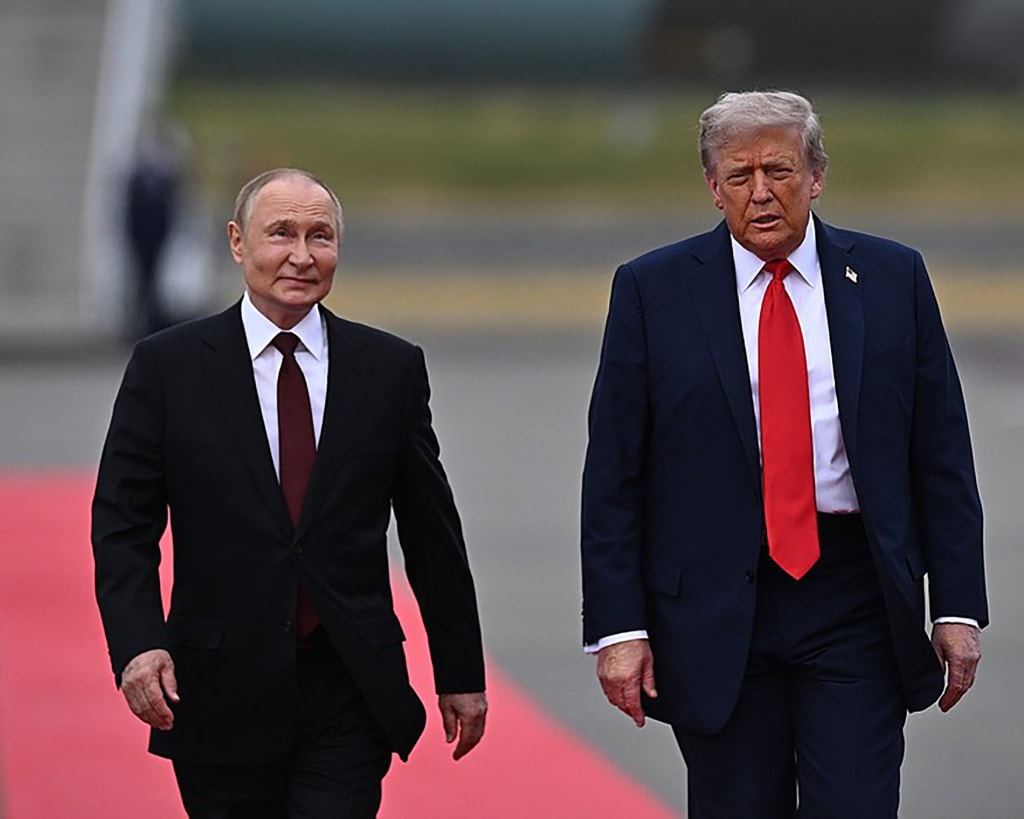
The geopolitical landscape has shifted once again following U.S. President Donald Trump’s much-discussed summit with Russian President Vladimir Putin in Alaska. While Trump teased “BIG PROGRESS ON RUSSIA” in a cryptic social media post, the lack of concrete details has left analysts, allies, and critics questioning what transpired behind closed doors. With the Ukraine conflict at the heart of discussions, the summit has generated both optimism and alarm in equal measure.
Trump’s Bold Claim: “Big Progress on Russia
On Sunday, Trump took to his social media platform to announce, in typical fashion: “BIG PROGRESS ON RUSSIA. STAY TUNED!” While the statement was brief, it carried significant weight coming just 24 hours after his high-stakes meeting with Putin in Alaska. The talks, which lasted roughly three hours, focused heavily on the ongoing war in Ukraine.
The announcement quickly sparked speculation about whether a potential peace roadmap had been agreed upon or if Trump was using the summit as a stage to project diplomatic success without tangible outcomes. For now, much of the world is still “staying tuned.”
The Alaska Summit: What We Know
The Alaska meeting was touted as a chance to reset U.S.-Russia relations and explore potential off-ramps for the grinding war in Ukraine. According to Trump’s special envoy Steve Witkoff, the talks produced an agreement on what he described as “robust security guarantees” for Ukraine. Speaking on CNN, Witkoff said: *“We agreed to robust security guarantees that I would describe as game-changing.”*
These assurances reportedly resemble NATO’s Article 5 protections, in which an attack on one member is considered an attack on all. If implemented, such guarantees could significantly shift the security dynamics in Eastern Europe, offering Ukraine a stronger deterrent against further Russian aggression.
The Donbas Controversy
However, the optimism was quickly clouded by reports that Trump also backed a controversial plan for Ukraine to cede the Donbas region to Russia as part of a peace deal. This position marks a stark departure from the consistent stance of Ukraine and its Western allies, who have maintained that *“borders must not be changed by force.”*
The prospect of territorial concessions is deeply troubling for Kyiv and its European partners. For Ukraine, surrendering Donbas would not only be seen as a betrayal of its sovereignty but could also embolden Russia to pursue further territorial claims. For European leaders, the risk is that such concessions would set a dangerous precedent in global politics, signaling that aggression can be rewarded with land.
Europe Pushes Back
The backlash from Europe was swift. Several European leaders, including European Commission President Ursula von der Leyen, Italian Prime Minister Giorgia Meloni, French President Emmanuel Macron, German Chancellor Friedrich Merz, and NATO Secretary General Mark Rutte, are expected to join Ukrainian President Volodymyr Zelenskyy in his upcoming meeting with Trump. Their unified presence underscores Europe’s determination to ensure that Ukraine’s sovereignty is not negotiated away in Alaska or Washington.
Von der Leyen has been particularly outspoken, reiterating the European Union’s commitment to Ukraine’s territorial integrity. Macron and Meloni, while differing on some domestic policies, have aligned firmly with the principle that no peace plan should come at the expense of ceding Ukrainian land. The involvement of NATO’s Rutte highlights the alliance’s concern that Trump’s negotiations could undermine the credibility of Western security commitments.
A Diplomatic Gamble
If Trump indeed endorsed territorial concessions, it would represent one of the boldest—and most controversial—diplomatic gambles of his presidency. On one hand, the proposal could end years of bloodshed, offering a quicker resolution than continued military stalemate. On the other, it risks fracturing the Western alliance and leaving Ukraine permanently weakened.
Critics argue that Putin could interpret any U.S.-backed territorial deal as validation of his strategy, thereby encouraging further aggression in the future. The Guardian described the Alaska summit as “a PR victory for Putin,” noting that the Russian leader left the talks without having to concede much, while Trump touted vague progress.
U.S. Messaging: Optimism vs. Vagueness
Secretary of State Marco Rubio struck a more cautious tone, noting that while the Alaska talks produced “enough movement to justify further meetings,” they did not amount to a formal ceasefire agreement. He pointed to progress on key issues like borders, security guarantees, and Ukraine’s alliances but stopped short of declaring a breakthrough.
The mixed messaging has fueled uncertainty. Supporters argue that Trump is taking a pragmatic approach to end the war, prioritizing peace over rigid principles. Critics, however, see the vagueness as a cover for concessions that could weaken Ukraine and destabilize Europe.
Putin’s Win?
From Moscow’s perspective, the Alaska summit appears to have been a success. Time magazine noted that Putin must be “thrilled” with the results, as the talks gave him an international platform to appear as a legitimate negotiating partner without forcing him to compromise significantly. By merely entertaining U.S. proposals, Putin strengthens his hand domestically and internationally.
This interpretation fuels fears that Russia has gained more from optics than substance, while Ukraine risks being sidelined in its own war.
Ukraine’s Next Move
For Zelenskyy, the upcoming meeting with Trump is critical. Accompanied by key European leaders, he will push back against any proposals that involve ceding territory while pressing for concrete guarantees of Ukraine’s sovereignty and security. The presence of EU heavyweights signals that Ukraine will not be negotiating alone and that any agreement must align with broader Western principles.
The Ukrainian president faces a delicate balance: welcoming potential security guarantees while rejecting territorial compromises. His task will be to ensure that Ukraine does not become the bargaining chip in a geopolitical deal between Washington and Moscow.
The Bigger Picture
The Alaska summit comes at a time when global trust in American leadership is already strained. Allies in Europe and Asia are closely watching whether the U.S. remains committed to defending democratic sovereignty or whether it is willing to prioritize quick deals over long-term stability.
For Trump, the Alaska talks provide an opportunity to showcase himself as a dealmaker capable of achieving what others could not: movement on the Ukraine war. Yet the lack of transparency and the specter of concessions risk turning a potential diplomatic win into a strategic misstep.
What Happens Next?
The next phase of negotiations will be decisive. Zelenskyy’s meeting with Trump, backed by European leaders, could clarify whether the U.S. is truly committed to Ukraine’s independence or whether the Alaska talks were the beginning of a policy shift toward appeasement.
If robust security guarantees materialize without territorial concessions, the outcome could be hailed as a breakthrough. But if Ukraine is pressured into ceding land, the result may be long-lasting divisions within the Western alliance and an emboldened Russia.
Final Thoughts: Progress or Precedent?
At its core, the Alaska summit highlights the tension between pragmatism and principle in international diplomacy. Trump’s claim of “big progress” remains ambiguous, and until concrete details emerge, the world is left to speculate whether the U.S. has paved the way for peace or set a dangerous precedent.
For Ukraine and its allies, the stakes could not be higher. The outcome of these talks will shape not only the future of Eastern Europe but also the credibility of Western commitments in an increasingly unstable world.
About the Creator
Fazal Ur Rahman
My name is Fazal, I am story and latest news and technology articles writer....
read more and get inspire more............
Keep reading
More stories from Fazal Ur Rahman and writers in The Swamp and other communities.



Comments
There are no comments for this story
Be the first to respond and start the conversation.