
Ashes in the Alps: The Crans-Montana Fire and the Questions That Remain
A deadly blaze at a Swiss ski resort exposes the hidden risks woven into the fabric of a postcard-perfect landscape.

The Silence Before the Dawn
In the early hours of a late winter morning, the Swiss ski resort of Crans-Montana was quiet. The kind of deep quiet that falls over alpine towns after the last chairlift has stopped and the last fondue pot has been cleared away. At the 1800 Resort & Spa, a hotel known for its traditional wooden chalet style, guests were asleep. Then, just after 5:00 AM, that silence was shattered. What began as a small spark erupted into one of the deadliest hotel fires in modern Swiss history.
A Rapid and Devouring Blaze
The fire did not smolder. It raced. Witnesses described seeing flames engulf the structure with shocking speed. The building, constructed largely of wood in the classic local style, acted as a perfect fuel source. Panicked guests, some alerted by shouts or the crackle of flames rather than blaring alarms, scrambled in the dark. Some escaped in their nightclothes into the freezing air. Many others did not. Initial reports from Valais canton police confirmed a tragic and growing number of fatalities, expected to reach at least several dozen. The precise count remains a careful, grim process for authorities.
The Allure and the Risk of Wood
The 1800 Resort & Spa represented an ideal. It was the picture of Alpine charm, with its timber beams and rustic facade. This aesthetic is a cornerstone of the region's tourism identity. Yet, the very material that creates that cozy, authentic atmosphere is also highly combustible. While modern building codes in Switzerland and other alpine nations require fire retardants and safety measures for wooden structures, a fast-moving fire can outpace these defenses. The investigation will focus intensely on the building's materials, its compartmentalization, and whether the speed of the blaze overwhelmed the existing safety protocols.
The Deadly Timing
The time of the fire, 5:00 AM, was a critical factor. It is the time when sleep is deepest and human reaction is slowest. Guests were not awake and alert. They were not dressed or prepared to evacuate. The night left them vulnerable and disoriented. This small window between ignition and full engulfment is often the only chance for escape. In Crans-Montana, that window appears to have slammed shut within minutes. The tragedy highlights a universal challenge in fire safety: how to protect people when they are at their most vulnerable.
An International Tragedy Unfolds
Crans-Montana, like many premium Swiss resorts, is an international destination. The guests at the hotel were not just from Switzerland. They were tourists from across Europe and likely beyond, drawn to the world-class slopes. This fact has turned the local disaster into a multinational event. Embassies are involved. Identification of victims requires international coordination and diplomatic sensitivity. The grief emanating from this valley is being felt in homes across borders, a reminder of the global community that gathers in these mountain towns.
The Community Response
In the immediate aftermath, the resort community of Crans-Montana shifted from a place of leisure to one of crisis response. Emergency services from multiple towns responded. Survivors, some in shock, were taken to local gathering points and hospitals. Hotels nearby opened their doors to those who had lost everything but their lives. This mobilization in a remote, high-altitude location is complex. It tests infrastructure and highlights the tight-knit nature of mountain communities, where people rely on each other out of necessity.
The Investigation Begins
Swiss authorities have launched a major investigation. The process will be methodical and thorough. Forensic experts will sift through the charred ruins of the hotel. Their primary questions are direct. Where did the fire start? An electrical fault in the aging wiring of a renovated building? A heating source, a kitchen appliance, or something else? The point of origin is the first clue. Next, they will map the fire's path. Why did it move so quickly through the building? They will examine the placement of firewalls, the use of insulation, and the effectiveness of any sprinkler systems.
The Alarm Question
A central point of public and investigative inquiry will be the alarm systems. Several survivor accounts reported being awakened by the smell of smoke, the sound of other guests yelling, or the sight of flames—not by the piercing sound of a central fire alarm. This raises immediate and serious questions. Was there a working, interconnected fire alarm system in the hotel? If so, did it fail to activate, or did it activate too late? The presence or absence of a functional early-warning system is often the line between a close call and a catastrophe.
A Reckoning for Alpine Resorts
This fire will force a reckoning far beyond the town limits of Crans-Montana. From Switzerland to Austria to France, iconic alpine regions are dotted with thousands of similar traditional wooden hotels. They are the backbone of the tourism economy. This tragedy will inevitably lead to a painful but necessary review of fire safety standards for these buildings. Are current codes, which often grandfather in older structures, sufficient? Is the mandatory use of advanced sprinkler systems, more frequent inspections, or upgraded alarm networks required? The debate will balance historical preservation against undeniable modern safety requirements.
The Human Element Beyond the Headlines
Behind the statistics of the dead and injured are individual stories. The family on a once-in-a-lifetime vacation. The seasonal worker from another country. The retired couple returning to a favorite spot. The staff member who tried to help guests escape. Each life lost represents a universe of memories, connections, and potential erased. The trauma for the survivors—those who escaped, the first responders, and the community members who helped—will be long-lasting. Recovery is not just about rebuilding structures, but about healing invisible wounds.
Navigating the Aftermath
In the coming weeks, the news cycle will move on. The headlines will fade. But for Crans-Montana, the work will continue. There will be funerals and memorials. There will be insurance assessments and bureaucratic inquiries. The resort will face the daunting task of reassuring future tourists that it is safe, even as it mourns. The ski slopes will eventually reopen, but the shadow of the fire will remain a part of the town's history.
A Lesson Written in Smoke
The Crans-Montana fire is a stark lesson. It demonstrates that tragedy can occur anywhere, even in places synonymous with order, wealth, and safety. It shows that familiar, beautiful things—like a wooden chalet under a starry sky—can harbor hidden risks. The ultimate response to this disaster will be measured not just in updated building codes, but in a renewed collective awareness. It is a reminder that safety is a constant practice, not a guarantee, and that vigilance is the price we pay to protect the places and people we love.
About the Creator
Saad
I’m Saad. I’m a passionate writer who loves exploring trending news topics, sharing insights, and keeping readers updated on what’s happening around the world.
A Gathering of Evil Bosses
“I’m the queen of chin jutting while I smooth my hair, attacking, insulting, and deflecting to protect my appointer.” “Oh, please, Blondi, my hair is curled, highlighted, and longer than yours. I feature television commercials telling immigrants that we will give them a free plane ride home, and if they voluntarily turn themselves in, they will be allowed to legally apply for re-entry. It runs everywhere, and I look good in it! You can’t compete because of your blond hair. Mine is nicer, and my lips are prettier than yours.”
By Andrea Corwin 10 days ago in The Swamp
Winter Storm Covers Parts of North-East US in Snow
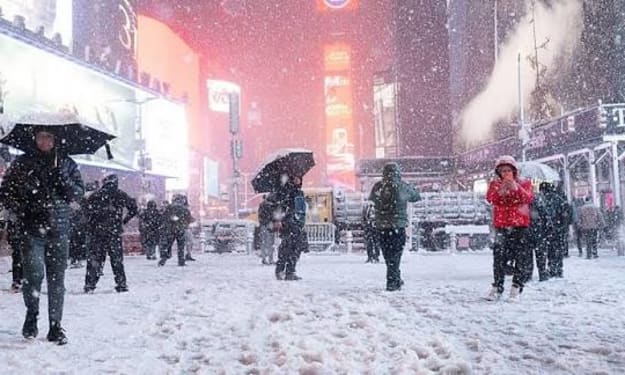
A powerful winter storm swept across the north-eastern United States this week, dumping heavy snow, disrupting transportation networks, and prompting states of emergency in multiple regions. The weather system, driven by an arctic cold front and moist Atlantic air, brought significant snowfall totals to areas from Pennsylvania up through New England, impacting travel, schools, utilities and day-to-day life for millions of residents. Forecasters from the National Weather Service (NWS) reported snowfall totals exceeding 30 inches in some locations, with high winds producing dangerous blizzard conditions and drifting snow that reduced visibility to near zero. The storm—nicknamed “Blizzard Titan” by some local meteorologists—was among the most significant to hit the region in recent years. Snowfall and Conditions Heavy snow began accumulating late Tuesday night and continued through much of Thursday, with the most intense bands affecting parts of Upstate New York, Vermont, New Hampshire, and Maine. In several towns and rural counties, snowplows struggled to keep roads clear as drifts piled up, sometimes reaching several feet in height. Temperatures plunged well below freezing, with wind chills making outdoor exposure dangerous even for short periods. In major cities such as Boston, New York City, and Philadelphia, officials warned that travel could become treacherous, urging residents to stay off the roads unless absolutely necessary. Travel Disruptions Airlines reported hundreds of flight cancellations at key airports including Boston Logan International Airport, Newark Liberty International Airport, and Philadelphia International Airport. Some travelers were left stranded overnight as storms made runway operations unsafe and delayed de-icing procedures. Amtrak and regional rail services such as MBTA Commuter Rail and NJ Transit suspended portions of their schedules, citing unsafe track conditions and blocked routes. Interstate highways, particularly I-87 in New York and I-95 in Connecticut and Massachusetts, saw closures as state police advised motorists against attempting travel during peak snowfall. “The combination of heavy, wet snow and high winds created severe blizzard conditions,” an NWS meteorologist said. “This isn’t just ordinary snowfall—visibility drops quickly, and even major routes can become impassable without significant plowing.” Power Outages and Utility Strain The storm’s fury did not spare power infrastructure. Thousands of residents experienced outages as heavy snow and ice brought down trees and power lines. Public utility crews worked around the clock to restore service, but officials warned that some rural areas might remain without electricity for days. Utility companies issued safety advisories, urging residents to report downed lines and avoid contact with fallen wires. Emergency shelters opened in affected towns to provide warmth, food, and medical support for families impacted by outages. Emergency Declarations and Local Responses Governors of several states, including Massachusetts, New York, and Vermont, declared states of emergency ahead of the storm’s peak, activating the National Guard and deploying additional snow removal equipment. Schools in many districts switched to remote learning or closed entirely to keep students and staff safe. Municipal officials also issued curfews or travel bans on local streets to allow plows unimpeded access and prevent accidents. Residents were advised to stock up on essentials and avoid leaving home if possible. “Public safety is our top priority,” said one city emergency manager. “We are asking residents to help by staying off the roads, conserving power where possible, and checking on elderly neighbors.” Economic and Community Impacts Beyond immediate safety concerns, the storm poses economic challenges. Businesses faced layoffs due to closures, and supply chains were disrupted as freight movement slowed. Grocery stores saw rapid depletion of essential items such as bread, milk and bottled water as residents prepared for days indoors. Communities also prepared for indirect effects, including possible flooding as snow begins to melt in the coming days, particularly where rain mixes with snow in warmer lower-elevation areas. Looking Ahead Meteorologists predict temperatures will remain well below average for at least a week following the storm, slowing snowmelt and prolonging hazardous conditions. While additional snowfall is not expected immediately, gusty winds and cold air will keep travel and outdoor work risky. Officials emphasize patience and caution as cleanup continues, reminding residents that the storm’s full impact—including infrastructure restoration and road clearance—will require time, manpower, and community cooperation.
By Fiaz Ahmed 5 days ago in The Swamp



Comments
There are no comments for this story
Be the first to respond and start the conversation.