
Army’s New Acquisition Structure, a New Tank Prototype, and More Drones: A 2026 Preview
How faster procurement, next-gen armor, and drone warfare are reshaping the modern battlefield

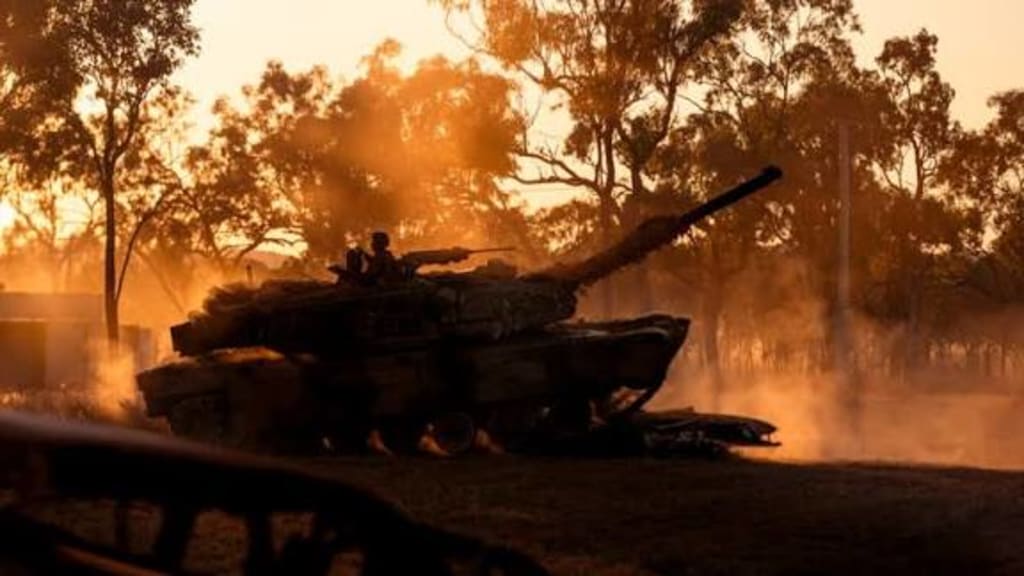
As global security challenges continue to evolve, armies around the world are racing to modernize their forces. The year 2026 is shaping up to be a pivotal moment, marked by sweeping reforms in military procurement, the unveiling of next-generation armored vehicles, and a rapid expansion in drone warfare. Together, these changes signal a fundamental shift in how modern armies prepare for future conflicts.
A New Acquisition Structure: Faster, Smarter, More Flexible
One of the most significant developments expected by 2026 is the introduction of a revamped army acquisition structure. Traditional procurement systems have long been criticized for being slow, bureaucratic, and ill-suited to the pace of modern warfare. In response, military planners are now prioritizing speed, adaptability, and innovation.
The new acquisition model focuses on shorter development cycles and closer collaboration with private industry, particularly technology startups. Instead of waiting years for fully perfected systems, armies are increasingly adopting a “deploy, test, improve” approach. This allows new equipment to be fielded quickly and refined based on real-world feedback from soldiers.
Another key feature of the new structure is decentralization. Commanders at lower levels are being given greater input into equipment decisions, ensuring that what is purchased actually meets battlefield needs. This shift is expected to reduce waste, cut costs, and deliver more effective tools to troops on the ground.
The New Tank Prototype: Reinventing Heavy Armor
Despite predictions that tanks would become obsolete, armored warfare is far from dead. In fact, 2026 is expected to bring the debut of a new tank prototype that reflects lessons learned from recent conflicts.
Unlike traditional heavy tanks, the next-generation prototype emphasizes survivability, digital integration, and versatility. Advanced composite armor, active protection systems capable of intercepting incoming missiles, and reduced crew requirements are at the heart of the design. Automation and artificial intelligence are playing a growing role, helping crews detect threats faster and respond more effectively.
The new tank is also expected to be lighter and more mobile, allowing for rapid deployment across different terrains. Hybrid or alternative propulsion systems may reduce fuel dependency and improve operational range. Most importantly, the tank is being designed to operate as part of a networked battlefield, sharing real-time data with drones, infantry units, and command centers.
Drones Take Center Stage
Perhaps the most dramatic change heading into 2026 is the explosion in drone capabilities. Unmanned systems are no longer limited to surveillance roles; they are becoming essential tools for reconnaissance, logistics, electronic warfare, and direct combat.
Armies are investing heavily in a wide range of drones—from small, soldier-launched systems to larger unmanned aircraft capable of long-endurance missions. Swarm technology, where multiple drones coordinate autonomously, is expected to become more common, overwhelming enemy defenses and gathering intelligence at unprecedented speed.
Ground-based and maritime drones are also gaining attention. Unmanned ground vehicles can transport supplies, evacuate wounded soldiers, or scout dangerous areas without risking human lives. Meanwhile, naval drones are enhancing coastal surveillance and anti-submarine operations.
Integration and Networked Warfare
What ties together the new acquisition structure, tank prototype, and drone expansion is integration. The army of 2026 is being built around the concept of networked warfare, where every platform—manned or unmanned—shares data seamlessly.
This digital battlefield allows commanders to make faster, more informed decisions. Artificial intelligence systems can analyze vast amounts of information, identify patterns, and suggest tactical options. While human judgment remains central, technology is increasingly acting as a force multiplier.
Challenges and Ethical Questions
Despite the promise of these advancements, challenges remain. Cybersecurity threats pose a serious risk to highly networked systems. Supply chain resilience, training requirements, and interoperability with allied forces are also major concerns.
There are also ethical debates surrounding automation and autonomous weapons. As drones and AI systems take on greater roles, militaries must balance operational effectiveness with accountability and international law.
Conclusion
The 2026 preview of the army’s future reveals a force in transformation. A streamlined acquisition structure promises faster innovation, a new tank prototype redefines armored warfare, and drones are reshaping how battles are fought. Together, these developments reflect a military adapting to a world where technology, speed, and integration are as important as firepower.
As armies prepare for the challenges ahead, one thing is clear: the battlefield of tomorrow will look very different from that of the past—and 2026 may be the year that future truly arrives.
About the Creator
Fiaz Ahmed Brohi
I am a passionate writer with a love for exploring and creating content on trending topics. Always curious, always sharing stories that engage and inspire.
Keep reading
More stories from Fiaz Ahmed Brohi and writers in The Swamp and other communities.
Trump and Zelensky Appear More Upbeat — But Peace Still Feels Distant for Ukraine
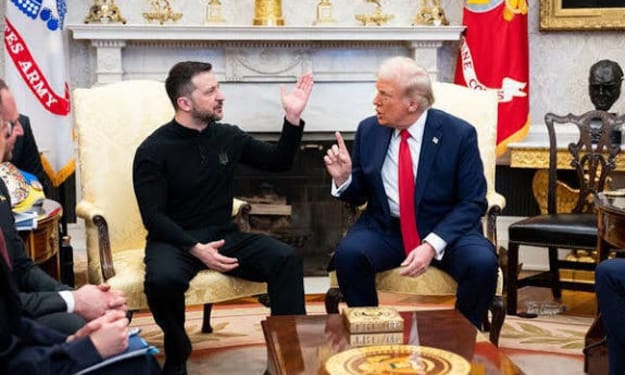
Despite warmer rhetoric and renewed dialogue, deep divisions, battlefield realities, and political constraints suggest an end to the war remains far from reach. In recent public appearances and statements, former U.S. President Donald Trump and Ukrainian President Volodymyr Zelensky have struck a noticeably more upbeat tone when discussing the possibility of ending the war in Ukraine. The language of optimism, negotiation, and “new approaches” has replaced months of hardened rhetoric. Yet behind the smiles and hopeful words, there is little concrete evidence that peace is genuinely close. For Ukrainians living under the shadow of daily air raids and for global observers watching one of Europe’s most consequential conflicts since World War II, the contrast between tone and reality is striking. Diplomatic warmth may generate headlines, but wars are not ended by mood alone. A Shift in Tone, Not in Terms Trump’s recent comments suggest he believes the war could be resolved “quickly” under different leadership, while Zelensky has emphasized openness to dialogue—provided Ukraine’s sovereignty and territorial integrity are respected. On the surface, this convergence appears promising. Both leaders project confidence and a willingness to talk, which is often a prerequisite for peace. However, optimism without clarity can be misleading. Neither side has presented a detailed framework for negotiations that addresses the core disputes: occupied territories, security guarantees, accountability for war crimes, and Ukraine’s future alignment with the West. Without movement on these fundamentals, upbeat rhetoric risks becoming little more than political theater. The Battlefield Tells a Different Story While diplomatic language softens, conditions on the ground remain brutal. Fighting continues along multiple fronts, with incremental gains and losses costing thousands of lives. Russia maintains control over significant portions of Ukrainian territory, while Ukraine remains determined to reclaim what it considers sovereign land. Military realities often dictate diplomatic outcomes, and at present, neither side appears decisively positioned to force a settlement on its own terms. This stalemate reduces incentives for compromise, making peace talks politically risky and strategically uncertain. Trump’s Calculus and Global Signals Trump’s optimistic messaging also reflects domestic political considerations. Positioning himself as a dealmaker capable of ending foreign wars resonates strongly with parts of the U.S. electorate. Yet translating campaign rhetoric into international agreements is far more complex—especially when the conflict involves multiple actors, alliances, and long-standing geopolitical rivalries. For European allies and NATO partners, Trump’s tone raises questions rather than reassurance. Would a peace deal prioritize speed over sustainability? Would Ukraine be pressured into concessions? The lack of specifics fuels anxiety among countries that view Ukraine’s resistance as critical to regional security. Zelensky’s Narrow Path Zelensky, meanwhile, walks a diplomatic tightrope. His openness to dialogue must balance international diplomacy with domestic expectations. After years of sacrifice, Ukrainian society remains deeply resistant to any settlement that legitimizes territorial loss. Any hint of compromise risks political backlash and public disillusionment. At the same time, Ukraine’s dependence on Western military and financial support means Zelensky cannot ignore shifts in tone from influential figures like Trump. Appearing receptive keeps doors open—but receptiveness does not equal readiness to concede. Peace Requires More Than Positivity History shows that successful peace processes depend on more than goodwill. They require enforceable agreements, trusted mediators, and credible security arrangements. At present, none of these elements are firmly in place. Mutual distrust remains profound, and previous diplomatic efforts have collapsed under the weight of broken promises and ongoing violence. Moreover, Russia’s strategic objectives and Ukraine’s national aspirations remain fundamentally incompatible. Until there is evidence of meaningful change in those positions, peace will remain aspirational rather than achievable. Why the Optimism Still Matters Despite the skepticism, the shift in tone is not meaningless. Language shapes possibilities. An environment where leaders speak about peace—even cautiously—can lower tensions, create diplomatic space, and prepare public opinion for difficult conversations in the future. However, optimism must be matched with substance. Without timelines, proposals, or confidence-building measures, hopeful rhetoric risks raising expectations only to dash them later. The Long Road Ahead For now, Trump and Zelensky’s upbeat demeanor offers a psychological pause in an exhausting conflict—but not a turning point. The war’s root causes remain unresolved, and the distance between words and action is still vast. Peace in Ukraine, if it comes, is more likely to be slow, complex, and imperfect rather than quick and triumphant. Until clear steps replace encouraging phrases, the world should view optimism with caution—and prepare for a conflict that continues to test diplomacy, endurance, and global stability.
By Fiaz Ahmed Brohi3 months ago in The Swamp
Parallel Protests
I haven't written for quite some time, but I have A LOT of thoughts about yesterday's protest rally against our government's involvement and complicity in America's war on Iran, on the harbourside of my home city Bristol, and I need to put them somewhere. My gorgeous girlfriend is always a loving and listening ear and sharing it all with her will always be a healthy and happy way of processing the mental and emotional weight, but getting it straight in my brain to share means writing it all down in straight lines, so, here we are and thanks for being here.
By Steph Cole11 days ago in The Swamp
Spain’s New Amnesty Offers Legal Status, Work Rights, and Hope to Hundreds of Thousands of Undocumented Migrants
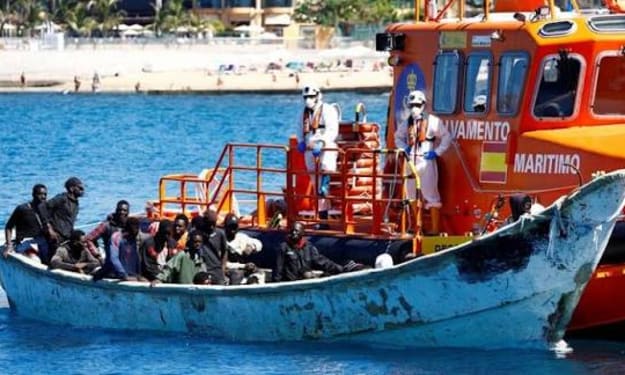
Madrid — When Spain’s government unveiled a sweeping amnesty plan in late January designed to offer legal status to hundreds of thousands of undocumented migrants, reactions ranged from political controversy to deep relief among the very people the policy aims to help. For many undocumented residents struggling on the margins of Spanish society, the initiative has been described in deeply personal terms as a “gift” and a “lifeline.” The extraordinary regularisation scheme, approved as a Royal Decree by the coalition government of Prime Minister Pedro Sánchez, will open a temporary path to legal residency and work authorisation for foreign nationals who can show they were living in Spain before Dec 31 2025 and have maintained at least five months’ continuous residence. Applicants also must have a clean criminal record to qualify. Once the programme begins in April 2026, beneficiaries will receive a one‑year renewable residence permit that immediately allows them to work legally, access Spain’s public health system, and register for social security. Estimates of the number who could benefit vary: the government cites around 500,000, while some internal police estimates suggest the figure could be as high as 750,000 – 1.1 million. “It’s Going to Help Us in Every Way” For migrants who have lived for years in legal limbo, the news has sparked genuine optimism. Diana, a 40‑year‑old from Peru who spoke with reporters in Madrid, said that life without formal status has been extremely difficult — limited job options, exploitation by employers, and exclusion from basic services have left many struggling. “It will help us in every possible way,” she said, adding that being able to earn a regular wage, pay taxes, and even start a business were among the most meaningful aspects of the amnesty. Before the programme was announced, many undocumented workers laboured in Spain’s informal economy: cleaning, construction, hospitality, agricultural fields and other low‑wage sectors where a lack of legal status left them vulnerable to exploitation and under‑payment. For these workers, the amnesty offers not just legal protection but economic inclusion — an ability to negotiate fair wages and integrate into the formal job market for the first time. Manuel, a Peruvian caregiver, explained that after losing his job when his asylum claim was rejected, he struggled to find regular employment. “Companies don’t want to hire you without residency — and if they do, they pay you less than the minimum wage,” he said. The regularisation, he added, would “allow me to work and contribute to the social security system.” A Policy Rooted in Humanitarian and Economic Logic The Spanish government has defended the measure on both humanitarian and pragmatic grounds. Officials say it acknowledges the reality that hundreds of thousands of people have made lives in Spain, contributing informally to the economy, and deserve a chance to settle with dignity. Elma Saiz, Minister for Inclusion, Social Security and Migration, underlined that foreign workers make up a significant portion of the workforce and have been essential to economic growth — particularly at a time when Spain boasts one of Europe’s lowest unemployment rates. Supporters argue the policy will generate positive economic effects: bringing informal workers into the formal economy expands the tax base, makes labor markets more transparent, and helps reduce labour exploitation. Agricultural groups and major employers have echoed this view, noting that a legalised workforce could stabilise sectors that have faced labor shortages. Political Pushback and Polarisation As expected with a major immigration reform, the amnesty has triggered fierce political debate. Conservative parties such as the People’s Party (PP) have criticised the initiative, suggesting that it rewards “illegality” and could incentivise more irregular migration. The far‑right Vox party has characterised the policy as harmful to public services and national security. Meanwhile, European partners have expressed caution, stressing that while member states can manage immigration autonomously, they must also coordinate within Schengen and the broader European Union framework to avoid policy “pull” effects that could increase migratory pressures elsewhere. A Turning Point for Migrants and Society For beneficiaries, the significance of the legalisation goes beyond economic opportunity. It represents a chance at long‑term stability: eligibility for formal housing markets, access to social services, legal protection against exploitation, and the possibility of eventually pursuing permanent residency or family reunification. “Today’s decision,” said one legal advisor working with migrants, “transforms lives. It’s not just about paperwork — it’s about dignity, safety, and being recognised as part of this society.” In a Europe where migration debates have become increasingly restrictive, Spain’s amnesty stands out as a bold attempt at inclusion — and for those who have lived in uncertainty, it could indeed help in every way.
By Fiaz Ahmed 6 days ago in The Swamp


Comments
There are no comments for this story
Be the first to respond and start the conversation.