
Army Chief Says Switzerland Can’t Defend Itself From a Full-Scale Attack: A Wake-Up Call for Neutral Europe
Why Switzerland’s Military Warning Is Shaking Europe’s Longstanding Neutrality

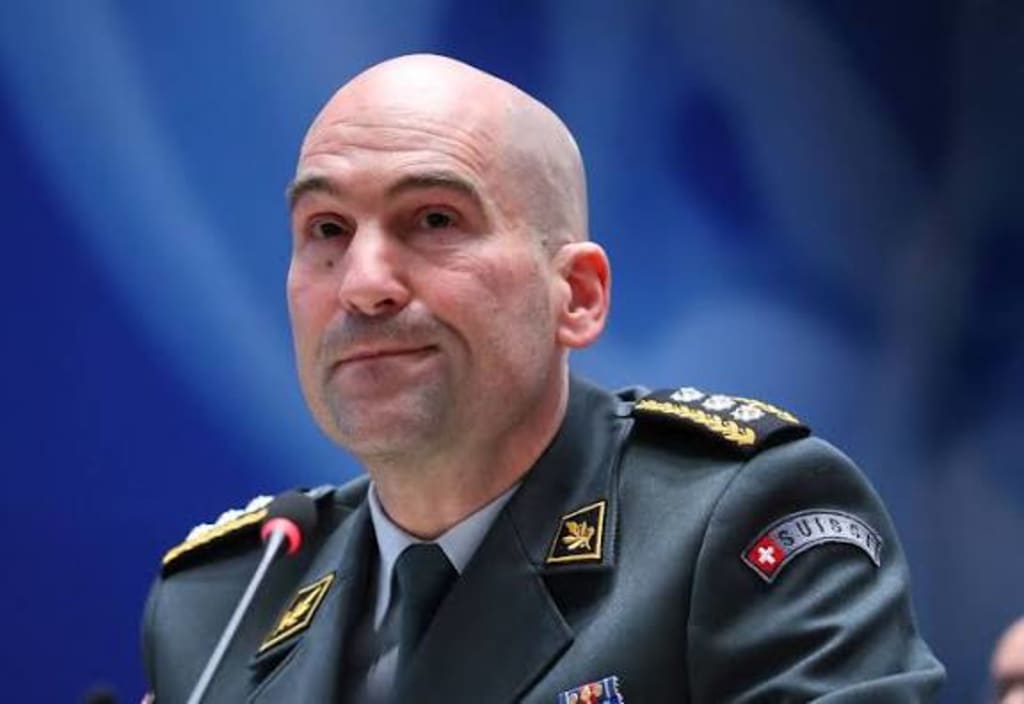
For decades, Switzerland has been viewed as the ultimate symbol of military neutrality and national preparedness. Nestled among the Alps, armed with a long-standing militia system, and historically untouched by large-scale wars, the country has projected an image of quiet strength and self-reliance. That image, however, was shaken when Switzerland’s army chief publicly stated that the country would not be able to defend itself against a full-scale military attack.
The remark has sparked debate far beyond Swiss borders, raising uncomfortable questions about defense readiness, modern warfare, and whether neutrality still offers protection in today’s volatile global landscape.
A Stark Admission From a Traditionally Confident Nation
Switzerland’s defense strategy has long relied on deterrence rather than power projection. Mandatory military service, fortified terrain, and civil defense infrastructure were once considered sufficient to discourage any potential aggressor. But the army chief’s statement signals a dramatic reassessment of these assumptions.
Modern warfare has evolved rapidly. Cyberattacks, long-range missiles, drones, electronic warfare, and hybrid threats have changed the meaning of “defense.” In this context, Switzerland’s traditional strengths—mountain geography and citizen soldiers—may no longer be enough.
The army chief’s warning was not about imminent invasion, but about capability gaps. Against a technologically advanced and fully mobilized military power, Switzerland would struggle to protect its airspace, critical infrastructure, and population without external support.
Neutrality in a Changing Security Environment
Swiss neutrality has been a cornerstone of its national identity since the 19th century. It allowed the country to avoid direct involvement in both World Wars and positioned it as a hub for diplomacy, banking, and international organizations. However, neutrality does not mean immunity.
The Russia-Ukraine war has demonstrated that European borders are no longer guaranteed by treaties or tradition alone. Even countries far from front lines are rethinking defense spending and military alliances. Switzerland, despite not being a NATO member, is deeply integrated into Europe’s economic and political systems, making it indirectly exposed to regional instability.
The army chief’s comments reflect a broader realization: neutrality does not eliminate the need for modern defense capabilities.
Underinvestment and Capability Gaps
One key factor behind the warning is years of underinvestment in defense. Like many European countries after the Cold War, Switzerland reduced military spending, downsized forces, and delayed modernization programs. While this freed up resources for social services, it also left the armed forces with aging equipment and limited readiness.
Air defense systems, ammunition stockpiles, and rapid-response capabilities are reportedly insufficient for prolonged or large-scale conflict. In an era where wars can escalate quickly and unpredictably, such gaps could prove critical.
The army chief’s message was not defeatist—it was pragmatic. Acknowledging weaknesses is often the first step toward reform.
A Broader European Wake-Up Call
Switzerland’s situation mirrors a wider European dilemma. Many countries assumed that large-scale interstate war was a thing of the past. The return of high-intensity conflict has exposed vulnerabilities across the continent, even in wealthy and stable nations.
The statement has fueled debates within Switzerland about increasing defense budgets, strengthening partnerships with neighboring countries, and modernizing military doctrine. Some argue that closer cooperation with NATO, even without full membership, may become unavoidable.
Others worry that abandoning strict neutrality could undermine Switzerland’s diplomatic role and domestic consensus.
Public Debate and Political Consequences
The army chief’s comments have also triggered strong reactions at home. Supporters argue that honesty about defense limitations is necessary to protect the country in the long term. Critics fear that such statements could damage Switzerland’s image or invite pressure to militarize unnecessarily.
Public opinion is divided between preserving neutrality at all costs and adapting to new security realities. What is clear, however, is that the conversation has shifted. Defense is no longer a distant or theoretical issue—it is a matter of national resilience.
Conclusion: Realism Over Illusion
Switzerland’s army chief did more than issue a warning; he challenged a national myth. In a world shaped by rapid technological change and geopolitical tension, even historically neutral and well-organized countries cannot rely on tradition alone.
The statement serves as a reminder that security is not static. It must be continuously reassessed and adapted. For Switzerland, the path forward will require balancing neutrality with preparedness, independence with cooperation, and history with hard reality.
For Europe as a whole, the message is equally clear: peace cannot be taken for granted—and neither can defense.
About the Creator
Fiaz Ahmed Brohi
I am a passionate writer with a love for exploring and creating content on trending topics. Always curious, always sharing stories that engage and inspire.
Keep reading
More stories from Fiaz Ahmed Brohi and writers in The Swamp and other communities.
3 Reasons Why Your Brain Loves Negative Thinking
Have you ever noticed how one negative comment can overshadow ten compliments? Or how your mind automatically jumps to the worst possible outcome, even when things are going well? This tendency isn’t a personal flaw—it’s how the human brain is wired. Negative thinking, while often uncomfortable, has deep psychological and biological roots. Understanding why your brain gravitates toward negativity can help you manage it more effectively. Here are three key reasons why your brain loves negative thinking, and how this ancient survival mechanism still shapes your modern life. 1. Your Brain Is Built for Survival, Not Happiness The human brain evolved over thousands of years with one primary goal: keeping you alive. For early humans, noticing danger quickly—such as predators, hostile tribes, or environmental threats—was essential for survival. Those who paid more attention to negative cues were more likely to survive and pass on their genes. This evolutionary bias is known as the negativity bias. Your brain automatically prioritizes threats over pleasures because, in prehistoric times, missing a danger could be fatal, while missing a pleasant experience usually wasn’t. Even today, your brain treats emotional threats—like criticism, rejection, or failure—with the same urgency as physical danger. That’s why negative thoughts feel louder, more intense, and harder to ignore than positive ones. Why it matters now: While negativity once helped humans survive, in modern life it often leads to anxiety, overthinking, and unnecessary stress. 2. Negative Thoughts Feel More “Useful” and Convincing Another reason your brain clings to negativity is because negative information feels more meaningful and believable. Studies in psychology show that people tend to trust negative news, feedback, and predictions more than positive ones—even when both are equally accurate. Why? Because your brain assumes negative information contains warnings you must act on. A critical comment seems more important than praise. A fear of failure feels more realistic than hope for success. Negative thinking also gives your brain the illusion of control. When you imagine worst-case scenarios, it feels like you’re preparing yourself emotionally. Your mind convinces you that worrying equals problem-solving—even though, in reality, excessive worry often creates more problems than it prevents. Why it matters now: This pattern can trap you in cycles of self-doubt, rumination, and pessimism, making it harder to take risks or enjoy progress. 3. Your Brain Repeats What It Practices Your brain is highly adaptable, thanks to a process called neuroplasticity. This means the thoughts you repeat most often become stronger mental pathways over time. If you frequently engage in negative self-talk, your brain learns that this is the default way of thinking. Think of it like a trail in a forest. The more you walk down the same path, the clearer and easier it becomes to follow. Negative thoughts, when repeated, turn into mental habits—automatic, fast, and familiar. This is why negative thinking can feel so natural. Your brain isn’t trying to harm you; it’s simply following patterns it has learned and reinforced over time. Why it matters now: Without conscious effort, negative thinking can become a long-term mindset rather than a temporary reaction. Can You Train Your Brain to Think Differently? The good news is that while your brain loves negative thinking, it is not stuck that way. Just as negative pathways can be strengthened, positive and balanced thinking can be trained too. Practices like mindfulness, journaling, gratitude exercises, and cognitive reframing help interrupt automatic negativity. Over time, these habits create new mental pathways that make optimism, resilience, and emotional regulation easier. Importantly, the goal isn’t to eliminate negative thoughts entirely. Negative thinking can still be useful for caution and reflection. The goal is balance—recognizing negative thoughts without letting them dominate your mind. Final Thoughts Your brain’s attraction to negative thinking is rooted in survival, habit, and perceived usefulness. While this bias once protected humans from danger, in today’s world it often causes unnecessary stress and emotional fatigue. By understanding why negativity feels so powerful, you gain the ability to step back and question it. Awareness is the first step toward change—and your brain is far more flexible than you might think. Learning to manage negative thinking isn’t about forcing positivity. It’s about teaching your brain that safety, growth, and happiness can coexist.
By Fiaz Ahmed Brohi22 days ago in The Swamp
Trump Signals Tariffs on Nations That Oppose Greenland Goal
Former U.S. President Donald Trump has once again placed himself at the center of a global controversy — this time by signaling that tariffs could be imposed on countries opposing his ambition to bring Greenland under U.S. influence. The statement has ignited debate not only about international trade but also about sovereignty, alliances, and the future of Arctic geopolitics.
By Aqib Hussain2 days ago in The Swamp



Comments
There are no comments for this story
Be the first to respond and start the conversation.